Side question: Why do people buy baguettes? Do they make sandwiches with them? How do you even make a sandwich from them? How are you meant to beat a baguette????

top 96 comments

sorted by: hot top controversial new old
[–] 151 points 9 months ago* (17 children)

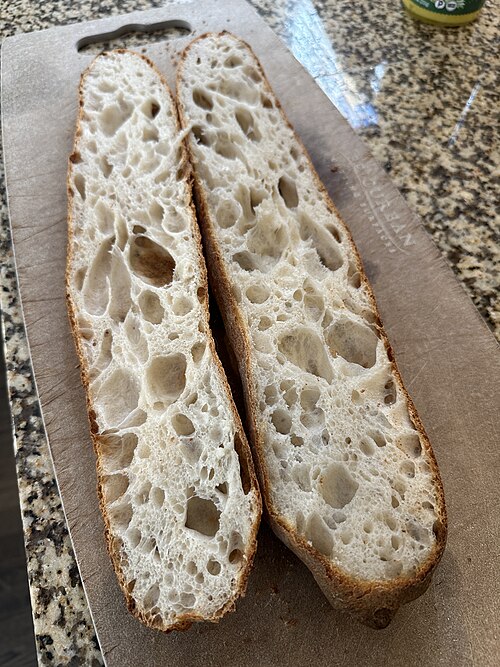
You cut a baguette down the middle to make a sandwich

Like this

  • source
  • hideshow 17 child comments
  • [–] 43 points 9 months ago (4 children)

    Not only that, baguettes go great with lots of cheeses.

  • source
  • parent
  • hideshow 4 child comments
  • [–] 91 points 9 months ago (4 children)

    The fact that someone have to explain this, is kinda funny

  • source
  • parent
  • hideshow 4 child comments
  • [–] 51 points 9 months ago (1 child)

    Yeah this is NoStupidQuestions so we should only have high level discourse.

  • source
  • parent
  • hideshow 1 child comment
  • [–] 1 point 9 months ago*

    Well, theres 2 ways to parse 'no stupid questions'.

    No question is stupid, implying all questions are valid here.

    No (asking) stupid questions- this is a place for questions with either merit from the level of discourse they spark, or the value of the answer.

    Or you could do the arrested development no money down thing with it.

    No, stupid questions! (only)

  • source
  • parent
  • [–] 10 points 9 months ago (5 children)

    Pro tip: Cut the baguette in a 45° angle.

    It makes the first bite easier, and it looks better.

  • source
  • parent
  • hideshow 5 child comments
  • [–] 7 points 9 months ago (4 children)
  • [–] 2 points 9 months ago (1 child)

    Instead of cutting it off at a right angle you cut it at an angle. Personally I'm French and yeah I know of the technique but I'm not the biggest fan necessarily. Works best if you're making 2 sandwiches out of 1 baguette and fill it up first before doing the middle cut.

  • source
  • parent
  • hideshow 1 child comment
  • [–] 1 point 6 months ago

    Hello my name is Doug, I’m 40+ years old and I’m a fucking idiot.

    I mean I guess part of me knew, I have been to Subway and watched them slice the fucking bread. But when I see baguettes at the store I think “hm, just like Olive Garden, I can make tiny baguette slices!” I don’t think “yeah time to make some killer sandwiches.”

    …I’m going to blame my autism for this one. It probably isn’t true, but I’m gonna blame it anyway.

  • source
  • parent
  • [–] 87 points 9 months ago (1 child)

    Because the dough was a different shape before baking.

    You can beat a baguette with a golf club, a truncheon, or even another baguette.

  • source
  • hideshow 1 child comment
  • [–] 40 points 9 months ago* (10 children)

    ELI5: dough can take any shape you give it.

    You can load the dough into a metallic shape and close it with a lid, and you'll get picture 1.

    Or you can make a ball out of it and leave it be on a flat surface, and it will naturally expand to look like picture 2.

    Side question: narrow shape makes baguette have a more crispy texture, which many people like. It's also usually produced using a special kind of sourdough, which makes it have unique and rich taste. People eat it as is (just biting it from one end to another) or make small open sandwiches by cutting it in slices and putting all sorts of toppings on top of them.

  • source
  • hideshow 10 child comments
  • [–] 11 points 9 months ago (4 children)

    I saw someone just cut it down the middle and make a long skinny sandwich with one. I didn't even know that was legal.

  • source
  • parent
  • hideshow 4 child comments
  • [–] 1 point 9 months ago*

    Lol, yes, it can be done, but it needs to be packed or cut from one side only, otherwise it will likely fall apart.

    (Also it's an ungodly abomination and there are certainly better options to do this with)

  • source
  • parent
  • [–] 3 points 9 months ago (4 children)

    Why would you want to bake in a container vs a flat surface? Why are some types of bread one shape, and others another? Is it just tradition, or is there some practical aspect?

  • source
  • parent
  • hideshow 4 child comments
  • [–] 5 points 9 months ago* (3 children)

    Baking in a rectangular shape allows you to make a space efficient bread that you can easily stack and transport. Also, it is very predictable, can fit neatly into your toaster, and can be cut in triangles.

    Making bread on a flat surface allows you to minimize costs of entry (not only don't you need the forms which are relatively cheap, you can go with simpler/cheaper ovens), and this kind of bread has a more pronounced crust, which many people like.

    Also, rectangular bread is harder to leaven for a long period of time as it comes with numerous technological complications down the production line. This affects the aroma composition, making rectangular bread less attractive for those who want the traditional "bread" taste.

    Baguette, as I already mentioned, has a unique crust and crumb texture defined by the shape and baking conditions. Many people like it that way.

  • source
  • parent
  • hideshow 3 child comments
  • [–] 1 point 9 months ago (2 children)

    Making bread on a flat surface allows you to minimize costs of entry (not only don't you need the forms which are relatively cheap, you can go with simpler/cheaper ovens), and this kind of bread has a more pronounced crust, which many people like.

    Crusts like this generally require a lot of steam in the oven, and steam ovens are usually much more expensive than non-steam ovens.

    If you want a homemade loaf that can actually produce the type of bubbly crust you expect in certain types of European style breads, you'll have to trap a lot of steam where you're baking it, often by containing it in a Dutch oven.

    And shaping/forming a loaf that stays tall when being baked on a flat surface takes skill, lots of practice and experience.

  • source
  • parent
  • hideshow 2 child comments
  • [–] 1 point 9 months ago* (1 child)

    Crusts like this generally require a lot of steam in the oven

    Fair enough!

    And shaping/forming a loaf that stays tall when being baked on a flat surface takes skill, lots of practice and experience.

    Or a fairly inexpensive machine that will do it for you. Of course though, there's a special pleasure in making a truly artisan bread with your own hands. But hey, it's not that hard if you know what you're doing. Best to see it in action.

    But then again, I speak from the side of low-scale industrial baking. For a home baker, all this machinery will be an overkill.

  • source
  • parent
  • hideshow 1 child comment
  • [–] 40 points 9 months ago

    Depends if they are baked in a container or not.

  • source
  • [–] 27 points 9 months ago (3 children)

    One's cooked in a pan, the other not.

    You can use baguettes in multiple ways like other breads, imagination is the limit.

    -Cut it on the bias (at an angle), toast and use to dip in soup or mop up sauce. I do this with onion soup to top it, buttered and sprinkled with a good melting cheese, place on top of soup in bowl and broil in oven until melted and browning.

    -Slice in half long ways, butter with a good garlic butter recipe, bake in oven until browned serve with spaghetti.
    -Once it's old, stale and hard, cube it up (can do it fresh too) use as croutons for salads or grind it up for bread crumbs to cook with.

  • source
  • hideshow 3 child comments
  • [–] 26 points 9 months ago* (5 children)

    The rectangular loaf became popular due to packing efficiency. You can fit more of them in less space.

  • source
  • hideshow 5 child comments
  • [–] 6 points 9 months ago (4 children)

    Okay, why not hexagon shaped bread?

  • source
  • parent
  • hideshow 4 child comments
  • [–] 19 points 9 months ago* (8 children)

    In Brazil we have a small baguette called "French bread"! It's very convenient and absolutely everywhere. And it tastes good, white bread in comparison tastes like nothing and has a shitty texture

    A pile of small baguettes

  • source
  • hideshow 8 child comments
  • [–] 7 points 9 months ago* (5 children)

    I believe those are called Petit Pain. And strongly agree, much better than standard white bread by a mile.

  • source
  • parent
  • hideshow 5 child comments
  • [–] 4 points 9 months ago (4 children)

    At first I was impressed it exists if France, but it's kinda obvious. Now I've learnt that, for 20 years of my life, I believed a bullshit story about how hundreds of years ago people in Brazil couldn't make baguette so they sold "French Bread"

    Btw, cute name for a pastry

  • source
  • parent
  • hideshow 4 child comments
  • [–] 7 points 9 months ago (3 children)

    So here in the UK they sell these fresh in Lidl: a cheap supermarket but it has an amazing bakery where they make these and other items.

    I often go to Lidl at lunchtime to buy two of these and something simple to fill them with into sandwiches, usually cheese and ham, (insert bland UK food joke here).

    My question for you, in the spirit of international culinary collaboration, what Brazilian fillings would you stuff one of these with to make a great sandwich?

  • source
  • parent
  • hideshow 3 child comments
  • [–] 3 points 9 months ago (2 children)

    We put cheese, ham, salami, mortadella and other stuff. However just mortadella on bread is really famous, because it's quite cheap and a very famous TV show called Chaves had the main character loving it.

    Recently I've started trying to make more meal-like sandwiches, like chicken, tomato and lettuce (really tasty) or egg, cheese and peperoni (all heated up together) and it's considerably better

    Also, you're talked about petit pain, do you know they have that name in France or they are sold with that name in the UK?

  • source
  • parent
  • hideshow 2 child comments
  • [–] 3 points 9 months ago (1 child)

    Those all sound delicious, I'll have to give them a try 😋

    Yeah I do and they are sold under that name here in the UK because English will just adopt words from other language or slang terms if they're used enough. Also in English words for farm animals are Germanic in origin and words for the meat of those same animals are Norman (northern France) in origin because after the Norman Conquest in 1066, the nobility were all Norman French and were the ones to refer to cuts of meat whereas the peasantry didn't eat the meat of the farm animals.

  • source
  • parent
  • hideshow 1 child comment
  • [–] 18 points 9 months ago (8 children)

    One word: Bánh mì

    Regarding your main question: you don't fit a square in a round hole.

  • source
  • hideshow 8 child comments
  • [–] 14 points 9 months ago (2 children)
  • [–] 3 points 9 months ago (2 children)

    I love ordering a bánh mì with pho and dipping it.

  • source
  • parent
  • hideshow 2 child comments
  • [–] 3 points 9 months ago* (1 child)

    If you have a Viet restaurant that serves things other than phó and noodles, check out a dish called "Bánh mì bò kho" - it's a spicy beef curry dish, chunks of meat, onions, potatoes and broth that comes with the bánh mì baguette to dip.

    https://www.hungryhuy.com/bo-kho-recipe-vietnamese-beef-stew/

  • source
  • parent
  • hideshow 1 child comment
  • [–] 17 points 9 months ago

    Baguettes are delicious, use a knife if you want to do a sandwich, what's the difficulty?

  • source
  • [–] 12 points 9 months ago

    industry vs. artisan goods?

  • source
  • [–] 11 points 9 months ago

    Why do people buy baguettes?

    They taste amazing

    Do they make sandwiches with them? How do you even make a sandwich from them?

    Cut the baguette along the length. Cut in half. You now have 2 sandwiches

  • source
  • [–] 11 points 9 months ago (3 children)

    Well, there's a number of reasons for the shape of the various bread types. The dough type - from the kind of flour used, through the resting time, fermentation time, raising agent (let it be any of a variety of yeast products, wild yeast aka sourdough starter, baking powder or baking soda, there's tons of options), how hydrated it is, and so on. The oven type and baking approach. The purpose of the bread.

    Your first picture is of a standard toast or sandwich bread. It's supposed to be a fairly loose, soft bread with a soft crust and an engineered shape for easier baking - with conduction baking on all sides except the top (here conduction baking refers to the fact the sides and bottom of the bread is held in place by a heated metal tray, transferring heat directly without letting air or steam escape, resulting in the soft crust). A more industrial yeast type is used (usually dry or instant yeast), which result in relatively small gas bubbles, giving it a dense but fluffy interior. The flour is usually a light wheat flour, and both resting and fermentation times are low - that's why it's a more industrial bread, you mix the ingredients, let the mixture sit for 30-60 minutes then bake it, easily automated.

    The second picture is of a sourdough loaf. This usually uses wholemeal wheat flour, often mixed with rye or other grains for better texture, and is a fairly tedious bread to make with multiple stretch and fold sequences and long resting periods, allowing lots of gluten to form, which means every stretch and fold sequence doesn't mix the dough but rather layers and shapes it. The yeast comes from a sourdough starter, and is allowed to ferment longer, which is why you get an intense flavour. It bakes quick in a Dutch oven first covered then uncovered, allowing it to fluff up but then shape a hard crust. You get much larger bubbles and an internal structure of long strands of gluten forming swirls and such.

    Then the baguette, it uses a different approach to sourdough but with a similar effect. Unlike sandwich bread, the dough for baguettes - as well as what I'd call "European medium bread" (medium here meaning the hardness and bakedness of the crust) - a crispy crust that isn't as well baked as a sourdough, but also isn't soft, with a well developed gluten structure, using more predictable yeasts (again usually instant quick yeast or dry yeast, or in some areas, live yeast cubes). Mind you the baguette you're showing is more of a hypermarket style baguette that is intentionally baked to a lesser darkness, and traditional baguettes are more on the golden brown part of the scale.

    Overall, the kind of flour determines the flavour, but also the raising and resting times. Some flours (especially wholemeal or grain mix flours) need more time as the more complex proteins and sugars take more time to be broken down by the yeast thus they rise slower. Hydration determines how tough the dough is to shape (e.g. pasta is only hydrated by the eggs, making it a hard, dense dough, pizza needs to be flexible so it's high hydration, and it gets extra raise in the oven as the water quickly evaporates). Yeast determines the flavour, the raising time, and in the final product, the texture and airiness. The baking method can fuck a lot with the texture. A regular convection oven can dry the crust out making it tough and thick, forming quickly and stopping the bread from rising, but adding some ice in a pan at the bottom can generate enough steam to let the bread rise properly by delaying the crust hardening. Same idea for sourdough using a Dutch oven, you create a high moisture environment, a steam box, to keep the crust soft while the bread rises, then remove it at the end so the crust can cripsen and brown. The sandwich bread is medium hydration thus it keeps the sides moist while they bake, giving it that brown but soft crust. If you were to plop the same dough just into the oven, without the baking shape, due to there being little to no gluten development, it would just fall apart and harden into the world's shittiest giant cookie.

    But also you can bake bread in a Dutch oven over an open fire, giving a more rustic style bread with thick, chewy, but also cripsy crust. Toss the same dough with lower hydration into a circle and onto an upside down pan in the same fire and you got some awesome flatbread with a nice center air pocket you can open up and stuff with meat.

    Then, you can decide to just fuck it and add as much high fructose corn syrup as possible without fucking up the bread, and you get American style bread.

  • source
  • hideshow 3 child comments
  • [–] 3 points 9 months ago

    Beautiful answer!

    A small point from someone working alongside bread industry - small bubbles in toast/sandwich bread are not due to the type of yeast used, but due to intentionally low time for second stage mixing and, as you mentioned, low time for resting and leavening. You can absolutely create huge bubbles using the very same yeast, though, if that's your goal.

  • source
  • parent
  • [–] 11 points 9 months ago* (3 children)

    Not pictured: baguette

    How are you meant to beat a baguette????

    Just punch it dude, it's bread.

  • source
  • hideshow 3 child comments
  • [–] 10 points 9 months ago

    US , EU and FR variants.

    Side question: Why do people buy baguettes? Do they make sandwiches with them?

    Sometimes, sometimes just eat with butter. They make good toasts too.

    How do you even make a sandwich from them?

    Just cut it open and put the ham and cheese inside it, not much to it really. Either cut the slice in half if I'm feeling poor or fold it in two if I'm feeling rich.

  • source
  • [–] 47 points 9 months ago* (last edited 9 months ago) (24 children)

    The sandwich bread is mass produced, baked in racks of loaf pans, designed to give very consistent and convenient slices for making sandwiches.

    The second pic is the way many people prefer to bake a more rustic loaf. The dough is just placed on a flat sheet, so there's much more crust, and it can just rise however it does. It's less convenient for sandwiches.

    No baguettes aren't used for sandwiches, they're used to serve bread with the meal. If you're eating dinner, you don't really want a slice of sandwich bread, you want something more convenient to hold in your hand, dip in you pasta sauce, or whatever. Plus it has a higher ratio of crust to insides, which can be nice.

    Edit: I replied to someone who corrected me, but apparently baguettes are very much used for sandwiches, I've just never seen it. Apparently I'm an ignorant American.

  • source
  • hideshow 24 child comments
  • [–] 66 points 9 months ago (4 children)

    No baguettes aren't used for sandwiches

    My jambon-beurre begs to differ

  • source
  • parent
  • hideshow 4 child comments
  • [–] 42 points 9 months ago (3 children)

    Baguettes are bomb sandwich bread. Ask France.

  • source
  • parent
  • hideshow 3 child comments
  • [–] 14 points 9 months ago (5 children)

    Uh what? Guess you have never been to France?

  • source
  • parent
  • hideshow 5 child comments
  • [–] 12 points 9 months ago (4 children)

    I have not and stand corrected

  • source
  • parent
  • hideshow 4 child comments
  • [–] 3 points 9 months ago (3 children)

    I cut a mini baguette lengthwise and used it to make a Vegemite sandwich.

    Don't tell the French, I don't want to be Rainbow Warrior'd

  • source
  • parent
  • hideshow 3 child comments
  • [–] 11 points 9 months ago* (1 child)

    I make my own sandwich bread, and it's far nicer than the bought stuff. Yeast based, not sourdough but that's fine too. I use a tin for those. They're generally more wet - about 70% hydration. They'd be fine not in a tin but would be flatter, and would benefit from chilling.

    I also make "rustic" loaves which are drier and stiffer about 60% and are firm enough to not need a pan at all.

  • source
  • parent
  • hideshow 1 child comment
  • [–] 4 points 9 months ago

    We use normal bread (pic 2) for sandwiches all the time. It's been years since I've had industry toast (pic 1) and only in times of desperation.

    Open top sandwiches with bread 2 are basically two thirds of my food pyramid.

  • source
  • parent
  • [–] 3 points 9 months ago (3 children)

    Now I'm curious, what did you think the baguette was used for?

  • source
  • parent
  • hideshow 3 child comments
  • load more comments (1 reply)
    load more comments
    view more: next ›