[–] 2 points 4 months ago (1 child)

How are you doing your cut? What are your macros? Carb intake? How long have you been doing the cut? What kind of fat?

There are two questions here: are you weaker or is your endurance lower?

We have literature on athletes becoming fat adapted that their performance dips for a few weeks then comes back to parity with their glucose adapted performance. But they are not eating any carbs at all in these studies.

  • source
  • [–] 27 points 4 months ago

    Run your own Lemmy instance or Mastodon instance. You can say whatever you want, it's absolute freedom of speech. People don't have to listen to you, and many people may defederate, but that's their choice

  • source
  • [–] 3 points 4 months ago* (last edited 4 months ago) (6 children)

    Carbs make people hungrier, so that lines up with the "we have easy energy, lets bulk up" hypothesis

    its funny we don't have the same response to fat, i.e. lots of free energy can be sitting in front of you, but you only eat just enough... why did we evolve so carbs are the super trigger?

    I have similar experience when i try a seasonal fruit, it's so hard to just have one bite!

  • source
  • [–] 3 points 4 months ago* (1 child)

    to build on what psud said - being fat adapted allows athletes to use their stored fat giving them big long term endurance improvements (i.e. running), bonking isn't really a thing anymore.

    Volek and Phinney have lots of published papers characterizing athletic performance on fat adapted athletes, but basically they have better access to their fat, and don't under perform vs carb adapted athletes (the default)

    The big indirect benefit is exercise recovery, less pain, less time being inflamed.

    If your going to jump into keto, i recommend following a well formulated ketogenic guide, the adaptation phase can put some people off. Keep electrolytes up (lots of salt), adjust your diet composition slowly (or you might get diarrhea), and increase fat intake (your trying to become fat adapted, you need fat or you will feel low energy)

    Get a CGM ($20) and watch your blood glucose, its the single best way to get started, it turns all your food into a interactive game of keep the glucose low, and there are lots of surprising foods you would think are clean... but aren't.

  • source
  • parent
  • context
  • [–] [S] 2 points 4 months ago

    really great, long long long, talk about medicine, perspectives, metabolic health, and health span. the last 20 minutes about optimizing quality of life and health span is quite impactful for me.

  • source
  •  

    Does having high LDL-cholesterol increase your risk of having a heart attack? If you are worried about having high LDL-C due to eating a Keto or Carnivore diet then this video will help you. Research continues to come out showing that high LDL-C is not the danger it was once believed to be, and that there is No association between high LDL-C and the progression of plaque in the heart arteries...

    Dave Feldman is a senior software engineer and entrepreneur who became obsessed with understanding Lipidology after seeing his cholesterol climb substantially on a low carb diet. He has since performed a series of experiments around this phenomenon, published several papers on its mechanisms and phenotype, and is currently conducting a clinical study out of UCLA through his newly formed public charity, the Citizen Science Foundation.

    summerizer

    KETO-CTA Study — Findings Presented by Dave Feldman (Interview with Dr. Ken Berry)

    Core Questions Raised

    • Does high LDL cholesterol or high ApoB, especially on ketogenic/carnivore diets, accelerate coronary plaque formation?
    • What happens to plaque burden when people maintain very high LDL for years on low-carb diets?

    Study Overview (as described)

    • Design: Coronary CT angiography (CCTA) scans analyzed for plaque burden; scans compared across time.
    • Cohort size: ~100 participants discussed.
    • Diet: Low-carb / ketogenic (includes lean-mass hyper-responders).
    • Exposure duration mentioned: Multi-year follow-up; “nearly half a decade” (~4.5 years) cited in discussion for average exposure at very high LDL levels.
    • Baseline CAC: Majority reported as CAC=0 at baseline.
    • Age: Average age stated as ~55 years.

    LDL/ApoB & Who Elevates Most on Keto

    • LDL/ApoB rises are most prominent in leaner individuals; a “1–5%” subgroup can see marked increases (lean-mass hyper-responders).
    • Overweight individuals starting keto more often see LDL fall or change minimally as metabolic health improves.

    Imaging & Analysis Pipelines Used

    • Multiple, independent quantification routes were used on the same CCTA datasets:
      • Cleerly (AI plaque quantification).
      • HeartFlow.
      • QAngio.
      • A semi-quantitative visual method.
    • Quality control / usability rates differed by tool on identical scans:
      • Example figures mentioned: HeartFlow ~6.3%, QAngio ~39.8% (context: differing pass/fail or exclusion proportions across analyses).
    • Key metric emphasized: Percent Atheroma Volume (PAV); also total plaque volume and non-calcified vs calcified plaque were discussed.
    • A specific change example cited: Cleerly ~+23.3 mm³ (small absolute change) in a reported plaque volume metric.

    Main Findings Reported

    • Progression signals were low overall across the cohort despite very high LDL/ApoB levels on long-term low-carb/keto.
    • Some participants showed regression (less plaque at follow-up than baseline).
    • Results were directionally consistent across analysis methods, despite different exclusion/quality rates.
    • Emphasis that non-calcified plaque (considered more concerning) did not show worrisome acceleration cohort-wide.

    Clinical Events Mentioned

    • Among ~100 people followed/discussed, no heart attacks were reported within the study’s observation window.

    Radiation & Practical Notes on CCTA

    • Modern CCTA was described as low-dose radiation, with a figure around ~0.6 mSv mentioned.
    • Dosing framed as roughly ~1.5× a mammogram (comparative remark).
    • Procedure described: IV contrast to opacify coronary lumens; modern detectors/software reduce needed dose.

    Limitations Acknowledged (as discussed)

    • Not a randomized trial; observational cohort with multi-tool re-analysis for robustness.
    • Different software pipelines yield different exclusion rates and require careful quality control.
    • Calls for larger, head-to-head prospective studies (e.g., vegan vs carnivore cohorts) were explicitly voiced.

    Takeaways Stated in the Video

    • In a keto/carnivore cohort with very high LDL/ApoB and ~4.5 years average exposure, plaque progression was minimal on average, with some regressors, and no heart attacks recorded in the observed period.
    • Multiple independent analytic methods—despite differing QC pass rates—converged on low progression signals.
    https://www.youtube.com/watch?v=6rfiLvrlo2A


    I want to live in a world where we treat the root cause of disease, not just the symptoms. And if you’re living with RA, diabetes, or chronic inflammation, this message is for you.

    summerizer

    Video Summary

    Speaker: Dr. Tony Hampton
    Topic: Using food as a lever to calm rheumatoid arthritis (RA), how to measure remission, and how to taper medications safely with data.

    Opening patient stories

    • A patient reported her RA pain vanished after cutting out sugar.
    • The same patient also reversed type 2 diabetes with diet, bringing A1C to 5.1; some clinicians were skeptical of diet as the cause.

    What RA is and why measurement matters

    • RA is an immune-mediated arthritis that inflames and, if uncontrolled, damages joints.
    • Treatment aims for remission, not just “less pain.”
    • Remission is defined with composite scores (e.g., swollen joint count, tender joint count, patient global assessment, and CRP):
      • Boolean remission: very strict; thresholds summarized as “≤ 1.”
      • Index cutoffs: SDAI < 3.3 or CDAI < 2.8 → in plain terms, almost no swollen or tender joints.
      • DAS28-CRP also referenced and used in trials.

    Food patterns discussed

    • Low-carb / ketogenic (and even carnivore for some):
      • Aim for roughly 20–50 total carbs/day (unless doing strict carnivore).
      • Typical foods: non-starchy vegetables, fish, eggs, meat, dairy (if tolerated), olives, avocado, extra-virgin olive oil.
    • Mediterranean-like (anti-inflammatory) approach:
      • Emphasizes extra-virgin olive oil, oily fish, herbs, nuts, leafy greens.
      • Caveat mentioned: still avoid a lot of grains (i.e., a lower-carb Mediterranean pattern).
    • Fasting / time-restricted eating also discussed as helpful tools for some.

    Mechanistic note

    • Ketone bodies (e.g., beta-hydroxybutyrate)—which rise on low-carb/keto—can directly inhibit the NLRP3 inflammasome, a key immune alarm pathway driving inflammation.

    Evidence referenced (from the video)

    • Mediterranean-style RCTs showed lower disease activity, improved function, and less stiffness versus control.
    • ADIRA trial (Sweden): improved DAS28-CRP and patient-reported outcomes on an anti-inflammatory Mediterranean-like diet.
    • Classic Lancet trial: a short fasting phase followed by a plant-based diet lowered RA activity for months.

    What to reduce/avoid

    • Sugar highlighted as a driver that can worsen inflammation and RA risk; removing sugar is framed as a step that can help earn the right to taper medicines.

    “Playbook” / data to track for clinic visits

    • Track DAS28-CRP, SDAI, or CDAI; aim for Boolean remission if possible.
    • Use labs that move with inflammation: CRP (and ESR).
    • Don’t chase RF or anti-CCP for activity (helpful for diagnosis but often remain positive).
    • Consider ultrasound to rule out silent synovitis.
    • Document function (e.g., a daily diary or HAQ-DI).
    • If relevant to your case, bring metabolic markers (e.g., A1C) showing dietary progress.

    Tapering guidance mentioned

    • After ~6 months of sustained remission, it’s reasonable to consider dose reduction of disease-modifying therapy—not abruptly stopping.
    • “Don’t ghost your meds.” Earn your taper with objective data and work with your clinician.

    Citations in this video


    In a perpetual war between YouTube and Adblock... a particular change in August appears to have caused unintended collateral damage.

    By logging a certain URL on a widely utilized list, the tracking of authentic desktop views for those using adblocking third party software appears to have been broken, leading to drastically reduced viewership for a large number of channels.

    Despite certain claims that this is a common and seasonal change, the reality is that this was an unexpected consequence of YouTubes hyper aggression with advertising, and the pushback that they get from extensions looking to block their ads form showing.


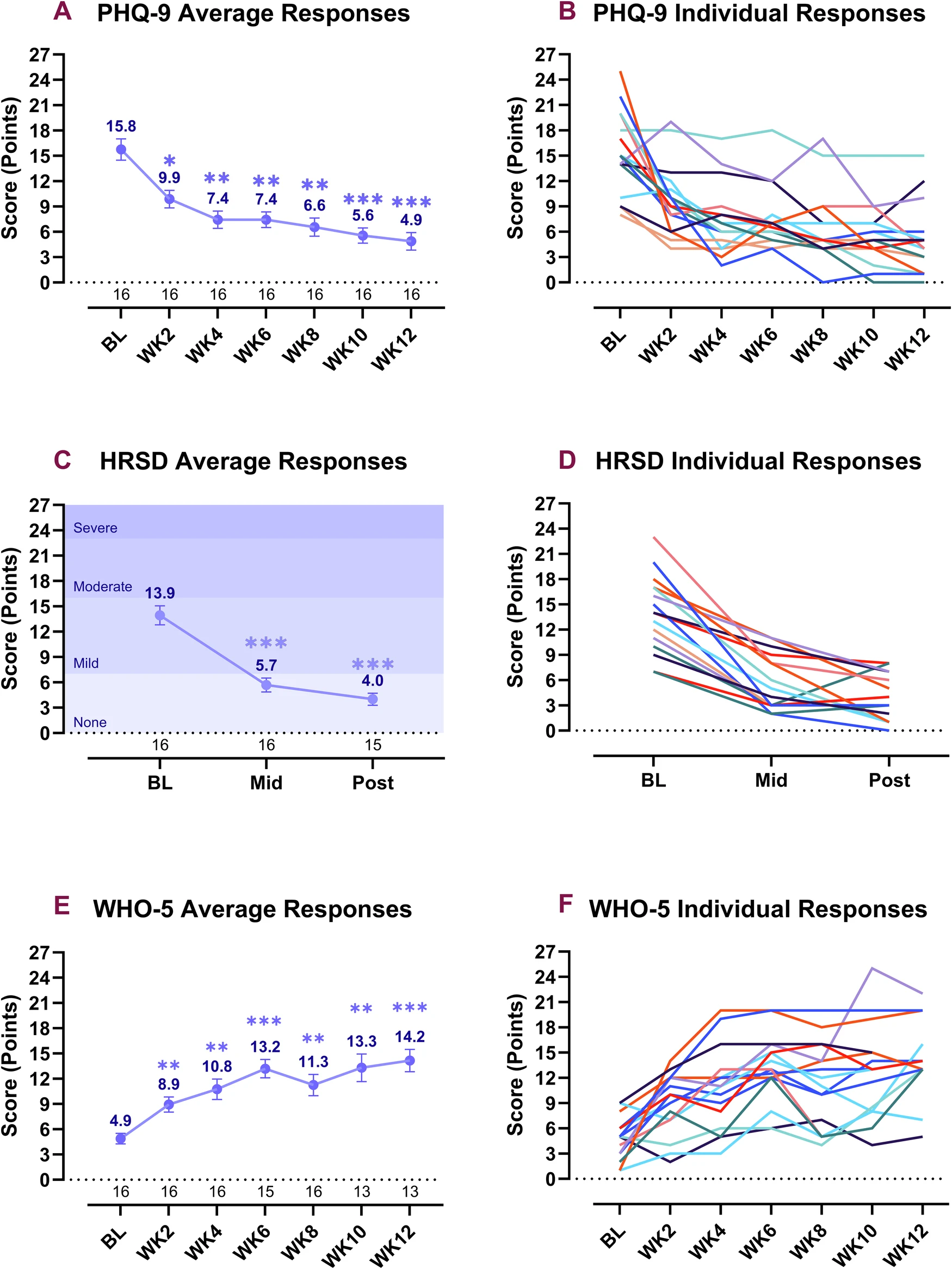
    A ketogenic diet (KD) has shown promise as an adjunctive therapy for neurological and neuropsychiatric disorders, including bipolar disorder and major depressive disorder (MDD). We examined tolerance for a KD in young adults with MDD and assessed symptoms of depression and metabolic health. Students (n = 24) with a confirmed diagnosis of MDD at baseline receiving standard of care counseling and/or medication treatment were enrolled in a 10–12 week KD intervention that included partial provision of ketogenic-appropriate food items, frequent dietary counseling, and daily morning tracking of capillary R-beta-hydroxybutyrate (R-BHB). Primary outcome measures for mood symptoms included the Patient Health Questionnaire (PHQ-9) and Hamilton Rating Scale for Depression (HRSD). Additional outcomes included body composition, neurocognitive function, and blood hormonal and inflammatory markers. Sixteen students (10 women, 6 men, mean age 24 yr) completed the intervention. Nutritional ketosis (R-BHB > 0.5 mM) was achieved 73% of the time. Depressive symptoms decreased by 69% (PHQ-9) and 71% (HRSD) post-intervention (p < 0.001), with improvement occurring within 2–6 weeks. Global well-being increased nearly 3-fold (p < 0.001). Participants lost body mass (−6.2%; p = 0.002) and fat mass (−13.0%; p < 0.001). Serum leptin decreased (−52%; p = 0.009) and brain-derived neurotropic factor increased (+32%; p = 0.029). Performance improved on several cognitive tasks. In students with mild to moderate depression based on PHQ-9 and HRSD, implementation of a WFKD for 10–12 weeks is a feasible adjunctive therapy and may be associated with improvements in depression symptoms, well-being, body composition, and cognition.

    Full Paper: https://doi.org/10.1038/s41398-025-03544-8


    Dr. Andrew Koutnik shares his dual perspective as both the longest-studied juvenile diabetes patient on therapeutic carbohydrate reduction and as a researcher collaborating with Harvard Medical School, Boston Children’s Hospital, and the University of Washington.

    Diagnosed with type one diabetes as an adolescent, Andrew was told to expect complications: cardiovascular disease, kidney decline, brittle bones, and brain damage . Instead, through more than a decade of sustaining therapeutic carbohydrate reduction, he has defied those expectations and helped demonstrate, through research, it's potential for juvenile diabetes.

    This presentation goes beyond one disease. It highlights how impaired metabolism underlies most chronic illnesses, from type 2 diabetes and cardiovascular disease to Alzheimer’s, Parkinson’s, and even psychiatric disorders, and why nutrition must be recognized as a frontline therapy, not an afterthought.

    • Mandate metabolic screening in standard-of-care
    • Reform federal and institutional nutrition guidelines to reflect the evidence
    • Expand access to medical nutrition therapy and monitoring tools

    As Dr. Koutnik puts it: metabolic health isn’t just about management; it’s about prevention, reversal, and saving lives. The time to act is now.


    For years, Vice President JD Vance came to know Charlie not merely as an ally, but as a beloved friend. Today, Vance takes up the microphone for his fallen friend and hosts The Charlie Kirk Show. Vance and others at the White House share their memories of the man who has become an immortal American hero and Christian martyr.

    VP Vance hosts the Charlie Kirk show, I found this talk extremely compelling both for its staunch appeal to free speech, but not condemning those who disagree. It's worth watching - in full - regardless of political ties.

    TLDW: It's both a remembrance of the departed, and a condemnation of the celebration of violence against someone who would debate anyone.

    Note - I'm not a conservative, very far from it. I however was very disturbed by the recent assassination, and I've been trying to parse the rhetoric, I thought it is very relevant to this community. What I found most alarming is that people are actioning violence using only vague references about what someone said, rather then what they actually said - a very sad game of political telephone inciting violence. This has to stop. Honestly, the us vs them mentality is very much part of the problem (a thing which JD Vance falls into in this very video).

    summerizer

    Summary of the video (approx. 2h05m)

    • Host & setting

      • The program is The Charlie Kirk Show, hosted by Vice President JD Vance, broadcasting from his office in the White House complex.
      • Early remarks are delivered to a live audience; he states, “Mr. President, … this room is 100% with you,” and references that “today is our 2-year-old’s birthday.”
      • Framing: “America’s future is a series of choices,” describing a “slow-motion national decline.”
    • Charlie Kirk tribute & context

      • Multiple segments memorialize Charlie Kirk, repeatedly stating he was killed by an assassin’s bullet and discussing not letting the assassin “silence Charlie’s movement.”
      • He says an FBI investigation is underway and that they are “on top of this.”
      • Guests and staff share personal stories about Charlie’s impact (including TPUSA events and community building).
    • Guest segments (as identified in the video)

      • Stephen Miller — introduced as White House Deputy Chief of Staff and a friend of Charlie.
        • Discusses the aftermath of the assassination and broader political themes (speech, movement, elections, students/TPUSA).
      • Panel of White House staff / friends
        • Mentions include Taylor Budawich (identified as a White House deputy chief of staff), Kayn Door (referenced alongside staff roles), and Andrew Kulv (described as deputy communications director and a longtime friend of Charlie).
        • Topics include teamwork inside the White House, campaign/election activity, and mentions of Arizona and Pennsylvania.
      • Caroline/Carolyn Levit — introduced as the White House Press Secretary.
        • Shares experiences at the press podium, says she prays before briefings, and speaks about the president’s and Charlie’s influence.
      • Tucker Carlson
        • Reacts to the assassination context and larger movement themes.
      • Robert F. Kennedy Jr.
        • Introduced as Secretary of Health and Human Services.
        • Notes coming from a prominent Democratic family; discusses COVID-era censorship he says he experienced and why that was a national concern.
      • White House Chief of Staff (later segment)
        • Joins to discuss governing and campaign-related themes; battleground states are referenced.
    • Issues & claims discussed

      • Free speech / censorship
        • Repeated emphasis on protecting speech, especially in light of COVID-era censorship claims.
      • Elections & movement
        • Recurrent focus on organizing, student outreach (TPUSA), and continuing Charlie’s mission.
    • Closing notes & tone

      • Spiritual elements are present, including a recitation of the Lord’s Prayer (“Our Father…”).
      • The program reiterates moving forward with unity, campus engagement, and honoring Charlie Kirk’s legacy.


    chrome v140+ now needs command line args when launching

    • --disable-features=ExtensionManifestV2Unsupported,ExtensionManifestV2Disabled

    Building on our last workaround post https://hackertalks.com/post/13751580

    and stealing from: https://superuser.com/questions/1917854/is-there-any-way-to-still-use-manifest-v2-extensions-in-google-chrome-139


    @bitofarambler@crazypeople.online and anyone else who has experiences to share

    I'm curious since you have gone to lots of places, what have your experiences been driving cars/bikes in other countries. I'm interested in where the rubber meets the road (heh) with respect to licensing, insurance, and dealing with traffic police.


    Every USCSB video is a absolute banger if you love to vibe with systemic system design failure and normalization of deviance.

    A CSB safety video on the agency's investigation into the massive March 17, 2019, fire that burned for three days at the Intercontinental Terminals Company (ITC) facility in Deer Park, Texas. Learn more here: csb.gov/intercontinental-terminals-company-itc-tank-fire


    I see this gets some attention on reddit every year or so, I have been doing my own survey and here is what I've found for modern cars

    Big Vehicles - No console

    Small Vehicles - No console

    Big Vehicles - Knee room

    • Toyota Landcruiser 70 Has a very small console far away from knee box. Roomy.
    • Subaru Forrester Has a annoying console, but gives more room then other console suvs, so 70% knee room
    • Hyundai Ioniq 5 Console can be moved back credit
    • Volvo xc30 console is retractable 75%, clear of the knee box. There is a floor console, it does poke into the ankles a little. Very wide seat

    Small Vehicles - Knee Room

    • Suzuki Swift Very small console, doesn't block knees, but kinda pokes at ankles.
    • Wuling AIR/Binguo EV - Very low console legs can go over, but slight risk of shifting gears
    • Aion UT Floating half console for cup holding, leaving knee box clear.

    What car without a console or lots of knee room do you know about?

    view more: ‹ prev next ›