
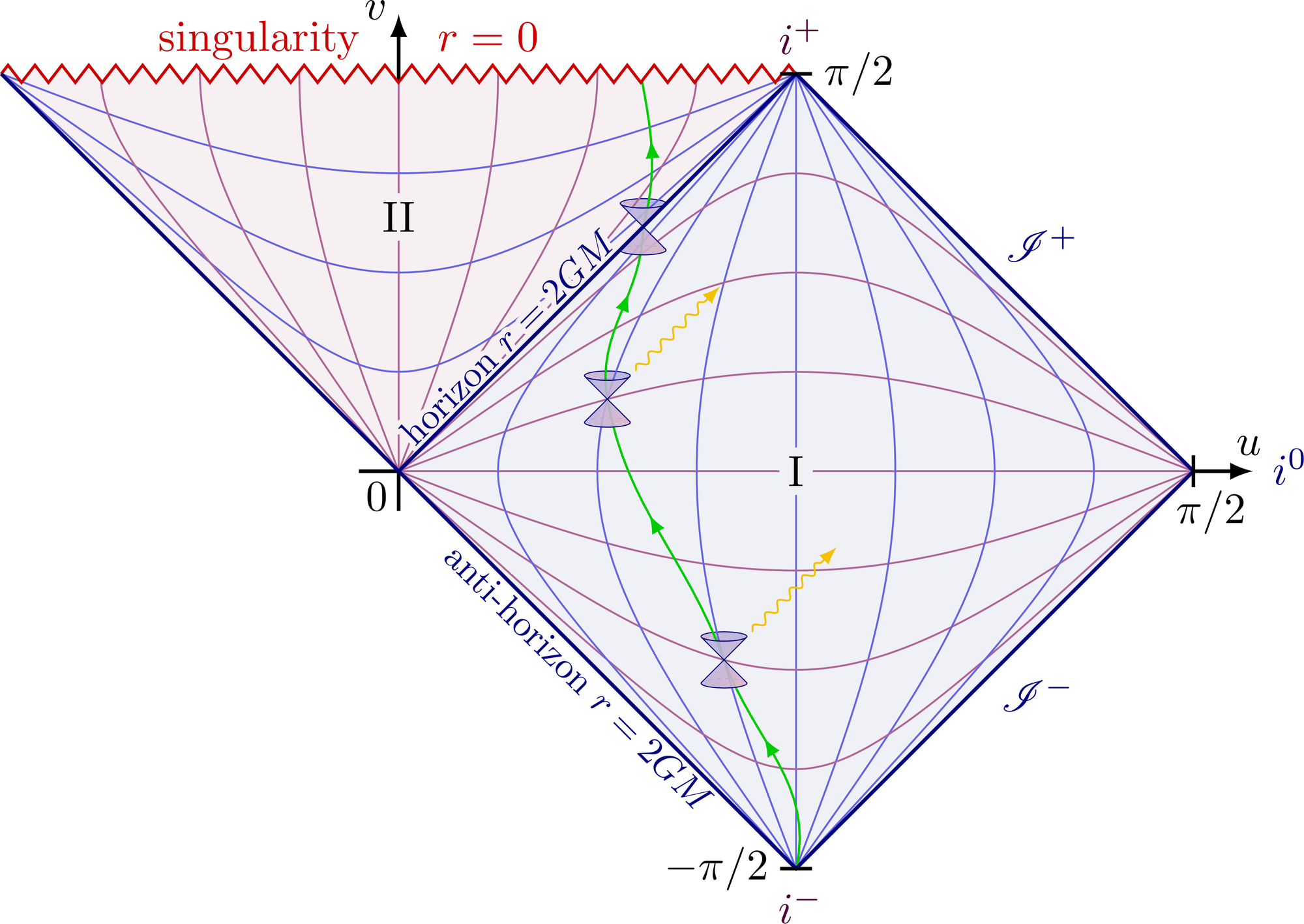
You are close I think! though its not quite that simple IMO. . According to penrose spacetime diagrams the roles of space and time get reversed in a black hole which causes all sorts of wierdness from an interior perspective. Just like the universe has no center, it also has no single singularity pulling everything in unlike a black hole. The universe contains many singularities, a black hole contains one singularity that might connect to many universes depending on how much you buy into the complete penrose diagrams.
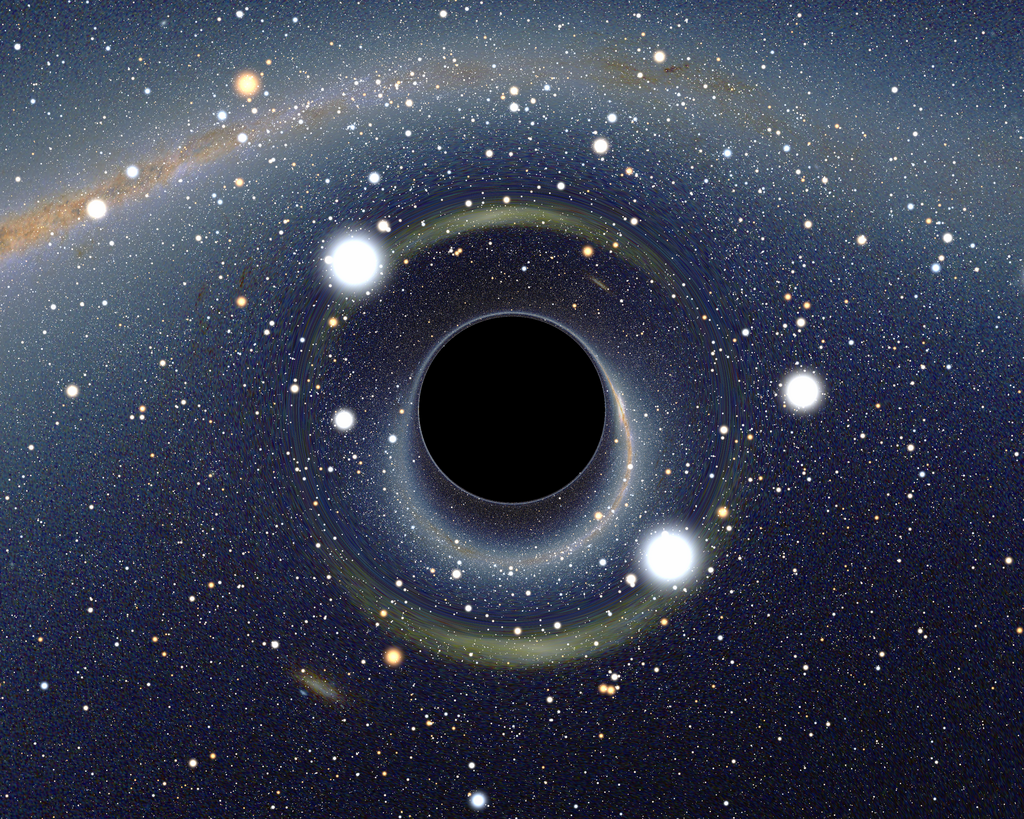
Now heres where it gets interesting. Our observable universe has a hard limit boundary known as the cosmological horizon due to finite speed of light and finite universe lifespan. Its impossible to ever know whats beyond this horizon boundary. similarly,black hole event horizons share this property of not being able to know about the future state of objects that fall inside. A cosmologist would say they are different phenomenon but from an information-theoretic perspective these are fundamentally indistinguishable Riemann manifolds that share a very unique property.
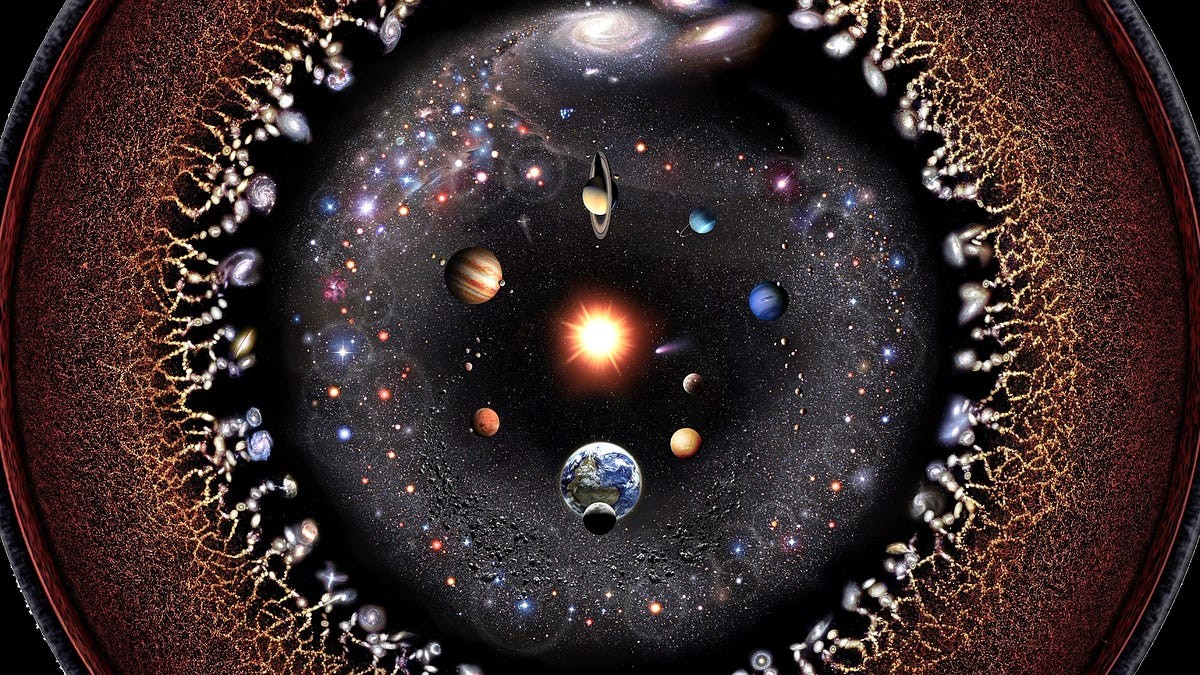
They are geometric physically realized instances of uncomputability which is a direct analog of godelian incompleteness and turing undecidability within the universes computational phase space. The universe is a finite computational system with finite state system representation capacity of about 10^122 microstates according to beckenstein bounds and Planck constant. If an area of spacetime exceeds this amount of potential microstates to represent it gets quarantined in a black hole singularity so the whole system doesnt freeze up trying to compute the uncomputable.
The problem is that the universe can't just throw away all that energy and information due to conservation laws, instead it utilizes something called 'holographic principle' to safely conserve information even if it cant compute with it. Information isn't lost when a thing enters a black hole instead it gets encoded into the topological event horizon boundary itself. in a sense the information is 'pulled' into a higher fractal dimension for efficient encoding. Over time the universe slowly works on safely bleeding out all that energy through hawking radiation.
So say you buy into this logic, assume that the cosmological horizon isn't just some observational limit artifact but an actual topological Riemann manifold made of the same 'stuff' sharing properties with an event horizon, like an inverted black hole where the universe is a kind of anti-singularity which distributes matter everywhere dense as it expands instead of concentrating matter into a single point. what could that mean?
So this holographic principle thing is all about how information in high dimensional topological spaces can be projected down into lower dimensional space. This concept is insanely powerful and is at the forefront of advanced computer modeling of high dimensional spaces. For example, neural networks organize information in high dimensional spaces called activation atlases that have billions and trillions of 'feature dimensions' each representing a kind of relation between two unique states of information.
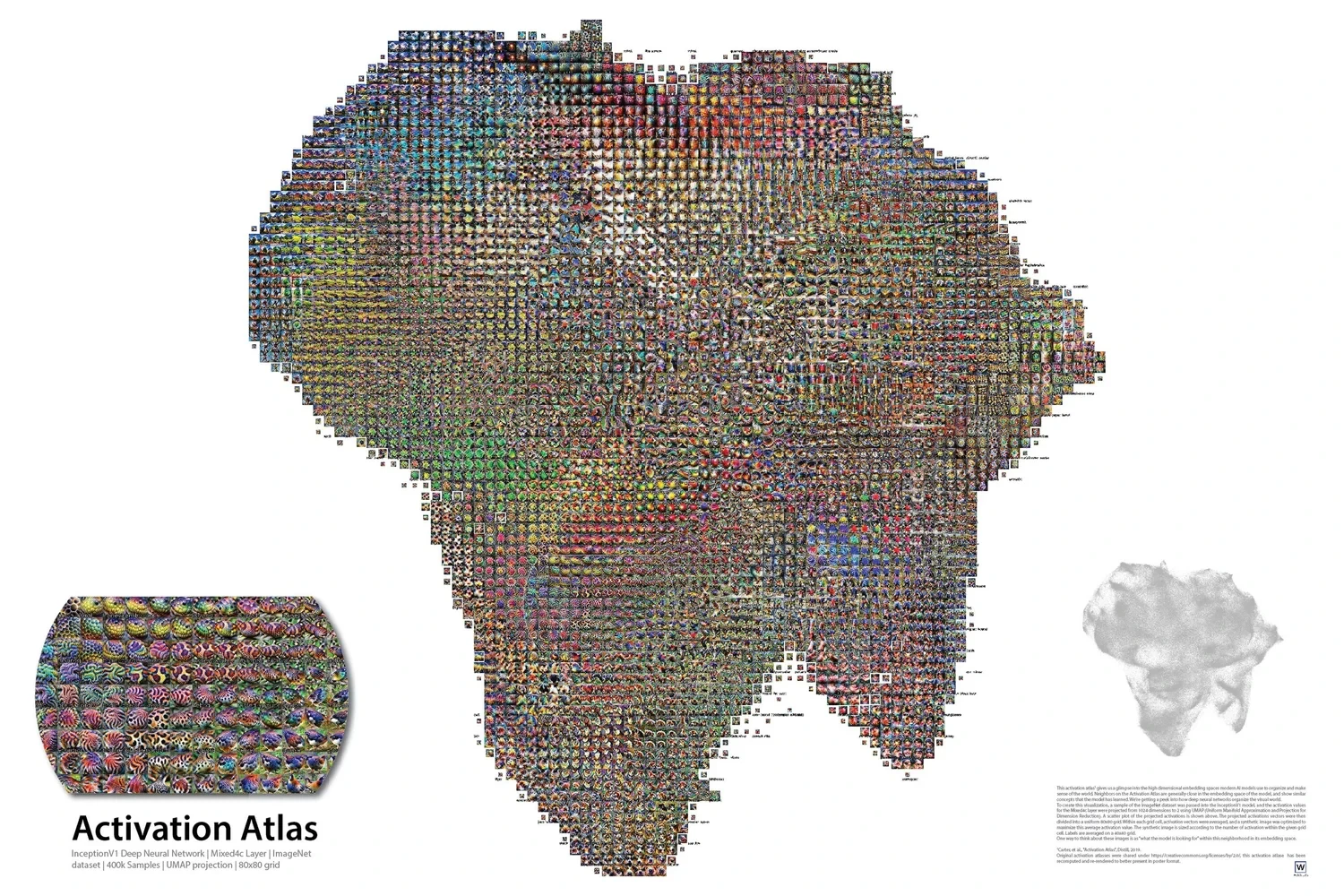
So, what if our physical universe is a lower dimensional holographic projection of the cosmological horizon manifold? What if the unknowable cosmological horizon bubble surrounding our universe is the universes fundimental substrate in its native high dimensional space and our 3D+1T universe perspective is a projection?