1


This article by Alma E. Muñoz and Arturo Sánchez originally appeared in the November 6, 2026 edition of La Jornada, Mexico’s premier left wing daily newspaper.

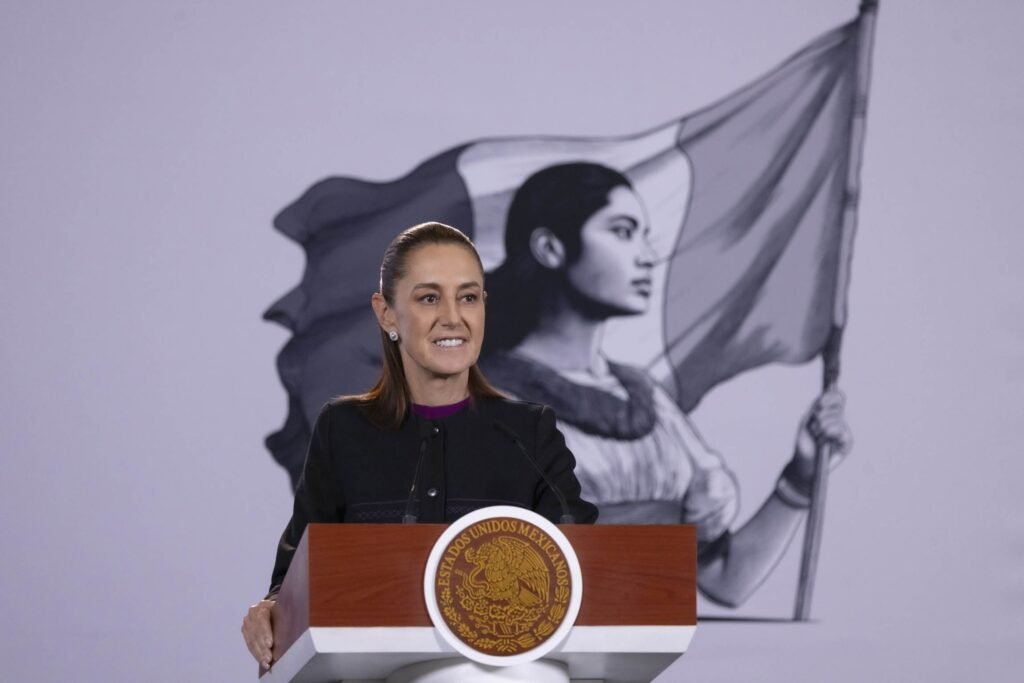
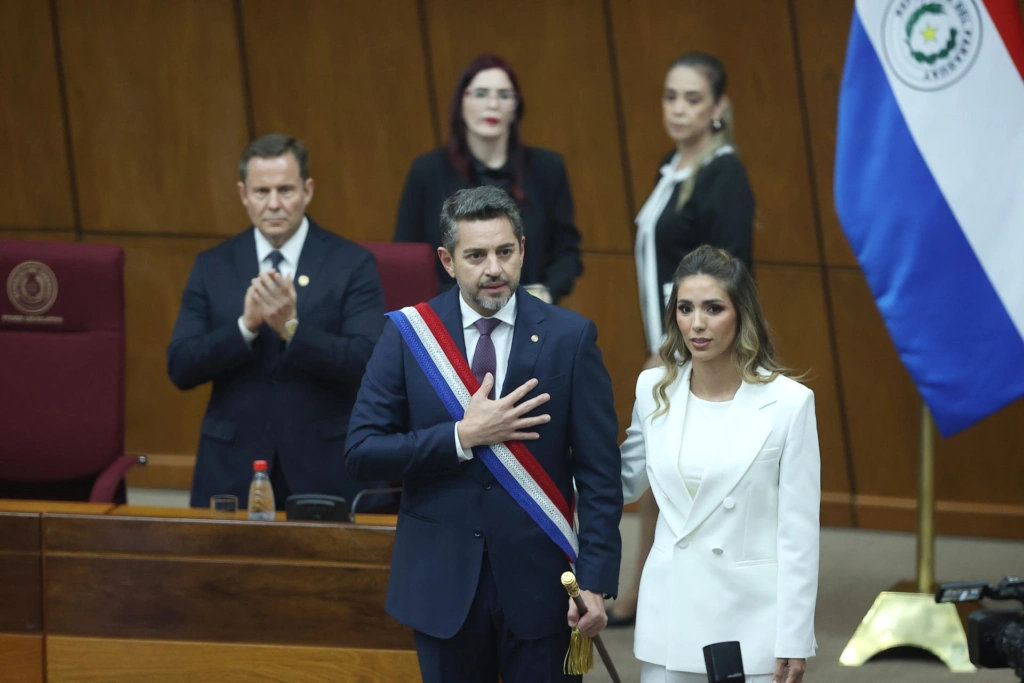
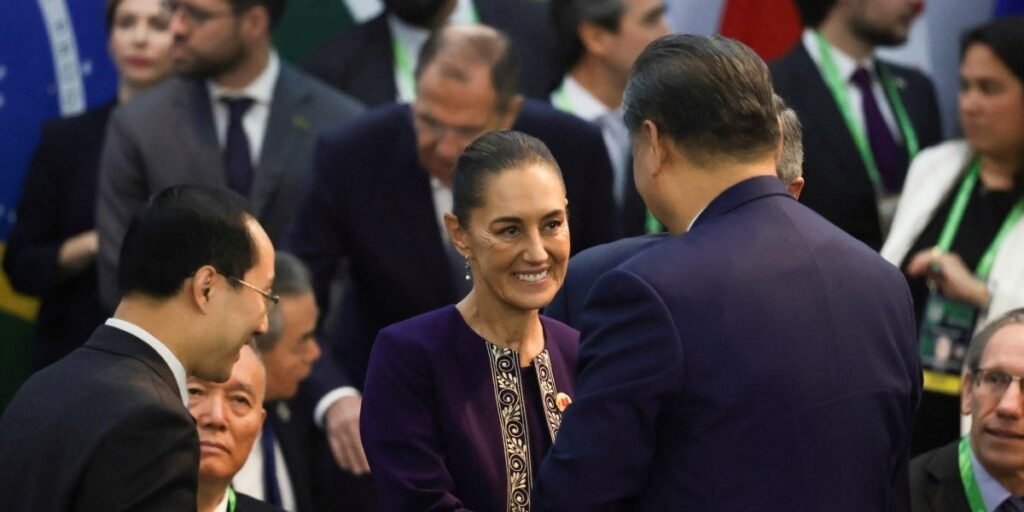
Mexico City. In response to the banking scandal in which the former president of Paraguay, Santiago Peña, finds himself, President Claudia Sheinbaum Pardo highlighted the importance of separating political power from economic power.

“Each one is separate,” she maintained, noting that she will wait to have more information before giving her opinion. The right-wing Santiago Peña resigned yesterday after the banking collapse in that country and an imminent impeachment trial against him.

“But it does seem that the now former president was involved in this bank, and that is the reason why he made the decision to resign,” President Sheinbaum affirmed.

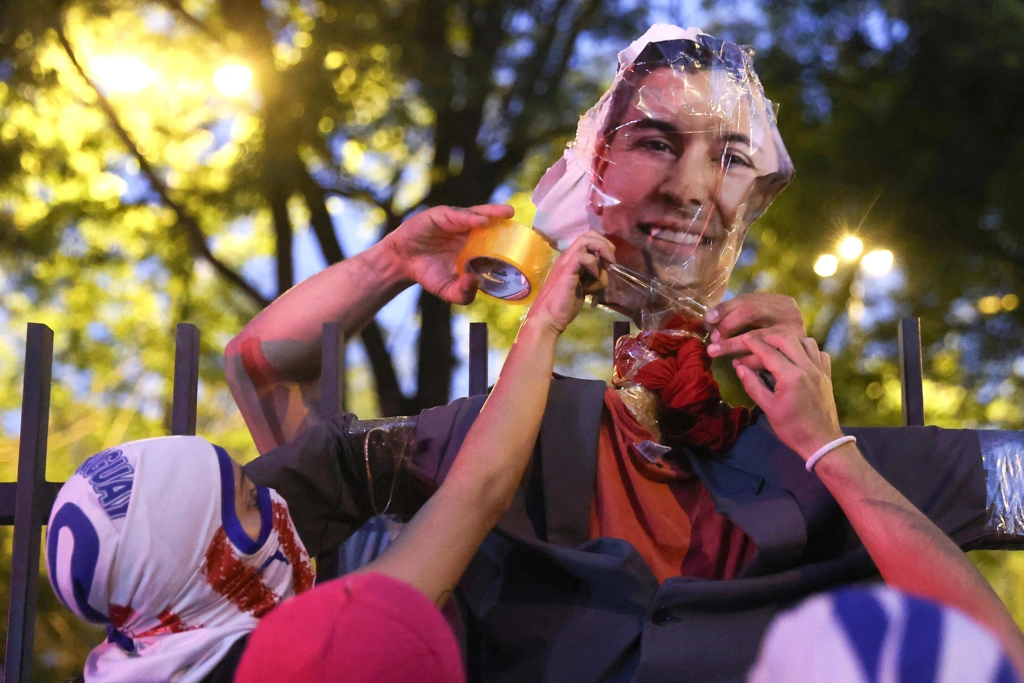
Yesterday, Paraguayan President Peña announced that he was leaving the presidency after the intervention of the Ueno bank, a digital financial institution with which he had ties, which managed some 850 million dollars in public funds and whose closure left three million customers without access to their accounts.

However, that country’s Congress rejected the resignation and will put him on trial.

The post Sheinbaum Stresses Separating Economic and Political Power After Paraguayan President’s Banking Scandal appeared first on Mexico Solidarity Media.


From Mexico Solidarity Media via This RSS Feed.

2


Caracas (OrinocoTribune.com)—On Friday, November 6, Venezuelan officials reopened Washington Square in Caracas, as Acting President Delcy Rodríguez joined a ceremony marking the 250th anniversary of US independence.

The event, along with acting president’s participation, prompted criticism from Chavista commentators, who questioned the tribute to George Washington amid decades of US intervention against Venezuela and the January 3 US military attack that led to the kidnapping of President Nicolás Maduro and First Lady Cilia Flores.

The ceremony had originally been scheduled for July 4 but was postponed after the June 24 double earthquake heavily struck La Guaira state and Caracas.

Reactions
Anti-imperialist outlet Venezuelanalysis criticized the display of US flags and the government rhethoric. “The disgusting proliferation of US flags. Venezuelan Acting President Delcy Rodríguez reinaugurated George Washington Plaza in Caracas (in the middle-class sector of El Paraíso), dropping some celebratory mumbo-jumbo about Washington and how he’s an inspiration,” it wrote.

“And it gets worse, giving US flags to kids to complete the neocolonial indoctrination. If they are too young to play with matches, they are also too young to be exposed to ‘peace diplomacy’ nonsense,” the outlet added.

Other Chavista voices argued that the criticism should also account for the coercive conditions facing Venezuela after the US military aggression, which threatened the country and its political leadership. They described the ceremony as taking place under pressure from a power that had recently bombed Venezuela and kidnapped its president and first lady.

Far-right influencer Eduardo Menoni used the ceremony to attack Chavismo and encourage divisions within the movement. “Chavista humiliation: Delcy Rodríguez paid homage to the US anthem and flag at the reopening of Washington Square…,” he wrote.

The ceremony and the plaza’s restoration
Rodríguez attended alongside Economy and Finance Minister Anabel Pereira Rivas, Economy Vice President Calixto Ortega, Public Works Minister Juan José Ramírez, First Deputy Foreign Minister Yuri Pimentel, and Caracas Mayor Carmen Meléndez.

The US delegation included embassy Chargé d’Affaires John Barrett; Luis Méndez, assistant secretary for South America at the State Department’s Bureau of Western Hemisphere Affairs; James C. O’Brien, senior adviser at the Treasury Department’s Office of International Finance; Andrew Rapp, acting assistant secretary at the Department of Energy; and Juan Pablo Varela, senior adviser at the Office of the Secretary of Energy.

Washington Square, inaugurated in the mid-20th century, is a public gathering place in Caracas and contains a statue of George Washington. Its diminished prominence during Chavismo has been associated with the deterioration of relations caused by US imperialist actions against Venezuelans.

On October 12, Baruta municipality held a ceremony to reopen Plaza Lincoln in the Bello Monte neighborhood. The event was led by US Chargé d’Affaires Barrett and Baruta Mayor Darwin González. Local media reported that a public-space restoration plan also included work on Washington Square, leading some to believe the US Embassy had carried out the renovation. EFE reported that the Venezuelan Ministry for Public Works oversaw the restoration.

The project involved multidisciplinary teams and the renovation of more than 2,400 square meters. The central sculpture, which dates to the 19th century, was also restored.

Rodríguez said the reopening recognized the historical ties between Venezuela and the United States, which mark 191 years of diplomatic relations in 2026. “This reopening of the plaza, a tribute to a leader of independence, a founding father, the first president of the United States, George Washington, is a heartfelt tribute to his leadership, a heartfelt tribute to the historical legacy he left for the United States,” she said.

She noted that new generations should learn about Venezuela’s independence heroes and “recognize the heroes of other nations.” “Simón Bolívar, in his independence and emancipation struggle, also saw a path for the peoples of our America to become independent and sovereign peoples,” she added.

Rodríguez congratulated the US people on the anniversary and reiterated the value of recognizing other nations’ historical figures. “We join in the jubilation of the United States for its 250 years of independence, but also in paying tribute to a founding father like President George Washington,” she said.

Barrett compared Washington and Bolívar, saying: “We should look with pride upon that statue of George Washington, who was our liberator, our leader, very similar to Simón Bolívar.” He also recalled that US Interior Secretary Doug Burgum took part in a ceremony in May to reopen the Simón Bolívar Square in Washington, DC, after its renovation.

The comparison drew criticism from Chavista researcher William Serafino, who cited Washington’s role in the colonial war against Indigenous nations. “They were so alike that look at what the Founding Father said in 1779, in a letter to Major General Sullivan, in the context of the war of colonial expropriation of Indigenous lands (Seneca, Cayuga, and other tribes) that he personally led: ‘The immediate objectives are the total destruction and devastation of their settlements and the capture of as many prisoners as possible of all ages and sexes. It will be essential to ruin their current crops and prevent them from planting more… I would recommend that some post in the center of the Indian Country should be occupied with all expedition, with a sufficient quantity of provision, whence parties should be detached to lay waste all the settlements around with instructions to do it in the most effectual manner, that the country may not be merely overrun but destroyed.’ The similarity between a white settler who massacred Indigenous people and our Liberator is obvious,” he wrote on social media.

Other commentators challenged the comparison by pointing to Bolívar’s antislavery commitments, his emancipation of the enslaved people he inherited—as sole heir of the richest family in the colonial Venezuela—and the poverty in which he died. They contrasted this with Washington’s ownership of enslaved people and his death as a wealthy landowner.

Cira Pascual Marquina: Building International Solidarity From a Venezuelan Commune

Embassy reception
National Assembly President Jorge Rodríguez also attended a formal reception organized by the US Embassy as part of the independence celebrations on Thursday night. He said he had accepted an invitation from Chargé d’Affaires Barrett and expressed support for maintaining cooperation between the two countries.

“The close ties of cooperation between our governments are a fundamental tool for the stability and prosperity of all our people,” Rodríguez wrote.

Special for Orinoco Tribune by staff

OT/JRE/SF


From Orinoco Tribune via This RSS Feed.

3


Shortly after his dismissal, while Alliana was assuming as the new president, Peña was arrested at his home by the National Police of Paraguay and was placed in the custody of the Justice. Photo: EFE.

Paraguay’s National Police announced Friday night that ousted president Santiago Peña is officially detained at his residence, hours after the Senate removed him in a political trial over the Ueno Bank embezzlement scandal.


The arrest came almost immediately after the political rupture that ended his presidency. Peña, 47, had been convicted in absentia for poor performance of duties earlier in the day, with 44 senators voting in favor and only one absent from the chamber.

Prosecutors moved while the political dust was still settling. A team from the Economic Crimes and Anti-Corruption unit, joined by an agent of the Specialized Unit on Cybercrime and Money Laundering, issued the arrest warrant on suspicion of breach of trust and other punishable acts tied to the financial collapse of Ueno Bank.

RELATED: Santiago Peña Removed From Office by Paraguay Senate in Ueno Bank Trial

Peña was placed under detention at his residence. The measure was formalized in Case No. 92/2026, filed under the heading “Santiago Peña on breach of trust and others.” The order went directly to the National Police Command with mandatory compliance, instructing officers to proceed with the capture of the former head of State.

The ruling came from prosecutors Elena Fiore, Christian Benítez and Silvia González Véster, of the Economic Crimes and Anti-Corruption unit, together with Ruth Karina Benítez, an agent of the Specialized Unit on Cybercrime and Money Laundering.

The team is investigating irregularities at Ueno Bank, the institution at the center of the scandal that triggered the case against Peña and, ultimately, his removal from office.

⚡️ Paraguay EX-PRESIDENT Santiago Peña ARRESTED after impeachment https://t.co/FmIljkDhDF pic.twitter.com/IM2zc8uDuJ

— RT Intl (@RT_on_X) November 6, 2026

Detention at Home

The arrest order landed on the same day the Senate convicted Peña in absentia for poor performance of duties. What had been a political process now becomes a criminal one, and the former President faces the possibility of charges far beyond the loss of his office.

Prosecutors determined there were sufficient indications of breach of trust and other offenses to justify the measure. Their instruction to the National Police left no room for discretion: execute the arrest immediately.

A document bearing the letterhead of the Public Ministry requests the police to detain Peña in the breach of trust case. The move transforms the political rupture into a legal reckoning. Peña spent his final days in office trying to resign and claim immunity as a lifetime senator, a maneuver the Congress rejected before convicting him. Now he sits under house detention while the criminal investigation advances.

URGENTE 🔴 Santiago Peña ya está detenido

🔸 Pasará la noche en su domicilio y mañana sábado deberá comparecer ante la Fiscalía a las 11:00.

👉🏼 "Es la medida apropiada ante la situación", indicó la fiscal Silvia González.

🟠 Seguí nuestro canal de Whatsapp:… pic.twitter.com/zOe2zpW6vw

— Monumental AM 1080 (@AM_1080) November 6, 2026

Text reads: “Urgent: Santiago Peña is already in custody. He will spend the night at his home and tomorrow Saturday he must appear before the Prosecutor’s office at 11:00 A.M. “It is the appropriate measure given the situation,” indicated prosecutor Silvia González.”

Assets and Family Ties

The investigation extends into the former President’s declared wealth and his family’s connections to the bank’s corporate structure.

In 2023, Peña declared himself a shareholder of Ueno Holding, valued at 6,144 million guaraníes. Those shares were sold in April 2025. He also declared a certificate of deposit worth 2,400 million guaraníes at Ueno and a bond issued by the company Itti.

The probe also points to family links. Peña’s brother appears as a partner in U Holding SARL, the entity through which the business group allegedly controlled Ueno, according to the case file.

That detail matters because it challenges the former President’s public claim of distance from the bank. Peña had said his investment was in Credi Centro, which later became Ueno Holding, and insisted he had no connection to Ueno Bank itself. The prosecutors’ line of inquiry suggests the corporate web may have been closer than the former president acknowledged.

The detention places Paraguay in uncharted political territory. A sitting President removed by Congress, then arrested the same evening, marks a rupture in the country’s recent history and sends the Ueno scandal into the criminal justice system, where the full accounting of the bank’s collapse may finally emerge.

Ver esta publicación en Instagram

Una publicación compartida de teleSUR English (@telesurenglish)


From teleSUR English via This RSS Feed.

4


By Kim Ives – Nov 4, 2026

On Nov. 2, about 1,000 poor peasants and townspeople living in the scrubby suburbs north of Port-au-Prince marched several miles to demand an end to the violence that foreign mercenaries and troops are raining down on their communities.

Since some 2,000 Salvadoran troops began invading Haiti on Oct. 22, they have concentrated their attacks on the area known as the Plain of Cul de Sac, just northeast of the capital, where three townships, all governed by armed groups, are located: Croix-des-Bouquets, home of the 400 Mawozo headed by Joseph “Lanmò Sanjou” Wilson; Croix-des-Missions, home of Chen Mechan (Mean Dog) of Claudy Célestin, and Canaan (Kanaran in Kreyòl), home of the Taliban headed by Jeff “Gwo Lwa” Larose.

The mostly young marchers danced and chanted to the drums and horns of a rara band and carried dozens of large hand-painted signs in Kreyòl (with a smattering in English and Spanish) with slogans like “Down with violence! Down with foreign intervention!” and “Stop spilling the people’s blood in La Plaine” and “The State, we are tired of counting dead bodies in La Plaine” and “Too many have died from gunshots and drones! Today we need schools, hospitals, water, and security without violence!”

https://haitiliberte.com/wp-content/uploads/2026/11/2026-11-02-Pasteur-Timothee-of-KAD-making-declaration-at-rally-in-Kanaran.mp4

Pastor Timothée, the leader of Canaan Stand Up (KAD), speaking at Nov. 2 rally in Kanaran. “They are killing little babies, pregnant women, paralyzed people, and peaceful citizens.” (CLICK FOR VIDEO)

Teachers from different schools of the three townships organized the march under the banners of Kanaran Debou (Canaan Stand Up) or KAD, a coalition of over 60 local community organizations, and the Grouping of Civil Society Organizations and Sectors (REDORSOP).

https://haitiliberte.com/wp-content/uploads/2026/11/2026-11-02-Elevated-shot-showing-large-size-of-KAD-demonstration-in-Kanaran.mp4

Some 1,000 people marched to demand an end to the violence in La Plaine. (CLICK FOR VIDE0)

“The Core Group [Washington and its allied embassies], under the US Embassy’s direction, has planned and carried out massacres, homicides, and human rights and civil rights violations of La Plaine’s population and all the neighboring zones,” said Pasteur Timothée, KAD’s head and a well-known community leader who was among the thousands of refugees who fled the capital 16 years ago to the flood plain which would later become Canaan after the Jan. 12, 2010 earthquake which leveled much of Port-au-Prince.

https://haitiliberte.com/wp-content/uploads/2026/11/2026-11-02-Madame-Margareth-making-statement-at-march-in-Kanaran.mp4

Madame Margareth, a nurse, teacher, and KAD leader, speaking at the Nov. 2 demonstration. “I’m speaking to the international forces. You know well what is going on here. In good conscience, do you really think you are innocent?” (CLICK FOR VIDEO)

“The La Plaine zone has a civilian population [of 4.7 million] living in it, which cannot move…. They are destroying our houses, children’s schools, churches, businesses, and health centers. They are committing war crimes by the hand of invading nations. They are killing little babies, pregnant women, paralyzed people, and peaceful citizens… We denounce the hidden hand of the Haitian government and the Core Group in the question of La Plaine, as well as all the other invading nations.”

Truly, the death and destruction which has been visited on the poor communities of La Plaine du Cul de Sac is horrific. Haïti Liberté has begun to collect the photos and videos of the many Haitian civilians killed and wounded in La Plaine, as well as the houses, shops, schools, and markets destroyed, in the 11 days between Oct. 23 and Nov. 2. Our journalists are working to get the victims’ names and ages and the circumstances of their deaths.

https://haitiliberte.com/wp-content/uploads/2026/11/2026-11-02-Dead-man-in-green-shirt-hit-by-drone.mp4

https://haitiliberte.com/wp-content/uploads/2026/11/2026-11-02-Wounded-woman-with-yellow-shirt-wounded-by-drone.mp4

Meanwhile, El Salvador’s President Nayib Bukele has made several provocative and likely consciously false pronouncements.

On Oct. 23, the day after his first troops landed, Bukele cast the deployment as a holy war. “All those who have enlisted are believers, and we have entrusted this mission to God,” he wrote on X. “Haiti’s gangs are satanic, and it is public knowledge that they carry out human sacrifices…. God will grant us victory. The Creator of the Universe is with us.”

In short, the Salvadoran soldiers are with God, and the Haitians in their gunsights are with the Devil. It is the oldest trope in the colonial playbook, the same one that US Marines and their propagandists used during the 1915-1934 occupation to paint Haiti’s Vodou-practicing masses as savages to be subdued. It also hands young Salvadoran soldiers, who know nothing of Haiti, its language, or its history, a ready-made license to see the people of La Plaine as less than human.

https://haitiliberte.com/wp-content/uploads/2026/11/2026-11-01-Woman-killed-in-Croix-des-Missions.mp4

https://haitiliberte.com/wp-content/uploads/2026/11/2026-11-01-Young-man-killed-in-Croix-des-Missions-in-recent-days.mp4

Bukele has also sought to calm critics at home and abroad by suggesting that his troops’ stay will be brief. If the four missing technicians are returned alive, he said, “that same day we return from Haiti.” But his other statements tell a different story. On Oct. 29, he promised only that “when our mission ends, we will return home,” without giving any end date. Meanwhile, the force keeps growing: from about 100 special forces on Oct. 22 to some 1,000 by Oct. 27 to over 2,000 by Oct. 28, backed by UH-60 Black Hawk and MD 500E helicopters, with Reuters reporting that the contingent could reach 2,500.

https://haitiliberte.com/wp-content/uploads/2026/11/2026-11-01-Man-with-cap-shot-in-Croix-des-Missions-market-in-recent-days.mp4

https://haitiliberte.com/wp-content/uploads/2026/11/2026-10-30-Man-on-bicycle-with-bag-of-bananas-shot-by-Salvadorans.mp4

Jake Johnston of the Center for Economic and Policy Research (CEPR) called it “a form of long-term deployment.” Nobody ferries 2,000 soldiers and a fleet of helicopters across the Caribbean for a brief stay.

Nor are all of those soldiers the crusading “believers” Bukele describes. “Yes, we have reports that several soldiers had requested discharge just before going to the Haiti mission,” Marvin Reyes of El Salvador’s Police Workers’ Movement (MTP) told Global South World.

https://haitiliberte.com/wp-content/uploads/2026/11/2026-10-31-Man-in-yellow-shirt-on-bicycle-shot-by-Salvadorans.mp4

https://haitiliberte.com/wp-content/uploads/2026/11/2026-10-30-Man-with-mud-on-face-killed-by-Salvadorans.mp4

Their requests were “denied” by the military high command, he said. “The main reason is the risk of losing one’s life.” How many soldiers tried to get out is unknown, Reyes explained, “because this information is classified.” José Edgar Campos, a retired Salvadoran officer, made the rules plain: “no member can refuse” the mission. Even at home, the war’s popularity is thinner than it looks. While a CID Gallup poll found 86% of Salvadorans approving of the “rescue,” 82% said they were worried about the risks to the troops.

https://haitiliberte.com/wp-content/uploads/2026/11/2026-11-01-Burning-street-merchant-stalls-set-ablaze-by-Salvadorans.mp4

https://haitiliberte.com/wp-content/uploads/2026/11/2026-11-01-Commercial-center-blown-up-by-drones.mp4

Then there is the money. “We are practically the only ones paying for this operation,” Bukele said on Oct. 29, claiming that “with our own small budget” El Salvador is covering 90% of the costs and that “nobody is
paying us for this.”

This is very likely untrue. Salvadoran troops were flown into Haiti on C-130 Hercules transports of the US Southern Command and the Colombian Aerospace Force, while the Dominican Republic provided transit, logistics, and intelligence. The Pentagon confirmed sending at least two military aircraft to Port-au-Prince for “logistical support.” When AFP asked how much El Salvador had budgeted, Bukele refused to answer. “All signs point to US support,” Johnston said.

https://haitiliberte.com/wp-content/uploads/2026/11/2026-11-01-Commercial-buildings-blown-up-by-drones.mp4

https://haitiliberte.com/wp-content/uploads/2026/11/2026-11-01-Crater-made-by-drones.mp4

To be sure, Axios reported that Washington turned down Bukele’s request for drones and transport planes, and Donald Trump said “he doesn’t need help” while telling Bukele to “do what you have to do.” But a country that in 2025 had to sign a $1.4 billion loan program with the International Monetary Fund is hardly in a position to bankroll a 2,000-man overseas war on its own “small budget,” and the 90% figure has never been backed up by a single published number.

Most stupefying of all was Bukele’s tweet today, Nov. 3, written in Kreyòl and invoking Jean-Jacques Dessalines, the founding father of Haiti. Of Haiti’s armed groups, he wrote: “Yo pa eritye Dessalines, yo se eritye trèt ki te asasinen l yo e ki te detwi eritaj li” (“They are not Dessalines’ heirs; they are the heirs of the traitors who assassinated him and destroyed his legacy”). “Those traitors still exist in Haiti,” he continued, before calling on Haitians to rise up and promising that El Salvador would help them “take back” their country. “Haiti will be free,” he concluded.

Nayib Bukele has built the world’s largest prison, designed to hold 40,000 prisoners. Is that his vision for Haiti too?

Bukele appears oblivious to who those traitors actually were. Dessalines was ambushed and killed at Pont-Rouge, just north of Port-au-Prince, on Oct. 17, 1806, in a plot whose chief architect was Gen. Alexandre Pétion, the son of a French colonist and a free woman of color. Pétion spoke for the affranchis or anciens libres, the lighter-skinned, propertied class of former free people of color who had inherited much of the colonists’ land and were enraged by Dessalines’ moves to verify land titles and redistribute property to the formerly enslaved. “And the poor Blacks whose fathers are in Africa, will they have nothing?” Dessalines famously asked.

El Salvador’s President Bukele Launches Illegal War in Haiti, with the Support of Dominican Troops

Those “poor Blacks” were the bossales, the African-born captives who made up the bulk of the revolutionary army. Their descendants, Haiti’s peasants and urban poor, are still called pitit Desalin, Dessalines’ children. The bourgeoisie, by contrast, is commonly known in Haiti as pitit Petyon, Pétion’s children, and its wealthiest hillside enclave above the capital still bears his name: Pétion-Ville.

So Bukele has turned history on its head. The proletarian and lumpenproletarian armed groups of Croix-des-Bouquets, Canaan, and the slums of Port-au-Prince, whatever their crimes, are recruited from the children of Dessalines. It is the bourgeoisie, Pétion’s children, along with their masters in Washington, that Bukele has allied himself with. Even his own tweet concedes that some Haitians “finance the gangs or give them weapons.” But his helicopters are not circling over the villas of Pétion-Ville. They are firing on the shacks, schools, and markets of La Plaine.

Jean-Jacques Dessalines (left) was the champion of Haiti’s former slaves, and Alexander Pétion was the champion of Haiti’s freedmen or affranchis.

That brings us back to the 1,000 marchers who danced behind a rara band on Nov. 2, carrying signs that said “Too many have died from gunshots and drones!” The Haitian diaspora group UNA-Haiti has denounced Salvadoran operations for “causing the death of innocent civilians, including children,” while Bukele and the Gang Suppression Force (GSF) deny using bombs or explosives at all. Doctors Without Borders treated 30 civilians wounded by gunfire or explosions in Port-au-Prince between Oct. 18 and 26 alone.

https://haitiliberte.com/wp-content/uploads/2026/11/2026-11-02-Kad-demonstration-coming-through-Kanaran-with-Madame-Margareth-speaking-in-bullhorn.mp4

The people of La Plaine are poor and want schools, hospitals, sanitation, electricity, and peace, not violence meted out by foreign soldiers with guns, bombs, and drones. (CLICK FOR VIDEO)

Bukele says his war is God’s war and that Haiti “will be free.” But for the families of La Plaine du Cul de Sac, who cannot flee and are counting their dead, the Salvadoran invasion has brought not freedom but terror. As Pasteur Timothée put it, these are “war crimes by the hand of invading nations.” The children of Dessalines are marching against them.

(Haiti Liberte)


From Orinoco Tribune via This RSS Feed.

5


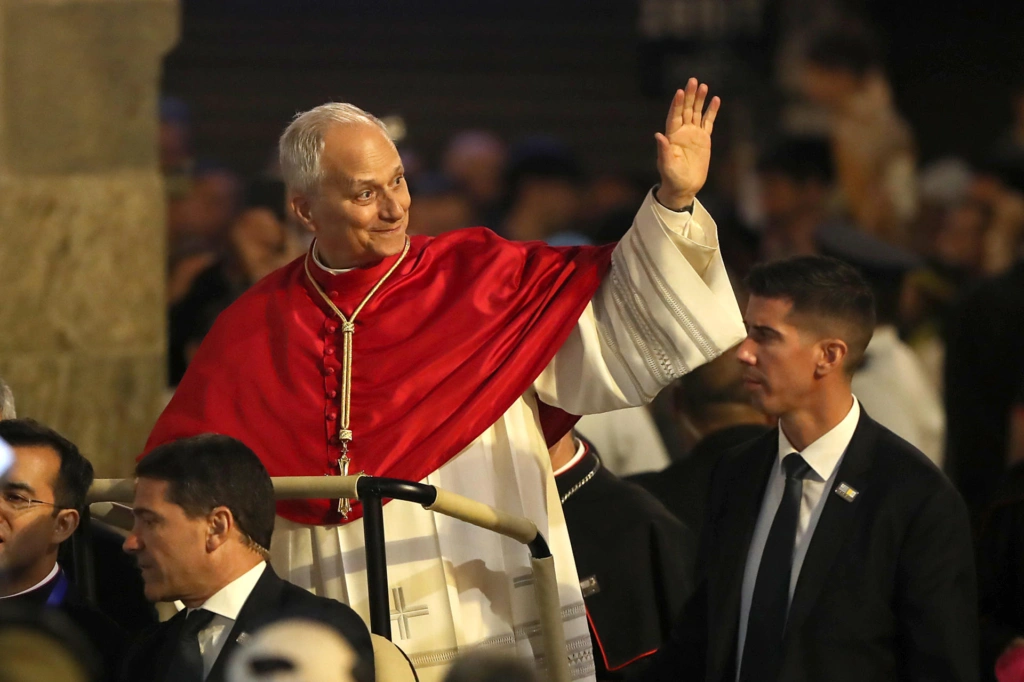
Pope Leo XIV arrived in Montevideo on Friday, launching his first apostolic tour of Latin America with a journey that will carry him through Uruguay, Argentina and Peru over the coming week.


Pope Leo XIV chose Uruguay for the opening act of his first Latin American journey, delivering a message that placed negotiation and legal respect above confrontation.

Speaking Friday from Plaza Independencia, before civil society representatives, the diplomatic corps and local authorities, he presented the small South American nation as a model for a region where divisions can harden quickly.

RELATED: Pope Leo XIV Demands End to Yemen Hostilities in Urgent Peace Appeal

Uruguay’s Constitution commits the country to promoting international understanding, and the Pontiff connected that founding principle to the nation’s present conduct. The fact that Montevideo serves as the seat of the MERCOSUR Secretariat, he said, “gives particular concreteness to that vocation of fostering spaces of understanding and cooperation in the region.”

His central appeal was unmistakable. “In times when differences can easily become a cause of confrontation, persevering in respect for the law, in negotiation and in the patient search for agreements is a service that Uruguay can continue to offer its neighbors,” Pope Leo declared.

The reference to MERCOSUR carried considerable weight. As the headquarters of South America’s main integration bloc, Montevideo sits at the center of the continent’s trade and diplomatic architecture, a position the Pope framed as both legacy and responsibility.

Ver esta publicación en Instagram

Una publicación compartida de teleSUR English (@telesurenglish)

Dialogue and Consensus

President Yamandú Orsi received the pontiff at Carrasco International Airport after his arrival at 4:20 P
.M. local time aboard an Ita Airways flight from Rome. The two leaders then held a private meeting following the official welcome ceremony.

Orsi highlighted Uruguay’s secular tradition, its democratic institutions and the diversity of convictions within its society. He thanked the Holy See for its posture on human rights and the defense of human dignity.

“We share and accompany your unwavering stance in favor of the peaceful resolution of conflicts. Our commitment to dialogue and consensus, which governs our attitude at home, is what Uruguayans always promote in international organizations,” the Uruguayan President said.

He went further, warning that “scenarios of violence and wars between peoples are not created overnight” but are rather “climates that are prepared and fostered through disinformation and fears.” Governments, he stressed, carry the obligation to propose alternative forms of engagement.

The ceremony gathered three former Presidents, Julio María Sanguinetti, Luis Lacalle Herrera and Luis Lacalle Pou, as well as community organizations and a large musical delegation. The National Choir contributed 65 voices, the National Youth Choir 40, the National Children’s Choir another 40, and some 100 musicians from the National Youth Orchestra performed.

As an institutional gift reflecting the country’s rural traditions, the Uruguayan State presented the Pope with a handwoven wool blanket and riding gear. Pope Leo also received the keys to Montevideo and later met with bishops, priests, deacons, religious and seminarians at the Metropolitan Cathedral.

Ver esta publicación en Instagram

Una publicación compartida de teleSUR English (@telesurenglish)

The visit opens a 12-day journey across Latin America, the first of Leo XIV’s papacy. With his emphasis on negotiation, legal respect and patient consensus-building, the pontiff has signaled the tone he intends to sustain as he travels through the region, Uruguay offered as the example others might follow.

Argentina, Then Peru

In Argentina the itinerary carries political weight. The Pope will meet President Javier Milei at the Government’s House and deliver a speech to national authorities on social justice.

The Argentine program includes a stop at the Don Orione Cottolengo, activities at the Federal Penitentiary Complex, meetings with labor sectors, and liturgies in Córdoba and at the Luján Sanctuary.

On Wednesday, November 11, Pope Leo XIV flies to Lima for what organizers describe as the most significant leg of the tour. The trip marks an emotional return for Robert Prevost, the pontiff’s birth name. He arrived in Peru in 1985 as an Augustinian missionary and served as bishop of Chiclayo for eight years before Pope Francis called him to the Vatican.

In the Andean nation he will lead large events at the National Grand Theater and the National Stadium in Lima, and hold meetings with church communities in Chiclayo and Zaña. The itinerary also reaches Cusco, where he will pray the Angelus at Saqsaywaman.

The final stretch takes him into the Peruvian Amazon, to the city of Pucallpa, for encounters with native people and missionaries. It is a fitting close for a trip built around a return to the region where his ministry began four decades ago.

Ver esta publicación en Instagram

Una publicación compartida de teleSUR English (@telesurenglish)


From teleSUR English via This RSS Feed.

6


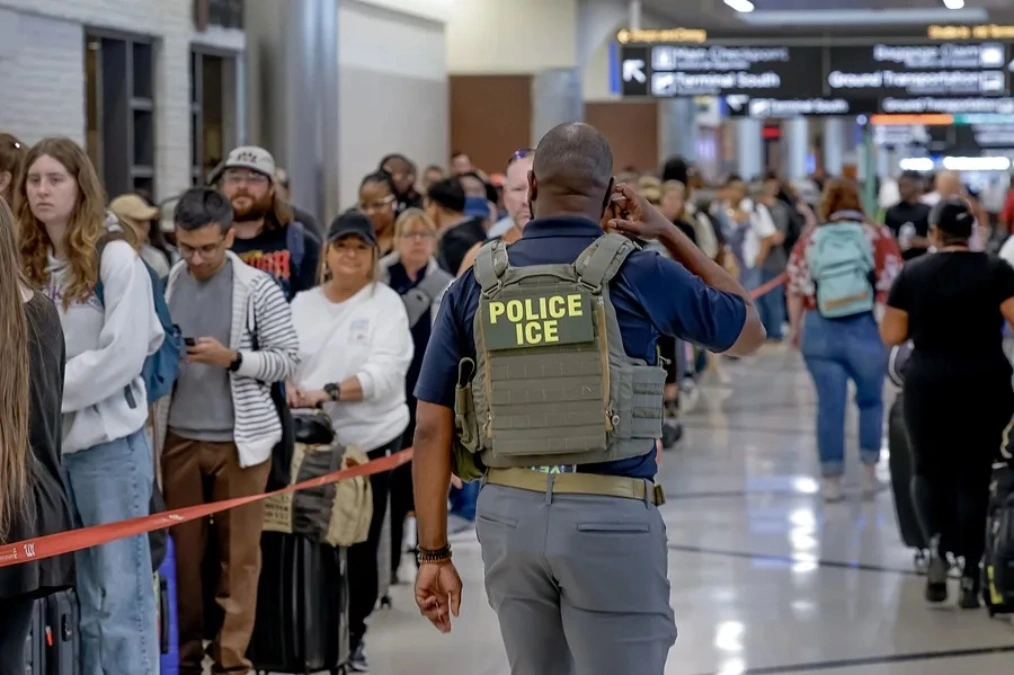
Puerto Rico lawmakers call for ICE elimination after immigration raids in San Juan, Puerto Rico.

Three congressional Democrats call for the agency’s elimination following immigration raids, including an operation at a San Juan church.


Three Democratic lawmakers called for the elimination of U.S. Immigration and Customs Enforcement (ICE) and its removal from Puerto Rico on Friday, condemning the agency’s immigration raids and demanding an end to its operations on the island. The call came two days after federal agents carried out an operation at a Catholic church in San Juan, which several organizations denounced.

RELATED: Venezuelan Migrant Dies in ICE Custody

U.S. Representatives Nydia Velázquez and Adriano Espaillat, along with Puerto Rico’s Resident Commissioner in Washington, Pablo José Hernández, made the demand at a news conference in San Juan, citing the negative impact of ICE enforcement on the island’s immigrant communities.

Velázquez, a veteran Democratic congresswoman, said the agency should be dismantled rather than reformed.

“We have reached a point where we should not even consider reforms. What needs to happen is for ICE to be removed from the jurisdiction of Homeland Security and eliminated as an agency,” she said.

🚨 Nueva York amenaza con demandar a la Administración Trump si el ICE usa espacios públicos como base de redadas. Un agente disparó en el cuello a Oscar Belgal, de 28 años, ante su hijo de cinco en El Bronx. #teleSUR #05Nov #ICE #inmigracion #eeuu pic.twitter.com/96uakbW7Iz

— teleSUR TV (@teleSURtv) November 5, 2026

Text Reads: 🚨 New York threatens to sue the Trump administration if ICE uses public spaces as a base for raids. An agent shot 28-year-old Oscar Belgal in the neck in front of his five-year-old son in the Bronx.

Espaillat, who chairs the Congressional Hispanic Caucus, also called for ICE’s abolition, accusing the agency of operating without adequate training and engaging in violence.

“ICE must be eliminated,” he said, describing the agency as “completely out of control.”

He also criticized agents’ conduct, citing their disputed records, use of long guns and alleged killings.

Hernández outlined safeguards for any agency that might replace ICE, including a ban on officers wearing masks, mandatory body cameras, restrictions on enforcement in sensitive locations and an end to the use of long guns.

“I support the position that ICE cannot be reformed and must be eliminated. The agencies that replace it should operate humanely and responsibly and respect human rights,” he said.

The lawmakers’ demands come amid growing uncertainty in Puerto Rico’s immigrant communities over immigration enforcement under U.S. President Donald Trump.

Since early 2025, raids ordered by the Trump administration have resulted in thousands of arrests and deportations, fueling fear in neighborhoods with large immigrant populations.

The recent operation at a Catholic church in San Juan further intensified criticism of the agency.

Velázquez also criticized Puerto Rico Governor Jenniffer González, a Trump supporter, for agreeing to provide federal authorities with confidential information on approximately 6,321 migrants to facilitate immigration raids on the island.

The congresswoman warned that the disclosure could have consequences beyond immigration enforcement, particularly for access to public services.

“That also puts Puerto Rico’s public health at risk, because people will be afraid to go to a hospital, and children will be afraid to go to school,” she said.

According to the Puerto Rico Statistics Institute, approximately 60,000 Dominicans live on the island, which has a population of just over three million.

The lawmakers’ demand for ICE’s elimination follows months of immigration enforcement operations in Puerto Rico and renewed criticism of the agency’s conduct. Their call comes as immigrant communities face continued uncertainty over raids, arrests and deportations.


From teleSUR English via This RSS Feed.

7
People’s Mañanera November 6 (mexicosolidarity.com)
submitted 4 hours ago by [B] to c/latam@news.abolish.capital


Every day, President Claudia Sheinbaum gives a morning presidential press conference and Mexico Solidarity Media posts English language summaries, translated by Mexico Solidarity’s Pedro Gellert. Previous press conference summaries are available here.

Reforming the INE: Oligopoly, Ties to Somos, and Zero Cover-ups“Perhaps they said, ‘Don’t touch the INE,’ to protect this entire electoral mafia that was built with their help,” President Claudia Sheinbaum said. She criticized former National Electoral Institute (INE) president Lorenzo Córdova for recognizing and maintaining the oligopoly for nine years without breaking up the concentration of power, and pointed to transactions totalling more than 2 billion pesos (US$110 million). Sheinbaum maintained that the Hernández Casillas brothers were groomed by a former Center for Investigation and National Security (CISEN) official linked to the new political party Somos, rejected the claim that the contractors were unknown, and questioned the organization’s attempts to distance itself from the scandal. The President also recalled Edmundo Jacobo’s 15-year stint in the INE and his reluctance to step down from his post.

Sheinbaum noted that the 2014 Pact for Mexico empowered 11 INE board members to appoint state electoral authorities and called for an investigation into a business network with ties to the Secretariat of Governance. She called for audits, transparent contracting, and lower costs leading up to 2027, leaving the Federal Superior Audit Department (ASF) and the state attorney general’s offices responsible for defining legal actions.

The President also announced a decree to strengthen Talleres Gráficos, with university oversight and participation. In response to Somos’s demands, she stated that “I stand by my words. I maintain them. Because I have proof of everything.”

Fox Confirms Interference Against AMLO in 2006; the PAN Now Distances Itself“When we denounced the fraud in 2006, they called us crazy,” the President recalled. She maintained that Fox validated the movement by acknowledging his intervention in favor of Felipe Calderón’s presidential bid and highlighted the PAN’s distancing itself from him following his statements. Sheinbaum defended the “vote-by-vote” recount and criticized the actions of the Federal Electoral Institute (IFE) and the Electoral Tribunal. She questioned talk of the “greatest electoral crisis” while omitting 2006 and the vote-buying in 2012.

Voces Vivas and Original: Pride in Our Roots and Dignified Artisanal Work“Voces Vivas,” a concert featuring 1,000 children and young people performing in 17 indigenous languages, will take place on November 7 in the Zócalo, and “Original,” a textile and artisanal arts fair with 580 creators, will be held from November 12 to 15 at Los Pinos. Both events celebrate and honor Mexico’s culture.


The post People’s Mañanera November 6 appeared first on Mexico Solidarity Media.


From Mexico Solidarity Media via This RSS Feed.

8


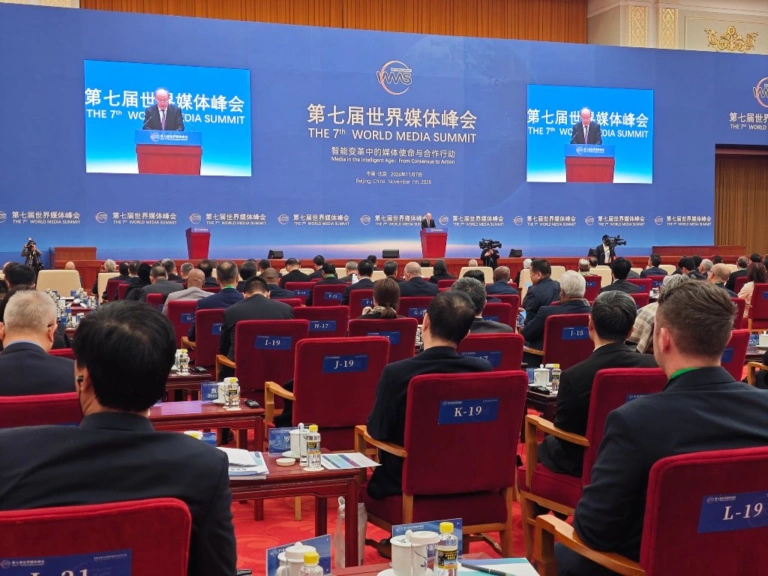
Delegates attend the 2026 World Media Summit in Beijing to discuss artificial intelligence, global journalism and international media cooperation.

Around 500 delegates from 112 countries discuss artificial intelligence, misinformation and international media cooperation.


The 7th World Media Summit opened in Beijing on Friday, bringing together around 500 delegates from approximately 330 media organizations, think tanks and institutions across 112 countries to discuss artificial intelligence, misinformation and the future of global communication.

RELATED: China and Oman Sign Historic Bilateral Deals After Beijing Summit

Hosted by China’s Xinhua News Agency and the Beijing municipal government, the summit comes as artificial intelligence reshapes media production and raises questions about technological access, information governance and international cooperation.

Representatives from Cuba’s Prensa Latina, Juventud Rebelde and Ideas Multimedios, as well as Venezuela’s teleSUR, are among the participants. Delegations also include Iraqi Media Network, Japanese media organizations and representatives from several Gulf countries.

Discussions focus on developing AI applications for newsrooms, sharing technological resources and narrowing the digital divide between developed countries and the Global South, which has historically had limited control over digital platforms, satellites, cables and algorithms.

Delegates are also examining how media organizations can strengthen international cooperation through information sharing, fact-checking and efforts to counter misinformation.

AI governance is another central theme, with participants discussing algorithmic transparency, data security, content traceability and the development of international standards for the technology.

The summit also explores how emerging technologies can foster dialogue between civilizations, preserve cultural diversity and strengthen exchanges among peoples.

Organizers have highlighted the role of media in promoting a safer international environment through information sharing, verification and cooperation against disinformation.

The gathering coincides with the 95th anniversary of Xinhua’s founding. Its agenda also includes presentations on China’s modernization, focusing on Beijing’s urban development, heritage preservation and green growth.

Expected outcomes include the Beijing Consensus of the 7th World Media Summit, the 2026 report on artificial intelligence and global media development, the launch of a biomimetic humanoid presenter and the Xinhua Dictionary AI Agent. Organizers also plan to launch a Global Media Initiative aimed at establishing common standards for artificial intelligence.


From teleSUR English via This RSS Feed.

9


This article by Arturo Sánchez Jiménez and Alma E. Muñoz originally appeared in the November 6, 2026 edition of La Jornada, Mexico’s premier left wing daily newspaper.

Mexico City. The murder of Gabriel Rivas Ríos, Morena councilman in Cuernavaca and environmental defender, was “a homicide ordered and directed against him,” President Claudia Sheinbaum Pardo affirmed this Friday, who, in condemning the crime, maintained that the investigation must reach not only the material killers, but also “whoever ordered this homicide.”

At her morning press conference at the National Palace, the head of the Executive said she knew Rivas Ríos and recalled that he had recently denounced a real estate development in an area of Cuernavaca that “could have environmental problems and was not suitable to be there.” She called the crime “sad, outrageous.”

She detailed that, as soon as the homicide became known, she asked the Security Cabinet to support the Morelos prosecutor’s office in the investigations. “It was a direct homicide, some people on a motorcycle shot him directly,” she recounted. She added that she will work with Governor Margarita González Saravia to review what can be done about the project the councilman was fighting against.

Questioned about the effectiveness of the protection mechanisms for journalists and defenders of human rights and the environment, she asserted that many environmental activists have federal protection, which prevents them from reaching “a situation like this one.” However, she specified that Rivas Ríos had not requested any protection. “That does not mean we do not condemn the homicide,” she noted.

Questioned about whether there is impunity regarding the attacks on and murders of environmental defenders, she acknowledged that “there are cases that have not been solved,” although she maintained that in many others there are results. She announced that she will ask the Secretary of Governance, Rosa Icela Rodríguez, to meet with groups defending nature “to be able to see what more we can do.”

Rivas Ríos, a founder of Morena, was shot to death on Wednesday afternoon in Acapantzingo, a neighborhood in the southeast of the Morelos capital.

The post Sheinbaum Says Murder of Cuernavaca Morena Councilman Gabriel Rivas Was Ordered appeared first on Mexico Solidarity Media.


From Mexico Solidarity Media via This RSS Feed.

10


By Craig Murray – Nov 5, 2026

It was a remarkably mild early November morning at 6 a.m. as I left the Chelsea Cloisters hotel to get the tube to Westminster and the Supreme Court. I had been worried because I had forgotten to pack my thermal underwear.

I had queued overnight for the Assange hearings, the Salmond trial, and the ICJ Genocide case—the latter in minus 5 degrees at The Hague—and thermals were an essential part of the kit. On the first night for the Assange hearings, at Woolwich Crown Court, I stood for seven hours in freezing drizzle with Patrick Henningsen and Randy Credico. Immediately that first day in court finished, I headed to Mountain Warehouse to buy a large, warm, waterproof jacket.

I found the one I wanted, which was on sale, and tried it on. I then took it to the counter and explained to the young lady that it was labeled XXL, but I couldn’t get the zip to do up. She looked at me coolly and replied, “Fat people don’t climb mountains.”

My ego somehow survived, and now as I approached the Supreme Court I saw the flashing orange lights of three trucks parked outside, and heard the ringing metallic sound of crews putting up metal crowd barriers around the building. I had slightly worried I was late for the queue, but there was only one tall young man sitting on the benches outside. He was a journalism student from City University, and neither of us having anything else to do, he interviewed me.

There were three men in sleeping bags along the front of the court building, one right across the door. We speculated as to whether they were part of the queue or simply homeless. As barriers were clamped into place behind us, we worried where the front of the queue was meant to be. I approached the man wearing a Hi-Vis jacket, who looked in charge. He had long hair and a beard and a friendly, open face. He wore a builder’s helmet, presumably in case the Supreme Court somehow fell on top of him.

“Do you know what the system is for installing these barriers?” I asked.

“I’d be pretty bad at my job if I didn’t,” he replied.

I explained we were the queue. He laughed and said we were fine where we were. About five minutes later the crew left with two-and-three-quarter trucks still full of barriers, presumably to cordon off somewhere else. Their work was inexplicably pointless—they had pit barriers up against an existing wall, with others randomly dotted on the pavement, and left a thirty-yard gap anybody could walk past to the court on the west side.

I pointed out to Tony this seemed strangely pointless and he said its purpose might become clear later. It didn’t.
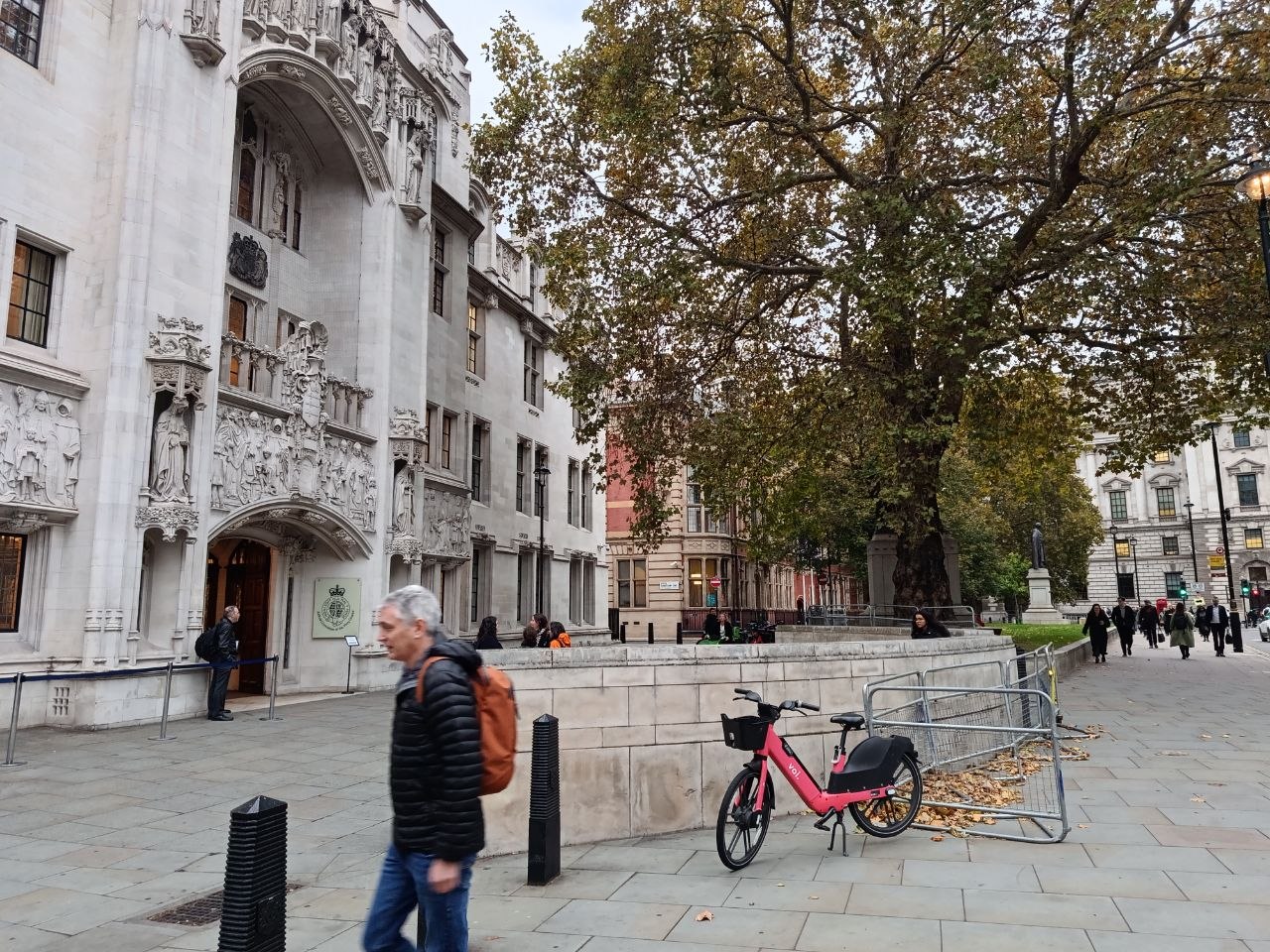
His name, incidentally, probably wasn’t Tony. I introduced myself but he didn’t volunteer a name so I didn’t press him.

At 7:30 a.m. a young lady arrived. She was pleasant and joined our conversation, but again did not give her name. She worked for a Westminster lobbying company, so I would assume was in the Israeli interest. It was 8:45 a.m. before a real queue began to gather. Public information had been that doors would open at 9 a.m., and they did—but we were kept standing outside until after 10 a.m.

There was then a great disappointment as an official arrived and told us no members of the public would be admitted to the courtroom. Court No. 1, he explained, has no public gallery and all the rows of benches would be fully occupied by the legal teams. The public would be allowed into an overspill Court No. 3, where screens were set up.

This was very annoying. It was also later plainly observable on the screens that the official explanation of no seats being available was untrue. Exactly the same thing had happened at the High Court hearing. I have no doubt that “security” was the motivation, and having designated Palestine Action supporters as terrorists, they were determined to treat any of the public interested in the case as potential terrorists.

The building is a very late flowering of Victorian medieval revivalist architecture and was originally Middlesex County Council. When the Supreme Court was established a quarter century ago, it was converted to the purpose, the county of Middlesex itself having essentially already been abolished.

It is rather a good building, which is important as a close neighbor to Westminster Abbey. Unfortunately the principle of open justice had not been applied in its conversion to the creation of public galleries.

Today was the last gasp of the UK legal system in challenging the legality of the proscription of Palestine Action, in the case brought by its founder Huda Ammori. This judicial review had proceeded through the High Court, which found the proscription unlawful, and the Appeal Court, which found it lawful.

As the process went through these courts, the grounds for permitted appeal were whittled down until only one was allowed: whether the effect of the proscription on Article X and XI rights (freedom of speech and freedom of assembly) were disproportionate in terms of what was necessary to protect the public from the terrorist organization.

Articles X and XI are from the European Convention on Human Rights, enshrined into UK law by the Human Rights Act.

In the Supreme Court they do not wear old horsehair wigs and gowns, including the judges. This felt rather strange, as such costume had been worn at all the prior stages. The five judges were situated on a curved dais, with the lines of lawyers below them.
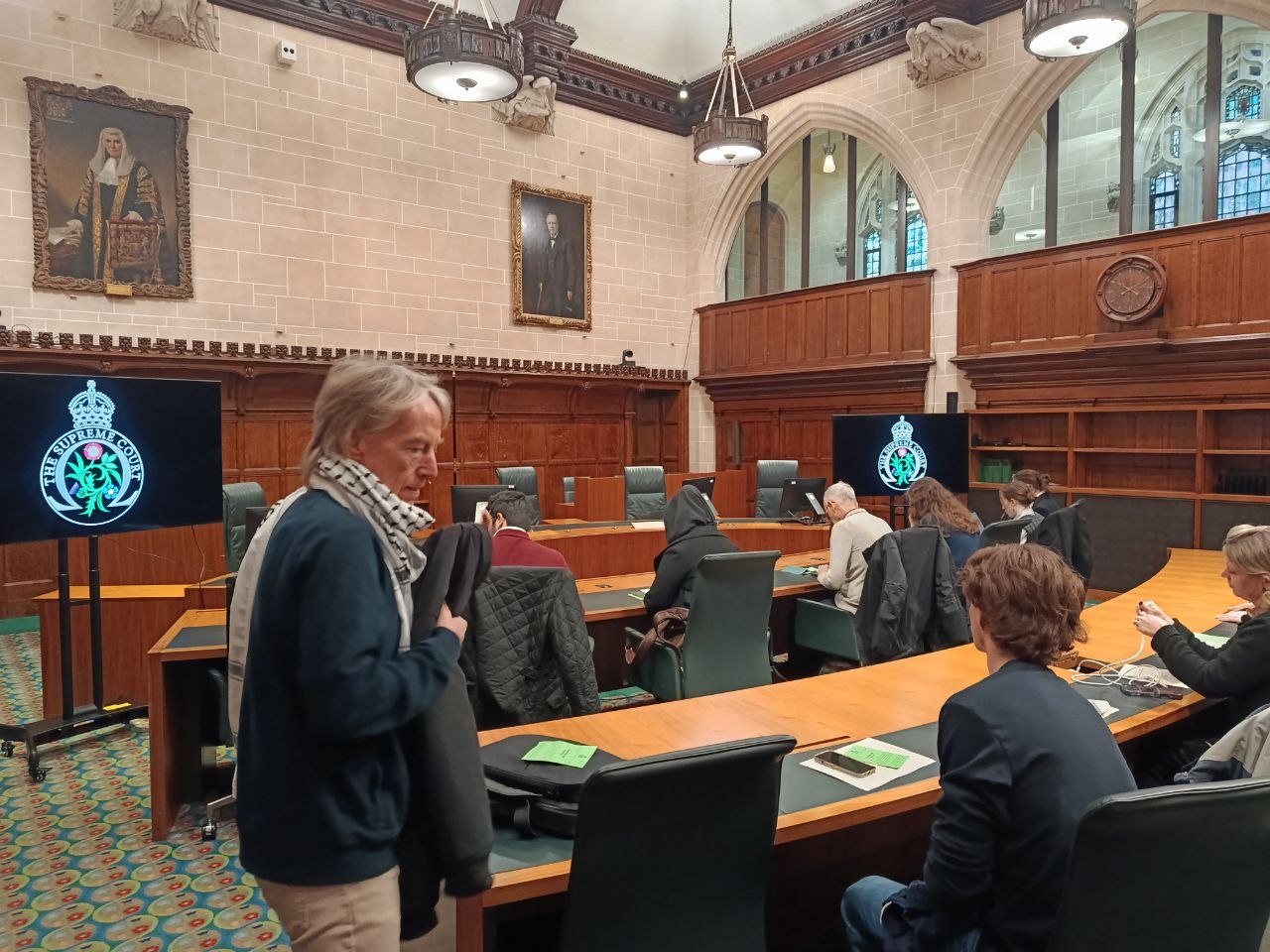
The public were only allowed in courtroom 3.

One problem with not being in the real courtroom was that, every time a judge spoke, the camera immediately cut to that judge in close up. The judges all looked extremely similar—white men aged about sixty in suits and ties. It was very difficult to tell in close-up which judge was which. Some of the identifications in this account are therefore almost certainly wrong, but not deliberate.

When you think about it, in our diverse society the difficulty of telling Supreme Court judges physically apart is a problem.

Raza Hussain KC opened for Huda Ammori. Raza seemed a much more imposing figure without his wig and gown, and spoke with a force and fluency that I had not really seen in full flow in the earlier hearings.

His first point may have been excellent but as the screens in Court No. 3 had no sound for the first five minutes I did not catch it. We therefore join him at point number 2.

  1. Hussain said that Palestine Action was not a terrorist group, but a protest group that takes direct action. He said it could only be caught by stretching the outer limits of the definition of terrorism in the Terrorism Act, a definition which the Supreme Court had already described in an earlier case as “striking in its breadth.”

  2. Hussain said that according to the Home Secretary herself, the vast majority of Palestine Action’s activities did not fall within the definition of terrorism. Only 3 actions out of 385 were so described. Yet these three were used to make all fall as terrorism.

  3. Unlike other proscribed organizations, the objectives of Palestine Action were in line with the principles of liberal democracy. They simply wished to impede genocide and war crimes.

  4. Contrary to the Appeal Court judgment, Palestine Action did fall within the tradition of other direct action groups, such as the suffragettes, and environmentalist and animal rights groups, which were not treated as terrorist.

  5. Important civil society groups such as Amnesty, Liberty, and PEN, and international organizations including UN Special Rapporteurs had expressed opposition to the proscription.

  6. Proscription of Palestine Action had wider effects on public confidence in the proscription regime itself and in the Terrorism Act. There was public revulsion at the arrest of over 4,000 for supporting Palestine Action, many of them elderly and distinguished.

  7. Proscription of Palestine Action was prone to upset the court’s judgments in many other compatibility cases over the years. (A compatibility case tests whether a law is compatible with the Human Rights Act.) The decision on proportionality of the effect on civil liberties must itself depend on whether the anterior exercise of the proscription power was proportionate to the alleged threat.

If an elderly and distinguished person arrested for expressing non-violent support for Palestine Action were to win a case against their arrest at the European Court of Human Rights in Strasbourg—he gave the example of an 81-year-old female Christian ex-magistrate arrested at a vigil at a Truro church—that could strike down all the Supreme Court’s previous decisions on Section 13 of the Terrorism Act (expressing support for a terrorist organization) where other, real terrorist organizations were concerned.

This last was a very good argument I had never heard before, and one tailored to meet the sensibilities of a court with no interest in civil liberties. Maintaining this absurd proscription could ultimately result, by the law of unintended consequences, in more freedom of speech, not less.

Lord Sales now interrupted from the judicial bench to ask whether Hussain’s description of just three terrorist incidents included that at RAF Brize Norton.

Raza Hussain replied that incident did not meet the bar of terrorism. It should rather be seen in the light of the famous Margaret Jones case, which was not assessed by anybody to be terrorism. The anti-militarist tradition is not terrorist.

Lord Sales then asked whether the proportionality exercise should not be conducted by this court on the facts as of now, as opposed to the facts at the initial hearing. Hussain replied that Lord Justice Lewis had ruled at an earlier stage that material that had happened after the initial Divisional (High) Court ruling was not admissible. Lord Stephens asked why the Court of Appeal had made this ruling.

There was a hiatus as everybody in court went through sheaves of papers looking for the answer to this question, but nobody seemed able to find one.

Lord Sales asked why Hussain said Brize Norton was not a terrorist attack. Raza Hussain replied that it was the Secretary of State’s judgment it was not a terrorist attack. He suggested the government lawyers might explain that. Lord Sales said he was asking Hussain why he would say it was not terrorism. Hussain replied because of the limited amount of damage done, and because of the Jones case.

Lord Stephens then interjected that RAF planes had been damaged. Why was that not terrorism? Raza Hussain said that was a precise comparison to the Jones case, which was judged not to be terrorism. The Jones case involved attempted arson at RAF Fairford. The Brize Norton case was merely spraying paint.

Lord Briggs said that surely the seriousness of damage depended on what the paint was sprayed upon? There was a difference between spraying paint on a railing and spraying paint on a Van Gogh.

Lord Sales then asked why it was not for the Supreme Court, rather than the Secretary of State, to decide whether Brize Norton was terrorism?

James Eadie KC for the government intervened to say that the extent of the damage at Brize Norton was the disputed subject of a current criminal trial. But there were other factors to be considered in determining whether an incident was terrorism.

Lord Sales said Raza Hussain appeared to accept it was for this court to determine whether Brize Norton was terrorism.

Raza Hussain suggested that whether one individual act was characterized as terrorism was not determinative of the proportionality of the interference with Article X and XI rights. The definition of terrorism in UK legislation is very broad. The power to proscribe is very broad. The effects of proscription are very severe. The “guardrails” provided by the Convention rights were therefore very necessary.

He outlined the draconian powers of the act, in empowering the police to arrest people on suspicion of supporting Palestine Action, and criminalizing speech which could lead somebody else to support Palestine Action, irrespective of whether that was the intention of the speaker.

Lord Stephens asked whether speaking against the proscription of Palestine Action, rather than in support of Palestine Action as such would be an offense. Raza Hussain replied that people are being arrested for doing exactly that.

Lord Sales asked whether, if he wrote a judgment opposing the proscription of Palestine Action, that would itself be an offense. Raza Hussain replied that on the ground people were being arrested for just opposing proscription, as well as those being arrested specifically for supporting Palestine Action.

Lord Briggs said that people opposing proscription were not necessarily supporting Palestine Action, and therefore there was no offense. Raza Hussain said that it was an offense under the Act to make a statement that gave rise to a suspicion of supporting Palestine Action. People opposing proscription were being arrested for that. These offenses carried up to 14 years in jail.

Lord Reid said that if an academic published “I understand why Hamas (also a proscribed organization) did what they did,” that would not be actionable.

Raza Hussain said people simply do not know what they may or may not say. There is no clear line. That is precisely the chilling effect on free speech.

Raza Hussain next moved on to say that he would address the findings of the Court of Appeal that Palestine Action was not in the tradition of civil disobedience groups and not non-violent. Hussain said this finding was an error of fact and ignored the evidence, including that contained in the various Home Office documents. The Court of Appeal’s characterization of other movements was ahistorical. In particular it was simply untrue to say that the suffragettes only engaged in non-violent and overt campaigning.

His submission was that Palestine Action never advocated violence. He accepted that there had been a few isolated instances of violence, but these were not deliberate.

The context was important, and the context was the enormous suffering of the Palestinian people. The aims of Palestine Action were to prevent jus cogens breaches of international law by “Israel”, including war crimes, apartheid, and genocide.

The Court of Appeal had stated that the complicity of Elbit Systems in Israeli war crimes “must be a matter of contention” but it was not in fact open to contention. Elbit describes itself as the backbone of the Israeli Defense Force. It is “Israel”’s main supplier of weapons.

The International Court of Justice had issued interim measures against “Israel” in the Genocide case. The International Criminal Court had issued warrants for both the Prime Minister of “Israel” and the former Defense Minister. These were indisputable facts.

An organization such as Palestine Action with the aim of countering this illegality was clearly in the honorable tradition of British direct action.

There were many precedents, such as the Animal Liberation Front, Extinction Rebellion, Just Stop Oil as well as anti-hunting and anti-GM food groups, who used very similar tactics to Palestine Action and were not terrorist.

Lord Sales interrupted to say that this was not an admissible argument. Palestine Action’s ground that the proscription was unfairly discriminatory against Palestinians had been refused and permission to appeal on this point had been refused.

Raza Hussain continued that the tactics employed by Palestine Action were commonplace. The Greenham Common women and Trident Ploughshares stood in the same tradition.

Lord Sales interrupted again to ask why this argument was different to a claim of discrimination, which was not allowed?

Lord Sales looks like an uglier version of Toby Young, which rather surprised me, as I had not realized that “Uglier than Toby Young” existed, even as a theoretical concept. He is very much from the Tony Blair stable and was a protégé of Tony Blair’s mate Lord Gerry Irvine KC.
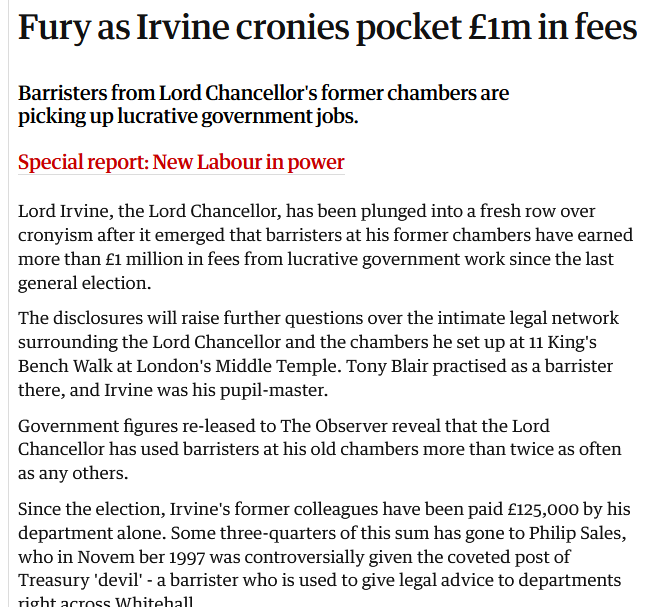
Sales represented the Blair government in opposing a judicial review into the decision to start the illegal invasion of Iraq, on the grounds that judges should not interfere in ministerial decisions on national security.

They say that true beauty emanates from inside, from the soul. Lord Sales proves that you can get true ugliness that way too.

Raza Hussain tried to plough on despite Sales’s interventions. The suffragettes had engaged in firebombing, arson, and serious property damage. They planned such events in secret. But history viewed them as vindicated. This is because, like Palestine Action, they had a legitimate aim. Unlike other proscribed organizations the aims of Palestine Action in stopping genocide were entirely compatible with the ideals of a liberal democracy.

The aim of proscription was to prevent the actions described in Section 1 and Section 3 of the Terrorism Act. The necessity of the proscription must strike a fair balance with its impact on statutory Article X and XI rights. Was there need for proscription? Elbit’s property rights were protected by the full range of criminal law and not just by Sections 1 and 3.

The aim of proscription must be limited to preventing actions which fell under Sections 1 and 3, not to disrupting the vast majority of Palestine Action’s activities which did not meet the definition of terrorism. Proscription was being used to prevent acts which the government simply considered as irritant. In the proportionality exercise it must be considered that they are preventing Palestine Action’s activities as a whole, not just those which fell under Sections 1 and 3.

Raza Hussain then handed over to Henry Blaxland KC to tackle the Home Office claim of “an escalating pattern of violence.”

Henry Blaxland said that the question to be asked is whether the criminal law is equipped to deal with Palestine Action without proscription. The state should not prematurely exercise a power to prevent crime. Sweeping preventative powers were a fundamental change to the order of a liberal democracy.

There were many charges in the criminal law which could be and had been used against Palestine Action activities. These included criminal damage, burglary, aggravated burglary, assault, and violent disorder.

Lord Sales interrupted that criminal law might not prevail. You might not catch the criminal. If you did catch them then it might be difficult to prosecute and bring witnesses. The fundamental criticism of the Divisional (High) Court by the Court of Appeal was that they did not accord due respect to the constitutional position and democratic mandate of the Secretary of State in making this judgment.

Lord Stephens asked if the criminal law is sufficient deterrent. It may be like director disqualification when a company goes bankrupt—it was no real deterrent at all.

Blaxland continued that the proscription was an excessive reaction to a particular problem. They should look at the three cases on which the determination of terrorism was made.

Lord Stephens asked whether the three cases included Brize Norton. Blaxland replied no, but he would come on to it.

In the Thales factory case in Scotland, six defendants had climbed onto the roof of the building and were supported by a crowd gathered outside. There was no attempt to escape and all six had pled guilty to breach of the peace. They received 12-month prison sentences, with one getting an extra 2 months.

This was not assessed as a terrorist action by the police at the time, nor by the Scottish Counter Terrorism Board (CONTEST). It was only later elevated to one of three instances of terrorism. But nobody was hurt.

The second “terrorism” case, the June 2024 action at the Instro Precision factory in Sandwich, Kent, was still being tried at the Old Bailey. In this action the protesters had been divided into black (covert) and red (overt) teams.

The black team had protested outside and provided a diversion before making good their escape, while the red team had entered the factory to cause damage and had intentionally been arrested. This was being tried under criminal law with charges of threatening behavior, burglary, violent disorder, and criminal damage.

The third case was at the Elbit factory at Filton, Bristol in August 2024. Here the black team trial was in progress and the red team trial had concluded. One security guard and one police officer had been injured.

This had been charged as aggravated burglary but all were acquitted of that. The charge of GBH with intent had also been acquitted. There was a conviction of GBH with no intent. The judge had found that the action had a “terrorist connection” which increased sentencing. Jail sentences were very substantial, of six to eight years.

Filton had been a watershed for Palestine Action. The arrests had been made under Section 21 of the Terrorism Act and all had been remanded in custody for 18 months before trial. This was not dependent upon proscription and was before proscription. It had changed how Palestine Action operated thereafter.

On the Appeal Court’s assessment that these were covert actions—

• At Thales there was no attempt to avoid arrest.
• At Instro Precision the black team evaded arrest but the red team had volunteered for arrest.
• At Filton all were arrested and the Red Team had volunteered for arrest.

The actions were not covert. The point of the action was to gather publicity for their cause by volunteering for arrest.

Lord Stephens asked where could he see that they volunteered for arrest.

Blaxland replied this has been plain from the evidence at trial where they received substantial custodial sentences. That was the meaning of the designations “overt” and “covert.”

Lord Sales said that the Court of Appeal went well beyond the question of avoiding arrest. They spoke of Palestine Action’s hidden funding, its cell structure, and of Ms. Ammori’s lack of transparency.

Henry Blaxland replied that Palestine Action was an open organization. It had a website. It held Training Days and Open Days which anybody could attend.

Lord Sales responded that Palestine Action had a cell structure. Blaxland countered that when it came to the serious incidents on which reliance is placed, they volunteered themselves for arrest.

Lord Lloyd Jones asked about the injury to the police officer. Blaxland stated it was not intentional and it was subject to a criminal appeal. After Filton Palestine Action confined themselves to action which entailed only low level criminality.

Lord Stephens asked about Brize Norton. Blaxland replied that Brize Norton was the exception that proved the rule.

The proper comparator was with the Margaret Jones case. That action had involved actual damage to refueling tankers, with an intention and equipment to damage aircraft by arson. The resulting sentences for the two defendants had been merely a curfew order and conditional discharge.

Lord Sales said that the Jones case was serious criminality. How did comparison to that help Blaxland’s case?

Blaxland replied that there had been no suggestion that the Jones case was terrorism.

Lord Stephens interjected that it plainly was terrorism. It involved serious damage to property.

Blaxland replied that there was no suggestion that the defendants in the Jones case should be described as terrorists or treated as terrorists.

Lord Sales said that the Jones case was prosecuted. This criminality was not tolerated.

Blaxland replied it was prosecuted, but not as terrorism. If he might move on with his argument, at Brize Norton, rather than arson, two aircraft had been sprayed with paint.

Lord Lloyd Jones asked which part of the aircraft? The idea was to disable the plane.

Henry Blaxland KC was plainly struggling. The judges were deliberately preventing him from articulating his argument. He is a criminal defense barrister and used to addressing juries, which are a cross section of the decent British public. Here his audience was much more difficult: four rather stupid, elderly white men hand-picked for their extreme right-wing opinions, plus Lord Briggs.

Palestine Action & the Extradition Case of Fergie Chambers: From Protest to Terrorism

He explained that the agreed evidence was that these were refueling aircraft which had been regularly deployed to RAF Akrotiri for operations in support of “Israel”. When damaged by paint they had been operationally replaced in 45 minutes. The incident could be dealt with by the ordinary criminal law.

Lord Stephens said that the ordinary criminal law did not deter them from damaging RAF planes.

Lord Lloyd Jones said that Brize Norton was a more serious incident as it affected national security.

Henry Blaxland said he must now speedily conclude (having lost most of his time with the judges speaking more than he did).

The activities of Palestine Action were within the reach of ordinary criminal law. There were several alternatives to proscription which did not entail wide impacts on freedom of speech and had never been properly considered.

  1. Conspiracy. This covered a wide range of organizational behaviors and could have been used.
  2. Encouragement and Incitement. It should have been very straightforward to detect and arrest people for holding Open Days and Training Days and publishing information online which encouraged people to break the law and taught them how to do it.
  3. The Online Safety Act covered the web activity.
  4. The Public Order Act—this had not been considered.
  5. Civil injunctions. The Court of Appeal had dismissed this point, but these had been effective against Just Stop Oil and the Campaign Against Animal Cruelty.

Lord Sales said that the decision on proscription was for Parliament and the Secretary of State to make.

Henry Blaxland went on: What were the effects of the unnecessary proscription? A wide impact on freedom of speech. On a point raised earlier, Blaxland could attest that people had been charged as supporting Palestine Action on the evidence that they campaigned against its proscription.

Far from depriving Palestine Action of the oxygen of publicity and destroying its brand, the proscription plainly had the opposite effect.

Henry Blaxland KC then handed back to Raza Hussain KC to conclude Palestine Action’s case.

Hussain said that the Margaret Jones case was the locus classicus for this kind of action. It stood in a long and noble history. The suffragettes had been vindicated by history. In a liberal democracy the police and prosecution should behave with restraint when faced with non-violent civil disobedience in a matter of conscience. Lord Hoffman had stated in the judgment:

My Lords, civil disobedience on conscientious grounds has a long and honourable history in this country. People who break the law to affirm their belief in the injustice of a law or government action are sometimes vindicated by history. The suffragettes are an example which comes immediately to mind. It is the mark of a civilised community that it can accommodate protests and demonstrations of this kind. But there are conventions which are generally accepted by the law-breakers on one side and the law-enforcers of the other. The protesters behave with a sense of proportion and do not cause excessive damage or inconvenience. And they vouch the sincerity of their beliefs by accepting the penalties imposed by the law. The police and prosecutors, on the other hand, behave with restraint and the magistrates impose sentences which take the conscientious motives of the protesters into account. The conditional discharges ordered by the magistrates in the case which came before them exemplifies their sensitivity to these conventions.

Lord Sales interjected that it is for parliament and the Secretary of State to make the decision on proscription. (This was the seventh time he had interrupted to make this exact same assertion. I have not noted all his repetitive interruptions.)

Raza Hussain continued that there had been a major impact from proscription. Thousands of people had been arrested for expressing their support for Palestine Action.

Lord Reed interrupted that this was the consequence of Section 12 of the Terrorism Act which the Secretary of State, who had the democratic mandate, had decided to bring into force by proscription and which had been approved by parliament.

Raza Hussain continued it was not only freedom of expression which had been constrained. It was an offense carrying up to 14 years in prison to arrange a meeting which might give rise to a suspicion that it was in support of Palestine Action. 14 years for arranging a meeting.

Palestine Action had produced educational materials about the Israeli arms trade in the UK. This freedom of expression was also being disrupted. Palestine Action had a genuine belief that in the context of the genocide taking place in Gaza, disruptive action was necessary.

If you even say that you support only Palestine Action’s low-level activities, those which did not meet the official definition of terrorism, you are still liable to 14 years in jail. The legislation makes plain your intention is irrelevant.

Thousands of people have now been arrested. Hundreds of thousands more people wished to speak out but their freedom of speech is curtailed because they could not afford to be arrested.

Freedom of speech and assembly are elevated rights and political speech and activity is at the top of elevated rights. This was being severely affected, while the legislation gave very extensive intrusive powers to police and other officials.

The deference given to the Home Secretary in matters affecting national security should be attenuated in this case. On the Home Office’s own documents, the threat from Palestine Action was to the property rights of Elbit and other companies. The FCDO assessed that their activities had no foreign policy knock-on effect. Their overall impact on the UK defense industry was assessed as low.

Raza Hussain accepted that some deference needed to be accorded to the Secretary of State in matters affecting national security. But this was not primary. It depended on the reasons invoked in the evidence available to the Secretary of State in making her decision. There was very little good evidence. The open documents revealed no detailed assessment of threat to national security. Not all national security risks are equal.

Lord Stephens said that it is for the Secretary of State to strike that balance and she is democratically elected.

Raza Hussain said that there was no evidence to show that the Secretary of State had evaluated the balance between the national security threat and the impact on civil liberties.

The Secretary of State may have available expertise on the national security background. But she does not have available expertise on the impact on civil liberties of proscription, nor had she sought expertise. No deference should be given to her in assessing the weight of the opposing basket in the balance to be struck.

That concluded the case for Huda Ammori (which the government lawyers were to refer to throughout as the case for Palestine Action). Sir James Eadie KC now stood to open the government’s response.

It is very important, given that the Burnham government has attempted to hide behind this court case as an independent arbiter of whether they will continue with the proscription of Palestine Action, to understand that every word spoken here by James Eadie is spoken on behalf of Shabana Mahmood and the government of Andy Burnham.

Sir James Eadie stated that the Court of Appeal had applied longstanding legal principles in a proper way. It had also restricted the extent of this appeal. It had excluded any challenge to the factual basis of the proscription. Palestine Action is an organization concerned in terrorism. That is the factual basis from which this court must start.

Palestine Action intended to promote the use of violence. The court would consider whether any fresh proportionality exercise was even required. If the court chose to do such an exercise, it must rest upon the facts established by the lower courts.

The purpose of the Terrorism Act was to allow our society to exist and people to live without fear. Parliament had decided what activities constitute terrorism and serious damage to property was one.

Parliament had placed no constraints on the powers of the Secretary of State to proscribe terrorist organizations. It is for parliament to decide the consequences that follow on proscription. These were designed by parliament to be effective and to stifle and disrupt the organization.

Parliament was alive to the fact that these are significant powers with significant effects, that is why the decision is by the Secretary of State but requires approval by parliament.

This is a case of socio-political importance, went on Sir James…
Lord Sales interrupted to agree, and said that was why the appeal court had made a fresh proportionality balance (which canceled the victory of Palestine Action in the High Court).

Sir James agreed with Lord Sales. He said this was in effect a second appeal and it was important that appeal courts should take a similar view.

Lord Sales said yes, and subsequent appeal courts should look to agree.

Sir James evidently felt that Lord Sales was going a bit far in making the government’s case for him, and suggested that the permission to appeal process acted as a filter to decide on which issues the courts may differ, as they excluded many grounds on which the original case had been made.

Lord Sales said yes, but granting permission to appeal does not necessarily mean that a fresh view should be taken.

Sir James Eadie said that he agreed that in principle a second appellate court should seek to reach the same view as the first. However perhaps the court could follow the same procedure but reach a different conclusion. Important points of fact which had been accepted should however not be reopened.

Sales and Eadie continued this pointless cycle of mutual backslapping for another few rounds. I gave up and wrote “Sales Eadie blah blah blah” in my notebook. When I zoned in again, incredibly they were still doing the same thing.

Lord Sales said that the court should look again but give significant weight to the view of the appellate court. It was important to maintain appeal discipline.

Eadie said that before closing for the day, he had one further point to make, which was to draw the attention of the judges to the (infamous) sentencing remarks of Mr. Justice Johnson in the Filton case.

With that we thankfully reached 4 p.m. and adjourned for the day.

I have not noted every judicial intervention during the presentation of Huda Ammori’s case as there were well over one hundred.

It became very plain to me that this went beyond judicial testing of the strength of the case into active hostility designed to prevent the case from being developed, with elements of ridicule. It was extraordinary and very unpleasant. Lord Briggs was the only judge whose behavior appeared to me professional, whatever his actual opinions.

The interruption was so extreme that the case against proscription was not fully developed and both KCs were forced by the judges taking up their time to cut major parts of their presentations.

These are top KCs who in any normal circumstances can keep a time limit. Even with severe cuts, due to the judges they overran their allotted time of 3 hours and 45 minutes by 20 minutes. This means their final rebuttal will be cut from 30 minutes to just 10 minutes.

However, should Sir James Eadie take less than his allotted 2 hours and 45 minutes for the government case, then Raza Hussain could recover some of that lost time. The government will therefore seek to stretch out their rather thin arguments to the full time.

So you may think that the prolonged backscratching between Lord Sales and James Eadie was a pointless waste of time. No. It was a pointed waste of time.

While the court was in session, over thirty people had been arrested outside the court for expressing support for Palestine Action. On leaving I gave a few interviews, then left with some friends including Matt O’Branain for a bite to eat and a pint in the nearby Westminster Arms. Matt wanted to record me singing his Palestine Action song which begins:

In the UK it is illegal to say, I support Palestine Action.

I told Matt I needed a pint before I sang in public. On arrival at the pub, Matt had vanished. I asked if anyone had seen him. I later discovered that Matt had been arrested just behind me and carted off by the police, for singing his song! I am afraid I was so intent on getting to the pub I had not noticed.

My hotel room was forced while I was in the Supreme Court and the jamb spilt apart. But nothing was taken, £180 cash left on the table.

Please note just in case. I am not suicidal, I have the most wonderful family and friends and many battles to fight. pic.twitter.com/8TGMXKHzPa

— Craig Murray (@CraigMurrayOrg) November 4, 2026

That was not the end of the strangeness. When I got back to Chelsea Cloisters I found that the door of my room had been forced open and the door jamb split apart in the process. Nothing had however been taken—there was still £180 in cash I had left on the table. I reported the break-in to the front desk, who said that the CCTV was managed by an external security company.

This could have been an interrupted burglary, but burglaries involving smashing doors in busy hotels are pretty rare. Obviously serious security services can enter a room undetectably. This seems more of a frighteners exercise.

Oh well, on to day 2.

(Craig Murray)


From Orinoco Tribune via This RSS Feed.
11


Photo: EFE.

Pedro Alliana, a former Colorado Party chairman and close ally of Horacio Cartes, becomes president of Paraguay this Friday, one day after the Senate removed Santiago Peña from office.


Pedro Alliana had served as Vice-president since August 2023. He took the oath of office before Congress in an extraordinary session held Friday afternoon, hours after the Senate convicted his predecessor in a political trial.

The Chamber of Deputies approved the accusation unanimously on Thursday. The Senate resolved the case the following day and confirmed the removal. Alliana will now complete the presidential term that ends on August 15, 2028.

RELATED: Santiago Peña Removed From Office by Paraguay Senate in Ueno Bank Trial

“The Paraguay we receive today has urgencies that force us to be in the streets, the hospitals and the fields. What I come to promise is concrete: the compatriots who are going through a difficult moment as a result of this financial collapse will be fully compensated,” the new president told lawmakers, who shared office with the removed President.

Alliana ordered immediate steps to repay depositors, with priority for those least able to absorb the loss. “I do not want any lukewarm person in charge of this mission, I want results. My transparency is non-negotiable,” he stressed.

Pedro Alliana juró como nuevo presidente de Paraguay, tras la destitución de Santiago Peña.https://t.co/ASi4qayIoq pic.twitter.com/ZpnIeo1gss

— Corta (@somoscorta) November 6, 2026

Text reads: “Pedro Alliana was sworn in as the new president of Paraguay, after the dismissal of Santiago Peña.”

The promise responds to a crisis that left millions of Paraguayans unable to touch their own money. Ueno Bank, the sixth largest in the country by deposit volume, was intervened on November 3 after the Central Bank found its solvency ratio had fallen below 50% of the required minimum. Ueno Bank processed more than three million transactions every day, a measure of how many people depended on it.

Clients lost temporary access to their deposits once the intervention began. The freeze triggered mass protests in Asuncion against the bank and against Peña.

Peña presented his resignation on Thursday, but Congress refused to accept it. Lawmakers instead moved through the impeachment process, and the Senate removed him in a trial held in his absence.

Who Is Alliana

Hércules Pedro Lorenzo Alliana Rodríguez was born on February 19, 1974, in Pilar, the capital of Ñeembucú in southern Paraguay. His first major political post came at the departmental level. Alliana served as governor of Ñeembucú from 2008 to 2012, building the regional base that would carry him to the national stage.

From there he moved to the lower house of Congress, where he spent nearly a decade. He held a seat as a national deputy from 2013 to 2022, and between 2019 and 2022 he presided over the Chamber of Deputies, one of the most influential posts in Paraguayan politics.

Alliana’s rise cannot be separated from Horacio Cartes, the former President and dominant figure of the Colorado Party. Within the party’s powerful Honor Colorado movement, Alliana ranked among Cartes’s principal allies. That loyalty carried him to the party’s top position. Alliana chaired the Colorado Party from 2016 to 2023, steering the political machinery that has governed Paraguay for decades. The bond with Cartes shaped his entire trajectory. Honor Colorado controls much of the party structure, and Alliana’s decade in the lower chamber coincided with his consolidation as one of its most visible operators.

Now that loyalty yields the presidency itself. Following the impeachment of Santiago Peña, Alliana assumes the office once held by his political patron.

A Paradoxical Ascent

Alliana’s path to the presidency includes a striking irony: he survived an impeachment attempt of his own, one that never gained traction. He arrives in office after facing, paradoxically, an impeachment request that did not prosper: the Chamber of Deputies rejected it by 48 votes to 30.

That failed effort now stands in contrast to the fate of his predecessor. Santiago Peña could not muster the same defense, and the Senate convicted him in absentia for poor performance of duties tied to the collapse of Ueno Bank.

Alliana steps into a difficult inheritance. The financial crisis that brought down Peña erased an estimated 1.2 billion dollars and left nearly three million Paraguayans without access to their savings. Several legislators linked Alliana to the Ueno scandal during the impeachment hearings, a shadow that follows him into the presidency.

The office changes hands, but the political team does not. Alliana belonged to the coalition that supported Peña until the end, and critics have warned that the same circle now governs the country.


From teleSUR English via This RSS Feed.

12


By Ana Maria Monjardino and John McEvoy – Oct 1, 2026

BP and Shell are cashing in on Venezuela’s oil and gas following the kidnapping of Nicolás Maduro.

Britain’s energy giants stand to make huge profits in Venezuela amid a major diplomatic rapprochement between London and Caracas, Declassified UK can reveal.

It comes in the wake of the kidnapping of President Nicolás Maduro earlier this year in a move described by UN experts as a “deliberate violation of the most fundamental principles of international law”.

US President Donald Trump has repeatedly emphasized how the US intervention was motivated by oil interests, even telling the UN General Assembly last week: “To the victor belong the spoils”.

Hours after Maduro’s seizure, UK Prime Minister Keir Starmer said Britain was “not involved”, but refused to be drawn on whether it was unlawful. “We shed no tears about the end of the regime,” he declared.

The kidnapping is already resulting in a boon for Britain’s energy giants, with Acting President Delcy Rodríguez welcoming foreign companies back to Venezuela and softening the country’s hydrocarbon legislation.

Since January 2026, BP and Shell have signed major agreements with the Venezuelan government as it appears to be operating under duress from the Trump administration.

Documents obtained by Declassified UK indicate how Britain’s Foreign Office has helped facilitate their return, with an influx of high-level meetings between executives and officials taking place in the weeks and months after Maduro’s removal.

The opening of Venezuela’s economy has also paved the way for the normalization of relations between London and Caracas. Plans were made earlier this month to upgrade diplomatic representation to ambassadorial level.

But serious questions surround benefiting from the kidnapping of a head of state amid a broader assault on Venezuela’s sovereignty.

“US coercive control over Venezuela’s oil revenues may have involved violations of Venezuela’s sovereignty,” said UN Special Rapporteur Ben Saul.

That includes breaches of “the duty of non-intervention, the right of economic self-determination, and the principle of permanent sovereignty over natural resources”.

Professor Francisco Rodríguez, a leading Venezuelan economist who has advised its National Assembly, told Declassified UK that “deals of this type are much more likely to survive when there is a broad consensus not only on their legal validity but on their desirability for the nation.

“At present, I see many more sectors of Venezuelan society that do not consider these agreements either legal or convenient for the nation, and some of them see them as outright exploitative”.

Rodríguez added: “It is hard to see any truly autonomous Venezuelan leaders signing these deals were a gun not pointed at their head”.

FiresaleVenezuela’s economy has been restructured under Delcy Rodríguez, who assumed power in January and was pictured with Trump earlier this month in New York, just miles from Maduro’s prison cell.

The country’s hydrocarbon legislation has been modified to make the terms more favorable for foreign firms, and its energy revenues are now being diverted through the US Treasury, with Washington taking a major cut.

By July, the US government had collected more than $13 billion in revenues from Venezuelan oil sales, according to the Financial Times.

In August, Trump also announced a “historic oil agreement” with Venezuela which would give the US control of more than 65 billion barrels of oil reserves for 100 years.

The deal would secure “our energy dominance for the next century”, Trump declared, “all at zero cost to the United States”.

Remarkably, the company at the forefront of that agreement, North American Blue Energy Partners (NABEP), hired three lawyers who had previously worked for the UK’s Serious Fraud Office.

It is within this context that Shell and BP have returned to Venezuela.

Shell has been granted concessions to develop and operate two offshore gas fields, named Loran and Dragon, which are projected to contain vast amounts of recoverable gas.

The company also signed a preliminary deal to develop two onshore oil fields known as Carito and Pirital in Monagas State, one of the country’s most oil-rich regions.

After signing a memorandum of understanding (MoU) in Caracas in March, Shell’s regional manager Adam Lowmass recalled the company’s “long history in Venezuela, dating from 1912”. He declared: “I could not be prouder of our team”.

BP signed its own MoU with the Venezuelan government in April to develop the Cocuina-Manakin gas field which sits on the maritime border with Trinidad and Tobago.

The company was also granted a licence for the second phase of operations on the Loran field in partnership with Emirati XRG and Qatari UCC Oil and Gas, and has started trading oil in the US.

Shell and BP plan to process Venezuela’s natural gas using the Atlantic LNG plant and export terminal in Trinidad and Tobago, in which they are both major shareholders.

This cross-border presence will give the firms significant control over the supply chain of natural gas in the Caribbean, a large portion of which will be destined for Europe.

Meetings and lobbying
Data obtained by Declassified UK through the Freedom of Information Act indicates how the Foreign Office has facilitated Shell and BP’s return to Venezuela.

Executives from the companies met with Colin Dick, Britain’s chargé d’affaires in Caracas, eight times in the two months following Maduro’s kidnapping, compared with eight meetings for all of 2025.

While the Foreign Office has refused to disclose what was discussed beyond a few heavily redacted emails, the frequency of the meetings might be seen as implicit endorsement for the energy giants’ new ventures in Venezuela.

Oil has been guiding British foreign policy in Venezuela for over a century. Former foreign minister for the Americas Alan Duncan declared in 2018: “The revival of the oil industry will be an essential element in any recovery, and I can imagine that British companies like Shell and BP will want to be part of it”.

Britain’s current director for the Americas Harriet Thompson was in Caracas in early March 2026 as Shell was gearing up to sign major new energy deals.

Thompson “conducted a productive visit that included meetings at the Venezuelan Foreign Ministry and engagements with representatives of British companies to explore growth opportunities for both countries”, the embassy said.

When asked in parliament whether those talks involved British natural resource companies, the Foreign Office said the question had already been answered in January – two months before the meetings had even taken place.

In its own write-up, the Venezuelan government said the delegation was the first of its kind for years, and opened new routes for “trade exchange” within a broader goal of “strengthening cooperation in strategic sectors”.

Earlier this month, Venezuela’s foreign minister and former ambassador to the UK Félix Plasencia and National Assembly President Jorge Rodríguez, Delcy’s brother, were in London for another high-level diplomatic exchange.

Standing outside the Foreign Office, Rodríguez noted how the meetings with British diplomats had covered “oil and gas investments” and the “rapid economic growth of Venezuela”.

‘Plundering’
BP and Shell have also been busy lobbying on Venezuela in Washington after a long period of relative dormancy.

Their efforts have focused on convincing the US Office of Foreign Assets Control (OFAC) to give them licences to operate in Venezuela as the Trump administration eases sanctions for projects which benefit US oil interests.

In the first quarter of 2026, Shell registered lobbying activities worth $1.3 million in the US which involved “the commercial development of natural gas in the Dragon gas field offshore Venezuela and Trinidad and Tobago pursuant to a licence issued by OFAC”.

During the same period, BP registered $1.18 million in US lobbying activities which included a focus on “Venezuela and OFAC licensing”.

Shell’s CEO Wael Sawan even met with Trump in January, saying he was “ready to go” with “a few billion dollars’ worth of opportunities to invest” in Venezuela.

Days later, US lawmakers implored Sawan and other oil executives “to decline to participate in any transaction or arrangement that relies on the Trump Administration’s asserted authority to control Venezuelan oil assets”.

Ricardo Vaz, lead editor of Venezuela Analysis, told Declassified UK: “Much like it joined the US in its economic blockade, the UK and UK-headquartered corporations are determined not to miss out on the plundering of Venezuela’s natural resources in this post-January 3 context.

“BP and Shell have been on the frontlines to take advantage of the reformed energy sector and feature among the six corporations that received the first general licence to negotiate deals with the Venezuelan government.

“Both companies had an extensive operational history in Venezuela’s oil industry, and they will now arguably return in the most favorable conditions they have ever enjoyed”.

Delcy Rodríguez Praises Agreements With Opposition to Recover Venezuelan Gold in England

Diplomatic rapprochement
The improved position of BP and Shell in Venezuela has coincided with a significant diplomatic rapprochement between London and Caracas.

Under Maduro, the UK government insisted fresh elections were necessary before diplomatic normalization, but the position has now been reversed, with the Foreign Office saying a democratic transition requires improved diplomatic relations.

“Upgrading our relations will strengthen our ability to play a constructive role in support of a democratic transition” and “promote UK businesses in Venezuela”, Foreign Minister Chris Elmore said earlier this month.

This “upgrade”, he said, would pave the way for the appointment of a UK ambassador in Caracas for the first time since 2017.

To celebrate this new spring in the UK-Venezuela partnership, Delcy Rodríguez met with Britain’s chargé d’affaires Colin Dick in Caracas on September 18. The pair were filmed laughing together as they fed deer and admired peacocks.

“Venezuela and the United Kingdom are opening a new chapter in their bilateral relations”, beamed Rodríguez.

The frozen goldOne of Venezuela’s top priorities amid the improvement of diplomatic relations will be the return of roughly $4 billion of gold that has been frozen in the Bank of England for over seven years.

While Elmore said Britain’s “long-standing position is to recognize states, not governments”, it was the UK government’s decision to recognize a parallel government under Venezuelan opposition figure Juan Guaidó in 2019 that fomented the gold deadlock.

According to former US National Security Adviser John Bolton, then foreign secretary Jeremy Hunt was “delighted” to help with Washington’s destabilization campaign in Venezuela, “for example freezing Venezuelan gold deposits in the Bank of England”.

After a protracted legal battle over ownership of the assets, Guaidó was ousted and his parallel government dissolved in 2022 – but the gold remained frozen due to Britain’s enduring non-recognition of Maduro.

The Rodríguez administration and the Venezuelan opposition have since engaged in negotiations, with both sides reportedly agreeing that the gold should be released.

These negotiations, according to the Financial Times, might result in the gold being transferred from the Bank of England to the Federal Reserve of New York, with the assets only available as collateral for government borrowing rather than for sale.

Transferring the gold to the country whose leader orchestrated the kidnapping of Venezuela’s head of state – after freezing the gold amid concerns about democratic legitimacy – might raise awkward questions for the Foreign Office and the Bank of England.

A spokesperson for the Bank of England previously said: “The Bank is not in a position to act on instructions until there is a further order from the UK Court which makes clear who has legal authority over the account. This requires the parties involved in the case to approach the UK Court to settle the dispute”.

The Foreign Office, BP, and Shell were approached for comment.

(Declassified UK)


From Orinoco Tribune via This RSS Feed.
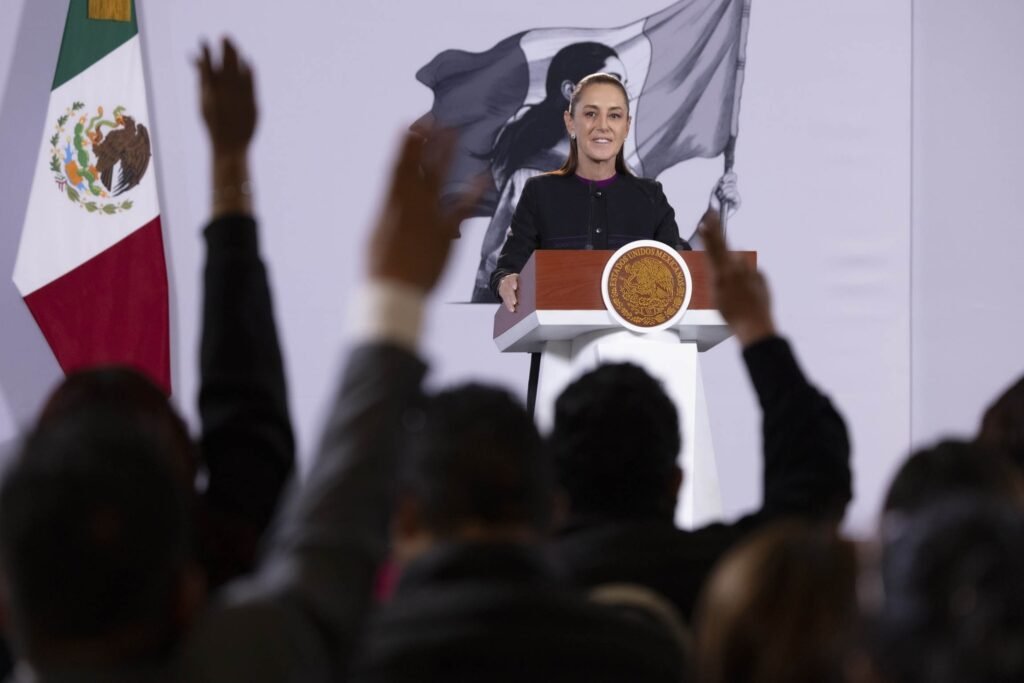
13


The Brazilian president stated his triumph coincided with political setbacks for right-wing leaders.

On Friday, Brazilian President Luiz Inacio Lula da Silva said his reelection was a “victory for the world” and that Brazilians gave an international lesson by defeating conservative forces at the polls.

RELATED: Students Demonstrate in Brazil to Cellebrate Lula’s Victory

During a live broadcast watched by nearly 700,000 people, the president reflected on the political significance of his return to power after losing the first round of voting. Lula maintained that his triumph coincided with political setbacks for right-wing leaders.

He mentioned Benjamin Netanyahu’s electoral defeat in Israel and said his victory foreshadowed the difficulties faced by Donald Trump and the Republican Party in the United States.

The Brazilian president said the main message of the election was the defense of national sovereignty. He added that Brazilians showed they would not accept being “anyone’s backyard,” an idea he repeatedly used during the campaign.

Botamos pra virar, Brasil! 🇧🇷❤️

Fizemos história nas ruas e nas urnas, com o povo como protagonista de uma caminhada que ainda tem muito pela frente. A democracia venceu, a esperança se fortaleceu e o Brasil segue em frente.

Essa vitória é nossa. E vamos fazer muito mais… pic.twitter.com/XynKtfbsNP

— Lula (@LulaOficial) October 26, 2026

Furthermore, Lula criticized his political rival Flavio Bolsonaro, son of former President Jair Bolsonaro. He recalled that during campaign rallies, he displayed and kissed the Brazilian flag, while Flavio kissed the United States flag.

The president also addressed Bolsonaro’s departure for the United States after the election defeat. He stated that the senator sought protection in that country, since he faces legal proceedings for alleged money laundering.

Lula explained that the key to his electoral comeback was popular mobilization, especially among women, young people, and the elderly. He also admitted to feeling more responsibility during this term, considering he now has to meet the expectations of those who placed their trust in him again.

#FromTheSouth News Bits | Brazil expands access to the Norwegian market, offering tariff benefits on nearly all its exports. pic.twitter.com/VLT4i5K5Gy

— teleSUR English (@telesurenglish) November 5, 2026

teleSUR: JP

Source: EFE


From teleSUR English via This RSS Feed.

14


The polls point to a very tight scenario between the ruling National Party and the opposition Labour Party. Photo: EFE.

New Zealand voters went to the polls Saturday in a general election that has become a near-even contest between the governing National Party and the opposition Labour Party, with polls pointing to a Parliament where no single party holds a majority.


New Zealanders headed to polling stations across the country Saturday to choose the next Parliament. The Electoral Commission reported 3,790,946 registered voters, and roughly 2,300 polling centers operated from 9:00 A.M. to 7:00 P.M. local time.

The day will define whether the ruling coalition retains power or hands it to the opposition in a contest the surveys describe as too close to call.

RELATED: Grenada PM Mitchell Reelected in Landslide

Prime Minister Christopher Luxon, a center-right leader, is seeking to extend the mandate he secured in 2023 with coalition partners ACT and New Zealand First. He has campaigned on stability and economic management.

His Labour opponent, Chris Hipkins, has pitched a center-left program focused on easing the cost of living and rebuilding public services.

🧵 Thread

New Zealand's PM Christopher Luxon’s National Party is fighting to secure a second term in a tight election dominated by the spiralling cost of living.

What you need to know about the 2026 New Zealand elections https://t.co/qkhrIq4ECh pic.twitter.com/6myXUQCXUW

— Al Jazeera English (@AJEnglish) November 6, 2026

A Tight Two-Party Race

Polls describe a razor-thin margin between the two main parties. Neither National nor Labour is expected to reach the majority required to govern alone, a reality that hands considerable weight to the smaller groups in any post-election negotiation. In that scenario, the formation of the next executive will depend on agreements among several forces rather than on a single decisive result.

The Greens, ACT and New Zealand First will influence how seats are distributed and will condition the talks that follow the vote.

New Zealand is in a delicate situation: between March 2025 and March 2026, 47,900 people emigrated to Australia, one of the largest annual departures on record, compared to 19,900 who made the reverse route. Economic pressure has dominated much of the campaign. Unemployment and inflation are climbing, and the recovery remains fragile. Tens of thousands of New Zealanders have already left for Australia in pursuit of better working conditions, a migration wave that became one of the defining issues of the debate. The rising cost of living has fueled frustration that both main parties tried to address.

In this context, the campaign of Opportunity, a centrist party founded in 2016 that has never been represented in parliament and now under the leadership of 38-year-old Qiulae Wong, has come out with great force.

New Zealand: polls are open in the 2026 New Zealand general election. Over 1.44 million advance votes have already been cast and more than two million voters are eligible to turn out before polls close at 7PM NZDT.

🇳🇿 Explore our election dashboard: https://t.co/GPC83YEMxj pic.twitter.com/sSe6kN9zps

— Oceania Elects (@OceaniaElects) November 6, 2026

Coalition Talks Ahead

New Zealand operates a mixed-member proportional system in place since 1996 and inspired by the German model, which has rarely produced single-party majorities.

Each elector has two votes: one to elect the representative of his or her constituency and another to choose a party, whose percentage determines the proportional distribution of parliamentary seats. Coalitions and support agreements have therefore become the usual route to forming a government.

To enter Parliament, a formation needs to reach 5% of the national vote or win at least one constituency. The House normally has 120 deputies, including representatives of seven constituencies reserved for the Māori population. To form a government in New Zealand, a party or coalition must have the confidence of a majority of members of parliament, although this does not necessarily require 61 votes, since a minority executive can also govern if it obtains the support or abstention of other parties in key votes, such as confidence or budgets.

Overseas participation has grown sharply. About 126,000 enrolled voters told the Electoral Commission they live abroad, a 36% increase from the 92,600 recorded in the 2023 election. They could vote by downloading and returning ballots online, by mail, or at polling stations set up in other countries.

Once the polls close, attention turns to the count and to the coalition arithmetic that will follow. With no clear winner expected, the next government may take shape only after days or weeks of talks among the parties. The official outcome will not be known until 27 November, a wait that could drag on if parties need several weeks of negotiations to reach a government agreement.


From teleSUR English via This RSS Feed.

15


By Margaret Kimberley – Nov 4, 2026

Public opposition to war with Iran has forced Trump to wait until after the midterm elections to commit more war crimes. But all signs point to an imminent attack.

“Trump is reportedly planning to restart war with Iran after the election. Some of us have been briefed on the war plan. And while I cannot disclose any details, I can say this: the plan is insane. It will not achieve objectives and will set off a new cycle of escalation.”
Senator Chris Murphy, D-Connecticut

Senator Chris Murphy should be given some credit for publicly speaking about a war plan that has been anticipated but not discussed openly by any other official who is privy to this information. The glaring omission from Murphy’s comment is that any U.S. attack would kill many thousands of people. That missing point isn’t really surprising. Murphy is most definitely in the more hawkish wing of the Democratic Party and clearly has little concern for human life. In 2013 he appeared in Kiev, Ukraine with the late John McCain to address a rally of thousands of people who were committed to overthrowing the elected president of that country. Barack Obama was on board with the plan and didn’t need convincing that U.S. interests required a compliant Ukrainian regime which would be used as a proxy to fight Russia. They all got their way in the Maidan coup. Murphy’s interventionist tendencies included support for the first Trump regime change plot against Venezuela in 2019. He can be counted on to be in support of U.S. intervention and interference around the world.

Yet even he is squeamish about undertaking a large-scale attack on Iran. He doesn’t give details but it isn’t hard to figure out that the Trump administration will attempt to destroy the Iranian state for good and kill thousands of its people. Trump said as much himself. “We might have to go after Pickaxe [Mountain], but that’s not a big deal. We can do it. And literally we can do that in one hour. Okay? As soon as we want, at any time we want.”

While Murphy and his senatorial colleagues hold a plan for war crimes close to their collective vests, the question remains as to what the rest of us will do. If senators know about plans to attack Iran so do the Washington Post, New York Times, and the television networks. Washington insiders know and many of them have been ringing the alarm bell and warning of an imminent war. Yet we the people live in a state of suspended animation, obsessing over the midterm election results and pondering the meaning of the number of seats won and lost by Republicans and Democrats while Washington threatens to carry out a catastrophic conflict.

The Democrats’ opposition to the war is not based on any adherence to norms regarding human rights or international law. There is no mention of Iran’s rights to self-defense in the face of a naked aggression. Instead we hear concerns about fuel prices, debates regarding the feasibility of toppling that state, U.S. military effectiveness or the lack thereof, and whether strategic interests are being met. The illegality of the act which began with the deaths of 165 people, mostly children, when U.S. missiles struck a school is rarely mentioned.

Of course the elephant in the room is the zionist entity, Israel. Prime minister Benjamin Netanyahu has spent decades predicting that Iran will have nuclear weapons capability. Iran does not have nuclear weapons while Israel and the U.S. do. Iran signed the Non-Proliferation Treaty and has never had nuclear weapons while Israel won’t even admit it has an arsenal whose existence is very much an open secret.

But the fear of nuclear weapons in Iran has long been the phony casus belli. Israel wants to eliminate any state in West Asia that can be an obstacle against its plans for the sick fantasy of “Greater Israel.” Along with partners in Washington spanning multiple administrations, Iraq, Libya, and Syria have all been eliminated as military powers, turned into vassals, or have been reduced to permanent destabilization.

US Airstrikes Hit Iran’s Qeshm Island Hours Ahead of Midterm Elections

The Gulf monarchies of Saudi Arabia, United Arab Emirates, Qatar, and Kuwait are puppet governments who have paid the price for hosting U.S. military bases as they faced Iran’s military capabilities. But their obedience to the U.S. and friendliness to Israel will not end easily despite the hard lessons they learned this year.

Now that the midterm elections are over, the only certainty is that international law has long been eviscerated by the U.S. and Israel and that the terrible duo will be able to do what they like without interference. The rest of the west may make noises about civilian casualties and give speeches calling for peace, but they will not intervene.

Iran is quite capable of defending itself and has not budged from defiance in the face of U.S. attacks. The Strait of Hormuz is still under its control and the Iranians recently warned that Iran’s “hands are not tied” if the U.S. resorts to a nuclear attack.

That threat is quite real. Pickaxe Mountain cannot be destroyed by conventional weapons, Trump’s grandiosity notwithstanding. Iran has not blinked and is rightly unconcerned with who will control congress in January.

We the people should be so astute, and not be distracted by the ruling class errand boys and girls in congress. We cannot look to them for any help when the bombs start to fall. Our strategy must be to stand with Iran without any hesitation. That country has stood up for all of humanity with its refusal to break to the zionist entity and its partners in Washington. We cannot be shocked when what was unthinkable happens. Iran is preparing its people for an attack and its media have produced a video which serves not only to inform their populace about how to protect themselves but to inform us that they will be ready and are not to be trifled with.

(Black Agenda Report)


From Orinoco Tribune via This RSS Feed.
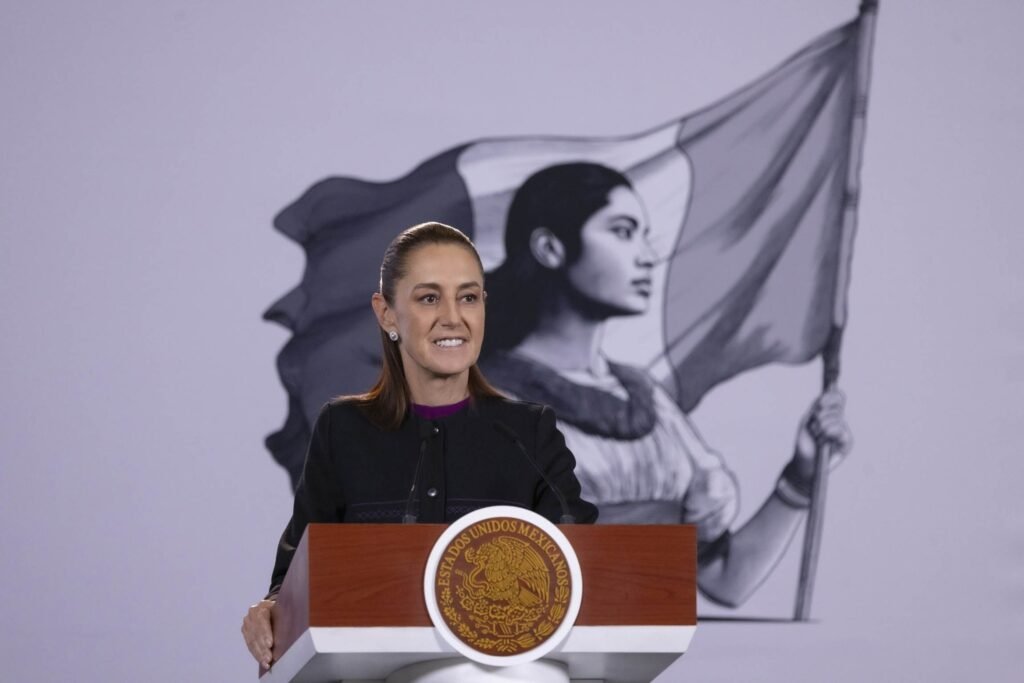
16


Leaders of the Peronist movement of Argentina, Cristina Fernández de Kirchner and Sergio Massa met André Janones, the Brazilian parliamentarian who created the “Lula Army,” the key WhatsApp network in the re-election of the Brazilian president, in Buenos Aires, with an eye on the Argentinian presidential elections in 2027. “Peronism is riding a winning wave,” a political analyst told Sputnik.

The Peronist opposition is looking in Brazil for a formula to challenge Javier Milei for power in next year’s elections. As a reunion, some of the most prominent figures of Peronism held a meeting with Janones. He was received by the former president of Argentina, Cristina Fernández, and former presidential candidate Sergio Massa.

The Brazilian strategist was accompanied by the publicists Chico Kertész and Rafael Marroquim, members of Sidonio Palmeira’s team, the current minister of Social Communication of Brazil and strategist of the ruling party’s campaign.

The first meeting was with Massa and lasted for about two hours, focusing on the Brazilian experience.Then, the delegation visited Cristina Fernández in her Buenos Aires apartment, where she is under house arrest since the Supreme Court confirmed, in June 2025, her six-year sentence in a case widely considered as lawfare, in addition to a lifetime disqualification from holding public office. According to Janones himself, Fernández was interested in how the result was built on social media.

The appeal of the model lies in the magnitude of the comeback. In the first round on October 4, Flavio Bolsonaro obtained 47.03% of the valid votes, compared to Lula’s 45.16%. Three weeks later, the incumbent won the runoff with 51.76%, something unprecedented since the return of democracy in Brazil.

Janones’ strategy was central to that shift. Before the runoff, his WhatsApp channel had around 50,000 followers; on election day, it surpassed 10 million. The scheme was based on daily “missions” to share videos, establish slogans, and make content viral in a decentralized manner, with activists producing their own pieces from tutorials sent by the channel.

A study by the Brazilian consultancy Ipse Global compared Janones’s network to “Tropa do Flávio,” the rival campaign channel, which concluded the electoral process with two million members compared to the ruling party’s 10.5 million. According to that survey, for every active user in the opposition group, around 35 Lula supporters were mobilized, a gap that translated into speed and scale of dissemination.

The connection is not new. In 2023, after the Argentinian presidential primaries won by Javier Milei, about 20 advisors associated with Brazil’s ruling Workers’ Party (PT) settled in Buenos Aires to work on the audiovisual and digital strategy of Massa, then minister of Economy (2022-2023) and candidate of Union for the Homeland. The Peronist candidate won the first round but lost the runoff with 44% of the votes compared to Milei’s 56%.

Janones’s visit comes amid a full-blown dispute for the Argentinian opposition leadership. The governor of the province of Buenos Aires, the most populous in the country, Axel Kicillof, distanced from Fernández, did not participate in the meetings, which left the former president and Massa as the only interlocutors. From Brazil, the PT clarified that the meetings do not imply Lula’s endorsement of any of the potential Argentinian candidates.

In parallel, just days before the Brazilian election, the WhatsApp channel “Ejército del Peronismo” (army of Peronism) emerged in Argentina, linked to Massa and inspired by Janones’s model, who recorded a video in Spanish to invite people to join. The channel has around 70,000 followers and has set a goal to reach 100,000 before November 17, the date on which Peronism celebrates its Day of Activism, one year before the presidential elections.

Peronism wants to copy the method
“Peronism is riding a winning wave, as all politicians generally do, but it seems to me that Lula’s victory surprised many … even almost all the polls,” Juan Adaro, political scientist and director of the consultancy Pulso Research, told Sputnik. According to the analyst, the Argentinian opposition “is trying to capitalize on this moment and to latch onto Lula’s victory.”

According to the expert, this explains “the photo with Cristina and the meeting with Massa,” which aim to “articulate a regional movement and not just a national one.” However, he downplayed the significance of the tool. “I believe that Peronism has a lot to learn from Lula. You do not win an election just with a WhatsApp group or with this method of digital organization,” he said.

Nevertheless, the specialist emphasized that the main weakness of the opposition lies in social media. “Peronism has a lot to learn in that area because, nowadays, it is lagging behind in terms of digital conversation,” he remarked. In contrast, he pointed out that the right, on a global level, “understood the digital conversation and how to reach it better,” and has “a bunch of communicators.”

Consulted by Sputnik, Santiago Giorgetta, political analyst at Proyección Consultores, focused on the method that supported the Brazilian government’s comeback. “In Lula’s strategy, there is something about the communication order, which allowed the campaign to abruptly change from the proposal made in the first round to the proposal on how to face the runoff,” he stated.

The political scientist identified in that ability to reorder the message between the first and second rounds the main lesson for an Argentinian opposition that today faces Milei with several voices in dispute. “The communicational order with clear slogans, with few topics to address, seems to me to be what Peronism can adopt,” he stated.

The limits of the internal struggle
Giorgetta emphasized that the main significance of the meetings goes beyond the strategic. “It has to do with Lula positioning himself very strongly in the region, making everything available so that next year Milei loses the elections,” he said. He defined it as the regional reference “that contrasts economic policies” with the Argentinian government.

However, Giorgetta warned that Peronism’s division is the main obstacle. “Since there are no solid points of convergence, there cannot be a communicational order … The limit is internal,” he commented.

As he explained, the strength of the Brazilian model is not replicable in Argentina. “The Lula team is the president himself, because there is an unrestricted alignment toward the main leader that the PT has.”

Adaro agreed that Peronism lacks what Brazil had: “a candidate with undisputed leadership who could compete in the elections.” On the contrary, “the opposition leader is in prison and is unable to compete for public office, so that leadership does not exist or no one is exercising that leadership that should be in order to head toward a positive election next year.”

“Today, Peronism is mired in a struggle between egos and leaderships to see who gets the candidacy,” Adaro remarked about the opposition. According to him, the Peronist leaders “are not discussing fundamental issues or what they want to do with the country or how they are going to change or how they are going to reactivate consumption in Argentina,” something he considers essential to build a proposal.

(Sputnik)

Translation: Orinoco Tribune

OT/SC/CD


From Orinoco Tribune via This RSS Feed.
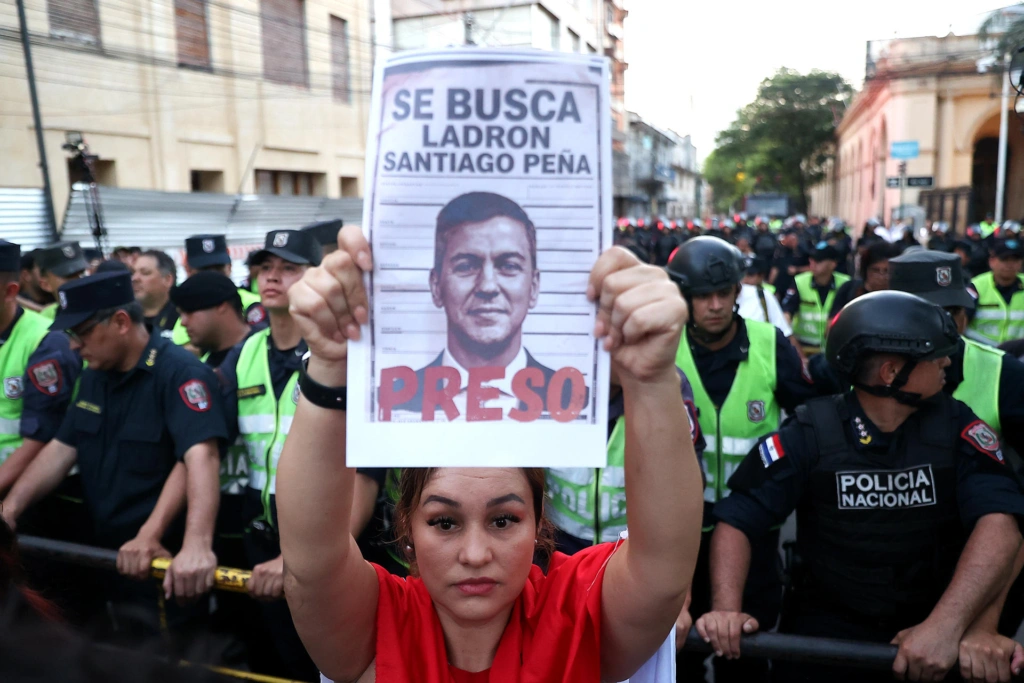
17


The first half of 2026 recorded 0.64°C above the average for the period 1991-2020

On Friday, Copernicus reported that the global average temperature in 2026 is more than 99% likely to exceed the 1.5°C threshold above pre-industrial levels, the second calendar year to surpass this limit, after 2024.

RELATED: Climate Science and Emissions Cuts Face Growing Resistance Ahead of COP31

The European climate service estimates that global warming in 2026 will be between 1.56°C and 1.61°C above the pre-industrial average. This forecast is based on statistical models adjusted to historical records.

Furthermore, Copernicus considers there to be an approximately 80% probability that 2026 will be the second warmest year since records began. It also considers a 20% possibility of matching or exceeding 2024.

During the first ten months of the year, 2026 recorded a global average temperature 0.64°C above the average for the period 1991-2020. This data currently places it as the second warmest year on record.

🌡️2026 is on course to become only the second calendar year on record to pass 1.5°C of global warming above pre-industrial levels.

According to the @CopernicusECMWF Climate Change Service (C3S), the first ten months of 2026 were the second-warmest on record … pic.twitter.com/4QqD5P1al2

— EU EnvironmentAgency (@EUEnvironment) November 6, 2026

Analyses predict that the annual temperature anomaly will close between 0.68°C and 0.73°C above the recent average. These figures equate to warming exceeding 1.5°C compared to the period 1850-1900.

Copernicus warns that, if this forecast is confirmed, the average for the years between 2023 and 2026 will also surpass 1.5°C. The organization considers this evidence of a sustained acceleration of global warming.

Experts attribute some of the high temperatures to a particularly intense El Niño event, compounded by warming caused by human activities. The warning coincides with the upcoming United Nations climate summit in Turkey.

🌍 Lavrov Arrives in Atlanta for the G20: Moscow Stands Up to Western Sanctions

Russian Foreign Minister Sergey Lavrov landed in Atlanta on October 30 after a 20-hour flight to participate in the G20 foreign ministers’ meeting, chaired by U.S. Secretary of State Marco Rubio.… pic.twitter.com/rIK3Ml6Myi

— teleSUR English (@telesurenglish) October 30, 2026

Source: EFE

teleSUR: JP


From teleSUR English via This RSS Feed.

18


By Bruno Sgarzini  –  Nov 4, 2026

“She could have avoided the show, the airports are there,” Delcy Rodríguez said a day after María Corina Machado returned to Caracas accompanied by a caravan of cars during the peak hour of the weekend. A few days later, Rodríguez herself danced at an event to the song by Dominican rapper Bulin 47, which has gone viral on social media.

In a synchronized movement, the acting president of Venezuela moved to the chorus of the song titled “Dame Hombro,” which originated from a freestyle session in Madrid when Bulin 47 entered a nightclub and a street artist dropped a rhyme on him. The “shittification” on social media turned the song viral when the faces of Bulin 47 and the street artist were replaced by global personalities, such as Messi and Cristiano Ronaldo, Donald Trump and Joe Biden, among many others.

In Venezuela, Henrique Capriles Radonski, another former opposition leader, went viral when videos of his neighborhood tours were altered by AI to show him dressed as El Chavo, Goku from Dragon Ball Z, Batman, The Joker, and a long list of fictional characters, while he criticized Delcy Rodríguez’s government with a strong exclamation: “What a mess, man!” Julio Coco, an opposition influencer, warned María Corina Machado not to be wary of the Bolivarian Intelligence Service of Venezuela, nor the Venezuelan police, but of the “messes.”

Thus, the return of María Corina Machado, with a clean record and without judicial accusations, is set against a backdrop of a permanent campaign on social media. The opposition leader, who called for sanctions and foreign intervention in the country, seems to be looking to reclaim the political center of anti-Chavismo and relaunch street protests to increase pressure for new elections.

In several interviews, María Corina Machado has criticized that her party, Vente Venezuela, was not invited to participate in the national dialogue between Chavismo, led by Jorge Rodríguez, president of the current National Assembly, and a sector of the opposition, led by Dinorah Figuera, head of the now defunct parliament won by the opposition in 2015. After visiting the epicenter of the La Guaira earthquakes, she spoke in favor of actively participating in this process under the principles of “memory, justice, reparation, and non-repetition.”

According to an anonymous US State Department official, the path of the negotiation is clear: first, the Supreme Court of Justice must be renewed with judges chosen from both the opposition and Chavismo, then the National Electoral Council, in the same way, to make it “impartial,” and finally, Delcy Rodríguez must declare “presidential vacancy” so that presidential elections can be called in six months.

“We must exercise our influence as a government over the interim authorities to ensure that this process moves forward responsibly. Our goal is to hold elections in which the losing side would say that the elections were fair, that they simply lost, and that they will move to the opposition,” declared this anonymous official on behalf of Marco Rubio, Donald Trump’s Secretary of State.

The situation is unclear because these are announcements for show without specific dates or deadlines. They also have the clear intention of giving “something” to María Corina Machado and the Republican congress members who support her, who ran for election in competitive districts, such as Florida, where the vote of anti-Chavista Venezuelan migrants carries significant weight. However, one thing is clear to most political sectors: Machado’s return accelerates the arrival of “D-Day” in Venezuelan politics, the final showdown between the opposition and Chavismo, which will determine who will lead the current process of economic opening, privatizations, and Venezuela’s definitive shift toward the sphere of US influence.

María Corina Machado, with a pyromaniac spirit, has the experience of having generated protests in 2014 with the famous La Salida plan, supporting the 2017 uprising due to a Supreme Court ruling that took over a role of the opposition-majority National Assembly, and backing the proclamation of Juan Guaidó as interim president, among many failed attempts that can be listed like the movies of the character from The Simpsons, the renowned actor Troy McClure.

The conflict, in itself, would re-legitimize her leadership in the opposition and allow her to test the mood in the Bolivarian National Armed Force, a Chavista stronghold that has always been elusive for the anti-Chavistas. It is not a question of knowing if this will happen, but rather what pretext will trigger this almost certain show of force. An election, a catastrophe, a citizen protest over wages or infrastructure problems, or some obstacle in the political path laid out by the United States?

The Turkish Soap Opera of Venezuela Business Dealings

For Delcy Rodríguez, her brother Jorge, and Diosdado Cabello, the three leaders of Chavismo in the government, the matter is somewhat complex: the sanctions, the conflict, the political repression acknowledged by the state with the amnesty law, the invasion, and the political shift with the United States have left a trail of political costs. Without a visible economic recovery and a substantial improvement in the quality of life for Venezuelans, a potential Chavista presidential candidacy is synonymous with political demise at the polls.

The strategy of the three Chavista leaders, focused on stretching political times, seems trapped if it fails to reap some of the benefits from oil and mining investments that are sold as a promise of economic progress in Venezuela. The degree of internal cohesion within the military apparatus after the January 3 invasion, surrounded by suspicions of betrayal, is also unclear. This is why Rodríguez talks about respecting an electoral schedule, outlined in the Constitution, which establishes regional, parliamentary, and finally presidential elections, without a clear deadline, and María Corina Machado says that presidential elections should be held in 2027.

The only thing that seems to be beyond question is Venezuela’s carnal relations with the United States.

(Diario Red)

Translation: Orinoco Tribune

OT/SC/CD


From Orinoco Tribune via This RSS Feed.
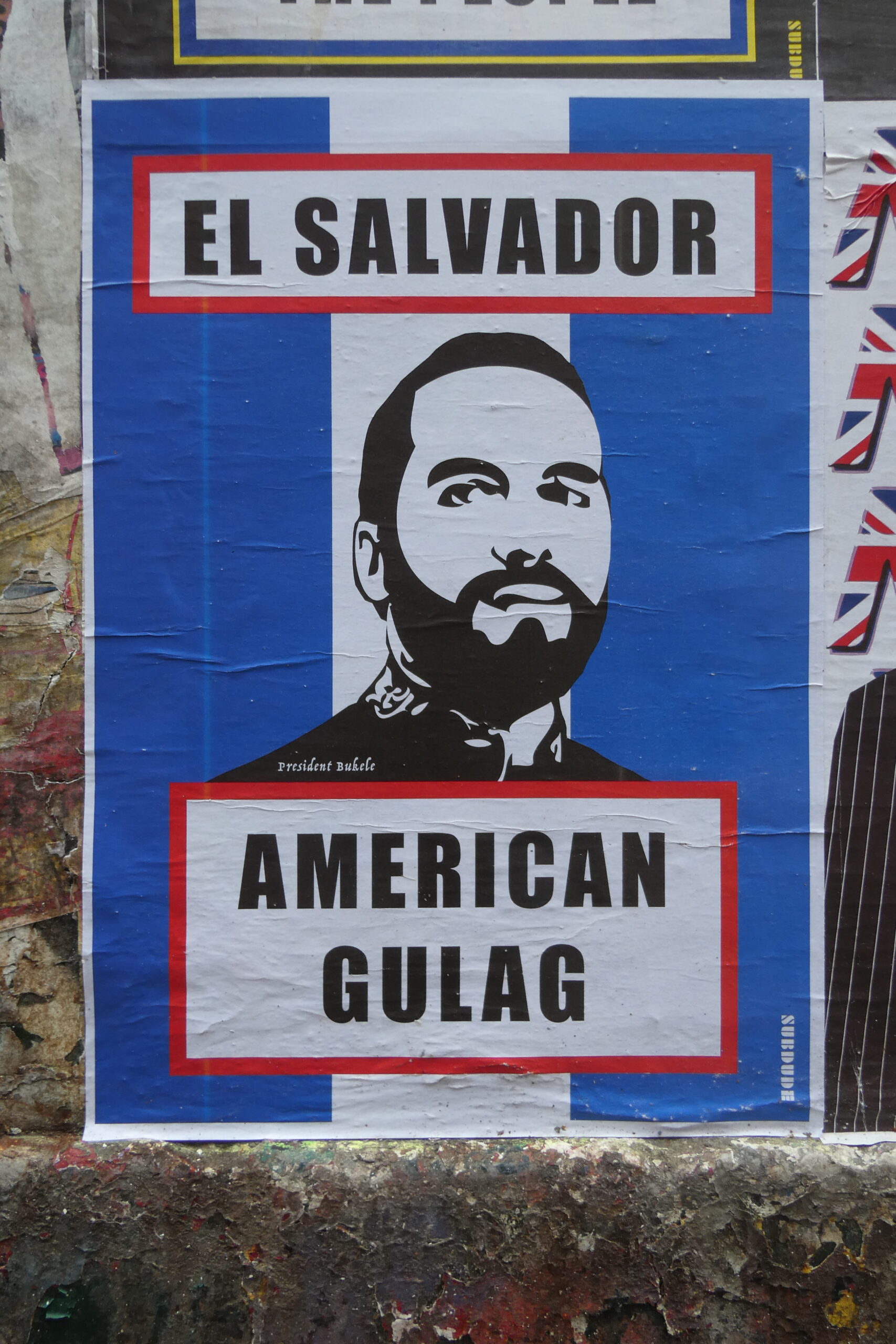
19


This article by Braulio Carbajal originally appeared in the November 5, 2026 edition of La Jornada, Mexico’s premier left wing daily newspaper.

Mexico City. The Governing Board of the Bank of Mexico (BdeM) decided by majority to lower by a quarter of a percentage point the target for the overnight interbank interest rate, which stood at 6.25 percent effective November 6, after judging that the disinflationary process has continued and that no demand pressures are perceived in the economy.

Victoria Rodríguez Ceja, José Gabriel Cuadra García and Omar Mejía Castelazo voted in favor of the cut. Galia Borja Gómez and Jonathan Heath came out in favor of keeping the rate at 6.50 percent. The decision was made with all members of the Board present, which described it as a one-time adjustment.

The central bank noted that in the third quarter of 2026 the economy continued to expand.

Between the first half of September and the first half of October, headline inflation rose from 3.42 to 3.62 percent, the result of an increase in non-core inflation. Core inflation fell marginally from 3.79 to 3.78 percent in that period.

Headline inflation forecasts were revised upward for the fourth quarter of 2026, mainly due to higher-than-anticipated levels of non-core inflation. For that quarter the BdeM projects 3.7 percent for headline inflation, compared with 3.5 forecast on September 24, and 3.7 for core, compared with 3.6.

The expectation that headline inflation will converge to the target in the fourth quarter of 2027 is maintained. For the four quarters of 2027 the central bank forecasts headline inflation of 3.4, 3.3, 3.2 and 3.0 percent, unchanged from its September estimate, and core inflation with the same trajectory. These forecasts, the central bank specified, are subject to various risks.

As upside risks for inflation, the Board pointed to the persistence of core inflation, a greater depreciation of the peso, disruptions from trade policies or an inflationary impact from geopolitical conflicts, climate effects and cost pressures.

On the other hand, as downside risks it identified lower-than-anticipated economic activity in Mexico and the United States, a smaller pass-through of cost increases and lower pressures associated with episodes of appreciation of the national currency. It estimated that the balance of risks maintains an upward bias.

In the external environment, the document states that global economic activity would have expanded in the third quarter at a slightly slower pace than in the previous quarter. In several advanced economies headline inflation continued to rise due to higher energy prices.

Fed Kept Its Rates Unchanged

The Federal Reserve kept unchanged the federal funds rate range at its October meeting, and U.S. government rates declined at most maturities, although long-term rates reached multi-decade highs.

International financial markets continued to be volatile, the dollar showed limited variations and uncertainty persists over the conflict in the Middle East and its repercussions.

Since the previous decision, rates on government securities in Mexico fell at medium and long maturities and rose at short ones, while the Mexican peso depreciated. Economic policy changes by the U.S. administration and the possible prolongation of geopolitical conflicts, the Board noted, add uncertainty to the forecasts and could generate pressures on inflation in both directions.

Going forward, the central bank considers that keeping the rate at the level reached for a prolonged period will support the convergence of inflation to its target and will be adequate to face external macroeconomic challenges. Its decisions will take into account the observed and expected behavior of inflation, as well as the pass-through of the exchange rate to consumer prices.

The BdeM reaffirmed its commitment to its priority mandate and to the need to persevere in its efforts to consolidate an environment of low and stable inflation.

The post Bank of Mexico Surprises and Cuts Interest Rate to 6.25% appeared first on Mexico Solidarity Media.


From Mexico Solidarity Media via This RSS Feed.

20


President Santiago Peña was found guilty of "poor performance of functions" in a political trial held in his absence. Photo: EFE.

Paraguay’s Senate removed President Santiago Peña from office on Friday, finding him guilty of poor performance of duties in an impeachment trial over the collapse of Ueno Bank.


The vote was 44 in favor with one senator absent, out of 45 senators. Santiago Peña did not appear at the trial and left his defense to his lawyers.

Peña, 47, becomes the second Paraguayan head of state in recent history to be removed through a political trial. The Senate also ordered every record of the case sent to ordinary courts.

Vice-president Pedro Alliana will assume the presidency. Several legislators described him during the hearing as part of the Ueno scandal, meaning the political team that surrounded the outgoing leader remains in command.

RELATED: Six Ueno Bank Executives Sent to Pretrial Detention in Paraguay Probe

The proceedings began Thursday, when the Chamber of Deputies approved the accusation with 78 votes. That same day Peña submitted his resignation, but a vote on it in a joint session of Congress collapsed for lack of quorum after ruling-party lawmakers left the chamber, so he remained formally in office.

The resignation was a tactic to obtain the status of lifetime senator, which carries immunity until Congress lifts it. Article 189 of the Constitution says democratically elected former presidents become lifetime senators unless they have been impeached and found guilty.

🇵🇾 BREAKING: Paraguay’s Senate just convicted President Santiago Peña of misconduct and removed him from office over the collapse of Ueno, a digital bank linked to his business interests.

Senators rejected his resignation, stripping him of the lifetime seat and immunity given… https://t.co/C70qmexhjr pic.twitter.com/14N2Rm9kYN

— NewsForce (@Newsforce) November 6, 2026

Accusations and Defense

Deputy Rocío Vallejo, one of the accusers, told the Senate that Peña created a $1.2 billion hole for Paraguayans and left three million people affected in a single day, referring to the Central Bank’s intervention in Ueno Bank on November 3. She affirmed that the central issue was the theft of public money and serious damage to pension funds, and that five pension funds, including the Social Security Institute (IPS), were left without resources.

“Santiago Peña must leave this Congress with the political sanction of being the largest embezzler in the history of Paraguay, and in a serious country that is poor performance of duties,” Vallejo declared, rebutting a defense that dismissed the accusation as null.

The defense rejected the case. One of Peña’s lawyers, Ricardo Preda, called the accusation a “theory” and argued that banks fail everywhere but that no country has removed a President over it. The defense also called the accusation null. The Senate had earlier rejected, by 39 votes to three, Peña’s request for 72 more hours to prepare his defense.

About 60% of Paraguay’s adult population, nearly three million people, had their financial lives at Ueno Bank. Prosecutors and accusers allege that during Peña’s term large sums of public funds were placed in the bank, which used them for unsecured loans and irregular overdrafts to at least 23 companies owned by or commercially linked to the bank’s leadership. The Central Bank found that Ueno’s solvency ratio had fallen below 50% of the required minimum, and the bank had 2.9 million clients in a country of 6.1 million people.

Santiago Peña, President since 2023, held shares in the bank’s parent business group until well into 2025. Ueno Bank received state contracts under his government, and that Peña appointed Carlos Carvallo, a former president of Ueno finance company, as Central Bank chief. Carvallo resigned on November 3.

Vice-president Pedro Alliana, whom several lawmakers named during the trial as part of the Ueno scandal, will succeed Peña. The Chamber of Deputies earlier rejected an impeachment request against Alliana, by 48 votes to 30.


From teleSUR English via This RSS Feed.

21


The company had instructed collective bargaining agreements without wage increases until 2030.

On Friday, German weekly Der Spiegel reported that Volkswagen has softened its proposal for a global wage freeze until 2030, replacing a stricter policy initially proposed to contain labor costs.

RELATED: Germany’s BMW to Cut 8,000 Jobs Worldwide by End of 2027

In October, the company had instructed its human resources managers to negotiate collective bargaining agreements without wage increases until 2030. Reductions in bonuses, overtime pay, and other benefits were also being considered.

However, a subsequent internal document modified the approach. Instead of imposing a general wage freeze, the text proposes a reduction in labor costs to reach competitive levels, with a freeze being considered a possible measure.

The new version also removes explicit references to cutting variable employee compensation. Although Volkswagen did not officially comment on the change, it cited the confidentiality of the internal documents published by German media.

German car giant Volkswagen will cut 100,000 jobs by the end of the decade in the biggest restructuring in global auto industry history.

Four German plants face an uncertain future as the carmaker battles US tariffs and Chinese competition.

🔴 More on https://t.co/MbrRGkFd1I pic.twitter.com/D7HZ1jgEmX

— Al Jazeera English (@AJEnglish) September 4, 2026

Representatives of the international works council welcomed the modification. They believe that a decision made at headquarters in Wolfsburg cannot impose a wage freeze on hundreds of thousands of workers for several years.

The issue has generated concern among unions: in Spain, CCOO and UGT categorically rejected any attempt to freeze wages until 2030 and attributed the current situation to strategic errors by management.

According to the leaked documents, the measure could affect a large portion of the group’s 600,000 employees worldwide and cause a real loss of revenue of around 10%.

#Germany | The far-right AfD won 43.8% of the vote in Saxony-Anhalt, becoming the first far-right party to win a German state election since WWII.
The historic result challenges Germany’s political “firewall” against the far right amid growing economic and political discontent.… pic.twitter.com/YdIOPZcbG0

— teleSUR English (@telesurenglish) September 7, 2026

teleSUR: JP

Source: EFE


From teleSUR English via This RSS Feed.

22


By Bruno Sgarzini  –  Nov 4, 2026

“She could have avoided the show, the airports are there,” Delcy Rodríguez said a day after María Corina Machado returned to Caracas accompanied by a caravan of cars during the peak hour of the weekend. A few days later, Rodríguez herself danced at an event to the song by Dominican rapper Bulin 47, which has gone viral on social media.

In a synchronized movement, the acting president of Venezuela moved to the chorus of the song titled “Dame Hombro,” which originated from a freestyle session in Madrid when Bulin 47 entered a nightclub and a street artist dropped a rhyme on him. The “shittification” on social media turned the song viral when the faces of Bulin 47 and the street artist were replaced by global personalities, such as Messi and Cristiano Ronaldo, Donald Trump and Joe Biden, among many others.

In Venezuela, Henrique Capriles Radonski, another former opposition leader, went viral when videos of his neighborhood tours were altered by AI to show him dressed as El Chavo, Goku from Dragon Ball Z, Batman, The Joker, and a long list of fictional characters, while he criticized Delcy Rodríguez’s government with a strong exclamation: “What a mess, man!” Julio Coco, an opposition influencer, warned María Corina Machado not to be wary of the Bolivarian Intelligence Service of Venezuela, nor the Venezuelan police, but of the “messes.”

Thus, the return of María Corina Machado, with a clean record and without judicial accusations, is set against a backdrop of a permanent campaign on social media. The opposition leader, who called for sanctions and foreign intervention in the country, seems to be looking to reclaim the political center of anti-Chavismo and relaunch street protests to increase pressure for new elections.

In several interviews, María Corina Machado has criticized that her party, Vente Venezuela, was not invited to participate in the national dialogue between Chavismo, led by Jorge Rodríguez, president of the current National Assembly, and a sector of the opposition, led by Dinorah Figuera, head of the now defunct parliament won by the opposition in 2015. After visiting the epicenter of the La Guaira earthquakes, she spoke in favor of actively participating in this process under the principles of “memory, justice, reparation, and non-repetition.”

According to an anonymous US State Department official, the path of the negotiation is clear: first, the Supreme Court of Justice must be renewed with judges chosen from both the opposition and Chavismo, then the National Electoral Council, in the same way, to make it “impartial,” and finally, Delcy Rodríguez must declare “presidential vacancy” so that presidential elections can be called in six months.

“We must exercise our influence as a government over the interim authorities to ensure that this process moves forward responsibly. Our goal is to hold elections in which the losing side would say that the elections were fair, that they simply lost, and that they will move to the opposition,” declared this anonymous official on behalf of Marco Rubio, Donald Trump’s Secretary of State.

The situation is unclear because these are announcements for show without specific dates or deadlines. They also have the clear intention of giving “something” to María Corina Machado and the Republican congress members who support her, who ran for election in competitive districts, such as Florida, where the vote of anti-Chavista Venezuelan migrants carries significant weight. However, one thing is clear to most political sectors: Machado’s return accelerates the arrival of “D-Day” in Venezuelan politics, the final showdown between the opposition and Chavismo, which will determine who will lead the current process of economic opening, privatizations, and Venezuela’s definitive shift toward the sphere of US influence.

María Corina Machado, with a pyromaniac spirit, has the experience of having generated protests in 2014 with the famous La Salida plan, supporting the 2017 uprising due to a Supreme Court ruling that took over a role of the opposition-majority National Assembly, and backing the proclamation of Juan Guaidó as interim president, among many failed attempts that can be listed like the movies of the character from The Simpsons, the renowned actor Troy McClure.

The conflict, in itself, would re-legitimize her leadership in the opposition and allow her to test the mood in the Bolivarian National Armed Force, a Chavista stronghold that has always been elusive for the anti-Chavistas. It is not a question of knowing if this will happen, but rather what pretext will trigger this almost certain show of force. An election, a catastrophe, a citizen protest over wages or infrastructure problems, or some obstacle in the political path laid out by the United States?

The Turkish Soap Opera of Venezuela Business Dealings

For Delcy Rodríguez, her brother Jorge, and Diosdado Cabello, the three leaders of Chavismo in the government, the matter is somewhat complex: the sanctions, the conflict, the political repression acknowledged by the state with the amnesty law, the invasion, and the political shift with the United States have left a trail of political costs. Without a visible economic recovery and a substantial improvement in the quality of life for Venezuelans, a potential Chavista presidential candidacy is synonymous with political demise at the polls.

The strategy of the three Chavista leaders, focused on stretching political times, seems trapped if it fails to reap some of the benefits from oil and mining investments that are sold as a promise of economic progress in Venezuela. The degree of internal cohesion within the military apparatus after the January 3 invasion, surrounded by suspicions of betrayal, is also unclear. This is why Rodríguez talks about respecting an electoral schedule, outlined in the Constitution, which establishes regional, parliamentary, and finally presidential elections, without a clear deadline, and María Corina Machado says that presidential elections should be held in 2027.

The only thing that seems to be beyond question is Venezuela’s carnal relations with the United States.

(Diario Red)

Translation: Orinoco Tribune

OT/SC/CD


From Orinoco Tribune via This RSS Feed.
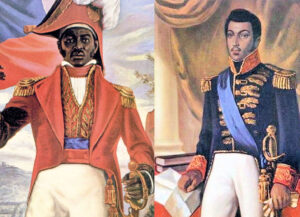
23


This article by Alma E. Muñoz and Arturo Sánchez originally appeared in the November 6, 2026 edition of La Jornada, Mexico’s premier left wing daily newspaper.

Mexico City. In response to the distancing made by the president of the PAN, Jorge Romero, from Vicente Fox over his participation in the 2006 electoral fraud, President Claudia Sheinbaum Pardo asserted that the doctrine of the right is hypocrisy, as Carlos Monsiváis said.

She noted that the distancing is “very interesting,” after this PAN leadership “re-invited” Fox, whose statement about those elections “is very relevant,” because:

When we denounced the 2006 fraud, they treated us like we were crazy. Of course there was fraud.

President Claudia Sheinbaum

At her press conference, she was ironic about the expression used by Luis Carlos Ugalde, former president councilor of the then Federal Electoral Institute, that Fox “should not talk anymore, please.”

The President charged that the PAN member governed the country “as if it were a business” and now “we find out from Vicente Fox himself that yes, yes, he did commit electoral fraud, that he participated, that he never would have handed the presidential sash to (Andrés Manuel) López Obrador.” It is very interesting, she pointed out, that “now the PAN says: oh, no, no more Fox, the one we brought in to help us with the next election; no, better we distance ourselves from him because he talks too much.”

The post Sheinbaum Highlights PAN’s Distancing From Fox Over Remarks on the 2006 Fraud; How Interesting, Now They Don’t Want Him to Talk appeared first on Mexico Solidarity Media.


From Mexico Solidarity Media via This RSS Feed.
24


Thousands of teachers and workers from other sectors marched in Old San Juan, Puerto Rico, today to demand a dignified retirement and some $94 million in teacher career ladder payments from the government of Governor Jenniffer González.


Chanting “Where is JGo? JGo is not here. JGo is betraying the country’s teachers,” protesters flooded the streets of Old San Juan to La Fortaleza, where government representatives received a group of union leaders.

RELATED: U.S. Bars Former Barcelona Mayor Ada Colau from Entering Puerto Rico

Union leader Edwin Morales, coordinator of the Puerto Rico Teachers Federation (FMPR), told journalists that retired teachers receive “poverty pensions,” a situation the government has not addressed immediately as it had promised. “If they don’t address (our demand) with the seriousness it deserves, we are not going to rest here, and if we have to organize a national strike, we will do it,” Morales said.

In an unusual convergence, the march—which started toward the executive seat at Plaza Colón in Old San Juan—was joined by the School Bus Drivers Federation, the United Firefighters Union of Puerto Rico, the Brotherhood of Exempt Non-Teaching Employees of the University of Puerto Rico, the Workers Union of the Puerto Rican University Professors Association and the Independent Union of the Aqueduct and Sewer Authority.

📚 "Las clases hoy son en la calle… es la única manera que logramos nuestros derechos". Bajo un fuerte reclamo de justicia salarial y retiros dignos, cientos de manifestantes pertenecientes al magisterio, al Sindicato de Bomberos y a la Hermandad de Empleados Exentos No… pic.twitter.com/EVZcqs7P5k

— Prensa Abierta (@prensaabiertapr) November 5, 2026

The March of Indignation, as the teachers called it, arises because workers “are tired of unfulfilled promises,” as is the case with school bus drivers; according to José Rosado Rolón, president of the School Bus Drivers Federation, the government owes them nine million dollars for services to the Puerto Rico Department of Education. “They want to make our companies go bankrupt, because we know what is behind this: they want to benefit a particular company, and they don’t care about the children; what they care about is benefiting a company,” Rosado Rolón said.

FMPR President Mercedes Martínez revealed that she established a line of dialogue with the government to address the multiple demands after, following several attempts, spokespersons for the different organizations met with the new Secretary of the Governorship, Norma Burgos. “This month we are going to organize to intensify the struggle, and by December 2 we expect concrete proposals and actions so that they return what they have stolen from us,” Martínez said.


From teleSUR English via This RSS Feed.

25


Brigadier General Ali Balali, adviser to the commander of the Aerospace Force of Iran’s Islamic Revolutionary Guard Corps, warned Washington that any nation allied with the United States could become a “legitimate target” in the event of new aggression against the Islamic Republic.


Balali specified that Iran’s response would not be limited to a specific geographic area and that its extent would depend on the nations that choose to accompany and coordinate with Washington. The new targets added to the Iranian list will be revealed when an eventual military response takes place, he said, stating that “when the enemy again commits the folly of imposing another war on us, those targets will be clear to the whole world.”

RELATED: Iran Nuclear Doctrine Review: 1 US Letter Signals Sharp Tone Change

The general defended the national missile, drone and air defense industry as one of the pillars of deterrence capability and explained that dependence on foreign weaponry makes it difficult to guarantee sustainable capacity.

Domestic manufacturing allows both production and operations to be maintained without depending on external factors, he said, adding that “we have completely nationalized this industry and all needs related to the production of missiles, drones and air defense systems are covered inside the country.”

He also highlighted the growth of the missile base network spread throughout Iranian territory, asserting that the facilities, extending from northeast to northwest and southeast, have underground structures designed to maintain operations even under military attack.

Marco Rubio defended Trump's war with Iran despite acknowledging its political costs and impact on fuel prices.

“Higher prices at the gas pump, I acknowledge, is not like the kind of thing you campaign on and brag about,” Rubio said.

He argued that Trump “deserves a tremendous… pic.twitter.com/HEulIfEbSU

— Clash Report (@clashreport) November 5, 2026

Regarding Washington’s and Israel’s missile defenses, he maintained that those systems fail to stop all attacks, since some Iranian projectiles reach Mach 7, while the hypersonic Fattah, Iran’s first ballistic missile, reaches Mach 12, according to his statements.


From teleSUR English via This RSS Feed.

view more: next ›