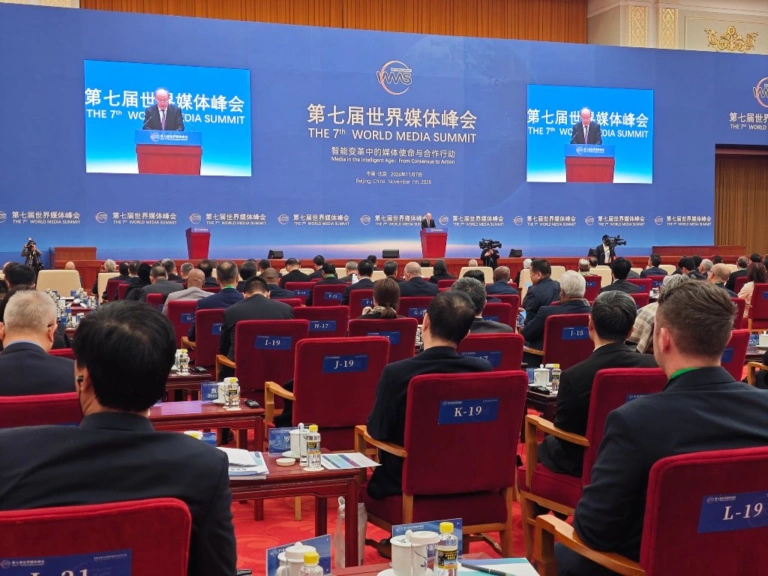
Delegates attend the 2026 World Media Summit in Beijing to discuss artificial intelligence, global journalism and international media cooperation.

Around 500 delegates from 112 countries discuss artificial intelligence, misinformation and international media cooperation.


The 7th World Media Summit opened in Beijing on Friday, bringing together around 500 delegates from approximately 330 media organizations, think tanks and institutions across 112 countries to discuss artificial intelligence, misinformation and the future of global communication.

RELATED: China and Oman Sign Historic Bilateral Deals After Beijing Summit

Hosted by China’s Xinhua News Agency and the Beijing municipal government, the summit comes as artificial intelligence reshapes media production and raises questions about technological access, information governance and international cooperation.

Representatives from Cuba’s Prensa Latina, Juventud Rebelde and Ideas Multimedios, as well as Venezuela’s teleSUR, are among the participants. Delegations also include Iraqi Media Network, Japanese media organizations and representatives from several Gulf countries.

Discussions focus on developing AI applications for newsrooms, sharing technological resources and narrowing the digital divide between developed countries and the Global South, which has historically had limited control over digital platforms, satellites, cables and algorithms.

Delegates are also examining how media organizations can strengthen international cooperation through information sharing, fact-checking and efforts to counter misinformation.

AI governance is another central theme, with participants discussing algorithmic transparency, data security, content traceability and the development of international standards for the technology.

The summit also explores how emerging technologies can foster dialogue between civilizations, preserve cultural diversity and strengthen exchanges among peoples.

Organizers have highlighted the role of media in promoting a safer international environment through information sharing, verification and cooperation against disinformation.

The gathering coincides with the 95th anniversary of Xinhua’s founding. Its agenda also includes presentations on China’s modernization, focusing on Beijing’s urban development, heritage preservation and green growth.

Expected outcomes include the Beijing Consensus of the 7th World Media Summit, the 2026 report on artificial intelligence and global media development, the launch of a biomimetic humanoid presenter and the Xinhua Dictionary AI Agent. Organizers also plan to launch a Global Media Initiative aimed at establishing common standards for artificial intelligence.


From teleSUR English via This RSS Feed.

Ang Bayan | November 7, 2026 (philippinerevolution.nu)
 

Ang Bayan ("The People") is the official publication of the Communist Party of the Philippines, guided by Marxism-Leninism-Maoism. It is published by the Central Committee. AB comes out fortnightly every 7th and 21st of each month. The original Pilipino edition is translated into English, Bisaya, Waray, Hiligaynon and Iloko.

The post Ang Bayan | November 7, 2026 appeared first on PRWC | Philippine Revolution Web Central.


From PRWC | Philippine Revolution Web Central via This RSS Feed.


Caracas (OrinocoTribune.com)—On Friday, November 6, Venezuelan officials reopened Washington Square in Caracas, as Acting President Delcy Rodríguez joined a ceremony marking the 250th anniversary of US independence.

The event, along with acting president’s participation, prompted criticism from Chavista commentators, who questioned the tribute to George Washington amid decades of US intervention against Venezuela and the January 3 US military attack that led to the kidnapping of President Nicolás Maduro and First Lady Cilia Flores.

The ceremony had originally been scheduled for July 4 but was postponed after the June 24 double earthquake heavily struck La Guaira state and Caracas.

Reactions
Anti-imperialist outlet Venezuelanalysis criticized the display of US flags and the government rhethoric. “The disgusting proliferation of US flags. Venezuelan Acting President Delcy Rodríguez reinaugurated George Washington Plaza in Caracas (in the middle-class sector of El Paraíso), dropping some celebratory mumbo-jumbo about Washington and how he’s an inspiration,” it wrote.

“And it gets worse, giving US flags to kids to complete the neocolonial indoctrination. If they are too young to play with matches, they are also too young to be exposed to ‘peace diplomacy’ nonsense,” the outlet added.

Other Chavista voices argued that the criticism should also account for the coercive conditions facing Venezuela after the US military aggression, which threatened the country and its political leadership. They described the ceremony as taking place under pressure from a power that had recently bombed Venezuela and kidnapped its president and first lady.

Far-right influencer Eduardo Menoni used the ceremony to attack Chavismo and encourage divisions within the movement. “Chavista humiliation: Delcy Rodríguez paid homage to the US anthem and flag at the reopening of Washington Square…,” he wrote.

The ceremony and the plaza’s restoration
Rodríguez attended alongside Economy and Finance Minister Anabel Pereira Rivas, Economy Vice President Calixto Ortega, Public Works Minister Juan José Ramírez, First Deputy Foreign Minister Yuri Pimentel, and Caracas Mayor Carmen Meléndez.

The US delegation included embassy Chargé d’Affaires John Barrett; Luis Méndez, assistant secretary for South America at the State Department’s Bureau of Western Hemisphere Affairs; James C. O’Brien, senior adviser at the Treasury Department’s Office of International Finance; Andrew Rapp, acting assistant secretary at the Department of Energy; and Juan Pablo Varela, senior adviser at the Office of the Secretary of Energy.

Washington Square, inaugurated in the mid-20th century, is a public gathering place in Caracas and contains a statue of George Washington. Its diminished prominence during Chavismo has been associated with the deterioration of relations caused by US imperialist actions against Venezuelans.

On October 12, Baruta municipality held a ceremony to reopen Plaza Lincoln in the Bello Monte neighborhood. The event was led by US Chargé d’Affaires Barrett and Baruta Mayor Darwin González. Local media reported that a public-space restoration plan also included work on Washington Square, leading some to believe the US Embassy had carried out the renovation. EFE reported that the Venezuelan Ministry for Public Works oversaw the restoration.

The project involved multidisciplinary teams and the renovation of more than 2,400 square meters. The central sculpture, which dates to the 19th century, was also restored.

Rodríguez said the reopening recognized the historical ties between Venezuela and the United States, which mark 191 years of diplomatic relations in 2026. “This reopening of the plaza, a tribute to a leader of independence, a founding father, the first president of the United States, George Washington, is a heartfelt tribute to his leadership, a heartfelt tribute to the historical legacy he left for the United States,” she said.

She noted that new generations should learn about Venezuela’s independence heroes and “recognize the heroes of other nations.” “Simón Bolívar, in his independence and emancipation struggle, also saw a path for the peoples of our America to become independent and sovereign peoples,” she added.

Rodríguez congratulated the US people on the anniversary and reiterated the value of recognizing other nations’ historical figures. “We join in the jubilation of the United States for its 250 years of independence, but also in paying tribute to a founding father like President George Washington,” she said.

Barrett compared Washington and Bolívar, saying: “We should look with pride upon that statue of George Washington, who was our liberator, our leader, very similar to Simón Bolívar.” He also recalled that US Interior Secretary Doug Burgum took part in a ceremony in May to reopen the Simón Bolívar Square in Washington, DC, after its renovation.

The comparison drew criticism from Chavista researcher William Serafino, who cited Washington’s role in the colonial war against Indigenous nations. “They were so alike that look at what the Founding Father said in 1779, in a letter to Major General Sullivan, in the context of the war of colonial expropriation of Indigenous lands (Seneca, Cayuga, and other tribes) that he personally led: ‘The immediate objectives are the total destruction and devastation of their settlements and the capture of as many prisoners as possible of all ages and sexes. It will be essential to ruin their current crops and prevent them from planting more… I would recommend that some post in the center of the Indian Country should be occupied with all expedition, with a sufficient quantity of provision, whence parties should be detached to lay waste all the settlements around with instructions to do it in the most effectual manner, that the country may not be merely overrun but destroyed.’ The similarity between a white settler who massacred Indigenous people and our Liberator is obvious,” he wrote on social media.

Other commentators challenged the comparison by pointing to Bolívar’s antislavery commitments, his emancipation of the enslaved people he inherited—as sole heir of the richest family in the colonial Venezuela—and the poverty in which he died. They contrasted this with Washington’s ownership of enslaved people and his death as a wealthy landowner.

Cira Pascual Marquina: Building International Solidarity From a Venezuelan Commune

Embassy reception
National Assembly President Jorge Rodríguez also attended a formal reception organized by the US Embassy as part of the independence celebrations on Thursday night. He said he had accepted an invitation from Chargé d’Affaires Barrett and expressed support for maintaining cooperation between the two countries.

“The close ties of cooperation between our governments are a fundamental tool for the stability and prosperity of all our people,” Rodríguez wrote.

Special for Orinoco Tribune by staff

OT/JRE/SF


From Orinoco Tribune via This RSS Feed.
 

Chinese lawmakers are proposing to restrict a contentious form of detention and police surveillance measure, among other changes to the country’s Criminal Procedure Law. Known as residential surveillance at a designated location (RSDL), the measure was originally intended as a mild restriction of personal freedoms to lower the rate of detention and arrest. Since RSDL’s introduction in 1996 and expansion in 2012, it has become the harshest form of detention used in state security cases, including...


From China - South China Morning Post via This RSS Feed.


The polls point to a very tight scenario between the ruling National Party and the opposition Labour Party. Photo: EFE.

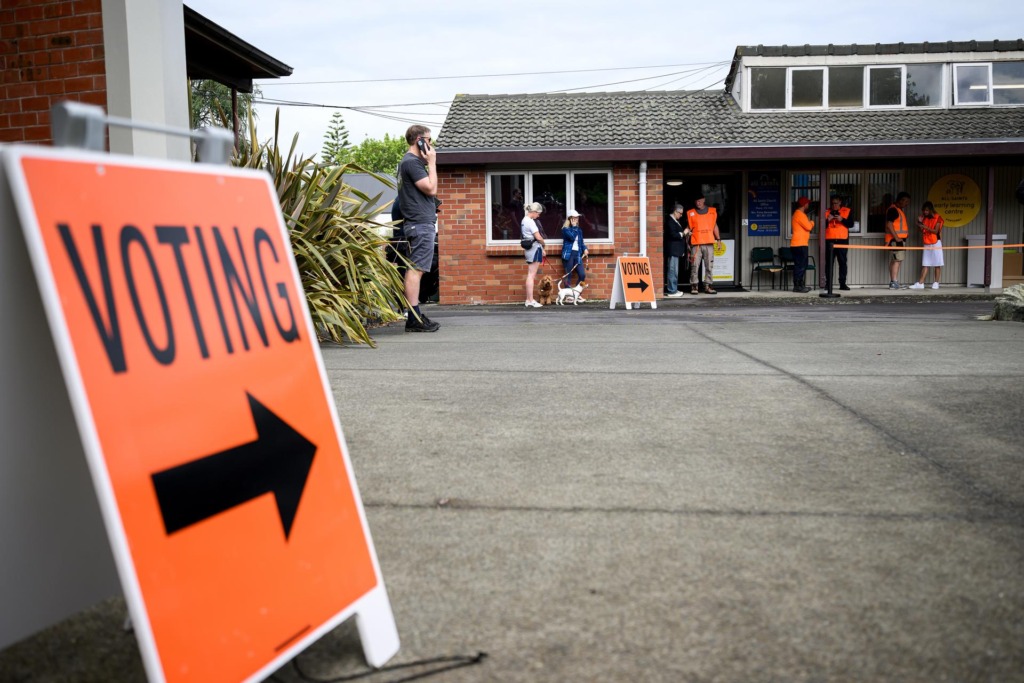
New Zealand voters went to the polls Saturday in a general election that has become a near-even contest between the governing National Party and the opposition Labour Party, with polls pointing to a Parliament where no single party holds a majority.


New Zealanders headed to polling stations across the country Saturday to choose the next Parliament. The Electoral Commission reported 3,790,946 registered voters, and roughly 2,300 polling centers operated from 9:00 A.M. to 7:00 P.M. local time.

The day will define whether the ruling coalition retains power or hands it to the opposition in a contest the surveys describe as too close to call.

RELATED: Grenada PM Mitchell Reelected in Landslide

Prime Minister Christopher Luxon, a center-right leader, is seeking to extend the mandate he secured in 2023 with coalition partners ACT and New Zealand First. He has campaigned on stability and economic management.

His Labour opponent, Chris Hipkins, has pitched a center-left program focused on easing the cost of living and rebuilding public services.

🧵 Thread

New Zealand's PM Christopher Luxon’s National Party is fighting to secure a second term in a tight election dominated by the spiralling cost of living.

What you need to know about the 2026 New Zealand elections https://t.co/qkhrIq4ECh pic.twitter.com/6myXUQCXUW

— Al Jazeera English (@AJEnglish) November 6, 2026

A Tight Two-Party Race

Polls describe a razor-thin margin between the two main parties. Neither National nor Labour is expected to reach the majority required to govern alone, a reality that hands considerable weight to the smaller groups in any post-election negotiation. In that scenario, the formation of the next executive will depend on agreements among several forces rather than on a single decisive result.

The Greens, ACT and New Zealand First will influence how seats are distributed and will condition the talks that follow the vote.

New Zealand is in a delicate situation: between March 2025 and March 2026, 47,900 people emigrated to Australia, one of the largest annual departures on record, compared to 19,900 who made the reverse route. Economic pressure has dominated much of the campaign. Unemployment and inflation are climbing, and the recovery remains fragile. Tens of thousands of New Zealanders have already left for Australia in pursuit of better working conditions, a migration wave that became one of the defining issues of the debate. The rising cost of living has fueled frustration that both main parties tried to address.

In this context, the campaign of Opportunity, a centrist party founded in 2016 that has never been represented in parliament and now under the leadership of 38-year-old Qiulae Wong, has come out with great force.

New Zealand: polls are open in the 2026 New Zealand general election. Over 1.44 million advance votes have already been cast and more than two million voters are eligible to turn out before polls close at 7PM NZDT.

🇳🇿 Explore our election dashboard: https://t.co/GPC83YEMxj pic.twitter.com/sSe6kN9zps

— Oceania Elects (@OceaniaElects) November 6, 2026

Coalition Talks Ahead

New Zealand operates a mixed-member proportional system in place since 1996 and inspired by the German model, which has rarely produced single-party majorities.

Each elector has two votes: one to elect the representative of his or her constituency and another to choose a party, whose percentage determines the proportional distribution of parliamentary seats. Coalitions and support agreements have therefore become the usual route to forming a government.

To enter Parliament, a formation needs to reach 5% of the national vote or win at least one constituency. The House normally has 120 deputies, including representatives of seven constituencies reserved for the Māori population. To form a government in New Zealand, a party or coalition must have the confidence of a majority of members of parliament, although this does not necessarily require 61 votes, since a minority executive can also govern if it obtains the support or abstention of other parties in key votes, such as confidence or budgets.

Overseas participation has grown sharply. About 126,000 enrolled voters told the Electoral Commission they live abroad, a 36% increase from the 92,600 recorded in the 2023 election. They could vote by downloading and returning ballots online, by mail, or at polling stations set up in other countries.

Once the polls close, attention turns to the count and to the coalition arithmetic that will follow. With no clear winner expected, the next government may take shape only after days or weeks of talks among the parties. The official outcome will not be known until 27 November, a wait that could drag on if parties need several weeks of negotiations to reach a government agreement.


From teleSUR English via This RSS Feed.


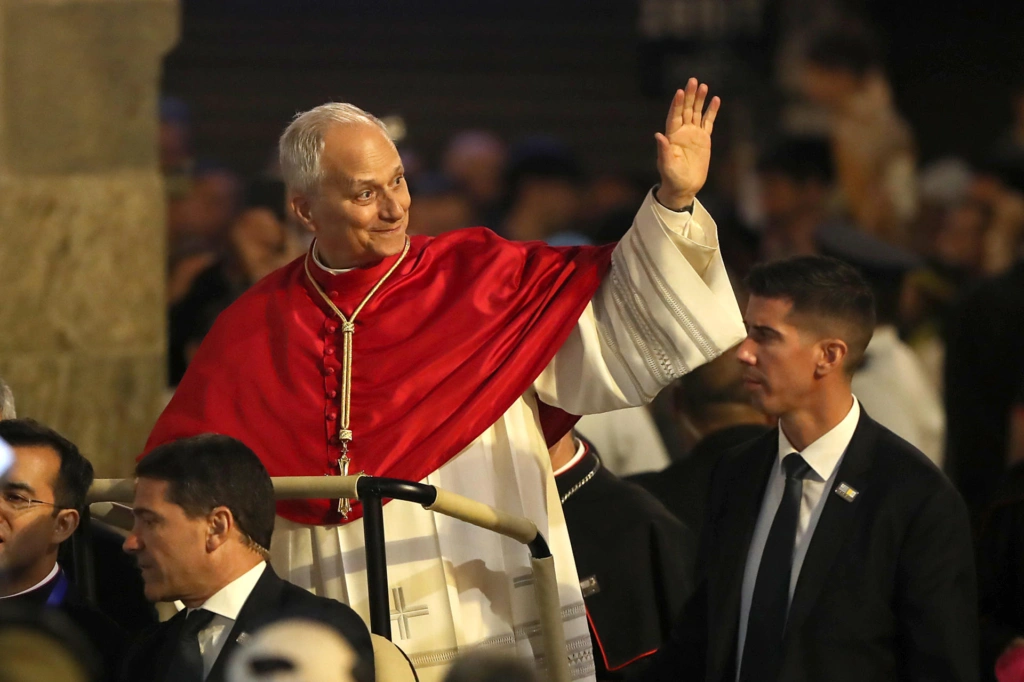
Pope Leo XIV arrived in Montevideo on Friday, launching his first apostolic tour of Latin America with a journey that will carry him through Uruguay, Argentina and Peru over the coming week.


Pope Leo XIV chose Uruguay for the opening act of his first Latin American journey, delivering a message that placed negotiation and legal respect above confrontation.

Speaking Friday from Plaza Independencia, before civil society representatives, the diplomatic corps and local authorities, he presented the small South American nation as a model for a region where divisions can harden quickly.

RELATED: Pope Leo XIV Demands End to Yemen Hostilities in Urgent Peace Appeal

Uruguay’s Constitution commits the country to promoting international understanding, and the Pontiff connected that founding principle to the nation’s present conduct. The fact that Montevideo serves as the seat of the MERCOSUR Secretariat, he said, “gives particular concreteness to that vocation of fostering spaces of understanding and cooperation in the region.”

His central appeal was unmistakable. “In times when differences can easily become a cause of confrontation, persevering in respect for the law, in negotiation and in the patient search for agreements is a service that Uruguay can continue to offer its neighbors,” Pope Leo declared.

The reference to MERCOSUR carried considerable weight. As the headquarters of South America’s main integration bloc, Montevideo sits at the center of the continent’s trade and diplomatic architecture, a position the Pope framed as both legacy and responsibility.

Ver esta publicación en Instagram

Una publicación compartida de teleSUR English (@telesurenglish)

Dialogue and Consensus

President Yamandú Orsi received the pontiff at Carrasco International Airport after his arrival at 4:20 P
.M. local time aboard an Ita Airways flight from Rome. The two leaders then held a private meeting following the official welcome ceremony.

Orsi highlighted Uruguay’s secular tradition, its democratic institutions and the diversity of convictions within its society. He thanked the Holy See for its posture on human rights and the defense of human dignity.

“We share and accompany your unwavering stance in favor of the peaceful resolution of conflicts. Our commitment to dialogue and consensus, which governs our attitude at home, is what Uruguayans always promote in international organizations,” the Uruguayan President said.

He went further, warning that “scenarios of violence and wars between peoples are not created overnight” but are rather “climates that are prepared and fostered through disinformation and fears.” Governments, he stressed, carry the obligation to propose alternative forms of engagement.

The ceremony gathered three former Presidents, Julio María Sanguinetti, Luis Lacalle Herrera and Luis Lacalle Pou, as well as community organizations and a large musical delegation. The National Choir contributed 65 voices, the National Youth Choir 40, the National Children’s Choir another 40, and some 100 musicians from the National Youth Orchestra performed.

As an institutional gift reflecting the country’s rural traditions, the Uruguayan State presented the Pope with a handwoven wool blanket and riding gear. Pope Leo also received the keys to Montevideo and later met with bishops, priests, deacons, religious and seminarians at the Metropolitan Cathedral.

Ver esta publicación en Instagram

Una publicación compartida de teleSUR English (@telesurenglish)

The visit opens a 12-day journey across Latin America, the first of Leo XIV’s papacy. With his emphasis on negotiation, legal respect and patient consensus-building, the pontiff has signaled the tone he intends to sustain as he travels through the region, Uruguay offered as the example others might follow.

Argentina, Then Peru

In Argentina the itinerary carries political weight. The Pope will meet President Javier Milei at the Government’s House and deliver a speech to national authorities on social justice.

The Argentine program includes a stop at the Don Orione Cottolengo, activities at the Federal Penitentiary Complex, meetings with labor sectors, and liturgies in Córdoba and at the Luján Sanctuary.

On Wednesday, November 11, Pope Leo XIV flies to Lima for what organizers describe as the most significant leg of the tour. The trip marks an emotional return for Robert Prevost, the pontiff’s birth name. He arrived in Peru in 1985 as an Augustinian missionary and served as bishop of Chiclayo for eight years before Pope Francis called him to the Vatican.

In the Andean nation he will lead large events at the National Grand Theater and the National Stadium in Lima, and hold meetings with church communities in Chiclayo and Zaña. The itinerary also reaches Cusco, where he will pray the Angelus at Saqsaywaman.

The final stretch takes him into the Peruvian Amazon, to the city of Pucallpa, for encounters with native people and missionaries. It is a fitting close for a trip built around a return to the region where his ministry began four decades ago.

Ver esta publicación en Instagram

Una publicación compartida de teleSUR English (@telesurenglish)


From teleSUR English via This RSS Feed.


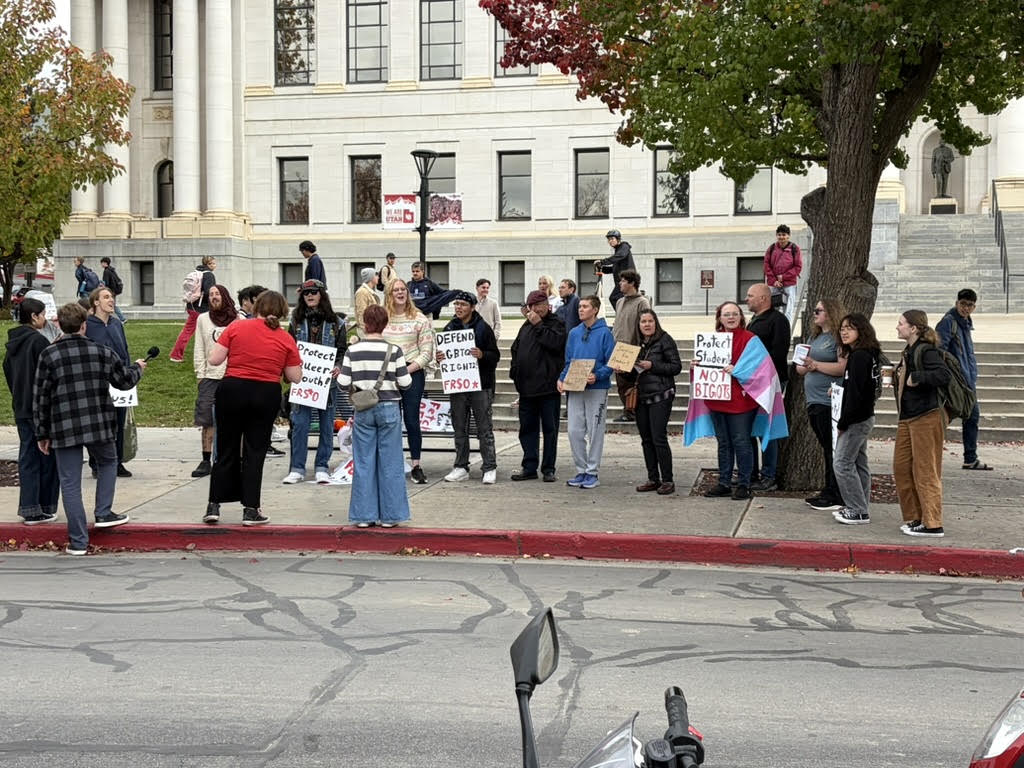
Protestors stand on sidewalk holding signs

Salt Lake City, UT – On November 4, dozens of LGBTQ students, youth and community allies gathered on the steps of the University of Utah’s President’s Circle to demand “Transphobes off campus.” The rally was called after Amber Grace, a U of U student and local anti-war activist, was followed and transphobically harassed by the U of U College Republicans.

The protest was the first political rally on the U’s campus in over a year. The College Republicans attempted to intimidate the protesters through heckles and invasive filming. The crowd shouted these agitators into silence with chants of “Hey hey, ho ho, transphobes have got to go!” Protesters held a banner reading “Protect queer youth, not bigots” and signs reading “We are a priority, not a minority!”

U of U College Republicans conduct transphobic and anti-immigrant outreach on the U’s Marriott Plaza, where students must walk to go to class. After filming the angry reactions of people who are angered by hate speech; they gain social media likes from right-wingers.

After being followed and filmed by one such transphobic U of U College Republican tabler, Grace was assaulted. Her glasses were punched off her face. Despite being the victim of a hate crime, Grace faces a trumped-up misdemeanor citation for assault. Protesters held signs reading “Drop the charges on Amber!”

U of U College Republican leaders Rylie Barnes, Riley Beesley and Daylan Alzamora took to social media to deadname and attempt to intimidate Grace. They then handed footage over to right-wing outlets like Fox News, leading to death threats against Grace.

“We have seen the University of Utah enable the reckless, harmful and discriminatory actions of the College Republicans, who are given free rein to harass marginalized students on their way to class,” said Grace.

“Last Tuesday, I should have also made it to class, and I should have not been on Fox News and other far-right outlets. Because I was followed, because I was recorded without my consent, and because I had transphobic language hurled at me, the situation turned into a hate crime against me.”

Organizers distributed a call urging people to contact Salt Lake County District Attorney Sim Gill to drop the charges on Amber Grace ahead of her first court appearance.

At the rally there were U of U College Republican hecklers and a heavy-handed University of Utah Police presence. At the University of Utah, transphobes are emboldened by the police and campus administration, but LGBTQ youth and students are strong and brave. They are ready to organize for LGBTQ liberation.

The rally was organized by the Utah Anti-War Committee and Freedom Road Socialist Organization.

#SaltLakeCityUT #Utah #SaltLakeCity #LGBTQ


From Fight Back! News via This RSS Feed.


Recovering the History of Anti-Zionist Judaism

Benjamin Moser is the Pulitzer-prize winning author of Susan Sontag: Her Life and Work, and of Why This World: A Biography of Clarice Lispector, which was a finalist for the National Book Critics Circle Award. His new book is Anti-Zionism: A Jewish History, which excavates the largely forgotten history of Jewish dissidents who opposed the creation of Israel, the killing and displacement of Palestinians, and the logic of ethnic and religious nationalism. He joined Current Affairs editor-in-chief Nathan J. Robinson to discuss the book, and where things stand with Israel and the Jewish diaspora today.


From blog via This RSS Feed.

People’s Mañanera November 6 (mexicosolidarity.com)
 

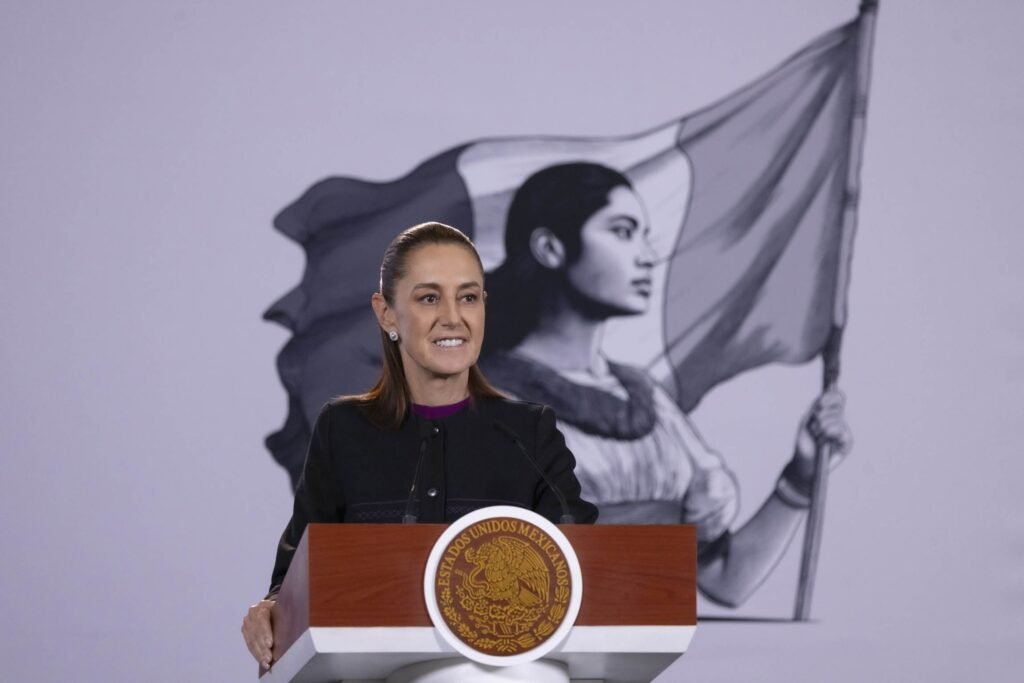
Every day, President Claudia Sheinbaum gives a morning presidential press conference and Mexico Solidarity Media posts English language summaries, translated by Mexico Solidarity’s Pedro Gellert. Previous press conference summaries are available here.

Reforming the INE: Oligopoly, Ties to Somos, and Zero Cover-ups“Perhaps they said, ‘Don’t touch the INE,’ to protect this entire electoral mafia that was built with their help,” President Claudia Sheinbaum said. She criticized former National Electoral Institute (INE) president Lorenzo Córdova for recognizing and maintaining the oligopoly for nine years without breaking up the concentration of power, and pointed to transactions totalling more than 2 billion pesos (US$110 million). Sheinbaum maintained that the Hernández Casillas brothers were groomed by a former Center for Investigation and National Security (CISEN) official linked to the new political party Somos, rejected the claim that the contractors were unknown, and questioned the organization’s attempts to distance itself from the scandal. The President also recalled Edmundo Jacobo’s 15-year stint in the INE and his reluctance to step down from his post.

Sheinbaum noted that the 2014 Pact for Mexico empowered 11 INE board members to appoint state electoral authorities and called for an investigation into a business network with ties to the Secretariat of Governance. She called for audits, transparent contracting, and lower costs leading up to 2027, leaving the Federal Superior Audit Department (ASF) and the state attorney general’s offices responsible for defining legal actions.

The President also announced a decree to strengthen Talleres Gráficos, with university oversight and participation. In response to Somos’s demands, she stated that “I stand by my words. I maintain them. Because I have proof of everything.”

Fox Confirms Interference Against AMLO in 2006; the PAN Now Distances Itself“When we denounced the fraud in 2006, they called us crazy,” the President recalled. She maintained that Fox validated the movement by acknowledging his intervention in favor of Felipe Calderón’s presidential bid and highlighted the PAN’s distancing itself from him following his statements. Sheinbaum defended the “vote-by-vote” recount and criticized the actions of the Federal Electoral Institute (IFE) and the Electoral Tribunal. She questioned talk of the “greatest electoral crisis” while omitting 2006 and the vote-buying in 2012.

Voces Vivas and Original: Pride in Our Roots and Dignified Artisanal Work“Voces Vivas,” a concert featuring 1,000 children and young people performing in 17 indigenous languages, will take place on November 7 in the Zócalo, and “Original,” a textile and artisanal arts fair with 580 creators, will be held from November 12 to 15 at Los Pinos. Both events celebrate and honor Mexico’s culture.


The post People’s Mañanera November 6 appeared first on Mexico Solidarity Media.


From Mexico Solidarity Media via This RSS Feed.


Japanese Prime Minister Sanae Takaichi has faced backlash online after writing a social media post celebrating Japan’s shodo calligraphy without mentioning its Chinese roots. On Thursday, Unesco released this year’s nominations for inclusion on its Representative List of the Intangible Cultural Heritage of Humanity. The 59 nominations submitted for consideration for the UN cultural body’s list include Chinese cuisine, Spain’s traditional jota music and dance genre and Japan’s shodo...


From China - South China Morning Post via This RSS Feed.


Kevin Abourezk
ICT

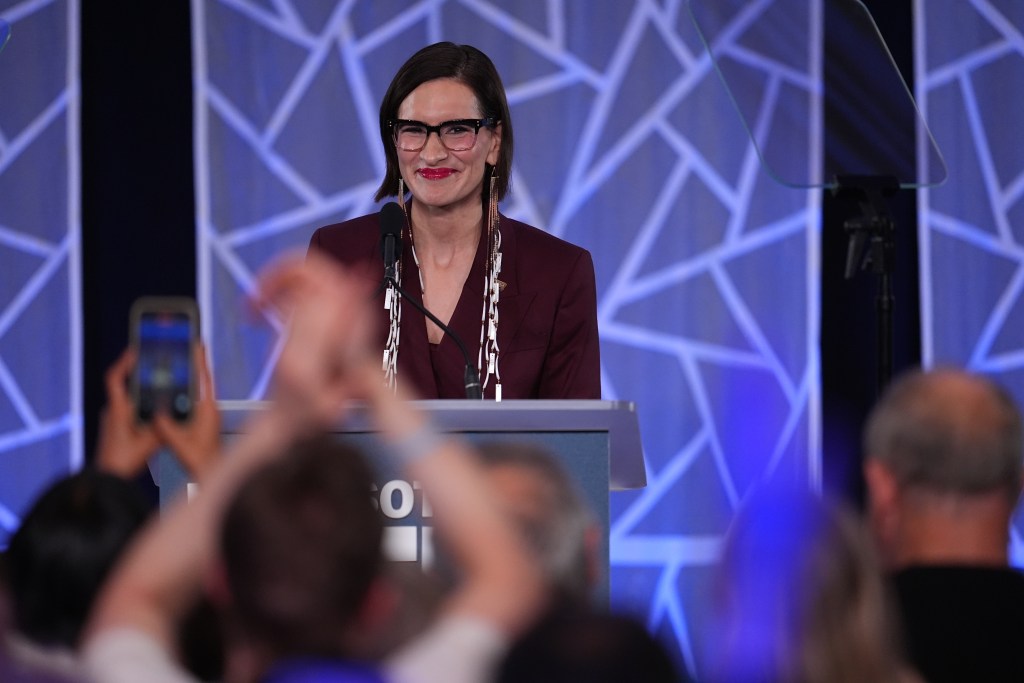
Newly elected Minnesota U.S. Sen. Peggy Flanagan, the first Native woman to serve in the upper chamber, said Wednesday that she looks forward to restoring Medicaid funding cuts, ending the Iran War and ensuring Indigenous people have quality healthcare as promised to them by the federal government.

“I am running on caffeine and adrenaline and tremendous amounts of gratitude to the people of Minnesota,” she said Wednesday during a virtual press conference. “I think we had a tremendous result last night in Minnesota but also all across the country.”

“I am thrilled that my sister Deb Haaland was elected governor of New Mexico last night,” she said, noting that Haaland, Pueblo of Laguna, is the first Native woman elected governor of a state. “I’m just very hopeful about the future as we head into 2027: holding the Trump administration accountable and also working hard to make sure that people can afford the lives they want to live. … I am honored and so very humbled to be the first Native American woman elected to the United States Senate.”

Flanagan – an Anishinaabe Kwe or Ojibwe woman – said her first priority would be to restore Medicaid funding that President Donald Trump’s administration cut, as well as banning prior authorization, which is a practice employed by many insurance companies in which they require customers to get permission before getting healthcare procedures done or risk not having those procedures covered. Flanagan said she also supports Medicare for all.

She said ending the war in Iran will be a priority and working to reduce the rising cost of gasoline, a problem she attributes to the war. She offered stern words about the Trump administration’s decision to send thousands of ICE agents into Minnesota earlier this year.

“We have been impacted so deeply here in Minnesota by the chaos, the terrorization, the scooping people up simply based on the color of their skin, including members of the Native community here in Minnesota, and the fact that they’ve been allowed to kill two Minnesotans with zero accountability whatsoever,” she said. “I think that is the message that I will be bringing to Washington, D.C. – that people want accountability.”

Flanagan said she was honored to see Michael Fairbanks, chairman of the White Earth Nation of which she is a citizen, and a drum group perform an honoring song for her prior to her victory speech Tuesday night.

“I absolutely understand the responsibility that I have as an Anishinaabe Kwe, as a member of the United States Senate, to ensure that we are working to make sure that the federal government upholds treaty rights and trust responsibilities, and frankly, that should be the floor,” she said.

“The significance of this moment is not lost on me, and I’m really hopeful for what we can do.”

She said she also looks forward to working with Wab Kinew, premier of Manitoba and Canada’s first First Nations provincial premier, to renew ties with Canada following the political turmoil that she said Trump’s tariffs and aggressive rhetoric have caused.

Kinew congratulated Flanagan on her win early Wednesday morning in a social media post:

“Congratulations MN Senator-Elect Peggy Flanagan and all the Democrats for absolutely dominating Trump in the midterms! I look forward to working together to lower costs on both sides of the border by ending the war in Iran (gas & diesel prices) and the Trump tariffs (the price of everything else).”

“The American people have delivered a resounding rejection of the President’s actions over the past two years,” Kinew wrote. “Canadians are ready to rebuild the relationship and strengthen our economies.”

Flanagan said she’s hopeful that her win would inspire other future Native leaders who can now see the possibility of fulfilling their own political ambitions.

“Although it took 250 years for a native woman to become a United States senator, I certainly know that the next Native woman … elected to the US Senate, it will happen much faster,” she said. “We won’t have to wait for 250 years, and it gives me a lot of hope.”

Looking forward, she said she plans to seek a seat on the Senate Indian Affairs Committee and will work to ensure the Indian Health Service is fully funded, and she offered some words of comfort for Mary Peltola, who is Yupʼik and the Democratic candidate for U.S. Senate in Alaska, whose tight race with incumbent Sen. Dan Sullivan, has yet to be called.

“The election night in Alaska lasts a little bit longer than it does in other states,” Flanagan said, referring to the challenges in counting votes in Alaska, where rural villages, including many Native villages, struggle to transport ballots, often by airplane, to the state capital of Juneau. “I know that she has run a really strong campaign and I look forward to that outcome, and I’m excited about the possibility of having two Indigenous women serving in the U.S. Senate together.”

She encouraged Native people all over the country to celebrate her win with her in whatever way they choose, and she thanked the many Indigenous women who have supported her throughout her life and political career.

“I would encourage all the aunties to wear your biggest earrings possible today,” she said. “Everyone should feel like they are a part of this. I exist because of the love and support of the Native community here in Minnesota, and I’d say even more specifically, the urban Native community here, and yeah, rock your ribbon skirt. Wear your big earrings. Let out your loudest lili and let’s go.”

The post ‘Wear your big earrings. Let out your loudest lili and let’s go’ appeared first on ICT.


From ICT via This RSS Feed.


Shortly after his dismissal, while Alliana was assuming as the new president, Peña was arrested at his home by the National Police of Paraguay and was placed in the custody of the Justice. Photo: EFE.

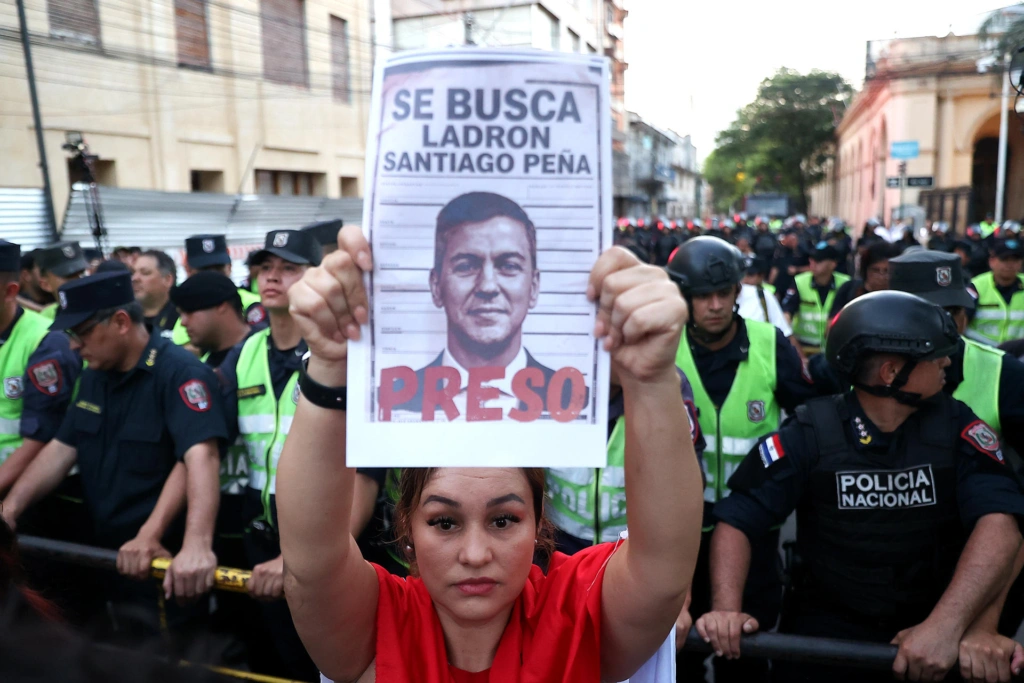
Paraguay’s National Police announced Friday night that ousted president Santiago Peña is officially detained at his residence, hours after the Senate removed him in a political trial over the Ueno Bank embezzlement scandal.


The arrest came almost immediately after the political rupture that ended his presidency. Peña, 47, had been convicted in absentia for poor performance of duties earlier in the day, with 44 senators voting in favor and only one absent from the chamber.

Prosecutors moved while the political dust was still settling. A team from the Economic Crimes and Anti-Corruption unit, joined by an agent of the Specialized Unit on Cybercrime and Money Laundering, issued the arrest warrant on suspicion of breach of trust and other punishable acts tied to the financial collapse of Ueno Bank.

RELATED: Santiago Peña Removed From Office by Paraguay Senate in Ueno Bank Trial

Peña was placed under detention at his residence. The measure was formalized in Case No. 92/2026, filed under the heading “Santiago Peña on breach of trust and others.” The order went directly to the National Police Command with mandatory compliance, instructing officers to proceed with the capture of the former head of State.

The ruling came from prosecutors Elena Fiore, Christian Benítez and Silvia González Véster, of the Economic Crimes and Anti-Corruption unit, together with Ruth Karina Benítez, an agent of the Specialized Unit on Cybercrime and Money Laundering.

The team is investigating irregularities at Ueno Bank, the institution at the center of the scandal that triggered the case against Peña and, ultimately, his removal from office.

⚡️ Paraguay EX-PRESIDENT Santiago Peña ARRESTED after impeachment https://t.co/FmIljkDhDF pic.twitter.com/IM2zc8uDuJ

— RT Intl (@RT_on_X) November 6, 2026

Detention at Home

The arrest order landed on the same day the Senate convicted Peña in absentia for poor performance of duties. What had been a political process now becomes a criminal one, and the former President faces the possibility of charges far beyond the loss of his office.

Prosecutors determined there were sufficient indications of breach of trust and other offenses to justify the measure. Their instruction to the National Police left no room for discretion: execute the arrest immediately.

A document bearing the letterhead of the Public Ministry requests the police to detain Peña in the breach of trust case. The move transforms the political rupture into a legal reckoning. Peña spent his final days in office trying to resign and claim immunity as a lifetime senator, a maneuver the Congress rejected before convicting him. Now he sits under house detention while the criminal investigation advances.

URGENTE 🔴 Santiago Peña ya está detenido

🔸 Pasará la noche en su domicilio y mañana sábado deberá comparecer ante la Fiscalía a las 11:00.

👉🏼 "Es la medida apropiada ante la situación", indicó la fiscal Silvia González.

🟠 Seguí nuestro canal de Whatsapp:… pic.twitter.com/zOe2zpW6vw

— Monumental AM 1080 (@AM_1080) November 6, 2026

Text reads: “Urgent: Santiago Peña is already in custody. He will spend the night at his home and tomorrow Saturday he must appear before the Prosecutor’s office at 11:00 A.M. “It is the appropriate measure given the situation,” indicated prosecutor Silvia González.”

Assets and Family Ties

The investigation extends into the former President’s declared wealth and his family’s connections to the bank’s corporate structure.

In 2023, Peña declared himself a shareholder of Ueno Holding, valued at 6,144 million guaraníes. Those shares were sold in April 2025. He also declared a certificate of deposit worth 2,400 million guaraníes at Ueno and a bond issued by the company Itti.

The probe also points to family links. Peña’s brother appears as a partner in U Holding SARL, the entity through which the business group allegedly controlled Ueno, according to the case file.

That detail matters because it challenges the former President’s public claim of distance from the bank. Peña had said his investment was in Credi Centro, which later became Ueno Holding, and insisted he had no connection to Ueno Bank itself. The prosecutors’ line of inquiry suggests the corporate web may have been closer than the former president acknowledged.

The detention places Paraguay in uncharted political territory. A sitting President removed by Congress, then arrested the same evening, marks a rupture in the country’s recent history and sends the Ueno scandal into the criminal justice system, where the full accounting of the bank’s collapse may finally emerge.

Ver esta publicación en Instagram

Una publicación compartida de teleSUR English (@telesurenglish)


From teleSUR English via This RSS Feed.

view more: next ›