Crossposted from https://lemmy.world/post/52505186
Dubbed by Cat Magazine as "the world's greatest painting of cats".

Not reading the article, didn’t internal documents come out revealing they were knowingly running scam ads? But they were also some of the most profitable because the more reports an ad/account got, the more Meta would charge them to run ads, effectively allowing it to continue as long as they got a bigger cut
Be aware that Sony may lock out your account if you do this. Companies will often do that arguing either that the account must be compromised or that the chargeback was made in bad faith. If you’re truly done with Sony that doesn’t matter, though!
TL;dr: this wasn’t on the open web but an internal network file share open to anyone on the network. It was found by a contracted pentester, and was just one of many failures of the company’s network security. The tester’s boss told him to delete it since it looked confidential, but when presenting the results to the client, the client’s security team denied that the contractor had found what he’d claimed and soon deleted the files. The contractor didn’t have the evidence of what he’d found since his boss made him delete it. When checking later the tester was still able to access the file share, it simply didn’t have those files anymore.
My Volvo Cross Country was pretty great. I miss my GTI more, though.
That’s sad, I didn’t know they did that
That’s something I’ve wondered about occasionally. I remembered them being the big thing, and then they just disappeared.
Mostly no. When they finally transitioned to chips in the US about 15 years ago there was a period where the card issuers maintained the liability for transactions made with stolen cards, but largely after 2015 (except for gas pumps with credit card functionality) any fraudulent transaction made using magstripe fell on the merchant to suffer the loss. Liability is a reason credit cards are much more popular in the US: if a fraudulent transaction is made the cardholder is normally not out any money, whereas a fraudulent transaction on a debit card could result in a permanent loss of money for the cardholder.
The merchants were responsible for upgrading their credit card terminals at their own cost, so that was how they incentivized upgrading. Still, some organizations with larger numbers of terminals or legacy software implementations were slow to switch to terminals that supported chips. One large local hospital and clinical medical group we visit a lot for specialists and physical therapy only stopped using magstripe this year. The front desk staff told me they were still using the old terminals because of how many they would have to replace and how those integrated with their billing software. They would have to upgrade everything: thousands of terminals across a dozen hospitals and many more clinics along with a major software upgrade or change of providers, and as a non-profit organization owned by the state’s public university system that wasn’t prioritized until it couldn’t be sustained any longer.
And as @captainlezbian@lemmy.world said, merchants have the option to swipe the magnetic strip if the chip has a read error, but the merchant is then risking the liability for a fraudulent purchase.
The wings are there, just not clear in this screenshot. The horizontal stabilizers/elevators, however, are not present anymore. If the NTSB finds those I’m guessing that will be very useful for the investigation. Sounds like the plane was trying to get out of an icing situation they thought was manageable shortly before the crash.
His “time at the tone” site includes a link to time.gov so people can figure out how far off their device is
A lot of them look identical so I wouldn’t be surprised if it’s photoshop or surprisingly competent slop
The NFC readers can read the non-NFC chip without it being physically inserted? I’ve never seen that before
Garbage they’re largely responsible for producing in the first place
Dubbed by Cat Magazine as "the world's greatest painting of cats".
Meet North America's only venomous mammal, the Northern Short-tailed Shrew!
The Northern Short-tailed Shrew is a tiny but fierce predator, subduing its prey with neurotoxic saliva.
Don't worry, unless you are a small mammal, invertebrate, or a small amphibian, the short-tailed shrew's venomous saliva is not medically significant to humans.
Despite their tiny size, these little hunters have a huge appetite and need to eat up to half their body weight in food a day to keep up with their metabolism.
Not exactly the kind of animal you'd expect to be venomous!
To save you a wikipedia search:
The saliva of the northern short-tailed shrew contains a kallikrein-like protease, used to paralyze and subdue its prey. The toxin is strong enough to kill small animals, up to sizes somewhat larger than the shrew itself, and results in painful bites to humans who attempt to handle the shrew. The venomous saliva is secreted from submaxillary glands, through a duct which opens at the base of the lower incisors, where the saliva flows along the groove formed by the two incisors, and into the prey. The toxin is very similar in structure to the one produced by the Mexican beaded lizard (Heloderma horridum) which independently developed its toxin from the same precursor protein.
For you true shrew-ophiles, a relatively fun article on soricidin and blarina toxin, 2 poisons found so far in the shrew venom, a little on how they work, the people that discovered the compounds, and potential pharmaceutical benefits. With a read!

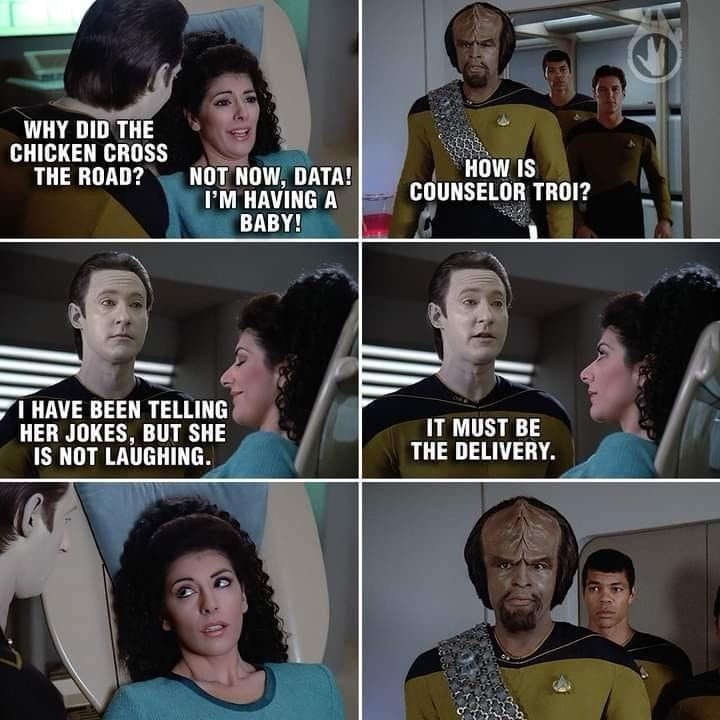
Crossposted from https://piefed.world/c/tenforward/p/1358097/data-the-doula
Alt text: “My lord, is that legal?” meme template. The trade federation member is labeled as “Shakespeare’s editors reading his plays”; he asks: “My lord, is that a word?” In the next panel the image of Palpatine is replaced with an image of William Shakespeare. He replies, “I will make it a word.”

