I'm pretty new to selfhosting and homelabs, and I would appreciate a simple-worded explanation here. Details are always welcome!

So, I have a home network with a dynamic external IP address. I already have my Synology NAS exposed to the Internet with DDNS - this was done using the interface, so didn't require much technical knowledge.

Now, I would like to add another server (currently testing with Raspberry Pi) in the same LAN that would also be externally reachable, either through a subdomain (preferable), or through specific ports. How do I go about it?

P.S. Apparently, what I've tried on the router does work, it's just that my NAS was sitting in the DMZ. Now it works!
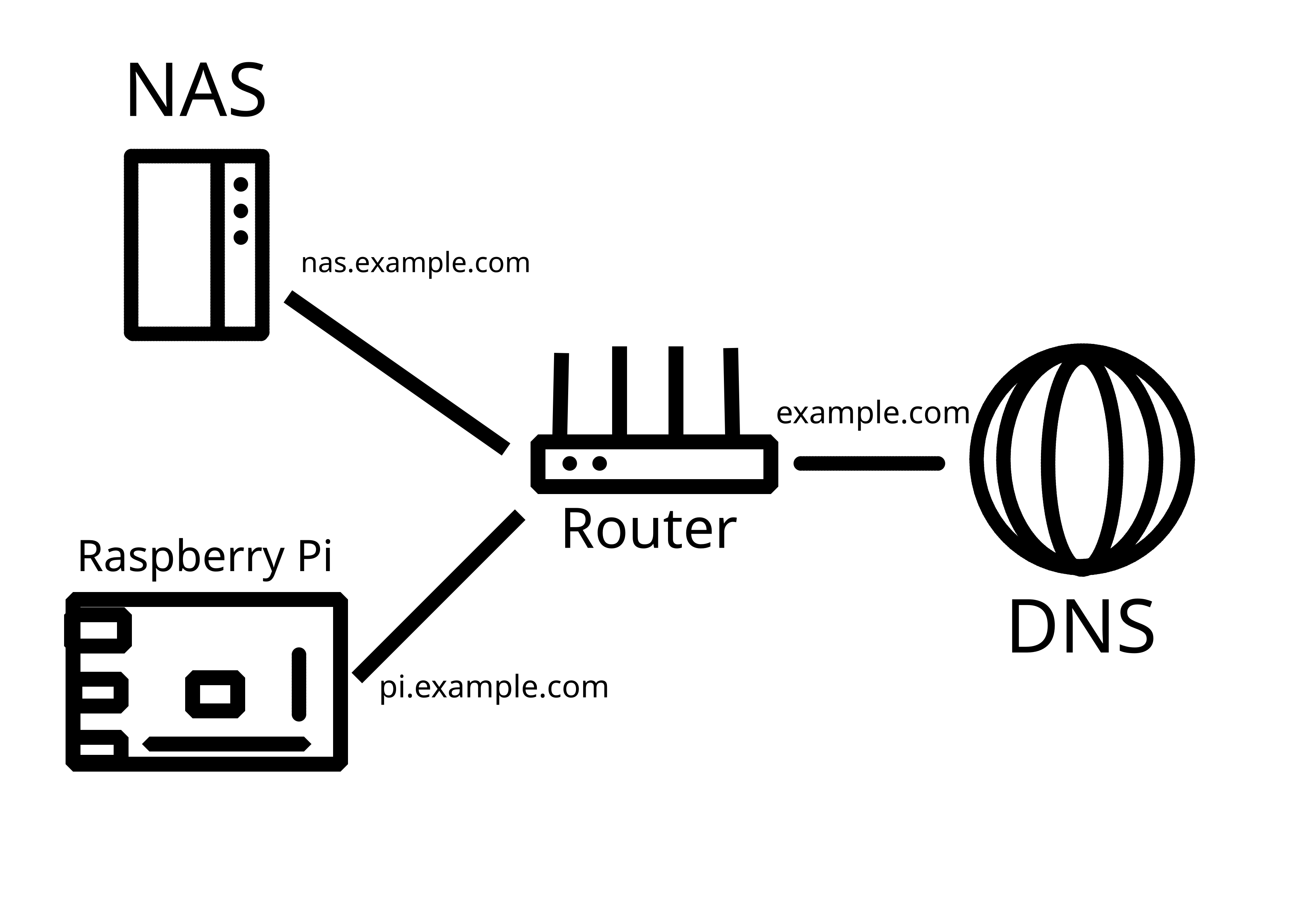
A scheme of desied network. NAS, available by nas.example.com, and Raspberry Pi, available by pi.example.com, are connected to a router, which gets DNS data
you are viewing a single comment's thread
view the rest of the comments
[–] 2 points 1 year ago (10 children)

Honestly Cloudflare Tunnels could be a very simple way to do it. I've always had tremendous luck with it. By using CF you can let them do all the heavy lifting instead of hosting your own... as long as you trust them.

  • source
  • hideshow 10 child comments
  • [–] 5 points 1 year ago (2 children)

    They are a plague with how prevalent they have become.

    The internet shouldn’t put all its eggs into one basket.

    It’s just another centralized entity which will lead to monopolized power. It goes against what we are trying to do with federated networks like Lemmy and mastodon.

  • source
  • parent
  • hideshow 2 child comments
  • [–] 3 points 1 year ago (3 children)

    You can use frp to do the same thing a CloudFlare tunnel does without giving them your unencrypted data.

  • source
  • parent
  • hideshow 3 child comments
  • [–] 1 point 1 year ago (2 children)

    It's definitely not the same thing. I do understand reservations behind usage free-tier services from Big Bad Corp., but I don't understand malicious reduction of valid arguments for usage of those services.

  • source
  • parent
  • hideshow 2 child comments
  • [–] 1 point 1 year ago (1 child)

    It literally does the same thing, except it's self hosted?

  • source
  • parent
  • hideshow 1 child comment
  • [–] 1 point 1 year ago

    No public server required at all

    • CF: Yes

    • frp: No

    DDoS protection, WAF, and automatic SSL

    • CF: Yes

    • frp: No

    Access controls and auth

    • CF: built-in Zero Trust

    • frp: manual setup of token/OIDC

    Managed DNS

    • CF: Yes

    • frp: No

    Built in security tools

    • CF: Yes

    • frp: No


    Just like I said - prevalent reduction of valid arguments for usage of those services.

  • source
  • parent
  • [–] [S] 2 points 1 year ago* (2 children)

    While not supportive of Big Tech, I do appreciate your piece of advice, and understand self-hosting needs differ!

    P.S. Also beware, seems like there's a new attack through Tunnels:

    https://www.csoonline.com/article/4009636/phishing-campaign-abuses-cloudflare-tunnels-to-sneak-malware-past-firewalls.html

  • source
  • parent
  • hideshow 2 child comments
  • [–] 1 point 1 year ago

    Again, attack targets end users, not Cloudflare tunnel operators: It abuses Cloudflare Tunnels as a delivery mechanism for malware payloads, not as a method to compromise or attack people who are self-hosting their own services through Cloudflare Tunnels.

  • source
  • parent