(edit: wow that link preview is really garbage when Lemmy references another Lemmy link)

Cash has become compromised by mass surveillance as an instrument for anonymous payments. According to the German article, ATMs read serial numbers of dispensed banknotes and associate them to the person making the withrawal. Then when the serial numbers are read again by the armored car service fetching the cash from wherever you spent it, the central DB links everything together. But because banknote serial numbers are not “personal data”, the GDPR is completely impotent to this concealed form of tracking. Cash users have no idea that they have lost an expectation of privacy.

inserted Farside cartoon “damned if you do; damned if you don’t”

Consumers are fucked either way. Banking and paying electronically generates a huge digital footprint which pretends to have GDPR protections. The GDPR is essentially an unenforced façade to stage a privacy illusion as a lubricant for digital transformation. The GDPR is most especially unenforced in the banking sector. So the choice is between fake legal protection and slightly better technical protection. You cannot “have your cake and eat it too”.

Cash is realistically the streetwise choice for consumers who know better. But it’s an absolutely unregulated laissez faire free-for-all blank cheque for rampent systemic unchecked unwarranted surveillance. Probably not many consumers will be wise enough to separate their machine-dispensed (tracked) cash from their quasi anonymous banknotes, while treating coins as the ultimate refuge.

Interesting how the IP address your ISP assigns to you is deemed personal data, but the serial numbers associated to you by your ATM withdrawal are not.

The bottom of the post linked to this post has an English translation of the German article.
all 2 comments

sorted by: hot top controversial new old
[+] 2 points 7 months ago (1 child)
  • [–] [S] 2 points 7 months ago

    Good point. The claim to the contrary came from:

    “Gerrit Stehle, Managing Director of Elephant & Castle IP GmbH, wants to raise the regulatory cash tracking in Germany to a new level.”

    Certainly someone who is biased.

  • source
  • parent
  • 18 comments in c/cash@slrpnk.net view that post
    [–] 14 points 3 months ago (8 children)

    Or launder them by asking for big bills from the bank, and having them broke up later by spending them. That way you don’t have to believe the joke that data can’t be held more than 6 months.

  • source
  • hideshow 8 child comments
  • [–] [S] 4 points 3 months ago* (last edited 3 months ago) (5 children)

    Or launder them by asking for big bills from the bank

    Indeed it is wise to draw the biggest banknotes possible to reduce the tracking extent.

    Note there is a trend of ATMs in recent years dispensing smaller max denominations. In Netherlands and France there are no longer ATMs that dispense banknotes bigger than €50. This is likely a move to increase surveillance without people realising.

    That way you don’t have to believe the joke that data can’t be held more than 6 months.

    Drawing big notes is orthoganol to the staleness of the data. You can do both. Draw big notes and also make the data stale.

    It’s also not about data retention. It’s about data relevance. The more stale the data is, the less likely the source and destination are transacted by the same person. If you pull cash from the wall and that some day buy fertilizer with it, there is greater confidence that the same person is in both transactions than if there are months between the two transactions.

  • source
  • parent
  • hideshow 5 child comments
  • [–] 3 points 3 months ago (2 children)

    Apparently there are ATMs in the Netherlands that dispense coins, which don't have a serial number. Though if you pay for fertilizer in coins that might set off some other flags.

  • source
  • parent
  • hideshow 2 child comments
  • [–] [S] 2 points 3 months ago (1 child)

    Apparently there are ATMs in the Netherlands that dispense coins,

    Interesting! I found this:

    “However, a user’s Dutch bank may charge fees for certain services, such as withdrawing coins.”

    I’ve used a non-Dutch card at Geldmaat and was given a choice of denominations but not coins. Is it just certain specific Geldmaat machines, or is the coin service just for Dutch-issued cards?

  • source
  • parent
  • hideshow 1 child comment
  • [–] 1 point 3 months ago (1 child)

    Data is relevant forever. It’s tracked forever. They’ll know if they look. So, laundering is the only option, as history has shown. Just launder your damn money fool.

  • source
  • parent
  • hideshow 1 child comment
  • [–] [S] 1 point 3 months ago* (last edited 3 months ago)

    Data is relevant forever.

    Nonsense. All sensitive data has a window of sensitivity. After you die, most of your personal data will become instantly irrelevant. No one will give a shit what embarrassing shit you said on social media after you’re dead, including this absurd claim that data is relevant forever.

    Some data is instantly and forever irrelevant from the moment it is created, like the fake birth date on my acct.

    Even direct solid evidence of a criminal offense can become irrelevant if the statute of limitations is reached.

    When the cash you draw from the ATM changes hands a dozen times before coming back on the radar 6 months later, the data about the source (your withdrawal from the ATM) is absolutely irrelevant and useless.

    It’s tracked forever.

    That does not make it relevant. My hard drive is perfectly capable of storing irrelevant totally useless data. It just means the data controller has plenty of storage space and the effort of determining whether it’s relevant has a higher price than the storage space.

    They’ll know if they look.

    Know what? Whatever you think they’ll know, the knowledge is not useful after the banknote changes a dozen hands.

  • source
  • parent
  • [–] 7 points 3 months ago (2 children)
  • [–] 2 points 3 months ago

    Really feel like its time we shifted currencies up a bit tbh.

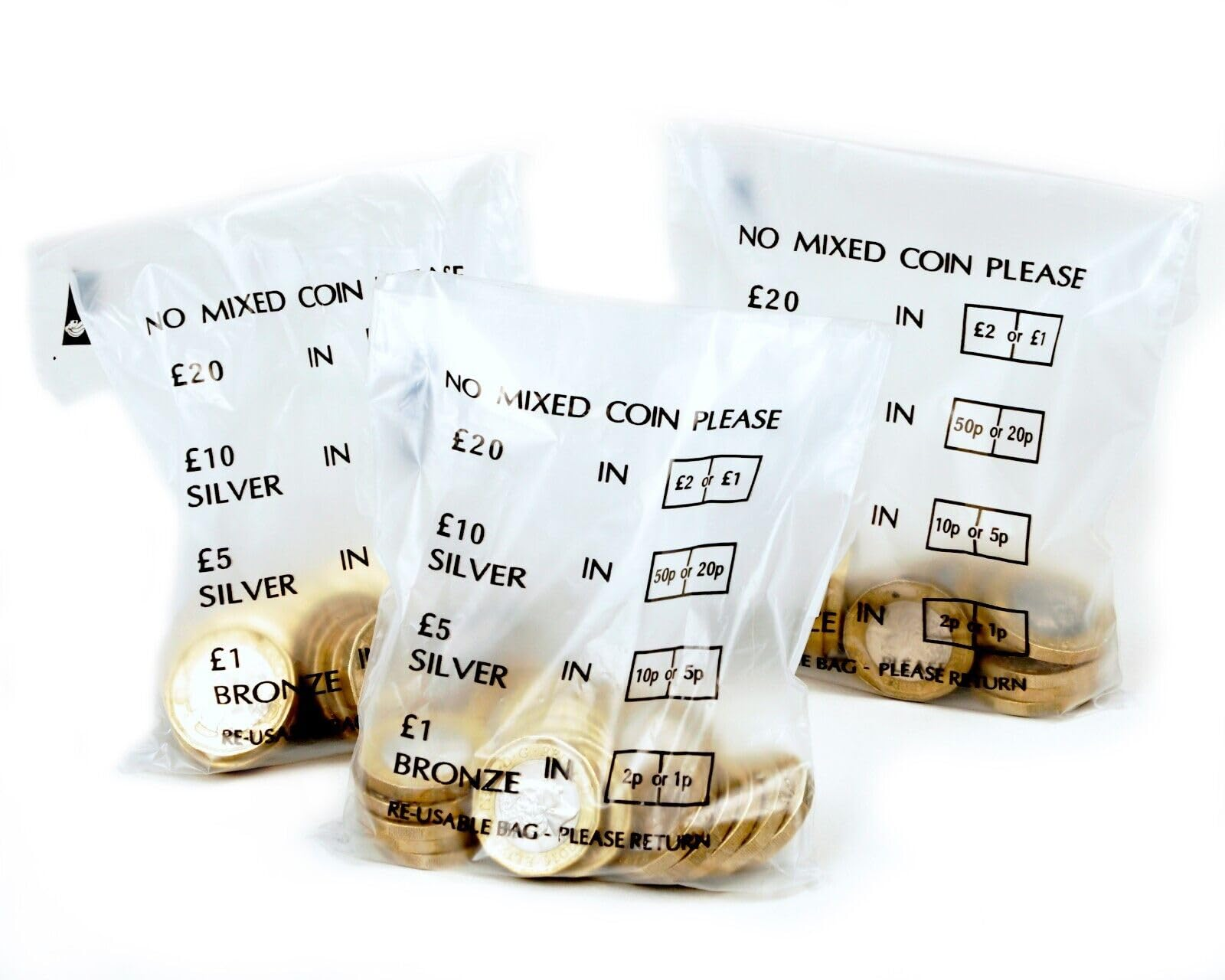
    So UK currently is ÂŁ50 (almost non existent) ÂŁ20 ÂŁ10 and ÂŁ5 notes, ÂŁ2 ÂŁ1 50p 20p 10p 5p 2p 1p coins.

    Drop the 1/2p coins and ÂŁ5/10 note, add a ÂŁ5/10 coin and actually print the ÂŁ50 notes in meaningful quantities, probably add a ÂŁ100 note too.

  • source
  • parent
  • [–] 5 points 3 months ago (5 children)

    So if I withdraw $500 to buy a used bicycle, and the new owner goes and buys a bunch of fertilizer, and the farm supply store deposits the cash at the bank, the FBI is going to show up at my house?

  • source
  • hideshow 5 child comments
  • [–] 8 points 3 months ago (2 children)

    I just use my debit card. That way there's no cash to track!

  • source
  • parent
  • hideshow 2 child comments
  • [–] [S] 2 points 3 months ago* (1 child)

    I don’t know if banks generally scan inbound cash that’s deposited over the counter. But if the farm supply store subscribes to a armored car security service to pickup the cash, then the security service would scan the serial numbers and enter the farm supply store as the source.

    The evidence would not be strong enough to make an arrest but targetting you for extra surveillance seems likely enough IMO.

  • source
  • parent
  • hideshow 1 child comment
  • [–] 3 points 3 months ago

    It wouldn't be tied to a transaction though would it? Just enough to suggest you may have made a transaction of some kind at that location.

    Still, seems like just holding the money may not be enough. Try to swap it. ÂŁ500 you took out 6 months ago all got spent in the same place, that is probably still your money. If it was ÂŁ80 of yours, ÂŁ140 of Johns, ÂŁ200 of Freds and ÂŁ80 of Beths, now its far harder to know. Plus its mixed in with so many other transactions as well.

    More people swapping notes would also further reduce the value of that kind of surveillance.

  • source
  • parent