TL;DR: A sprawling Lemmy thread ostensibly about a meme—billionaires donating to both parties to keep wages low—devolves into a case study of everything wrong with American political discourse: the reduction of politics to individual voting choices, the weaponization of "tankie" as a thought-terminating slur, the reflexive red-baiting of anyone who critiques the Democratic Party from the left, and the persistent refusal to analyze elections as anything other than a moral test of personal virtue rather than a terrain of class struggle. Beneath the noise, the thread accidentally reveals the real function of the two-party system: not to offer meaningful choice, but to manage discontent, absorb opposition, and ensure that whichever faction of the capitalist class wins, the working class loses.


The Meme and Its Discontents

The original meme is simple enough: a cartoon of a train switch, one track labeled "Democrats," the other "Republicans," both leading to the same destination—a pile of bodies—while a billionaire stands at the lever, smiling. The caption suggests that billionaires donate to both parties to keep wages low. It's a blunt instrument, but it lands because it articulates something millions of people intuitively understand: that the ritual of American elections produces outcomes that consistently favor the wealthy, regardless of which party wins.

What follows in the comment section is a masterclass in evasion. Rather than engaging with the meme's central claim—that both parties serve the same class interests—the thread's liberal participants immediately pivot to a series of defensive maneuvers. "They're not the same," they insist. "One party is worse." "You're helping the fascists by saying this." "You're a tankie." "You're a Russian bot." "You're from .ml." The argument never actually addresses the material claim; it simply changes the subject to the moral character of the person making it.

This is a familiar pattern. When a critique of the Democratic Party cannot be answered on the merits, it is answered by attacking the critic's credentials, motives, or nationality. The thread is littered with examples: user Honytawk accuses .ml users of being paid by Russia and China; edible_funk repeatedly calls anyone who critiques Democrats a "tankie" or a "propaganda bot"; DarkFuture compiles a list of "election trolls" to systematically downvote. The message is clear: dissent from the liberal consensus is not to be debated but to be policed.

The "Tankie" Smear and the Foreclosure of Left Critique

The term "tankie" appears dozens of times in this thread, almost always as an insult rather than an analytical category. Originally referring to British communists who supported the Soviet invasion of Hungary in 1956, it has been stretched to cover anyone who: criticizes the Democratic Party from the left, opposes imperialism, doubts the efficacy of electoral politics, or simply lives on the lemmy.ml instance. The word has lost all denotative meaning. As user SwingingTheLamp observes, "Unless, like terrorist, it's lost all denotative meaning and is just an insult to be hurled at people you don't like."

This is not accidental. The function of the "tankie" label in liberal discourse is to delegitimize left critique without engaging it. If someone argues that both parties serve capital, you don't need to prove them wrong—you just call them a tankie, and the conversation is over. The term becomes a way of saying "your argument is not worth considering" without having to explain why. It's the political equivalent of a thought-terminating cliché.

What's revealing is how quickly the label is applied to positions that are, by any reasonable historical standard, mainstream social democratic or even left-liberal. User Cowbee, who describes themselves as a Marxist-Leninist, is called a tankie for arguing that the Democratic Party is a capitalist party that serves capitalist interests—a claim that would have been uncontroversial among mid-twentieth-century liberals. User SwingingTheLamp, who explicitly says they vote for the lesser evil, is called a tankie for warning that the system is collapsing. The label has become so elastic that it now encompasses anyone who refuses to affirm that the Democratic Party is a force for good.

The .ml Question: Red-Baiting as Political Argument

A significant portion of the thread is devoted to attacking the lemmy.ml instance and its users as foreign agents, bots, or "paid Russian operatives." The evidence offered is almost entirely circumstantial: .ml users criticize Democrats, therefore they must be working for Russia. This is a remarkable inversion of logic. The assumption seems to be that no genuine American leftist could possibly critique the Democratic Party, so anyone who does must be foreign. This ignores the entire history of the American left, which has been critiquing the Democratic Party—often from within it—for over a century.

The red-baiting is also deeply ironic given the thread's subject matter. The meme is about billionaires buying elections. The thread's liberal participants respond by accusing the meme's defenders of being bought by Russia. The possibility that someone might critique the American political system on the merits—because it produces genocide, austerity, mass incarceration, and climate catastrophe—is simply not entertained. Instead, dissent is attributed to foreign manipulation, which conveniently absolves the domestic political system of any responsibility for producing dissent in the first place.

This is a classic maneuver of what might be called "imperial feminism" or "reactionary anti-communism": the assumption that the masses, if left to their own devices, would naturally support the existing order, and that any deviation from this natural support must be the result of external manipulation. It's a deeply anti-democratic premise. It says that people cannot be trusted to form their own political judgments, and that the state must protect them from "foreign" ideas.

Genocide, Empire, and the Two Parties

The thread's most substantive exchanges concern Palestine. User NonconfrontationaI argues that more Palestinians were killed under Biden than under Trump. User Honytawk counters that if we add Palestinian deaths to the Republican side of the tracks, the number triples. User potatomuncher points out that both parties have facilitated genocide, and that the victims of the "imperial war machine" include people in Afghanistan, Iraq, Libya, Syria, Yemen, and Somalia.

This is where the "lesser evil" argument becomes most fraught. The liberal participants in the thread concede that Biden facilitated genocide, but argue that Trump would be worse. Perhaps. But the debate never addresses the structural question: why does the American political system produce leaders who facilitate genocide? Why is the choice always between genocide and more genocide? The liberal answer is that this is simply the nature of international politics—there are bad people in the world, and we have to choose the least bad option. The radical answer is that the American empire is structurally committed to genocide, because its economic and military dominance depends on the subjugation of the global South.

The thread never really engages with this structural question. Instead, it devolves into a series of increasingly personal exchanges: who is a tankie, who is a bot, who is a genocide apologist. The possibility that the entire framework of American electoral politics is designed to foreclose meaningful debate about empire is never considered. The debate is about which candidate is less genocidal, not about why genocide is the baseline.

The Limits of Lesser-Evilism

The most sophisticated argument in the thread comes from user SwingingTheLamp, who makes a Utilitarian case for voting for the lesser evil while acknowledging its limitations. "If stemming the bleeding is the best we can hope for," they write, "then that's how democracy fails. Vote for the slightly-better candidate, by all means, that's the best move in the here-and-now. But, unless we change the rules, it's gonna be the same best move next time, too, and the patient only has so much blood."

This is a clear-eyed assessment. Voting for the lesser evil is not wrong; it is simply insufficient. The problem is that the "lesser evil" framework is a trap. It defines the terms of political debate so narrowly that any alternative is rendered unthinkable. You can vote for the Democrat, or you can vote for the Republican, or you can abstain. You cannot vote for a candidate who opposes the empire, because no such candidate will ever be permitted to appear on the ballot. The system is designed to produce this outcome.

The thread's liberal participants are aware of this, but they treat it as an unchangeable fact of nature rather than a political arrangement that could be otherwise. "That's how our Democracy works," says one user. But democracy is not a static thing; it is a terrain of struggle. The rules can be changed. The problem is that the people who benefit from the current rules—the billionaires who fund both parties—have no interest in changing them. And so the "lesser evil" framework persists, not because it is intellectually compelling, but because it serves the interests of the ruling class.

The Function of the Two-Party System

What the thread never explicitly states, but repeatedly demonstrates, is the function of the two-party system in American capitalism. The system does not exist to offer meaningful choice. It exists to manage discontent, to absorb opposition, to ensure that the working class remains divided between two parties that both serve capital. The Republican Party mobilizes the most reactionary elements of society—racists, sexists, religious fanatics, gun nuts—while the Democratic Party mobilizes the professional-managerial class and the remnants of the labor movement. Both parties are funded by the same corporate interests. Both parties pursue policies that benefit the wealthy. The differences between them are real, but they are differences of style, not substance.

This is not a conspiracy; it is the logical outcome of a political system in which money is speech, corporations are people, and the only viable path to office is through the two major parties. The system is designed to produce this outcome. The founders were explicit about it: they feared democracy and sought to create a system that would check the power of the "mob." The two-party system, combined with the Electoral College, the Senate, and the Supreme Court, is a system of minority rule. It is not a bug; it is a feature.

The thread's liberal participants treat the two-party system as a fact of nature, but it is a political arrangement that could be changed. Ranked-choice voting, proportional representation, public financing of elections, the abolition of the Electoral College—these are all reforms that would open up the political system to genuine competition. But they are all opposed by the same billionaires who fund both parties. And so the system persists, not because it is popular, but because it serves the interests of the people who benefit from it.

What Is to Be Done?

The thread ends, as these threads always do, in a stalemate. The liberals insist that voting is the most important thing you can do. The radicals insist that voting is the bare minimum, and that real change requires organizing, protest, and direct action. Both sides talk past each other. Neither side wins.

But the thread does contain, buried in the noise, the outlines of a more sophisticated position. User Bytemeister writes: "Voting is the most important thing you can do right now, but don't forget the other stuff. Behind every politician is a team, behind that team are supporters, and behind the supporters are voters. You get to choose your level of engagement." This is a reasonable position. Voting is not a substitute for organizing, but it is not mutually exclusive with it either. You can vote for the lesser evil while also working to build a political movement that can defeat both evils.

The question is whether such a movement is possible in the current political climate. The thread suggests that it is not—or at least, that it is very difficult. The left is divided between those who believe in electoral politics and those who believe in revolution. The liberals are committed to defending the Democratic Party against all criticism. The radicals are committed to criticizing the Democratic Party regardless of the consequences. The result is a circular firing squad that benefits no one except the people who are already in power.

What the thread lacks is any serious discussion of strategy. How do we build a movement that can challenge the two-party system? How do we organize workers, tenants, students, and marginalized communities into a political force that can win elections and govern? How do we connect the struggle against genocide abroad with the struggle against exploitation at home? These questions are not answered, or even asked. The thread is content to argue about whether voting is good or bad, rather than asking how we can make voting part of a broader strategy for social change.

The Specter of Revolution

There is one moment in the thread where the radical position is stated clearly. User Cowbee argues: "The US Empire is committing genocide because it economically benefits from perpetuating imperialism, and means the intelligent choice is to organize for revolution, rather than continue to prop up genocide." This is a coherent position. It says that the American political system is fundamentally illegitimate, that it cannot be reformed, and that the only solution is to overthrow it.

Whether this position is correct is a question of strategy, not morality. The thread treats it as a moral failing—evidence that .ml users are tankies or Russian bots or genocide apologists. But the argument itself is never engaged. What would a revolution in America look like? How would it be organized? What would its program be? These questions are not addressed. The thread is too busy calling each other names to have a serious conversation about strategy.

This is the tragedy of the thread. It contains all the raw materials for a serious discussion about American politics: the role of money in elections, the function of the two-party system, the relationship between domestic politics and empire, the limits of lesser-evilism, the need for a broader movement. But the discussion never coheres. It is constantly derailed by personal attacks, red-baiting, and the insistence that the only choices are voting for the lesser evil or doing nothing at all.

Conclusion: The Thread as Symptom

In the end, the thread is a symptom of a broader disease. It is what political discourse looks like when the working class has no political party of its own, when the left is fragmented and demoralized, when the only viable options are two parties that both serve capital. The thread is noisy, angry, and ultimately impotent—not because the participants are stupid or malicious, but because the system they are trying to navigate is designed to produce this outcome.

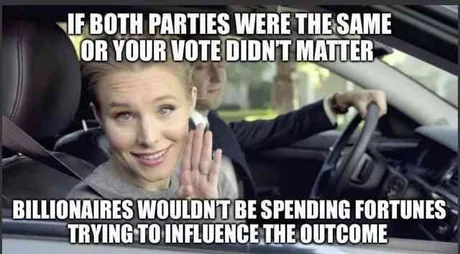
The meme at the top of the thread is correct: billionaires do donate to both parties to keep wages low. The thread's participants spend thousands of words arguing about this, but they never get to the obvious conclusion: if both parties serve the same class interests, then the working class needs a party of its own. Not a third party within the existing system—that system is designed to crush third parties—but a mass movement that can challenge the system itself. That movement would need to be built on the ground, in workplaces and neighborhoods, around issues that matter to ordinary people: housing, healthcare, wages, policing, climate, war. It would need to be internationalist, anti-imperialist, and committed to the principle that no one is free until everyone is free.

That movement does not exist yet. But the thread suggests that the raw materials are there: the anger, the analysis, the desire for something better. The question is whether those materials can be organized into something coherent, or whether they will remain trapped in the endless, circular, ultimately useless debates that define so much of online political discourse. The answer is not yet written. It depends on what we do next.


Watch or listen: full narration (about 3.5 min at 1.5×) and a 2-minute clip are attached to this cross-post on Bluesky and Mastodon.

Follow the work:

If this thread deserves more than a pile-on, share it. The full analysis exists in English and in Spanish — links below.


Tags: US Politics, Elections, Lesser Evilism, Imperialism, Marxism, Class Analysis, Two-Party System, Anti-Imperialism, Palestine, Red-Baiting, Political Discourse, Lemmy, Revolution
other discussions
Psssst (img-9gag-fun.9cache.com)


TL;DR: Un extenso hilo de Lemmy que, en teoría, trataba sobre un meme —que los multimillonarios donan a ambos partidos para mantener los salarios bajos— degenera en un estudio de caso de todo lo que está mal en el discurso político estadounidense: la reducción de la política a decisiones individuales de voto, el uso de «tankie» como insulto que clausura el pensamiento, el macartismo reflejo contra cualquiera que critique al Partido Demócrata desde la izquierda y la negativa persistente a analizar las elecciones como algo distinto de un examen moral de virtud personal, en lugar de un terreno de lucha de clases. Bajo el ruido, el hilo revela sin querer la verdadera función del sistema bipartidista: no ofrecer una elección real, sino gestionar el descontento, absorber la oposición y garantizar que, gane la facción de la clase capitalista que gane, la clase trabajadora pierda.


El meme y sus descontentos

El meme original es bastante simple: una viñeta de un cambio de agujas ferroviario, con una vía rotulada «Demócratas» y la otra «Republicanos», y ambas conduciendo al mismo destino —un montón de cuerpos— mientras un multimillonario, sonriendo, sostiene la palanca. El texto sugiere que los multimillonarios donan a ambos partidos para mantener los salarios bajos. Es un instrumento tosco, pero acierta porque articula algo que millones de personas entienden de forma intuitiva: que el ritual de las elecciones estadounidenses produce resultados que favorecen sistemáticamente a los ricos, gane quien gane.

Lo que sigue en la sección de comentarios es una clase magistral de evasión. En lugar de entrar en la afirmación central del meme —que ambos partidos sirven a los mismos intereses de clase—, los participantes liberales del hilo giran de inmediato hacia una serie de maniobras defensivas. «No son lo mismo», insisten. «Un partido es peor.» «Con eso estás ayudando a los fascistas.» «Eres un tankie.» «Eres un bot ruso.» «Vienes de .ml.» El debate nunca aborda realmente la afirmación material; simplemente cambia de tema hacia la calidad moral de quien la formula.

Es un patrón conocido. Cuando una crítica al Partido Demócrata no se puede responder en el fondo, se responde atacando las credenciales, los motivos o la nacionalidad del crítico. El hilo está lleno de ejemplos: el usuario Honytawk acusa a los usuarios de .ml de estar pagados por Rusia y China; edible_funk llama una y otra vez «tankie» o «bot de propaganda» a cualquiera que critique a los demócratas; DarkFuture confecciona una lista de «trolls electorales» para votarlos negativamente de forma sistemática. El mensaje es claro: la disidencia respecto al consenso liberal no se debate, se vigila.

El estigma de «tankie» y el cierre de la crítica de izquierdas

El término «tankie» aparece decenas de veces en este hilo, casi siempre como insulto y no como categoría analítica. Originalmente designaba a los comunistas británicos que apoyaron la invasión soviética de Hungría en 1956; hoy se ha estirado hasta cubrir a cualquiera que critique al Partido Demócrata desde la izquierda, se oponga al imperialismo, dude de la eficacia de la política electoral o simplemente viva en la instancia lemmy.ml. La palabra ha perdido todo significado denotativo. Como observa el usuario SwingingTheLamp, «salvo que, igual que “terrorista”, haya perdido todo significado denotativo y sea solo un insulto para lanzárselo a quien no te cae bien».

Esto no es accidental. La función de la etiqueta «tankie» en el discurso liberal es deslegitimar la crítica de izquierdas sin entrar en ella. Si alguien sostiene que ambos partidos sirven al capital, no hace falta demostrar que se equivoca: basta con llamarlo tankie y la conversación se acabó. El término se convierte en una forma de decir «tu argumento no merece ser considerado» sin tener que explicar por qué. Es el equivalente político de un cliché que clausura el pensamiento.

Lo revelador es la rapidez con la que la etiqueta se aplica a posiciones que, según cualquier criterio histórico razonable, son socialdemócratas de manual o incluso de izquierda liberal. Al usuario Cowbee, que se define como marxista-leninista, se le llama tankie por sostener que el Partido Demócrata es un partido capitalista que sirve a intereses capitalistas: una afirmación que habría sido indiscutible entre los liberales de mediados del siglo XX. Al usuario SwingingTheLamp, que dice explícitamente que vota al mal menor, se le llama tankie por advertir de que el sistema se está derrumbando. La etiqueta se ha vuelto tan elástica que hoy abarca a cualquiera que se niegue a afirmar que el Partido Demócrata es una fuerza del bien.

La cuestión .ml: el macartismo como argumento político

Buena parte del hilo se dedica a atacar la instancia lemmy.ml y a sus usuarios como agentes extranjeros, bots u «operativos rusos pagados». Las pruebas que se ofrecen son casi todas circunstanciales: los usuarios de .ml critican a los demócratas, luego deben de trabajar para Rusia. Es una inversión notable de la lógica. La suposición parece ser que ningún izquierdista estadounidense auténtico podría criticar al Partido Demócrata, de modo que quien lo hace tiene que ser extranjero. Esto ignora toda la historia de la izquierda estadounidense, que lleva más de un siglo criticando al Partido Demócrata, a menudo desde dentro.

El macartismo resulta además profundamente irónico dado el tema del hilo. El meme trata de multimillonarios que compran elecciones. Los participantes liberales responden acusando a quienes defienden el meme de estar comprados por Rusia. La posibilidad de que alguien critique el sistema político estadounidense por sus méritos —porque produce genocidio, austeridad, encarcelamiento masivo y catástrofe climática— simplemente no se contempla. En su lugar, la disidencia se atribuye a manipulación extranjera, lo que absuelve cómodamente al sistema político interno de cualquier responsabilidad por generar esa disidencia.

Es una maniobra clásica de lo que podríamos llamar «feminismo imperial» o «anticomunismo reaccionario»: la suposición de que las masas, dejadas a su aire, apoyarían naturalmente el orden existente, y de que cualquier desviación de ese apoyo natural debe ser resultado de una manipulación externa. Es una premisa profundamente antidemocrática. Sostiene que no se puede confiar en que la gente forme sus propios juicios políticos y que el Estado debe protegerla de las ideas «extranjeras».

Genocidio, imperio y los dos partidos

Los intercambios más sustantivos del hilo giran en torno a Palestina. El usuario NonconfrontationaI sostiene que bajo Biden murieron más palestinos que bajo Trump. El usuario Honytawk responde que, si sumamos las muertes palestinas al lado republicano de la balanza, la cifra se triplica. El usuario potatomuncher señala que ambos partidos han facilitado el genocidio y que las víctimas de la «máquina de guerra imperial» incluyen a personas de Afganistán, Irak, Libia, Siria, Yemen y Somalia.

Aquí es donde el argumento del «mal menor» se vuelve más delicado. Los participantes liberales del hilo admiten que Biden facilitó un genocidio, pero sostienen que Trump sería peor. Puede ser. Pero el debate nunca aborda la cuestión estructural: ¿por qué el sistema político estadounidense produce líderes que facilitan genocidios? ¿Por qué la elección es siempre entre genocidio y más genocidio? La respuesta liberal es que tal es la naturaleza de la política internacional: hay gente mala en el mundo y tenemos que elegir la opción menos mala. La respuesta radical es que el imperio estadounidense está estructuralmente comprometido con el genocidio, porque su dominio económico y militar depende del sometimiento del Sur global.

El hilo nunca entra realmente en esa cuestión estructural. En su lugar, degenera en una serie de intercambios cada vez más personales: quién es un tankie, quién es un bot, quién es un apologista del genocidio. La posibilidad de que todo el marco de la política electoral estadounidense esté diseñado para clausurar el debate serio sobre el imperio nunca se considera. El debate trata de qué candidato es menos genocida, no de por qué el genocidio es el punto de partida.

Los límites del mal menor

El argumento más sofisticado del hilo lo aporta el usuario SwingingTheLamp, que defiende desde el utilitarismo el voto al mal menor reconociendo sus limitaciones. «Si contener la hemorragia es lo mejor que podemos esperar», escribe, «entonces así es como fracasa la democracia. Vota al candidato un poco mejor, por supuesto, es la mejor jugada aquí y ahora. Pero, a menos que cambiemos las reglas, también será la mejor jugada la próxima vez, y el paciente solo tiene una cantidad limitada de sangre.»

Es una valoración lúcida. Votar al mal menor no es incorrecto; es simplemente insuficiente. El problema es que el marco del «mal menor» es una trampa. Define los términos del debate político de forma tan estrecha que cualquier alternativa queda impensable. Puedes votar al demócrata, puedes votar al republicano o puedes abstenerte. No puedes votar a un candidato que se oponga al imperio, porque nunca se permitirá que un candidato así aparezca en la papeleta. El sistema está diseñado para producir ese resultado.

Los participantes liberales del hilo son conscientes de ello, pero lo tratan como un hecho natural inalterable y no como un arreglo político que podría ser distinto. «Así funciona nuestra democracia», dice un usuario. Pero la democracia no es algo estático; es un terreno de lucha. Las reglas se pueden cambiar. El problema es que quienes se benefician de las reglas actuales —los multimillonarios que financian a ambos partidos— no tienen ningún interés en cambiarlas. Y así persiste el marco del «mal menor», no porque sea intelectualmente convincente, sino porque sirve a los intereses de la clase dominante.

La función del sistema bipartidista

Lo que el hilo nunca afirma explícitamente, pero demuestra una y otra vez, es la función del sistema bipartidista en el capitalismo estadounidense. El sistema no existe para ofrecer una elección real. Existe para gestionar el descontento, absorber la oposición y garantizar que la clase trabajadora permanezca dividida entre dos partidos que sirven ambos al capital. El Partido Republicano moviliza a los elementos más reaccionarios de la sociedad —racistas, machistas, fanáticos religiosos, fanáticos de las armas—, mientras el Partido Demócrata moviliza a la clase profesional y gerencial y a los restos del movimiento sindical. Ambos partidos están financiados por los mismos intereses corporativos. Ambos aplican políticas que benefician a los ricos. Las diferencias entre ellos son reales, pero son diferencias de estilo, no de fondo.

No es una conspiración; es el resultado lógico de un sistema político en el que el dinero es libertad de expresión, las corporaciones son personas y la única vía viable al cargo pasa por los dos partidos mayoritarios. El sistema está diseñado para producir ese resultado. Los fundadores fueron explícitos al respecto: temían la democracia y buscaron crear un sistema que contuviera el poder de la «muchedumbre». El sistema bipartidista, combinado con el Colegio Electoral, el Senado y el Tribunal Supremo, es un sistema de gobierno de la minoría. No es un fallo: es una característica.

Los participantes liberales del hilo tratan el sistema bipartidista como un hecho natural, pero es un arreglo político que podría cambiarse. El voto por orden de preferencia, la representación proporcional, la financiación pública de las campañas, la abolición del Colegio Electoral: todas son reformas que abrirían el sistema político a una competencia genuina. Pero todas ellas se enfrentan a los mismos multimillonarios que financian a ambos partidos. Y así persiste el sistema, no porque sea popular, sino porque sirve a los intereses de quienes se benefician de él.

¿Qué hacer?

El hilo termina, como terminan siempre estos hilos, en un punto muerto. Los liberales insisten en que votar es lo más importante que se puede hacer. Los radicales insisten en que votar es el mínimo imprescindible y que el cambio real exige organización, protesta y acción directa. Ambas partes hablan sin escucharse. Ninguna gana.

Pero el hilo contiene, enterrados en el ruido, los contornos de una posición más sofisticada. El usuario Bytemeister escribe: «Votar es lo más importante que puedes hacer ahora mismo, pero no te olvides del resto. Detrás de cada político hay un equipo, detrás de ese equipo hay simpatizantes, y detrás de los simpatizantes hay votantes. Tú eliges tu nivel de implicación.» Es una posición razonable. Votar no sustituye a organizarse, pero tampoco es incompatible con ello. Puedes votar al mal menor y trabajar al mismo tiempo por construir un movimiento político capaz de derrotar a ambos males.

La pregunta es si ese movimiento es posible en el clima político actual. El hilo sugiere que no —o, al menos, que es muy difícil—. La izquierda está dividida entre quienes creen en la política electoral y quienes creen en la revolución. Los liberales están comprometidos a defender al Partido Demócrata frente a cualquier crítica. Los radicales están comprometidos a criticarlo sin importar las consecuencias. El resultado es un pelotón de fusilamiento circular que no beneficia a nadie salvo a quienes ya están en el poder.

Lo que falta en el hilo es cualquier discusión seria sobre estrategia. ¿Cómo construimos un movimiento capaz de disputar el sistema bipartidista? ¿Cómo organizamos a trabajadores, inquilinos, estudiantes y comunidades marginadas en una fuerza política capaz de ganar elecciones y gobernar? ¿Cómo conectamos la lucha contra el genocidio en el exterior con la lucha contra la explotación en casa? Estas preguntas no se responden, ni siquiera se formulan. El hilo se conforma con discutir si votar es bueno o malo, en lugar de preguntarse cómo hacer del voto una parte de una estrategia más amplia de cambio social.

El espectro de la revolución

Hay un momento en el hilo en el que la posición radical se enuncia con claridad. El usuario Cowbee sostiene: «El imperio estadounidense comete genocidio porque se beneficia económicamente de perpetuar el imperialismo, y eso significa que la elección inteligente es organizarse para la revolución, en lugar de seguir sosteniendo el genocidio». Es una posición coherente. Afirma que el sistema político estadounidense es fundamentalmente ilegítimo, que no se puede reformar y que la única solución es derribarlo.

Si esa posición es correcta es una cuestión de estrategia, no de moral. El hilo la trata como una falta moral —prueba de que los usuarios de .ml son tankies, bots rusos o apologistas del genocidio—. Pero el argumento en sí nunca se aborda. ¿Cómo sería una revolución en Estados Unidos? ¿Cómo se organizaría? ¿Cuál sería su programa? Estas preguntas no se plantean. El hilo está demasiado ocupado llamándose cosas entre sí como para tener una conversación seria sobre estrategia.

Esa es la tragedia del hilo. Contiene todas las materias primas para una discusión seria sobre la política estadounidense: el papel del dinero en las elecciones, la función del sistema bipartidista, la relación entre la política interna y el imperio, los límites del mal menor, la necesidad de un movimiento más amplio. Pero la discusión nunca cuaja. Se descarrila constantemente por ataques personales, macartismo y la insistencia en que las únicas opciones son votar al mal menor o no hacer nada.

Conclusión: el hilo como síntoma

Al final, el hilo es un síntoma de una enfermedad más amplia. Es el aspecto que tiene el discurso político cuando la clase trabajadora no tiene un partido propio, cuando la izquierda está fragmentada y desmoralizada, cuando las únicas opciones viables son dos partidos que sirven ambos al capital. El hilo es ruidoso, furioso y, en última instancia, impotente; no porque sus participantes sean estúpidos o malévolos, sino porque el sistema en el que intentan navegar está diseñado para producir ese resultado.

El meme que encabeza el hilo es correcto: los multimillonarios donan a ambos partidos para mantener los salarios bajos. Los participantes dedican miles de palabras a discutirlo, pero nunca llegan a la conclusión obvia: si ambos partidos sirven a los mismos intereses de clase, la clase trabajadora necesita un partido propio. No un tercer partido dentro del sistema existente —ese sistema está diseñado para aplastar a los terceros partidos—, sino un movimiento de masas capaz de disputar el sistema mismo. Ese movimiento tendría que construirse sobre el terreno, en los lugares de trabajo y en los barrios, en torno a los problemas que importan a la gente corriente: vivienda, sanidad, salarios, policía, clima, guerra. Tendría que ser internacionalista, antiimperialista y estar comprometido con el principio de que nadie es libre hasta que todos sean libres.

Ese movimiento aún no existe. Pero el hilo sugiere que las materias primas están ahí: la rabia, el análisis, el deseo de algo mejor. La pregunta es si esos materiales pueden organizarse en algo coherente o si seguirán atrapados en los debates interminables, circulares e inútiles que definen buena parte del discurso político en línea. La respuesta aún no está escrita. Depende de lo que hagamos ahora.


Ver o escuchar: la narración completa (unos 3,5 min a 1,5×) y un clip de 2 minutos van adjuntos a este cross-post en Bluesky y Mastodon.

Sigue el trabajo:

Si este hilo merece algo más que una bronca, compártelo. El análisis completo existe en inglés y en español — enlaces abajo.


Tags: Política de EEUU, Elecciones, Mal menor, Imperialismo, Marxismo, Análisis de clase, Sistema bipartidista, Antiimperialismo, Palestina, Macartismo, Discurso político, Lemmy, Revolución