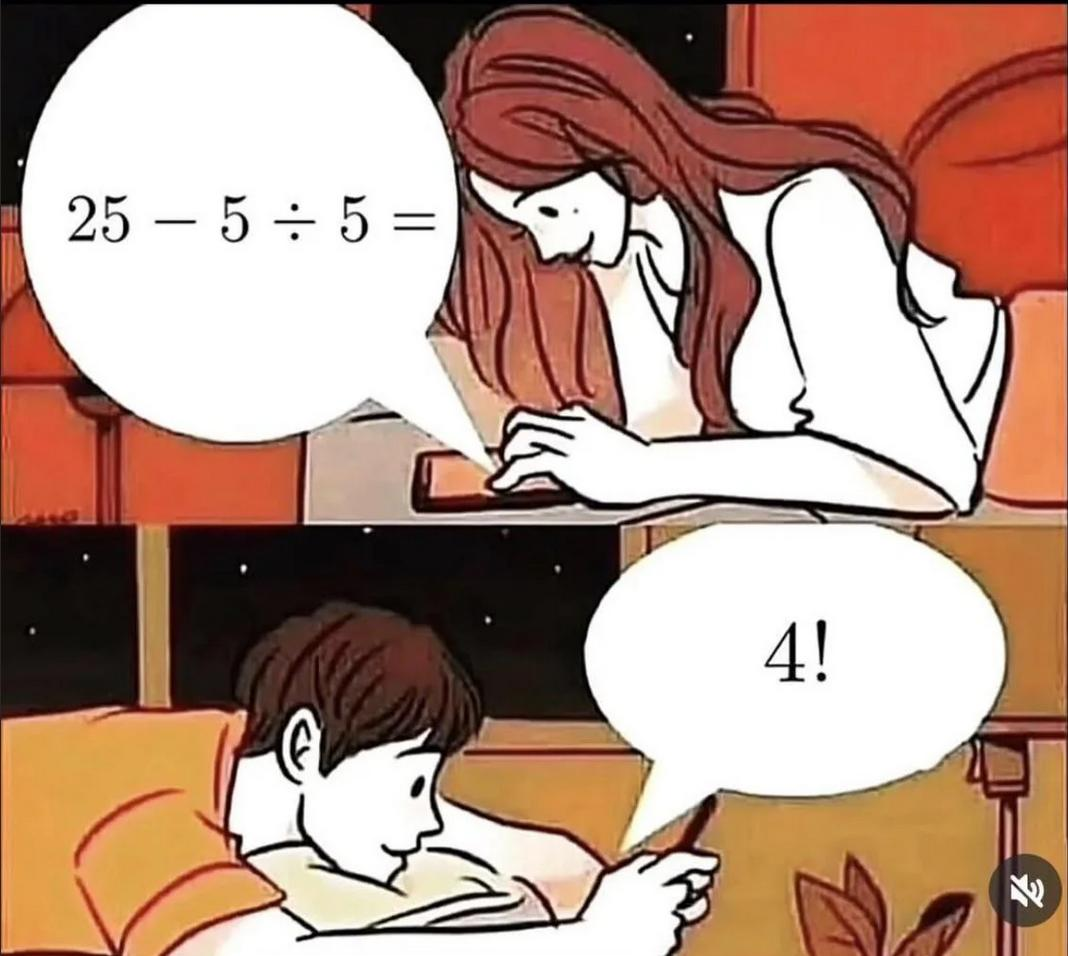
Naively, not natively. Someone who wasn't a good math student, or just doesn't remember, might read it left to right and come to the wrong conclusion. The rules for order-of-operations are, so far as I know, arbitrary, and different people coming at it without instruction (ie: naively) could arrive at different conclusions. Knowing that you're supposed to do division first isn't obvious.
You could read 25 - 5 ÷ 5 as "25 - 5 is 20. 20 divided by 5 is 4" or you could read it (correct, per the standard rules) as "25 minus.. hold on.. 5 divided by 5 is one. Now 25 subtract that from the 25 sitting over there, and get 24." This isn't the same kind of error as, like, "5 divided by 5 is 0"