Photo came pretty aesthetic, btw!
Also old post, I know, but still going through my RSS backlog... "<.<
Photo came pretty aesthetic, btw!
Also old post, I know, but still going through my RSS backlog... "<.<
It seems I have misremembered slightly however in my defense it was over 15 years ago.
I think these were the instructions I was thinking of to make a "pandora battery" https://www.instructables.com/How-to-Your-Custom-Firmware-MOD-PSP/
The critical part seems to be severing some connection on the battery PCB. The pencil is later used to unsever the connection and restore the battery back to normal.
The use of a pencil to mod a psp must have been so novel and weird that that's all that I remember about the process lol.
I don't remember why this worked though.

Hang on in there, little buddy.
What
It's from the chemistry.
3.6, 3.7V is just what lithium-ion cells naturally give you. It can be as high as 4.1V when they're freshly charged.
Maybe it didn't need a heat gun. I'm going off memory from a few years ago and I might have added that thinking about phone batteries I've done. In any event, it was far more complicated than the last dell I'd changed (maybe 2010 ish which involved sliding a tab with your thumb like so:

I thought this was all I'd have to do. Fuck Tim Apple and Steve Jobs for starting all this bullshit. Tech used to be really fucking easy to do basic maintenance and small upgrades.
Odd for a Dell to need a heat gun, I've done a few of them (since the early 2000's)and they were all screws.
Sounds like something from a consumer or compact model?
Also LCDs require a lot of voltage
For anyone wondering 3.6V is about typically what the PS2 ran most of its component at (3.3 - 5V range), despite being a 12V device, mostly because the peripherals needed higher voltages (e.g. gamepad) which the PSP doesnt need
I remember one of the earliest ways to hack a PSP (to run custom firmware) was to use a pencil to draw on the PCB on the battery pack.
Exactly haha. I quickly disposed of that when i found it xD
Ok one side of that is supposed to be flat....
Ok so, my psp battery became a spicy pillow.
Yes, the battery is curved, but when spicy it becomes even more curved and the lid doesnt close anymore. On top of that, its very hard to actually see if its spicy because of that curve.
The enclosure is not hard plastic and it doesnt crack when the battery is spicy, it bends at first.

The PSP battery is curved, this isn't a failing battery. Also the battery is enclosed in hard plastic. There would be a large split where the clam shell is showing.
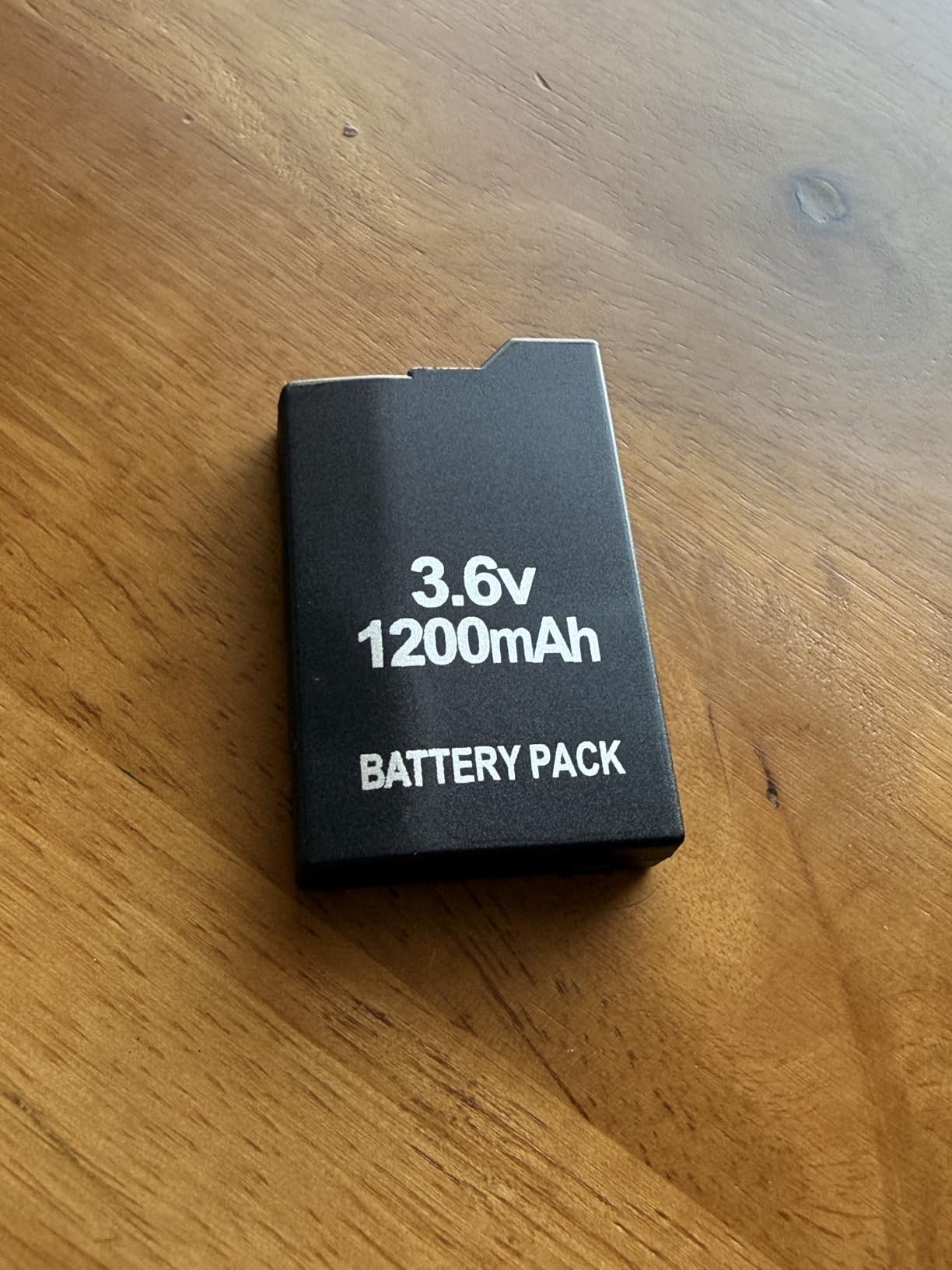
The battery is bulging out… which explains the title.
it's not gore. and yes it did have a rounded edge otherwise the cover the other commenter mentioned wouldn't fit.
gore for a PSP battery would be cracks all over it or something
You're not crazy, the PSP batteries are normally rounded/beveled.
I ran one of those bad boys for thousands of hours and never had issue with one.
I recently had a work laptop battery die. This was during COVID so I didn't want to deal with taking it to a place or having them send a technician. I told them to just mail me one and I'd do it myself. I assumed it would pop out like the picture and be easily replaced. It turned out that I needed a heat gun and had to get like 5 screws out, remove and replace a ribbon cable and a few other things. It was still doable, but thanks Dell for making that way harder than it had to be to sell services to people.
Alright, I am just confused as it has no visible cracks in the plastic.
It was not. There’s supposed to be a plastic case covering it. This is quite spicy indeed.
I don't know if this is gore or not...
I remember the psp battery being slightly rounded on one side to fit the console.
The actual PCB hasn't been damaged. The plastic light diffuser sitting above the PCB was removed, and the cooling plates on each side were cut to the same height as the PCB.
this isnt gore, its just nudity
(lemmy mods please dont autoban look at the post and community)
clean board with isophrophyl alcohol thoroughly and then replace the component