1
This looks vaguely like boletes but I'm absolutly unqualified to recognise mushrooms.

This looks vaguely like boletes but I'm absolutly unqualified to recognise mushrooms.
I cracked the last of my black walnuts I foraged 2 years ago. There were only a few that had spoiled, which is pretty amazing. We root cellared them. Its a great fat that can be saved for a really long time without a lot of preservation.
I bought a black walnut cracker this year, which has changed the game. Previously I used a hammer and towel. This amount would have taken about 2 hours. With the cracker, it took me 40 minutes.
Right now, it's black walnut season in NE Tennessee! So many people happy to give them away, as they are a nuisance to most people. We pulled about 50 gallons of the nuts so far, but are looking for more spots around us that have good sized nuts.
What are some ways we can incorporate foraging meaningfully into life? That's the question I've been looking to answer. We've foraged a lot, but I've struggled to figure out how to meaningfully bring it into my families diet.
EDIT: Added a terrible pic of the black walnut cracker. The one I bought is the Grandpa's Goody Getter. I also bought the other anvils, so this should be able to crack just about any nut I can find.


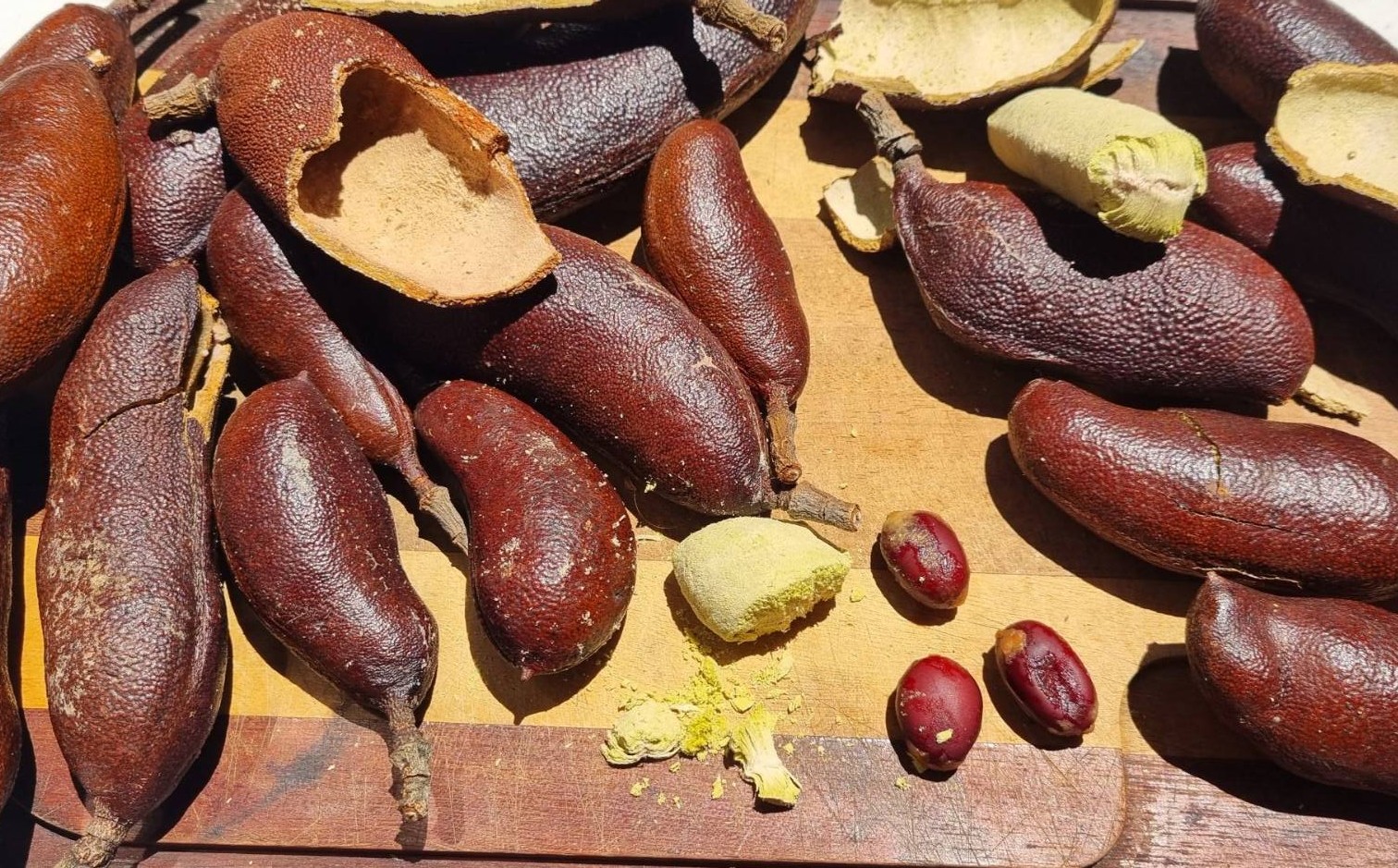
aka Hymenaea courbaril. If you are not used to it, you'll say it stinks, specially when wet
The pulp is sort of powdery fibery, if that word exists, and surprisingly sweet. It will also stick to your teeth, similar to when you eat dry infant cereal, like nestle cerelac
When they're still growing like this, they look almost like alien pods.

Unfortunately they're very invasive up here but there's a pretty productive bush where I work, and I'm not allowed to remove it, so at least I can get some free berries out of it. If you've never had them, they're sweet but a little tart.

I thought this was going to be a no-hazelnut year. It has been no- or low-hazelnut for three year straight as the trees that are familiar to me don't resist well to hot and dry summers. But I see more and more of what seems to be a different variety I've never notice growing up.
These other hazels are more like small trees and less like big bushes. The involucres are much bigger hidding the nuts from a passing gaze. Because of that, I only found them when something make them fall all at once like bad weather or the very nice road workers that made that much fall in the street next to mine.
I'm very exited! I will go back tomorrow if the street has been "cleaned" yet.
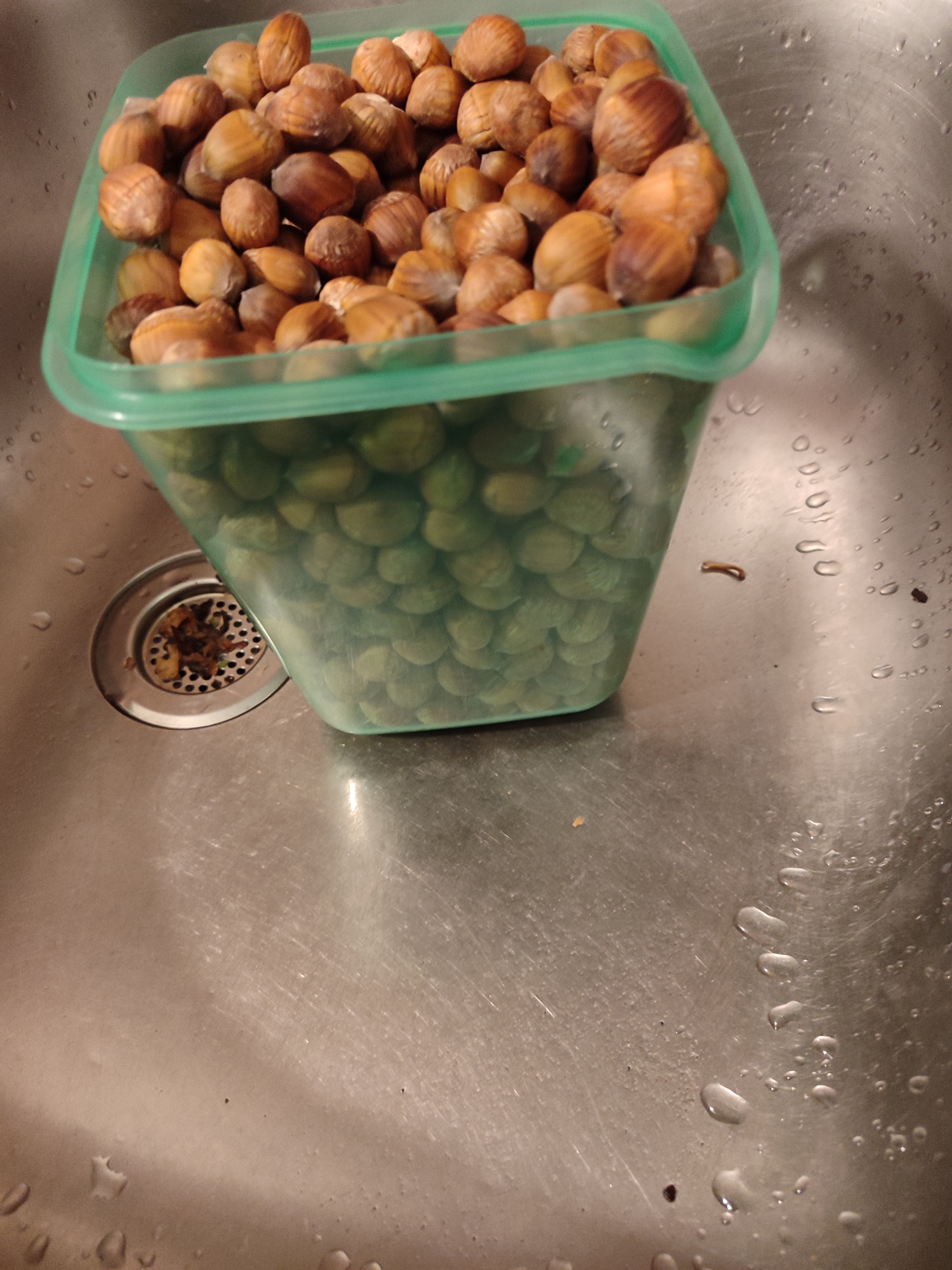
Some young trees finally gaves fruits and I realised they were 6 or 8 among what have been planted by the municipality a few years ago.
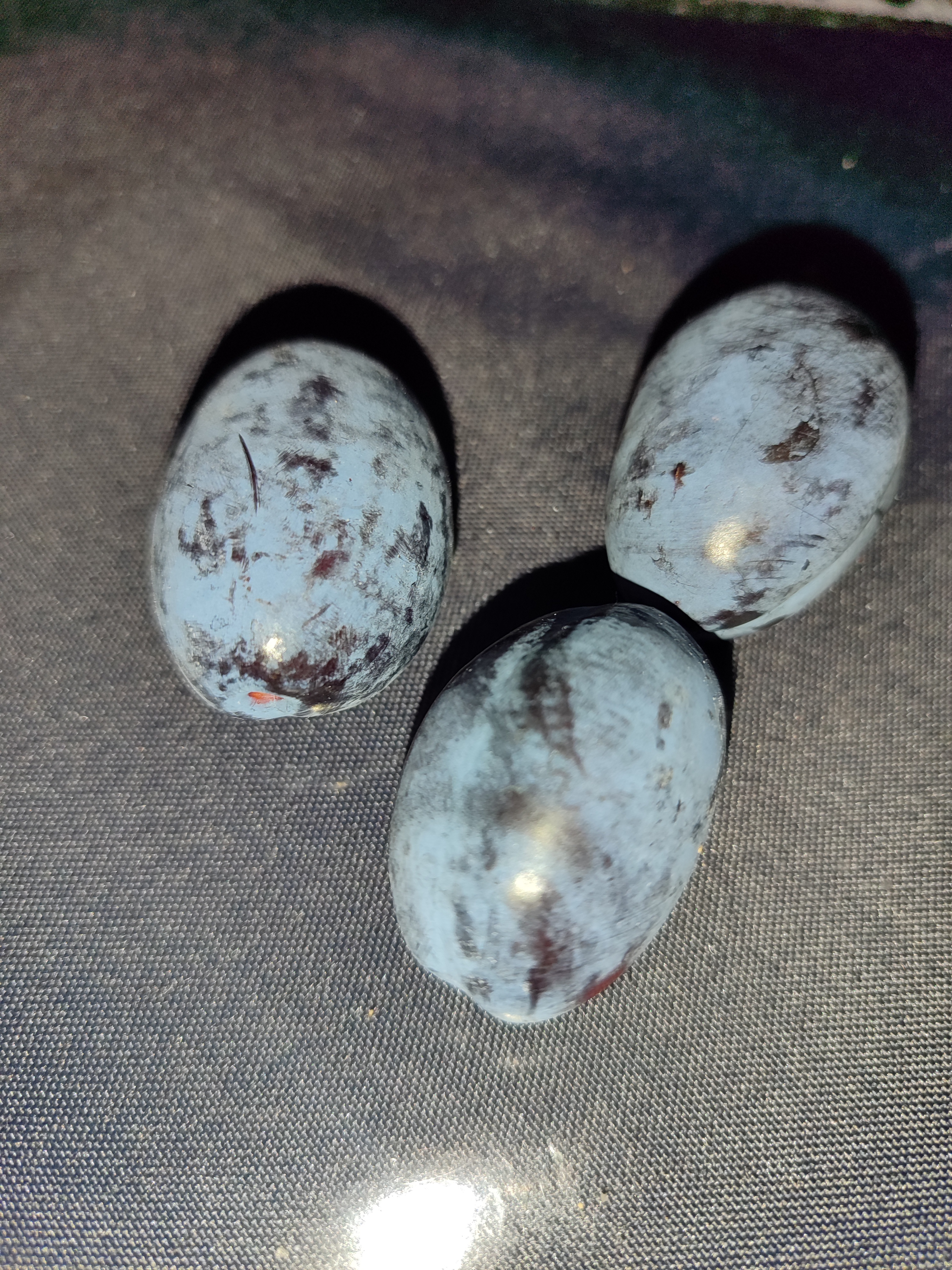
Tree wasn't tagged by the city, so I didn't know what it was, but I saw someone grabbing a couple of them to eat a few days earlier, so I gave it a try
I can confirm there is a lot of latex on the skin
From reverse image search, it looks like a Pouteria caimito. I'd say it has a really subtle sweet flavor and texture of a jello
I'm using a spoon to eat them now to try to avoid all the latex, but if anyone has any other tips, they are always welcome

Hand and field guide for scale.
Now to decide what to do with them all 😅.

I'm looking forward to the fruits next year! What an amazing gift from this tree.

I've been asked to help ID this plant.
Can anyone ID this fruit? It's a #native #Amazon #rainforest #tree growing in the region of Badass Fruiterrarist Land in far western #Amazonia near Sumaco National Park. We're confident that it's a #Solanum species, but which one? The #fruit is like something between Solanum betaceum (tree tomato) and Solanum quitoense (lulo/naranjilla), and it grows on a narrow but fairly tall tree at the edge of the forest (next to the road).
The university in my town has many white mulberry trees, and they are ripening. Sadly they are super old and many of them their lowest branches are far out of my reach, but I am not beyond foraging of the ground. And neither is Furiosa...

She is actually eating grass there, but she had been foraging for berries.

Persimmons were still quite green when I picked them, as the birds had already gotten to the ripe ones first.
They also have very thick skin compared to store bought persimmons, which might be a good think, as I only found superficial damage and just one bug near their weakest part around the calyx
Guavas on the other hand... let's just say I won't need any extra protein in my diet for a while

I'm not an avocado specialist, but it seems to be a different variety from the avocado I'm used to forage (which is tagged as persea americana), as this one is rounder like a ball
I'm glad they shared it now, as I'm not to keen to climb the wall where I'm used to go, as it was filled with invasive african snails, which are known to transmit diseases around here
Perhaps it is time to learn how to safely make some escargot?

As far as I know, this is a wood-sorrel, aka Oxalis, perhaps an oxalis articulata in this case? I think I might have needed to wait for the flower to bloom to know for sure. If anyone can id them properly, let us know
Lawn owners usually hate them around here, as they only want to see grass in their lawns, which means I only pick them where I know herbicides/pesticides aren't used (and hope there isn't runoff from somewhere else)

I think my camera is busted (or it's just my lack of photography prowess), they are looking pinkish in the photo, but it should be red
It is a Malpighia genus, but I don't know the exact species to be honest
Studies show it has around 1,000–4,500 mg, of vitamin C, per 100 grams of fresh fruit, which is around 50–100 times than that of orange or lemon

Fruit from Moquilea tomentosa
I can barely finish a couple of these and I already feel satiated. At least for me, this is not the kind of fruit that I can eat a pound in the blink of an eye