[–] 11 points 2 weeks ago (1 child)

The article is down. Threadiverse death hug?

A family says police escorted them and their 3-year-old son off an i9 Sports youth soccer field in Winter Park after the league issued a trespass, following complaints from opposing parents that the boy held the ball too much and was “trying to put on a show.”

The incident, captured in video the family posted to TikTok under the handle @nevadaney10 and later shared widely, shows the child — identified by his parents as Nevada — playing in a league with kids roughly two years older. According to the family’s accounts in the video and related posts, he dominated possession, was substituted multiple times in a roughly 30-minute game, and still scored multiple goals (the family cited 10 in one game). Opposing parents are heard complaining that the play was unfair.

“They really called the police on a 3 year old because he had the ball too much,” the father said in the circulating video. The mother is heard responding to parents gathered nearby: “Those grown ups huddled up talking about my son… but he ain’t doing nothing but playing soccer.”

The family states that the league banned them from the field via a trespass notice and that officers then escorted them away in front of the other children. They say they later received a refund for the 2026 fall soccer league registration. The original video notes that the game was being live-streamed on TikTok, so other viewers saw the sequence in real time.

Police called on 3 year old Black boy—for being "too good" at soccer.

Officers escorted his family away in front of all the other kids.

After league had them tresspassed from the field.

“They really called the police on a 3 year old because he had the ball too much," dad said.… pic.twitter.com/kqIn2PIDF5

— LongTime🤓FirstTime👨‍💻 (@LongTimeHistory) October 25, 2026

Nevada has previously drawn attention online for skill clips and goal highlights posted by the same account, with some videos circulating on accounts such as House of Highlights and ESPN FC. Family posts describe a pattern of the 3-year-old excelling against older children in the league, which they say prompted repeated complaints about fairness.

i9 Sports, which operates youth leagues, camps, and clinics for children ages 3 and up in sports including soccer, has not issued a public statement on the incident. Local police have also not released information confirming details of any call or escort. The family’s video and posts remain the primary public record of what occurred.

The episode has prompted online discussion about age-group rules, competitive balance in recreational youth leagues, and the decision to involve law enforcement at a game involving a preschool-aged player.
  • source
  • [–] 14 points 2 weeks ago* (2 children)

    Most team sports don't ban star players

    Although i have seen a show called Ted Lasso where the coach put him on the bench for hogging the ball.

    The article says multiple substitutions. Wonder what the coach's role was in the whole thing.

  • source
  • parent
  • context
  • [–] 15 points 2 weeks ago (3 children)

    What Queer People and Cyclists Both Know

    Why do angry men in cars yell at queer people, women, and... cyclists?

    Robin L Owen

    18 hours ago

    18

    8

    2

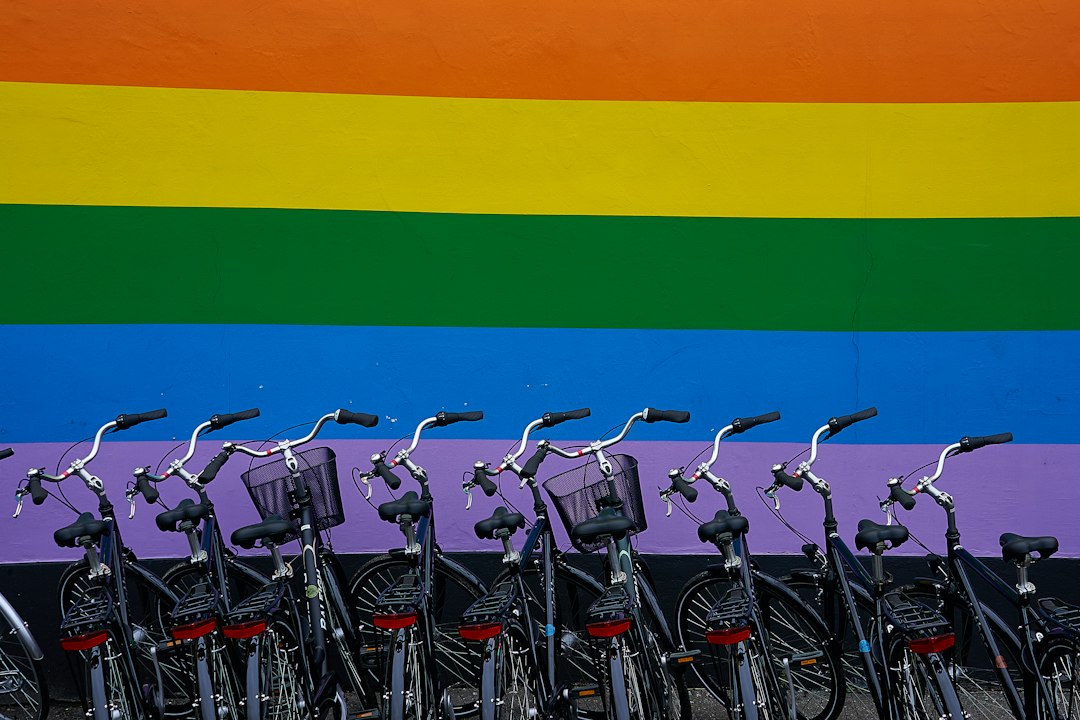
    black commuter bikes parked near multicolored wall

    Gay bikes. Photo by Stefano Ghezzi on Unsplash

    Have you ever read queer theory and thought to yourself, “I don’t even know what you mean by queer, man”?

    I’ve been there, but I’m here to clarify for you: they mean cyclists.

    You might be surprised to know that when rightwing freaks talk about how leftists are grooming your children, they are also referring to cyclists. After all, cyclists want your child to learn how to ride a bike, which is also what queer theorists want.

    If you thought riding a bicycle, the simple act of getting around on two wheels, was a largely agendered experience, I’m here to tell you that cycling is a little, well, queer. Not necessarily because of anything inherent to bicycles, but because of what happens when you do something that makes other people question the rules they take for granted.

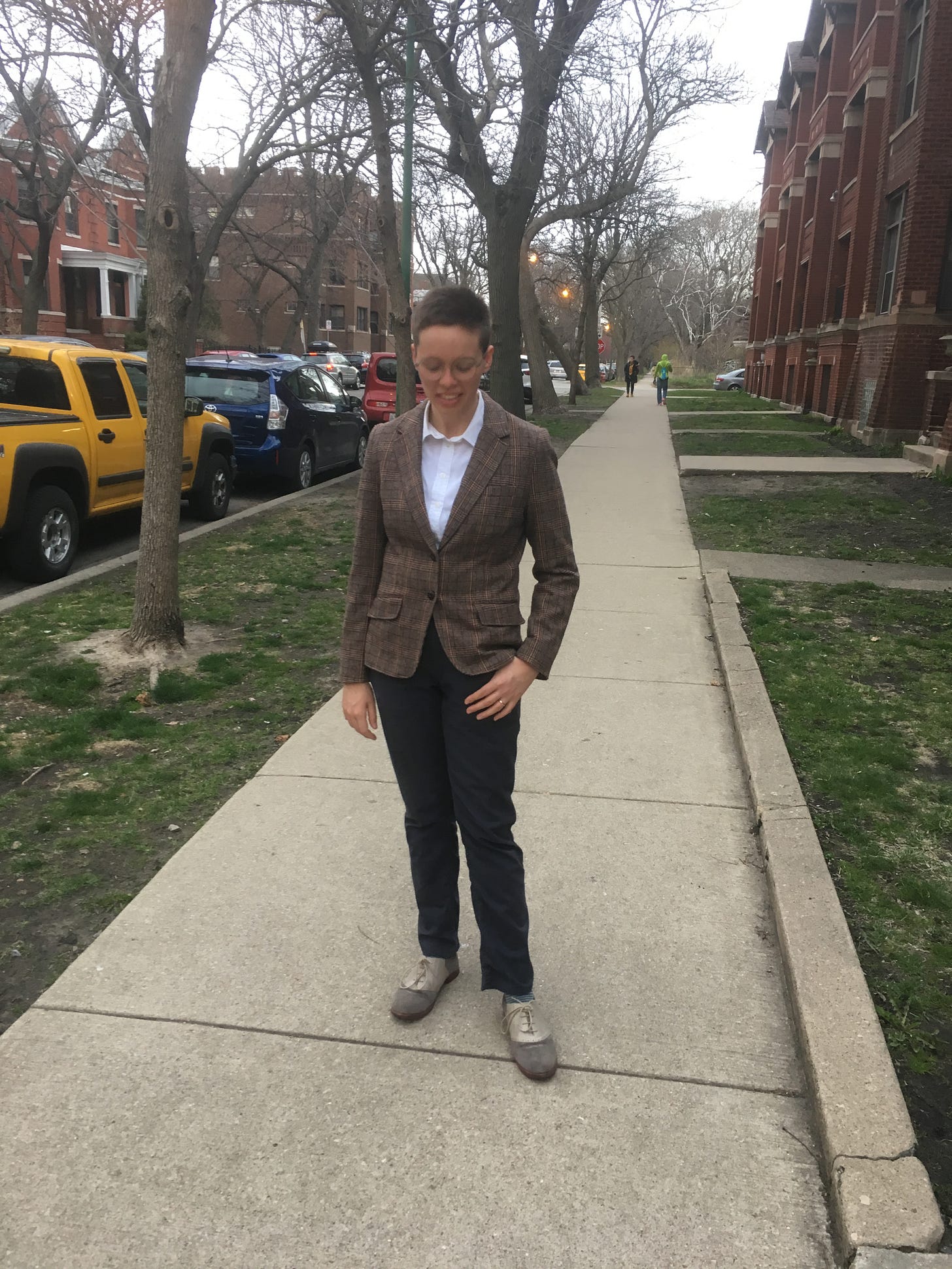
    When I started riding a bike to get around in college, I experienced a familiar kind of harassment: frat boys rolling down their truck windows to yell at me from the comfort of the driver’s seat. Off of my bike, these frat boys could see my half-shaved head and masculine clothes, so they knew to call me a dyke.1 When I rode past them on my bike, helmet covering my dykey hair, they didn’t know to call me a dyke, but it didn’t stop them from yelling. Instead of homophobic slurs, they settled for the more universal misogynist slur: bitch.

    You can see why they called me a dyke.

    Now, ten years later, I’ve started bike commuting, and it seems that the behavior of men in cars hasn’t changed. Earlier this week, a man sped up toward me, feigning that he would hit me, then swerved out of the way. He opened his door to yell at me: “Get out the street, bitch!”

    I look a lot less queer now, and so I’m less used to being yelled at by strangers in cars. But when he yelled at me, I thought: oh yes, I remember this. It was familiar, like slipping into your coat for the first time in the season… If you coat was kind of scary and very aggressive. He didn’t know to call me a dyke, but the same sentiment underpinned both this harassment and the homophobic slurs I’ve gotten in the past.

    But why is that? Why do aggressive men in cars want to yell at queer people, women, and cyclists? Cyclists feel like the oddball in this list; two of these are about sexual politics and the third is about… transportation?

    Obviously, cycling and queerness are not the same thing. One is a way of getting around, and the other is a way of describing, among other things, who you are and whom you love. Most cyclists aren’t queer, and (unfortunately) plenty of queer people don’t ride bikes. I’m not suggesting that every driver who harasses a cyclist is secretly motivated by homophobia, which would be a wild reason to yell at someone on a bike.

    But there is, I think, a common impulse at work in both kinds of harassment: the desire to put people back in their place.

    A cyclist on the road is a violation of an unwritten rule. The road is for cars. Cars are how people get around. A person on a bicycle is an obstacle, an inconvenience, an intruder in a space that drivers have come to regard as their own. Never mind that cyclists have a legal right to use most roads, or that a person on a bike is trying to get somewhere just like everyone else. The cyclist is wrong simply by being there. This is what Dr. Ian Walker called “motonormativity.”

    Often, drivers are mad at cyclists irrespective of how people behave on the road. Drivers become angry at cyclists in bike lanes, in the right lane of streets or squeezed onto shoulders; when we pass them in traffic, when we move with pedestrian walk signs, or when we’re on sidewalks. Faster or slower, in the road or on the sidewalk, some people are angered at the mere sight of a person on a bike.

    There are legitimate disagreements about how people should share streets, and cyclists aren’t incapable of making mistakes. But the intensity of some drivers’ anger seems disproportionate to any particular behavior.

    I recognize this from being queer.

    There are plenty of ways to be queer incorrectly, according to people who think queerness is something that needs correcting. You can be too masculine or too feminine, too visibly gay or insufficiently discreet. You can hold your partner’s hand in the wrong place, wear the wrong clothes, or simply be recognizable as someone who doesn’t fit the expected arrangement of gender and sexuality. The rules are often contradictory, and you can follow them as carefully as you like without ever being assured of safety.

    What makes these experiences feel related to me isn’t that a bicycle is somehow inherently queer; it’s that both can put you in the position of being treated as though your presence requires an explanation.

    Who said you could be here? Why are you doing that? Don’t you know that’s not how things are supposed to work?

    And then, sometimes, a guy in a truck decides to enforce the rules.

    The man who threatened to hit me with his car had a considerable physical advantage over me. He was inside a vehicle weighing thousands of pounds. I was sitting on a bicycle. He could have seriously injured or killed me, whether or not he intended to. He could make me afraid with a quick acceleration and a turn of the steering wheel, all from the safety of his car.

    A cyclist is physically exposed in a way a driver isn’t. When a driver uses a car to intimidate a cyclist, the threat comes with the possibility of actual violence. Even worse, the driver can feel relatively confident that if they go too far and harm the cyclist, they will likely face few consequences for their actions, if any at all. Motonormativity is violent.

    And I think about how familiar that arrangement feels. Being queer doesn’t make someone physically vulnerable in every situation, and the dangers queer people face vary enormously. But queer people know something about the experience of having another person decide that your presence is an offense, and that they are entitled to punish you for it.

    I remember being a young queer woman in college, working at the University of Tennessee’s brand new LGBT center. One day, we found that the windows of the center had been broken. Someone had driven by and thrown a brick through our window; on it, they had written “fags get aids and die.” Eloquent, and to the point. Other times, our flags were stolen, and once the State of Tennessee threatened the University’s funding because of our existence.

    Other times, I would be walking through the streets of Knoxville with queer friends. I remember the men in trucks who seemed to find our existence an invitation to shout at us — dyke, fag. They were never very creative, the frat boys in trucks.

    In each of these situations, we had not done anything to anyone except exist, but it was our existence that was the point. By merely being there, we were a threat to the meaning of their own hypermasculine gender and sexuality. If someone could opt out of the strict gender roles they abided by, what would that mean for them? Like the cyclist in the street, we rejected a status quo that made others feel safe and secure. The roads are for people; sexuality is defined and meant for domination.

    I don’t know what the man in the car was thinking when he threatened me. Maybe he was angry about traffic. Maybe he thought I was breaking the rules. Maybe he was having a terrible day and decided I was an acceptable target. I can’t know what was in his head, but I don’t need to know to recognize the behavior.

    He felt entitled to use his power to make me afraid, and he expected me to accept it.

    There’s something here about masculinity, too. In a culture that treats dominance as a sign of strength, the ability to intimidate another person can become a way of proving yourself. The truck, the road, the raised voice, the threat: they all become ways of demonstrating that you have the power to decide who belongs and who doesn’t. You can see a version of this in the harassment of queer people, too, when someone treats gender nonconformity as a challenge to be answered or a boundary to be defended.

    I don’t think all hostility toward cyclists comes from this place. But I do think that the culture of machismo makes it easier to see another person’s vulnerability as an opportunity rather than a reason for restraint.

    The politics of bike lanes and the politics of queer life sometimes collide in such strange ways. Both challenge the idea that public space belongs most naturally to a particular kind of person, and that everyone else is there on sufferance. A protected bike lane says that a cyclist’s safety is worth building for. A public world in which queer people can live openly says that they shouldn’t have to shrink to make other people comfortable.

    Neither proposition is radical; both, in fact, are the bare minimum. But both require us to question whose comfort we have organized the world around, and whose discomfort we have decided doesn’t matter.

    I still think the comparison is a little funny. Unfortunately for the straight cyclists, riding a bike won’t make you queer (sorry y’all!). But I do think that being queer has taught me something about cycling: sometimes, when a stranger gets furious at the sight of you going about your ordinary life, the problem isn’t really what you’re doing. It’s that you’ve challenged their worldview by simply being.

    1

    A gay female pastor?!?!? Yes! I am!

    I don't like substack :(

  • source
  •  

    Hi, maybe I'm old school but i did not appreciate Google replacing their old "Google assistant" on Android with the new Gemini. I do not want to participate in Gemini.

    How can i replace it with a more traditional voice assistant?

    I don't use it for very much: the only workflows it would really have to support are:

    • Play music (currently Spotify), e.g., "Play the Beatles on Spotify"
    • Set timers and alarms on the clock app, e.g. "Set a timer for one hour with the label: laundry".

    I think tasker can do this? But i couldn't find a good guide online.

    Anyone know a good way of going about setting this up without it becoming a new hobby?


    Researcher also has free (speech and beer) schematics for making your own sensor and replicating the experiment.

    Have you heard of this concept? Does it ring true for you? Do you live somewhere where cars pass you dangerously?

    Wear a helmet or don't, but either way, society is responsible for making bicycling safer, and encouraging more people to take a bicycle over a car trip. Mandatory helmet laws reduce the number of people cycling, and the safety in numbers factor.


    When i try to paste an image into a piefed comment on blorp, i get a http 400 error (bad request)

    I can post the same image into a lemmy comment and it works fine.

    Is this a intended behavior, a problem with piefed, or a problem with blorp?

    One wrinkle, i can usually copy entire articles, including images, and paste these as comments in piefed. Turns out i was misremembering and this still fails. Actually it did work once with the Wikipedia fediverse article, but failed the lego 404 article.

    I will post some test comments below from piefed blahaj, Lemmy blahaj, and retrofed (piefed).

    Please let me know if you have any insights or anything else to try.

    NEW INFO: testing on Summt vs Blorp reveals: quota exceeded.


    Hello, I'm not seeing OP's responses on a thread, but i can see them in an alt piefed.blahaj.zone account.

    But i realized it was because i have blocked OP previously.

    So my question is, if I have blocked them, why can i read their post? Is there something wrong with my account?

    I suppose the first troubleshooting step is to find a desktop computer and see if using a different client other than Blorp is any different?

    Anyone have insight into what is going on? Thank you

    [Crash] Page rendering error (piefed.blahaj.zone)
     

    Host: localhost

    Path: /home/posts/https%3A%2F%2Fdiscuss.online%2Fpost%2F44559567

    User Instance: piefed.blahaj.zone

    App Version: 1.14.0

    Commit: 0ea2c64cf2f6d15be512b7c34e75902214442ddb

    Error: Called contentMatchAt on a node with invalid content

    Stack:

    Error: Called contentMatchAt on a node with invalid content
        at pz.contentMatchAt (https://localhost/assets/index-Pokk-y-a.js:2:1803840)
        at pz.canReplace (https://localhost/assets/index-Pokk-y-a.js:2:1803972)
        at eJe (https://localhost/assets/index-Pokk-y-a.js:2:1845507)
        at v1 (https://localhost/assets/index-Pokk-y-a.js:2:1845822)
        at SJe (https://localhost/assets/index-Pokk-y-a.js:2:1879348)
        at https://localhost/assets/index-Pokk-y-a.js:2:2000840
        at Object.lift (https://localhost/assets/index-Pokk-y-a.js:2:1989270)
        at https://localhost/assets/index-Pokk-y-a.js:2:2021701
        at Object.toggleWrap (https://localhost/assets/index-Pokk-y-a.js:2:1989270)
        at https://localhost/assets/index-Pokk-y-a.js:2:2123123
    
    view more: next ›