[–] -1 points 3 months ago

Good for you, but the discussion in this comment thread has always been about his politics

No... it has been about mullvad being a great browser that just acts like a browser.

that is literally what the first reply to your comment in this chain was about.

and i've addressed why that hot take is just a whataboutism and purity testing doesn't belong in open source discussions.

Don’t engage in the first place if you are so unwilling to discuss it.

Same to you buddy! This is my thread your badgering me on.

  • source
  • parent
  • context
  • [–] -1 points 3 months ago (4 children)

    now you have moved the goalposts from mullvad, to one of its founders using personal money, now to a political party that isn't involved in mullvad.

    does any of this impact the open source project? no.

  • source
  • parent
  • context
  • [–] 16 points 3 months ago
    1. I do this shit for money I ain't going to do it for free. I'm not about to be the 24/7 unpaid on call for my families pagerduty rota. Paid cloud services for me
  • source
  • [–] 5 points 3 months ago

    I've done this a few ways:

    Optical thunderbolt to thunderbolt dock.. so the dock would be next to your tv and you plugin to the dock with whatever. This works amazingly well.

    Game streaming over Ethernet - moonlight/sunshine do a great job, on a high quality network it's not noticable. Only downside is they don't forward microphone, so you end up doing some gymnastics to get microphone input.

  • source
  • parent
  • context
  •  

    A novel approach to the modern issues with Star Trek... No longer do we get insightful criticism of structural societal problems we get repackaged corporate washing of political movements removing the heart and soul of actually critiquing power or having something interesting to say..

    The way Damien Walter illustrates how Larry Ellison basically owns Star Trek and its unlikely he would allow a criticism of anything Ellison is doing.... is a compelling link I hadn't considered.

    Unlike most Star Trek noise out there, this one is saying something novel about why modern Trek has no bite.

    TLDW: Get your capitalism out of my fully automated luxury space communism show.

    summerizerDeep Space Nine : post colonial studies in space

    • DS9 moves from episodic exploration to long-form politics.
    • DS9 puts colonization, settler colonialism, and decolonization on-screen.
    • Bajor: a spiritual, peace-leaning society after Cardassian rule.
    • Cardassians: stiff, polite imperialists; empire dynamics in space.
    • Ferengi: profit-first middlemen; an uneasy ethnic mashup in the metaphor.
    • Dominion: persecuted shapeshifters become an expansionist state; cycles of harm.

    Old Trek carries material critique; New Trek carries corporate "wokeness".

    • Star Trek peaks in DS9 with postcolonial critique of imperial power.
    • New Trek is written by elite-college pipelines and corporate shareholders.
    • Starfleet Academy opens with loud messaging and weak craft.
    • Kurtzman-led teams keep failing upward while the franchise falls.

    Corporate "wokeness" is marketing skin over power.

    • Fearless Girl looks like feminist defiance but works as fund advertising.
    • The campaign promotes State Street's gender-diversity product (ticker: SHE).
    • The statue is built for PR by McCann Worldgroup.
    • Charging Bull is guerrilla art by Arturo Di Modica, dumped at the NYSE.
    • Fearless Girl vs Charging Bull becomes a clean corporate story over a messy one.

    Spectacle and recuperation hollow out radical culture.

    • Guy Debord's Society of the Spectacle targets culture under capitalism.
    • Recuperation sterilizes subversive acts and sells them back as safe symbols.
    • Protest slogans, 1960s counterculture, and early political hip hop get commodified.
    • Star Trek goes through the same sterilization into corporate "wokeness".

    Ownership explains the shift.

    • Skydance is in Star Trek Into Darkness credits as a rising finance engine.
    • Skydance bankrolls big franchises, then buys Paramount and the Star Trek library.
    • David Ellison leverages Larry Ellison's Oracle wealth to consolidate Hollywood.
    • Control of CBS News tightens; stories get spiked to fit owners' tastes.

    The missing future.

    • Star Trek's radical idea: no billionaires; wealth is shared for human flourishing.
    • New Trek talks emotional safety and dodges billionaires because billionaires pay.
    • While billionaires own Star Trek, Star Trek never becomes woke again.

    References


    Saturated fat is back in the headlines, and so is the confusion.

    The new Dietary Guidelines for Americans just dropped, and while there’s clear progress (more support for animal-based protein, low-carb options, and reduced sugar), they’ve kept the 10% cap on saturated fat. But does the science still support that limit, and does it make sense with the rest of the recommendations?

    In this episode, Dr. Bret Scher breaks down the real story on saturated fat: where the guidelines get it right, where they fall short, and why context is everything when it comes to fat, food, and metabolic health.

    summerizer

    • Why this topic is back
      • The new Dietary Guidelines for Americans keep a 10% cap on saturated fat.
      • The same guidelines push more protein, fewer grains and sugars, and a low-carb option for metabolic disease.
      • They also list butter and tallow as cooking fats, which can look inconsistent with the cap.
    • My bottom line upfront
      • Saturated fat from minimally processed whole foods, in a lower-sugar / lower-refined-carb diet, is a different exposure than saturated fat in a standard American diet.
      • The food source and the surrounding diet matter more than a single saturated-fat number.
    • Evidence bucket 1: long-term diet surveys
      • These studies use self-reported diets and track heart disease over time.
      • Results are weak and inconsistent: some link higher saturated fat to higher risk, others do not.
      • Effect sizes are small (hazard ratios ~1.1–1.4), compared with smoking and cancer (~15–20).
      • Big problems: confounding (smoking, exercise, income, access to care), “healthy user” behavior, and recall/FFQ error.
      • They also mix food sources (steak and cheese get lumped with pizza, pastries, and ice cream).
      • Useful for hypothesis generation; not strong for cause-and-effect.
    • Evidence bucket 2: controlled feeding and mechanisms
      • These studies often show saturated fat can raise LDL cholesterol in many people.
      • A key mechanism: saturated fat can lower liver LDL-receptor activity.
      • Limits: LDL is a risk marker, not a heart-attack outcome.
      • Many studies miss the broader risk picture: insulin resistance, triglycerides, HDL, inflammation.
      • Practical move: measure your own labs on the diet you actually eat, including ApoB if available.
    • Evidence bucket 3: randomized trials that lower saturated fat
      • People are assigned to reduce saturated fat or not, often swapping it for carbs or polyunsaturated fats (PUFAs).
      • Typical pattern: modest LDL lowering, little or no change in all-cause mortality, mixed/neutral heart attack and stroke results.
      • A major limit is duration: often ~5 years, which can be short for coronary disease outcomes.
      • Substitution matters: saturated fat → carbs is neutral or worse for heart attack risk in some trial sets.
      • Saturated fat → PUFA has a small benefit signal, but the supporting trial set has high bias risk.
    • Evidence bucket 4: studies that separate saturated fat by food source
      • When saturated fat is split by source, whole-food sources (dairy, unprocessed meats, chocolate) are often neutral, sometimes favorable.
      • Many dairy findings show a small signal toward fewer cardiovascular events.
      • Processed foods that combine saturated fat + refined carbs show harm more often.
    • Evidence bucket 5: low-carb and ketogenic trials
      • These are interventions where carbs drop and saturated-fat intake often rises.
      • The saturated fat shifts from processed fat+carb foods toward whole-food fat sources.
      • Typical results: lower triglycerides, higher HDL, better insulin sensitivity.
      • Often: no rise, or even reductions, in ApoB and LDL particle counts; broader risk markers improve.
      • A small subset shows large LDL rises; long-term outcome meaning is unclear.
      • Keto-CTA comments: an early plaque-progression result tied to one analysis did not match three other analyses, which showed slower progression or regression; more results are expected.
    • Comment responses and takeaways
      • Allowing saturated-fat foods is not permission for a standard American diet; it fits a whole-food pattern where LDL does not automatically rise.
      • “Plant-only reversal” talking point: Ornish-style reversal programs bundle diet with smoking cessation, exercise, stress management, social support, and medical therapy, so diet alone is not isolated.
      • “Blue zones low saturated fat” pushback: Mediterranean island patterns include goat milk, lamb, pork, and cheese, not a saturated-fat–free diet.
      • Individual testing is endorsed: labs plus carotid imaging, coronary calcium scoring, or coronary CT angiography can guide personal nutrition choices.
    • Close
      • Stop treating saturated fat as one thing.
      • Track food source, processing, carb context, metabolic health, and measured biomarkers.

    References


    Cancer can only metabolise glucose

    Carbohydrates of all types turn into glucose.

    Humans can live without eating carbohydrates.

    Going strict zero carb (carnivore) will stop feeding the cancer extra fuel, reducing the growth rate. For some people this is enough so their own bodies can get ahead of the cancer.

    This makes carnivore a great ADJUNCT to a cancer treatment plan. By itself carnivore will not cure cancer.

    Without medical intervention the body will still make glucose, which cancer can use. This production is at a much lower rate then eating carbs. There is a human trial testing cancer protocol that presses of zero carb eating with pulses of drugs that stop the bodies glucose production. The studies that use this focus on glioblastomas in the brain and show very promising results (in humans, not mice)

    Tldr: carnivore doesn't cure cancer, but it doesn't enable cancer either, it couldn't hurt to go zero carbohydrate while fighting cancer.


    a shower thought, since I've been talking to my friends about cancer seemingly over and over. Every body knows somebody fighting cancer


    7 Year old monitor started to have panel issues today, no initiating event. Did the normal trouble shooting, shut every component down, disconnected, swapped cables, updated firmware, changed resolutions, etc... issue persisted.

    Took it apart to have a looksie

    Getting all the plastic snaps off the back of the monitor was the single longest part of this... very annoying. I miss easy to repair devices.

    The PSU has shorts!!

    the other side of the pcb is a transformer

    some other leaking seen as well

    both sides of the PSU in full

    the logic board looks fine

    I'm tempted to just fix the shorted pads and test the voltages... I probably should replace the transformer

    Lots of chatter on youtube about the thunderbolt ports dying on this monitor, but I don't think that is applicable to me. At least the PSU shouldn't look like this even if its not the core problem.

    Any insights or suggestions from those you have rescued erstwhile monitors? This is the first monitor that has ever fully died on me. I melted a laptop screen sitting too close to a fire.. heh, but it was still usable.


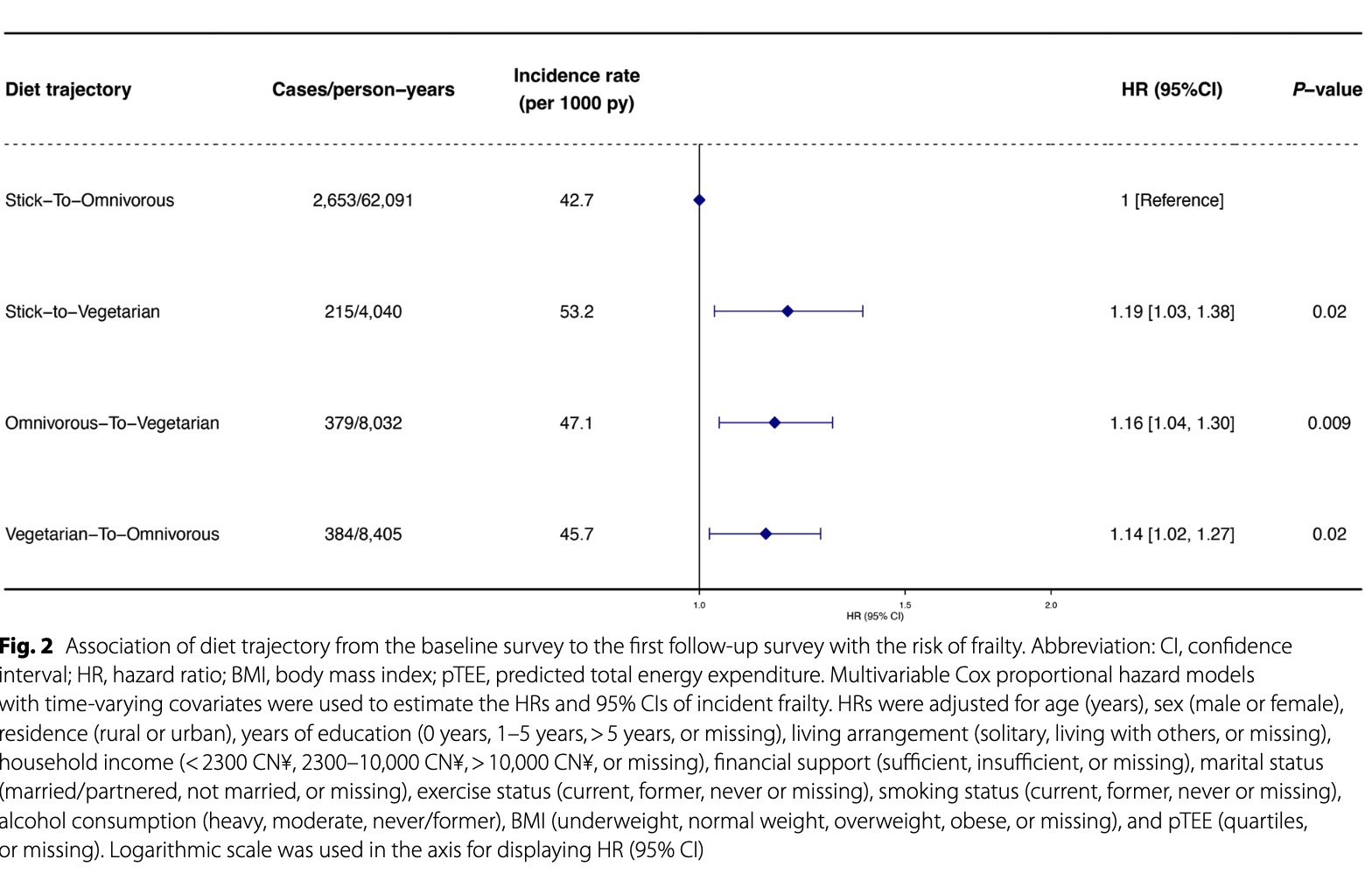
    this study aimed to investigate the association between vegetarian diet and risk of frailty in a nationwide representative cohort of Chinese community-dwelling older adults (≥ 65 years old).

    During a median follow-up of 3.0 (IQR: 1.83–5.33) years, vegetarians showed a higher risk of incident frailty (HR [95% CI]: 1.13 [1.07, 1.20]) compared to omnivores. Similar patterns were observed across subgroups of vegetarian diet, including pesco-vegetarians (HR [95% CI]: 1.15 [1.05, 1.26]), ovo-lacto-vegetarians (HR [95% CI]: 1.11 [1.02, 1.20]), and vegans (HR [95% CI]: 1.12 [1.01, 1.25]). In terms of diet trajectory, maintaining vegetarian diets (HR [95% CI]: 1.19 [1.03, 1.38]), transition from the omnivorous diet to vegetarian diets (HR [95% CI]: 1.16 [1.04, 1.30]), and transition from vegetarian diets to the omnivorous diet (HR [95% CI]: 1.14 [1.02, 1.27]) were all associated with higher risks of frailty, compared with maintaining an omnivorous diet.

    In this prospective study, vegetarian diets were observed to be associated with higher frailty risk, compared to the omnivorous diet in Chinese older adults. Future research is needed to confirm our observations.

    Full Paper: https://doi.org/10.1186/s12916-025-04232-6


    Lift so you can sit.

    summerizer

    • Purpose: counter desk-driven pain and fragility by building whole-body strength.

    • Core idea: ergonomics reduces triggers; barbell strength raises tolerance and recovery capacity.

    • Safety and scope:

      • Over 18; medical clearance when needed.
      • Start light; technique first; add load only when reps stay controlled.
    • Why barbell powerlifting for desk workers:

      • High benefit per minute; simple movements; measurable progression.
      • Trains posture under load: bracing, spinal alignment, hip hinge, scapular control.
    • Novice progression model:

      • Linear loading: add ~2.5 kg (~5 lb) each session early on.
      • Early phase: fast gains from motor learning and coordination, plus some muscle.
      • Typical arc: months to ~1 year of rapid progress; large fraction of eventual strength reached.
    • Lifts and the desk-body problems they target:

      • Squat: legs + trunk stiffness; neutral neck; shoulders set; core brace; hip-knee tracking.
      • Press / bench variants: upper back and shoulders; counter rounding and weak scapular support.
      • Deadlift: posterior chain; safe picking-up mechanics; back strength through braced hinging.
    • Minimal novice template:

      • Frequency: ~3 sessions/week with rest days between.
      • Main work: squat + press/bench + deadlift as the base lifts.
      • Sets/reps: 3×5 per lift (or similar simple work sets).
      • Time: short sessions; most time spent resting between heavy sets.
    • Recovery rules:

      • Rest days are part of training; heavy loading needs recovery.
      • Sleep and food support progress; add load next session when recovery and form allow.
    • Long-run frame:

      • Consistency beats complexity; basic barbell work compounds.
      • Add variation later after the novice progression stalls.

    References


    For references and a written breakdown, see the associated Stay Curious Metabolism Newsletter: staycuriousmetabolism.substack.com/p/salt-vs-fat-rethinking-the-root-causes

    We’ve been told to restrict salt because it increases blood pressure, but what does the science actually say? In today’s video, we dive into the fascinating biology of salt sensitivity and salt resistance. It’s not simply about your genes, but rather your fat cells. I’m going to reveal the secret of salt sensitivity, backed by data from top journals like Cell Metabolism and NEJM. Get ready to learn how fat impacts your blood pressure, and why understanding this can challenge conventional advice from your cardiologist and nephrologist. Whether you're dealing with high blood pressure or curious about metabolic health, this breakthrough science could change the way you think about your health and your diet.

    summerizerSalt vs. fat

    • Salt restriction is common blood pressure guidance; obesity drives salt sensitivity.

    Guideline target

    • U.S. guideline target is ≤2.3 g sodium/day; some long-term cohorts link lower sodium with higher BP.

    Body-fat → brain → kidney chain

    • Adipose tissue functions as an endocrine organ; leptin rises with fat mass and raises blood pressure.

    Hypothalamus control

    • The hypothalamus coordinates sympathetic tone, hormones, thirst, and kidney sodium handling.

    Obesogenic diet triggers the sequence

    • A high-sugar/high-fat diet causes obesity; leptin rises; hypothalamic microvasculature remodels before BP rises.

    Gliovascular remodeling mechanism

    • Leptin signaling in brain tissue drives HIF1α and VEGF, increasing vessel density and thickening basement membranes near the BBB.

    Kidney consequences

    • Higher sympathetic output plus altered renal signaling reduces sodium excretion, expanding volume and raising BP.

    Human anchor: congenital leptin deficiency

    • Severe obesity without leptin links to low/normal BP, separating fat mass from hypertension when leptin is absent.

    Human anchor: salt sensitivity trial

    • NEJM crossover: 15 g salt/day vs 1 g/day, 2 weeks each; only obese participants lower BP on low salt.
    • Salt sensitivity falls with body-fat percentage; below ~30% body fat, salt sensitivity approaches zero.

    Interpretation

    • Obesity creates a salt-sensitive phenotype; salt becomes a lever only after adiposity-driven reprogramming.
    • Salt resistance protects from obesity-related BP rise; salt restriction mainly helps salt-sensitive, higher-adiposity states.

    Reversibility

    • In mice, weight loss reverses hypothalamic vascular remodeling and lowers BP.

    Practical takeaways

    • Target the fat–leptin–hypothalamus–kidney axis; use sodium targets as a secondary, phenotype-specific tool.

    References


    A real how the sausage is made look at the new guidelines.

    Stephen interviews Nina Teicholz, the author of "The Big Fat Surprise," about the recent changes in dietary guidelines in the United States. Nina highlights the revolutionary shift in the guidelines, particularly the new emphasis on previously demonized foods like red meat and butter, which are now featured prominently in the updated food pyramid. She discusses the significant reduction in recommended grain servings and the acknowledgment of low carbohydrate diets for individuals with chronic diseases, marking a substantial departure from past recommendations. Nina expresses her excitement over these changes, noting that they reflect years of advocacy and research aimed at improving public health.

    The discussion also delves into the potential real-world impact of these guidelines, with both Stephen and Nina optimistic about the positive health outcomes that could arise if people adopt the new recommendations. They explore the influence of grassroots movements and personal success stories in shaping these guidelines, emphasizing the importance of lived experiences in driving dietary change. Nina also addresses the ongoing debates surrounding saturated fat and dietary cholesterol, revealing the complexities and contradictions that still exist within the guidelines. Overall, the conversation underscores a pivotal moment in dietary recommendations, with the hope that these changes will lead to improved health outcomes for many Americans.

    summerizerDietary-guidelines reset

    • New guidelines use a short, consumer-focused format compared with prior editions.
    • The earlier grain-heavy pyramid is inverted; red meat, butter, and whole milk are emphasized.

    What to focus on: the visual pyramid

    • The cornucopia-style graphic is the largest visible change and signals priority foods.
    • Animal foods are placed centrally after earlier “eat sparingly” messaging.

    Chronic disease reality and why macros must change

    • 88–93% of U.S. adults are metabolically unhealthy; a single universal diet has not worked well.
    • Carbohydrate reduction (especially grains) plus less added sugar is linked with chronic-disease reversal.
    • More fat and more protein replace those carbohydrates in the low-carbohydrate approach.
    • Low carbohydrate eating is named for chronic disease in the guidelines.

    Keto: what this means for keto adaptation and keto resistance

    • Keto and low carb are commonly tried “new year” options, alongside carnivore.
    • The pyramid is not ketogenic, but it shifts macronutrients toward lower-carb, higher-fat patterns.
    • Low carb is treated as a legitimate option, reducing institutional and social opposition.
    • The remaining “<10% saturated fat” rule conflicts with common keto food choices.

    Protein: higher targets and why

    • Protein guidance rises from 0.8 g/kg (ideal body weight) to about 1.2–1.6 g/kg.
    • More protein supports satiety, illness avoidance, and muscle-building across the body.

    Grains and sugar: a quieter reversal

    • The 1980 grain target (6–11 servings/day) drops to about 6–7 servings/day.
    • Reducing grains and added sugars is treated as compatible with better health outcomes.

    Whole milk and schools

    • Whole milk returns; policy shifts allow whole milk without counting it against saturated-fat limits.
    • The goal is whole milk back in schools.

    Saturated fat: the unchanged ceiling

    • The <10% saturated-fat cap remains, with limited supportive evidence cited.
    • Removing that cap would have been the highest-profile change; keeping it limits the reform.

    Red meat and cancer: the “WHO” legacy and why it persists

    • A WHO-convened group labeled processed meat as cancer-causing and red meat as probable/likely.
    • That classification influenced guidelines and headlines, while clinical-trial evidence was not included in the core review.
    • Processed meat remains stigmatized even as the new pyramid elevates red meat generally.

    Implementation and expected pushback

    • Pushback is expected from major institutions (e.g., American Heart Association) and legacy stakeholders.
    • Public lived experience and grassroots pressure are described as drivers of change.

    Origin story and trust collapse

    • A low-fat, whole-grain identity once dominated personal nutrition choices.
    • Research for The Big Fat Surprise revealed weak evidence, entrenched bias, and conflicts of interest behind fat restrictions.

    References


    Dr Paul Mason obtained his medical degree with honours from the University of Sydney, and also holds degrees in Physiotherapy and Occupational Health. He is a Specialist Sports Medicine and Exercise Physician.

    Dr Mason developed an interest in low carbohydrate diets in 2011. Since then he has spent hundreds of hours reading and analysing the scientific literature.

    https://youtu.be/Xgokvp5bfNg

    summerizerBackground and context

    • Sports and exercise medicine focus; work expanded from athletes to public metabolic health.
    • Metabolic syndrome in 30s despite low-fat diet, sodium counting, heavy exercise, high carbs/sugar intake.
    • Metabolic syndrome defined by 3 of 5: central adiposity, low HDL, high triglycerides, high blood sugar, high blood pressure.

    Plant only vs carnivore

    • Plant only diet benefit often comes from leaving heavily processed “SAD” eating.
    • Research comparisons often use a low baseline and exclude plant-only junk-food intake.
    • Many nutrition studies group “red meat” together with junk food and other confounders.
    • Food-frequency questionnaires are a core data source, with major recall limitations.

    Carnivore

    • Carnivore movement includes high-profile advocates; diet sits at the extreme end of dietary change.
    • Pure carnivore marked as extreme; question raised about maintaining optimal health on it.
    • No research cited that proves optimal health on pure carnivore is impossible.
    • People on pure carnivore can be extremely healthy; early support is largely anecdotal and observational.
    • Personal contacts and patients on carnivore show very good health; some reversed chronic issues after switching.
    • Population and historical patterns (Maasai, Inuit, other cultures) include predominantly animal foods with minimal plant food.

    Animal foods, growth, and brain nutrients

    • Cross-country child stunting aligns with low animal-food intake; economics and availability drive intake.
    • Ecuador intervention: giving children one egg per day prevented pathological stunting.
    • Red meat, dairy, and eggs support child growth and development via nutrient density.
    • Developing brain needs DHA; plant omega-3 converts poorly to DHA; algae is a potential exception.
    • Dietary DHA availability links to cognition and measured IQ differences in children.

    Evidence quality

    • Study design and confounding control determine reliability; avoid cherry-picking supportive papers.

    Cholesterol, LDL, and carbohydrate damage

    • Excess carbohydrate drives damaging changes to LDL; LDL level alone is a weak signal without metabolic context.
    • Older-adult evidence synthesis: 19 cohorts; LDL inversely associated with all-cause mortality in 16 cohorts.

    Practical blood tests and interpretation

    • Triglyceride:HDL ratio and HbA1c are practical, widely available predictors of cardiovascular risk.
    • HbA1c reflects average glucose exposure via sugar attachment to red blood cells over ~120 days.
    • Lab “normal” ranges mirror population distribution and can drift as population health worsens.
    • Liver enzymes help flag metabolic dysfunction; interpret toward optimal health, not the average.
    • Homocysteine can reflect malabsorption and B-vitamin/folate insufficiency.

    Fatty liver, connective tissue, and pain

    • Fatty liver raises matrix metalloproteinases, increasing connective-tissue breakdown and arthritis pain risk.
    • Early weight loss often comes from the liver and reduces these enzymes.
    • Around 10% body-weight reduction links to ~30–50% pain reduction in obesity-related arthritis.

    References


    Dr. Michael Hoffmann obtained his medical degree at the University of Witwatersrand, Johannesburg, South Africa and neurological subspecialty fellowship training in stroke from Columbia University. This was followed by two senior doctorates, one in cerebrovascular medicine (MD) and one in behavioral health (PhD). Dr. Hoffman’s main areas of research have concerned cognitive disorders after stroke and how to improve brain health and fitness based on scientific principles and evolutionary insights.

    Dr. Hoffmann is currently a Professor of Neurology with the University of Central Florida and has recently served in a number of administrative leadership positions, such as Associate Dean of Academic Assessment and Chief of Neurology Services and Director of the Stroke Center at the Orlando VA Medical Center. He is the founding director of comprehensive and primary stroke centers in 5 tertiary medical centers to date in the USA and South Africa and has current licenses in Florida and Kentucky and previously in Canada, Germany and South Africa. Dr. Hoffman is also a cognitive neurology consultant at the Roskamp Neuroscience Institute in Sarasota, Florida where he focuses on frontotemporal disorders, traumatic brain illness and neuro-toxicological syndromes such as Gulf War Illness.

    https://youtu.be/EUUOK9qo_n0

    summerizerClinical brain energy failure model

    • Brain and mental illness as brain-energy failure with mitochondria at the center.
    • Metabolic syndrome, insulin resistance, and obesity drive neurologic and psychiatric decline; Alzheimer’s as “type 3 diabetes”.
    • Stress and environmental load trigger migraine and other brain symptoms.

    Clinical observation and clinical blind spots

    • Subtle changes in mood, outlook, and behavior can precede recognized neurologic or psychiatric syndromes.
    • “Clinical simultanagnosia”: item-by-item medicine misses the whole-person metabolic pattern.

    Ketogenic / low-carb as a main lever

    • Dozens of large weight-loss cases with rapid functional improvement; goal is brain-function recovery.
    • Ketogenic metabolism overlaps with mitochondrial resilience, inflammation control, and neuroplastic support.
    • Target conditions include epilepsy, headache disorders, cerebrovascular disease, multiple sclerosis, depression, and other psychiatric disorders.

    Evidence and examples named in the talk

    • JAMA 2018 risk-factor data: diet among the leading contributors to mortality and disability burden.
    • Mild cognitive impairment: a blinded randomized controlled trial of a ketogenic medium-triglyceride diet improves Trail Making, verbal fluency, and naming, with higher cerebral metabolic rates.
    • Multiple sclerosis: a positive pilot study is already available.

    Comorbidity and system wiring

    • Psychiatric diagnoses cluster; a “P factor” concept and multi-million-person data show strong cross-disorder risk links.
    • Vagus-nerve pathways and noninvasive vagus nerve stimulation converge with metabolic approaches across headache and psychiatric domains.

    Historical and anthropological notes

    • Banting’s “Letter on Corpulence” anchors an early low-carbohydrate precedent.
    • The Horus mummy findings include coronary-artery calcification; atherosclerosis is not exclusively modern.

    Information growth and data reliability

    • Medical knowledge growth outpaces clinician bandwidth; research reliability concerns remain.
    • Clinical practice uses structured handouts, reading lists, and performance criteria to drive adherence.

    References


    Dr. Calogero (Carlo) Longhitano is an Associate Professor of Psychiatry at James Cook University and a psychiatrist at North Queensland Forensic MH Services. He obtained his MD in 1999 (Italy) before completing his psychiatric residency in Oxford and London (United Kingdom).

    Dr. Longhitano has held senior positions in forensic psychiatry across London and Townsville, Australia. Since 2019 he has collaborated with Prof. Zoltan Sarnyai, leading to a PhD project on the effects of nutritional interventions in psychosis. He is the co-investigator at JCU's randomised clinical trial of ketogenic diet vs standard diet in adults with bipolar disorder and schizophrenia. The project is supported and funded by the US-based Baszucki Brain Research Foundation.

    Additionally, Carlo is a member of the forensic faculty of the RANZCP and an Early Career committee member of the International Society for Nutritional Psychiatry Research. He is the author of several peer-reviewed articles and two textbook chapters.

    https://youtu.be/gmPuwG4tUig

    summerizerThesis and framing

    • Serious mental disorders have a metabolic component, including impaired bioenergetics.
    • Ketogenic metabolic therapy uses dietary carbohydrate restriction to induce nutritional ketosis.
    • Mitochondrial function and brain energy metabolism connect metabolic and psychiatric conditions.

    Historical and evolutionary context for ketosis

    • Fasting can induce nutritional ketosis.
    • Long-duration fasting is used as historical precedent for ketosis-based treatment.
    • A shift from traditional diets to modern processed diets is linked to a higher metabolic disease burden.
    • Ketosis is positioned as a backup metabolic pathway when glucose availability is low.
    • “Cancer without sugar the tumor can’t really grow” is stated.

    History of ketogenic diet in neurology

    • Early ketogenic-diet work at the Mayo Clinic is referenced.
    • Wilder is referenced for early ketogenic diet use in epilepsy.
    • A report is referenced in which ~75% of infants with refractory epilepsy stopped “fitting” on a no-sugar/no-carbohydrate diet.
    • Expansion of antiepileptic medications is linked to a decline in ketogenic diet use.
    • Ketogenic therapy is extended (in scope) from epilepsy to cancer, dementia, and psychiatric contexts.

    Metabolic–psychiatric overlap in schizophrenia and psychosis

    • Insulin shock/coma therapy is referenced as historical psychiatric treatment.
    • Insulin shock therapy observations include higher insulin dose requirements in schizophrenia.
    • A 2019 Harvard/McLean sibling study is referenced for insulin resistance in psychosis.
    • Insulin resistance is linked to psychotic disorders in sibling/unaffected-family findings.
    • Antipsychotic metabolic side effects are separated from intrinsic metabolic abnormalities in psychosis.

    Metabolic–psychiatric overlap in bipolar disorder

    • Historical observations are referenced for metabolic abnormalities in bipolar disorder.
    • Kinal (2014) is referenced for insulin resistance in the brain in bipolar disorder.
    • Insulin resistance is linked to bipolar disorder in the brain-focused study reference.

    Mechanistic model: mitochondria, metabolism, and neurotransmission

    • Mitochondrial dysfunction is used as a unifying model for diverse mental disorders.
    • Ketosis is linked to altered glutamate/GABA system behavior.
    • Ketosis is linked to reduced hunger and reduced carbohydrate cravings.
    • Ketosis is linked to reduced inflammatory markers and oxidative stress markers.
    • Glucose monitoring is used to evaluate metabolic shifts during intervention.

    Prior clinical evidence and case reports referenced

    • Chris Palmer case studies are referenced for psychiatric symptom changes on ketogenic diets.
    • An open-label Stanford trial is referenced for ketogenic intervention in schizophrenia with an enrollment count in the low 20s.
    • Judy Ford is referenced in connection with the Stanford work.
    • Albert Danan (France) is referenced for psychiatric ketogenic work and engagement with Stanford work.
    • A seminar paper is referenced with Iain Campbell and Ali Hon (Edinburgh).

    North Queensland RCT: design and population

    • A randomized trial compares ketogenic metabolic therapy with a guideline-based comparator diet.
    • The comparator diet is the Australian Guide to Healthy Eating.
    • The ketogenic intervention is a “well formulated ketogenic diet” aligned with a Volek protocol.
    • Recruitment focuses on stable community patients rather than acute inpatient populations.
    • Diagnosis eligibility includes schizophrenia and bipolar disorder.
    • Vegetarian participants are eligible and vegan participants are excluded.
    • Exclusion criteria include active substance use and other clinician-determined contraindications.

    North Queensland RCT: delivery, adherence, and safety workflow

    • Diet support includes weekly sessions of approximately one hour, predominantly face-to-face with some phone sessions.
    • The intervention focus is diet change rather than medication change.
    • A multi-disciplinary team supports delivery.
    • Home cooking and supermarket shopping are required for participation.
    • Participant expectations include effort and structure, with no “magic” solution.

    North Queensland RCT: measurements

    • Continuous glucose monitoring is used, including a 2-hour pre-dinner measurement timing rule.
    • Blood ketones track ketosis, with a target range of ~0.5–3 and observed peaks around 4–5.
    • Weight and body composition are tracked.
    • Physical activity is tracked with a wearable device.
    • Sleep is tracked with an Oura ring.
    • Psychiatric rating scales include PANSS.
    • Daily self-reports include mood and energy ratings via visual analog scales.
    • Cognitive measures and biomarkers (including stool samples and hair cortisol) are included in the protocol.

    Reported trial experience and preliminary outcomes

    • Both diet arms produce some weight loss.
    • The ketogenic arm is preferred by some participants relative to portion-control guidance.
    • The comparator arm is experienced as difficult by some participants.
    • Anecdotal reports include reduced anxiety and increased social engagement during ketosis.
    • A case example includes long-standing auditory hallucinations resolving during the ketogenic period.
    • Interim analysis is pending at the time of the talk.

    References


    Dr Paul Mason obtained his medical degree with honours from the University of Sydney, and also holds degrees in Physiotherapy and Occupational Health. He is a Specialist Sports Medicine and Exercise Physician.

    Dr Mason developed an interest in low carbohydrate diets in 2011. Since then he has spent hundreds of hours reading and analysing the scientific literature. For a number of years Dr. Mason has been applying this knowledge in treating metabolic and arthritis patients who have achieved dramatic and sustained weight loss and reductions in joint pain.

    Dr. Mason is also the Chief Medical Officer of Defeat Diabetes, Australia's first evidence-based and doctor-led program that focuses on the wide range of health benefits of a low carb lifestyle, particularly for those wanting to send into remission pre-diabetes, type 2 diabetes, and other metabolic illnesses.

    https://youtu.be/fdMpkUyF2BU

    summerizer

    Core thesis

    • Atherosclerosis: arterial wall injury + inflammation + oxidative stress + microbial burden.
    • Oxidation of lipoproteins: a required step for foam-cell formation and plaque growth.
    • Dental plaque and coronary plaque: biofilm similarity with different locations.

    LDL and diet–heart hypothesis

    • High LDL levels: no compelling evidence for causal heart-disease linkage.
    • Older cohorts: highest LDL strata with longest survival in 16/19 prospective cohorts (systematic review; >68,000 participants).
    • INTERHEART: 72.1% of myocardial infarction cases with LDL <130 mg/dL.

    Randomized diet trials with omega-6 linoleic-acid substitution

    • Corn-oil supplement after myocardial infarction (1965): higher mortality and recurrent heart attacks in the corn-oil arm versus controls.
    • Sydney Diet Heart Study: omega-6 linoleic acid substitution; higher all-cause and cardiovascular mortality.
    • Minnesota Coronary Experiment: cholesterol reduction without mortality benefit; higher mortality signal in subgroup analyses.

    Infection and biofilm biology

    • Transient bacteremia: toothbrushing and eating.
    • Periodontal pathogens: bloodstream access with vascular seeding and endothelial dysfunction.
    • Porphyromonas gingivalis bacteremia model (pigs): recurrent IV challenge; coronary and aortic atherosclerosis lesions versus saline controls.

    Thrombosis and microbial DNA

    • Arterial thrombus: bacterial DNA present in 58% of samples.
    • Streptococcus viridans: 42% of 121 thrombus specimens after sudden cardiac death.
    • Von Willebrand factor: lowest 20% levels with 41% lower sudden cardiovascular presentation risk.

    Oxidative stress triggers

    • Hyperglycemia spikes: oxidative products persistence ~3 days; ~9× longer than spike duration.
    • Tobacco smoke: large acute cardiovascular risk amplification.

    Oxygen exposure in myocardial infarction

    • Supplemental oxygen above ~94% saturation in non-hypoxic myocardial infarction: larger infarct size (~35%) and increased recurrent infarction signal in-hospital.

    Coronary stenting versus medical therapy

    • Stable coronary disease: coronary stenting strategy without outcome advantage over medical therapy in large randomized trials (2,287- and 5,179-patient trials).

    Mitigation themes

    • Insulin resistance reduction: dietary sugar and fructose reduction as a primary lever.
    • Aged garlic extract + statin therapy: coronary calcium score progression 22.2% (placebo) versus 7.5% (garlic) over 12 months.
    • Oral hygiene focus: hydroxyapatite toothpaste as a plaque-control option.
    • Environmental oxidants: “forever chemicals” (PFAS) and chronic exposures as additive oxidative load.

    References

    Papers/Reports Named

    view more: ‹ prev next ›