"... vs. the Forces of Evil", mostly to watch my fellow sci-fi nerds squirm
Just don't let him get near water.
I'm only half joking when I say this could be the modern replacement. I've caught both myself and the S.O. using "no take only throw" in conversation, often about unreasonably demanding people.

I did, test drove it for a while but liked OsmAnd better.
Is that graph supposed to say bottom 50%? The top 1% would be included in the top 50% so it makes no sense for the 1% to be a higher value.
I'm currently using Tuta, but the complete inability to do SMTP has pretty much guaranteed I'll be finding an alternative before my plan expires.
Mass Effect 1: the minute-long unskippable cutscene before the fight with Matriarch Benezia. I can't remember if I was just terrible at that fight or what, but I had to watch that scene SO. MANY. TIMES.
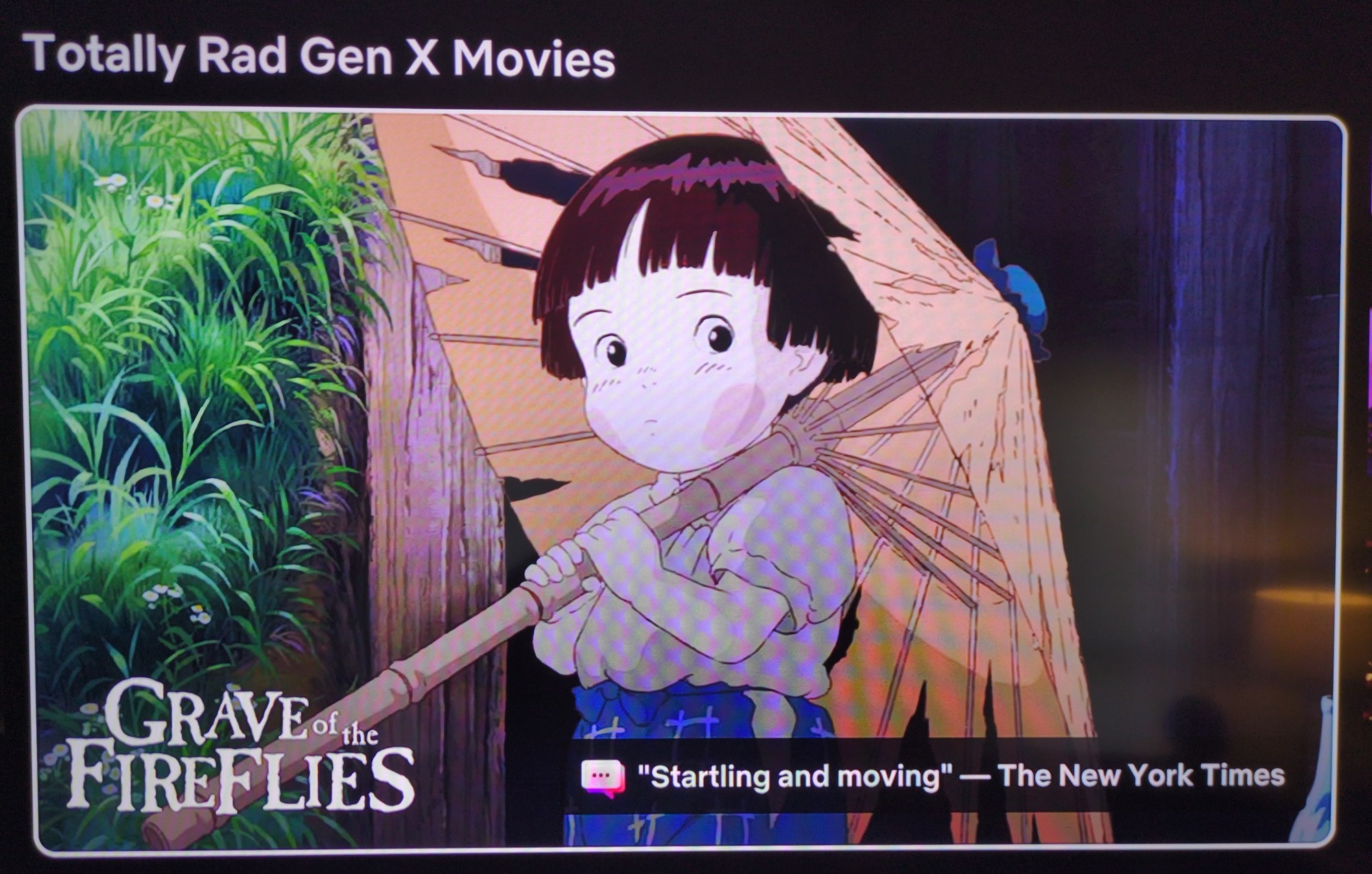
Know the name of the artist on this?
I think the main difference is how you choose to pay for additional features. If you log into any of the versions of the app with an OsmAnd cloud account that has an active subscription, those subscription features should work.
As I understand it, the "+" version available through Google Play is for those who just want to pay for the app once through that storefront and not have the separate OsmAnd cloud account.
If I've misunderstood that, I welcome corrections from anyone who knows better.
I think this is basically an actual arc from The Ancient Magus' Bride. Pic related.

Apologies if I'm reading too much into what you've said here, but it reads to me as if you're implying search engines couldn't keep up with the volume of the internet and AI is the logical next progression.
Search engines actually worked pretty amazingly at one point, but then were kneecapped because Google et al were more interested in advertising money than useful search results. Then when they needed an excuse to justify ludicrous spending on AI, they shoehorned AI into web search where it is very much the wrong tool for the job if you want accurate, high relevance results.
For AI, it's as though the library were just a massive pile of books tossed around haphazardly and the librarian had to make sense of it enough to pull whatever you're looking for out of the chaos. Is it at all surprising, then, that it takes a huge amount of energy and computing resources to make any of this work?
It's more like the librarian has taken it upon themself (for some reason) to write a book that is the mathematical average of every other book in the library. Then when any patron comes looking for a specific book, the librarian just hands them this slag instead hoping they won't notice the difference.
Now that said, I 100% agree that running a good "old-style" search engine does still take a huge amount of computing resources, but I'd be surprised if the requirements were anywhere near what is being thrown at training LLMs.
That depends upon how narrow your definition of "right" is. Sort of reminds me of this parable.
view more:
next ›