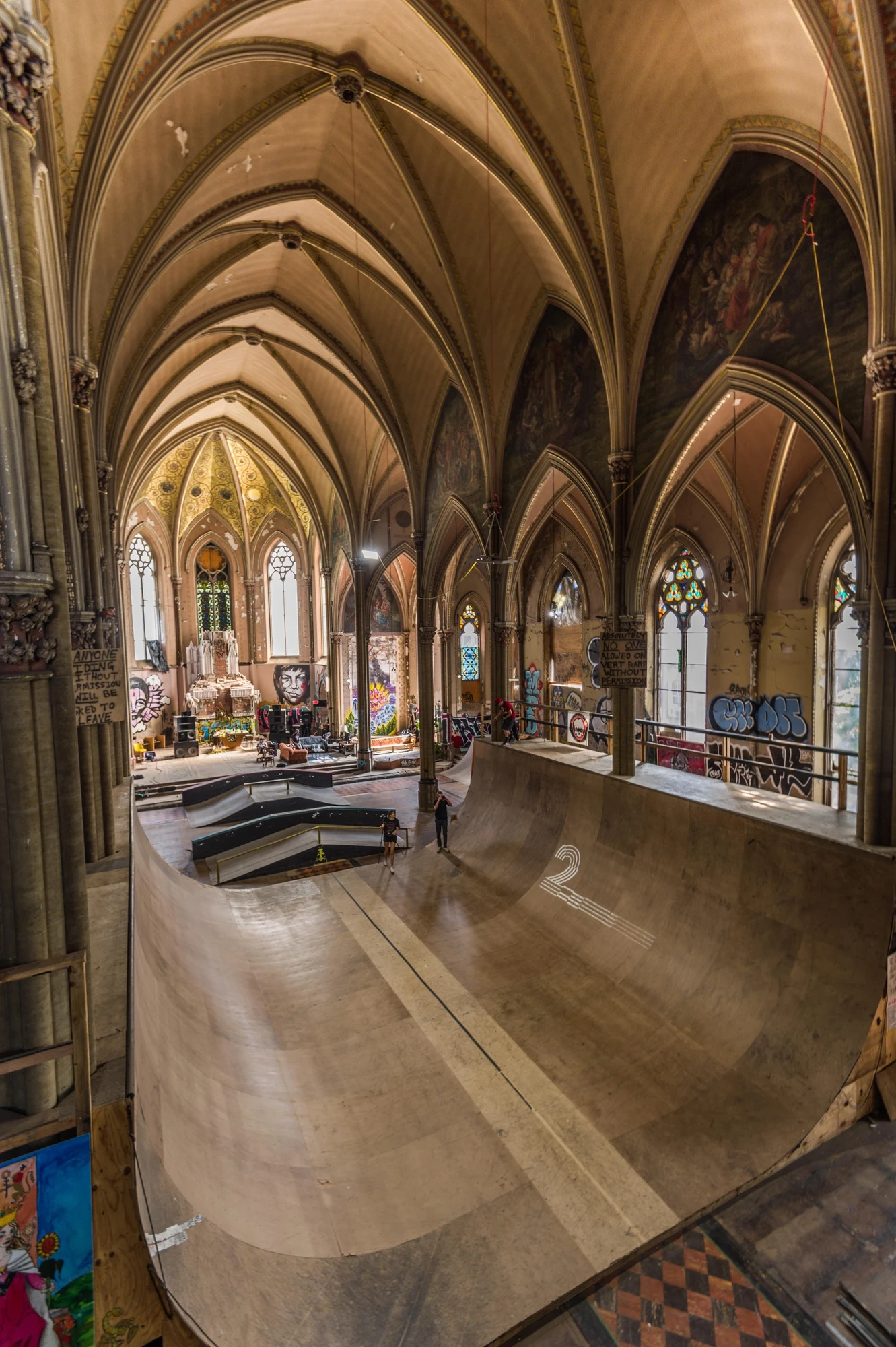
St. Liborius was established as a German national parish in 1856, and construction of the church was completed in 1889. This large Gothic Revival building, marked by its pointed arches and thin, vein-like pillars, went through several transformations to reach its current form. Over the years, St. Liborius gained a clergy house and a convent, and merged with nearby parishes due to a dwindling number of Catholics in the neighborhood. Before its official closing in 1992, St. Liborius was declared a City Landmark in 1975 and recognized as a National Historic Place four years later. Today, it exists as a shell of a church, where the stained glass windows shine vibrant light on skate ramps instead of pews. Its new name is Sk8 Liborius.
Three different pics here, including article and outer view:
https://www.atlasobscura.com/articles/how-a-st-louis-church-became-a-skatepark