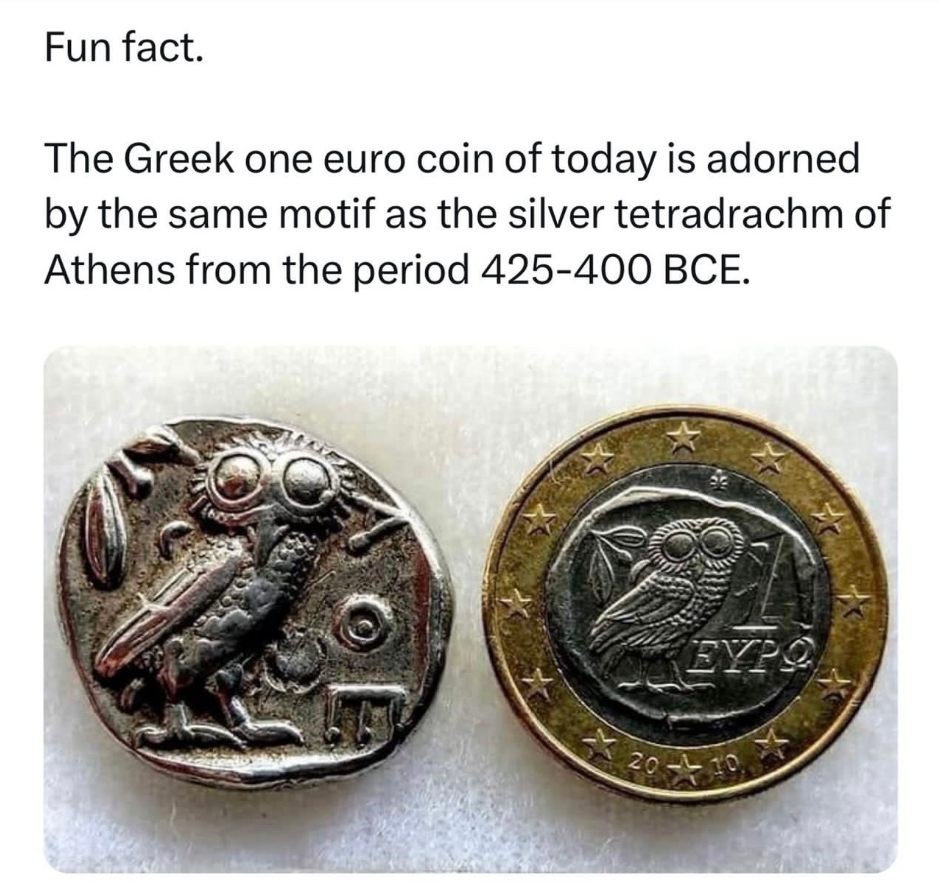
Silver coin of ancient Athens and modern Greek 1 Euro coin, 425-400 BCE Classical Antiquity (~800 BCE - 500 AD) Modern Antiques or Ethnography (~1800 AD or later) (media.piefed.social)
 
you are viewing a single comment's thread
view the rest of the comments
[–] 7 points 1 year ago (2 children)

Wait.... There is different Greek euro coins than the rest of Europe? Do all European countries have their own euros?

I always assumed a centralized currency went hand in hand with the eu membership

  • source
  • hideshow 2 child comments
  • Every country that is a member of the Eurozone mints their own coins with their own motifs. Only the paper notes are standardized.

    To illustrate: these are all the (different) coins in my wallet:

    Picture of 11 coins each with a different motif

    (values from left to right: 1 Euro, 20 cent, 10 cent, 5 cent, 1 cent)

    The only countries I can determine are Spain (twice), Germany (thrice), Greece (once) and the Netherlands (once). Mostly because Spain and the Netherlands wrote their country's name on their coins and Greece used Greek letters.

  • source
  • parent
  • [–] 9 points 1 year ago

    all countries have their specific coins :) amd sometimes there's a limited few for anniversarys or in honour of someone.

    germans depict their architecture, dutch depict their royalty, croats got 50 cents with nikola teslas face....

    always makes you wonder where the foreign coin you just paid with has been so far.

  • source
  • parent