"With direct connections to Chat J'ai Pété and clod"
Anon almost dies from food poisoning
There is a process for printing metal parts, it's being used on one of NASA's new aerospike rocket nozzles. IIRC it uses lasers and metal dust
Even better when it's covered in white, gooey sauce! Yummmm!
"With direct connections to Chat J'ai Pété and clod"
It's a tough one, on one hand yes we killed their predators so we have to do it instead; on the other if those predators somehow come back then most often we just kill them again so we can continue hunting. I suppose my biggest issue with hunting is the seemingly inevitable wolf cull.
If there was no farmland, if the majority of this planets surface wasn't being used exclusively for human activities then I would have no problem at all with hunting; however that's not the case. Wild populations likely seem abundant but they are a fraction of what they were before industrialization/colonization (Overton Window) and further pressure on those populations, that are essentially holding on to slivers of the only land left for them, can only do harm (with the caveat of overpopulation).
As well, most hunters use lead bullets because they're cheap, so now all areas where hunting happens regularly are contaminated with lead, especially the predators (including humans) of that area (bioaccumulation).
I guess the least impactful way to hunt is to use copper/non-lead bullets(?) in rehabilitated farmland.
Ah yis, the true lore.
♦️This is propaganda♦️
>smoke a fat blunt to celebrate the voting outcomes
>text your racist mother this
the original subreddit was titled after the creators apartment number.
no you either red or blue. no between. bad. >:(
WOLOLOLOLOLO
A screenshot from CBC News showing the democrats with a majority of 196 seats in The House™.
Also shows democrat candidate Mary Peltola leading by ~12% over the Republican candidate, Dan Sullivan in Alaska (54.1% vs. 42.8% resp.).
I wish the dems lead in the senate by 67 seats, or even 69 seats even.

Oh fuck oh no
Thankfully I've locked away those emotions in a dark corner hallway of my soul.
😎 *guttural scream
cross-posted from: https://lemmy.world/post/53801753
Best buds

Miles MorrisseauICT
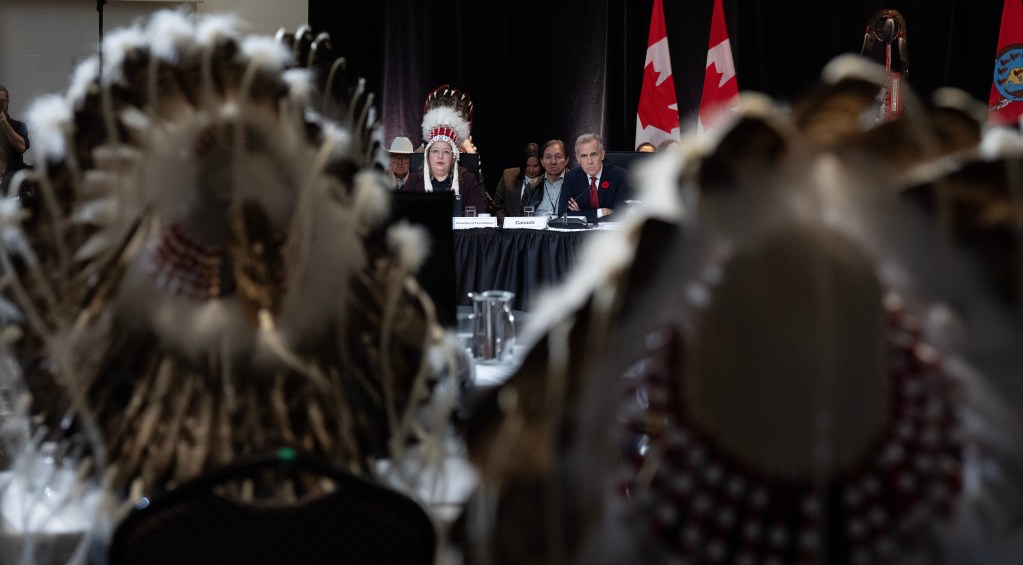
A historic gathering of First Nations leaders with Canadian and Provincial leaders was hosted by Prime Minister Mark Carney on October 26. It was the first such meeting in over two decades. Although it was considered a landmark gathering, the meeting was boycotted by many First Nations and skipped by a couple of provincial premiers.
Wab Kinew, Premier of Manitoba and the country’s first First Nations provincial premier, spoke to media before the meeting began and was asked about the historical nature of the gathering.
“It’s a great day to be Anishinaabe. It’s a great day to be Canadian. When we have everyone coming together it will make for a stronger Canada,” said Kinew. “It’s important for me to be here as a First Nations First Minister. First Nations First Minister meetings don’t happen all the time.”
Three of the 10 provincial premiers did not make it to the meeting — the newly elected premier of British Columbia Lorne Doerkson, Quebec Premier Paul St. Pierre Plamondon and Alberta Premier Danielle Smith.
Following an opening prayer by Algonquin elder Claudette Commanda, the Prime Minister made opening remarks.
“This is the first time in over two decades the first ministers and First Nations have met together. This is an important opportunity, yes to share perspectives to listen to learn but above all to commit to action,” Carney said. “So let’s seize this opportunity. We all bear heavy responsibilities to acknowledge many challenges, to recognize where there has been progress, to build on that progress and to act to improve outcomes for our peoples.”
National Chief of the Assembly of First Nations, Cindy Woodhouse Nepinak stated in her opening remarks the importance of respecting the treaties and the need for solutions to be led by First Nations.
“We are here to build prosperity and well-being for our children in the next seven generations. It can’t just be about ramming through major projects as fast as we can; the national interest must also include the proposals, law and policy reforms that First Nations seek,” said Woodhouse Nepinak. “We have been persistent and patient but we cannot afford to wait many many years for results in implementation. It’s our turn to lead the change that we all need.”
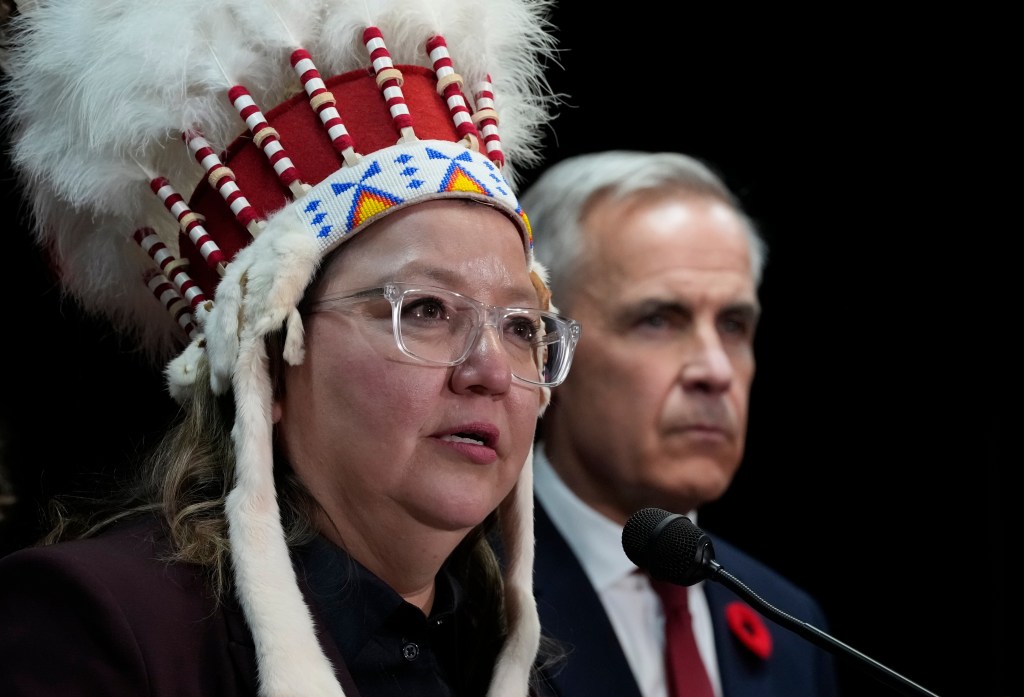
AFN National Chief Cindy Woodhouse Nepinak speaks as Prime Minister Mark Carney looks on following the First Nations and First Ministers’ meeting in Ottawa, Monday, Oct. 26, 2026. (Adrian Wyld/The Canadian Press via AP)
Organizers of Idle No More, the grassroots movement that inspired demonstration and protest across Canada 14 years ago, weighed in on the meeting releasing a statement that Canada is once again pushing Indigenous people to make a stand.
“The conditions that gave rise to Idle No More in 2012 are confronting us again. Sweeping legislative changes, threats to environmental protections and government decisions affecting Indigenous territories without respecting the authority of the peoples who belong to those lands,” the statement said. “Idle No More emerged through grassroots organizing and public education bringing Indigenous and non-Indigenous people together to defend Indigenous rights and protect the living world. That responsibility remains urgent today.”
The statement was signed by the organizers of the movement as well as co-founders Sheela Maclean and Sylvia Mcadam.
On Oct. 22, the Onion Lake Cree Nation sent an open letter to the National Chief of the AFN stating that the organization “has no authorization to speak for, represent, negotiate for, give consent on behalf of, or ever enter into any declaration, agreement or commitment for OLCN in connection with the October 26, 2026 First Nations first ministers meeting,” the letter stated. “The AFN does not represent, speak for, or hold any authority or agency on behalf of OLCN. You are therefore directed to cease and desist immediately from making any such representation and acting or purporting to act on behalf of the OLCN.”
Sheldon Sunshine, Sturgeon Lake Cree Nation Sunshine and Deputy Grand Chief of Treaty, was speaking on behalf of representatives of Treaty 6, 7, 8 and the Blackfoot Confederacy who were at the meeting.
“I’ve heard people describe this meeting as historic, it certainly has a potential to be; but history will not remember us for gathering in a room taking photographs making speeches,” Sunshine said. “History will judge us by what we change. Prime Minister, premiers, we need your commitment for a different way forward one that is grounded in treaty, demonstrates respect for treaty nations and a shared responsibility.”
The Prime Minister’s office announced a number of initiatives and investments including the potential to repeal the Indian Act, a section of the Canadian constitution that controls much of First Nations life and administration.
There was an agreement to develop new revenue-sharing mechanisms, including the potential creation of a new First Nations Sovereign Wealth Fund. Prime Minister Carney directed the Minister of Finance to work with First Nations leaders to determine how to most effectively establish such a fund, with the clear goal of giving First Nations peoples a direct stake in major projects.
“Canada’s strength comes from what we can build and what we achieve together. That means working in partnership, government to government, to ensure that First Nations not only have the opportunity to build their community and country stronger, but to share in the wealth we create – including through new revenue tools such as a First Nations Sovereign Wealth Fund,” Carney said. “Today, the federal government, provinces, territories, and First Nations leaders built on our progress and raised our ambitions to build bigger and better, together.”
The Prime Minister announced that the federal government will amend the First Nations Fiscal Management Act to expand the First Nations Finance Authority’s lending authority. This will make it easier for First Nations to secure financing to invest in major projects and share in the returns.
There was also discussion on ways to recruit, train, and hire more First Nations workers to build these infrastructure projects and an investment of $260 million (CA) over four years to establish the new Partnerships for Indigenous Workforce Readiness Fund.
This will provide targeted funding to connect Indigenous Peoples with job opportunities created by major projects.
“Today marked more than a meeting. It marked a renewed commitment to work together, nation-to-nation, on the priorities First Nations have identified for our peoples and our communities,” said Mandy Gull-Masty, Minister of Indigenous Services, who is Cree and the first Indigenous person to head up the ministry. “The investments announced today will help First Nations strengthen emergency preparedness, improve community safety, and build the infrastructure needed for future generations to thrive. Most importantly, our discussions are helping to lay the foundation for a future where First Nations are full partners in Canada’s growth and prosperity.”
During the meeting, the leaders discussed the possibility of reforming or abolishing the Indian Act as part of a broader effort to modernize the Crown’s relationship with First Nations. The Prime Minister reaffirmed his commitment to charting a path beyond the Indian Act and is directing ministers to work in partnership with First Nations to develop that path.
There was also a commitment to closing critical gaps in emergency preparedness as First Nations continue to bear the brunt of the climate crisis with many First Nations communities devastated by wildfires and flooding. Carney announced more than $2.5 billion in funding over five years, and nearly $450 million in ongoing funding, through the Emergency Management Assistance Program, the Wildland-Urban Interface firefighting initiative, and the First Nations Fire Protection Strategy.
The government also announced more than $630 million over four years, alongside $250 million in ongoing annual funding, to renew and expand First Nations and Inuit Policing Program agreements. Based on a robust, needs-based costing assessment, these agreements will substantially close gaps between First Nations and non-Indigenous police services. The federal government also announced an additional $140 million over four years to fund crime prevention and culturally sensitive community safety initiatives in Indigenous communities across the country.
The announcements of the meeting were received positively by many First Nations representative organizations including the Chiefs of Ontario who released a statement shortly after the meeting wrapped.
“We are extremely pleased to hear numerous commitments coming out of today’s meeting with the Premiers and Prime Minister and are looking forward to starting the real work as true, equal partners,” the Ontario Chiefs stated. “A central outcome of the meeting was Prime Minister Carney’s commitment to work with First Nations to establish a process to repeal the Indian Act and address the recognition and implementation of First Nations’ inherent, Treaty, and constitutional rights.”
The post First meeting in over 20 years between First Nations and First Ministers met with Divisions appeared first on ICT.
From ICT via This RSS Feed.
Photo: Pat Kane
Last summer, Lauren Wright was planting lentils in a field outside of Saskatoon. The air was thick with wildfire smoke and, as temperatures climbed, a co-worker was hit with a sudden asthma attack.
Rushing to the truck for an inhaler, Wright remembers fighting blurred vision, their head pounding from the smoke exposure. The episode is etched in Wright’s memory — not for the sudden moment of panic, but as a lasting reminder that summer life on the Prairies had morphed into something both unfamiliar and dangerous.
Both of Wright’s parents were raised in northern Saskatchewan, their father on a farm and their mother in a small town. While Wright was the first in the family to grow up in the city, they spent much of their childhood canoeing, fishing and working the family farm during harvest.
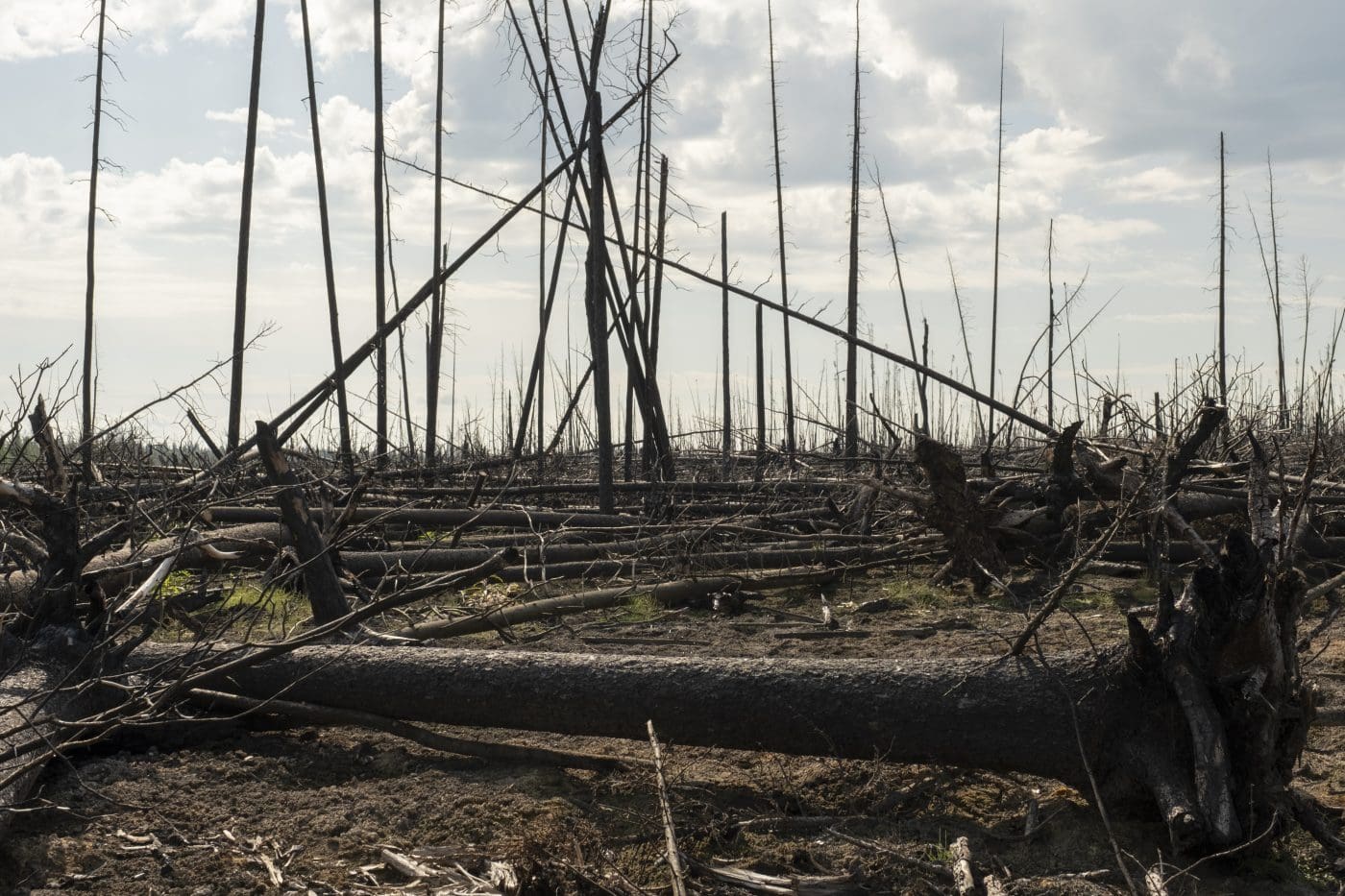
A multi-year drought dropped water levels on the river where they used to fish and canoe. Some summers, extreme heat would make it nearly impossible to play sports or go on camping trips. Drought sunk crop yields. Then the wildfires came, and with them, forests burned and smoke filled the air.
“I really started to understand, you know, what was going on in my city, my country and how climate change was very much a current reality rather than a distant future problem,” Wright said.
“It’s really a culmination in the change of my way of life, the way of life that my family has lived for so many generations.”
The 22-year-old is among 15 young Canadians whose experiences with heat waves, floods and wildfires form the backbone of a legal case that has wended its way through federal court since 2019. After a series of appeals and amended pleadings, the landmark constitutional challenge — known as La Rose vs. His Majesty the King — will finally be heard at a federal courthouse in Vancouver starting Oct. 26.
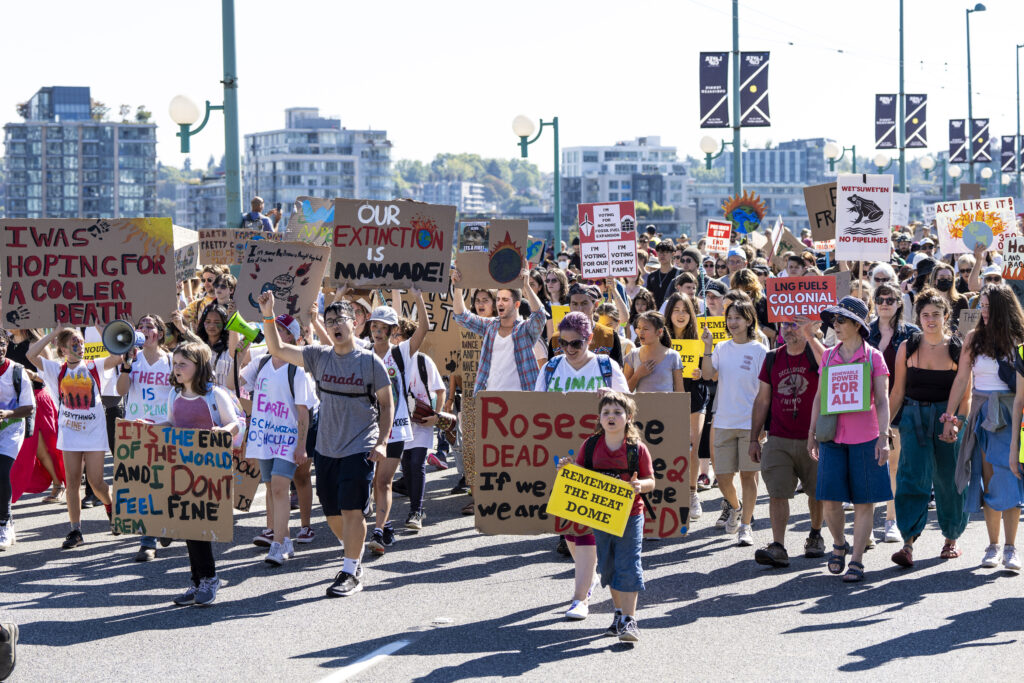
For years people have been calling for more climate action in the streets, through climate marches like this one in Vancouver in 2023. Now, 15 youth are taking the government to court, arguing that weak climate laws go against their constitutional rights. Photo: Jimmy Jeong / The Narwhal
Over a four-week trial, lawyers and multiple experts are expected to submit evidence that the federal government’s Net-Zero Emissions Accountability Act — which legally binds Canada to absorb as much carbon pollution as it emits by 2050 — is not ambitious enough, and so violates the Canadian Charter of Rights and Freedoms.
The court challenge claims the government’s plan to curb emissions is not in line with the best available science. As a result, the plaintiffs claim it fails to safeguard the life, liberty and security of Canadians, a direct breach of Section 7 of the Charter.
Plaintiffs hope a win would take the politics out of climate policy
Canada’s climate is already warming nearly twice as fast as the global average. Canada could see 5 C of warming by the end of the century if governments around the world do not pursue emissions reduction with more effort than laid out in current climate policies, warned federal scientists in September.
The claim warns of a continued rise in heat-related illnesses, life-threatening diseases, allergies, asthma, exposure to dangerous pollutants and death. As permafrost melts, shorelines destabilize and rivers run dry, ecosystems will suffer, leading to severe consequences — both for spending on public infrastructure and the livelihoods of Indigenous communities who rely on fishing and hunting, according to the claim.
Children are already at higher risk from heat and smoke, and the court challenge emphasizes they will disproportionately suffer in a world where climate-driven disasters become more common and more extreme.
The plaintiffs, who hail from nearly every corner of Canada, have already seen the destructive power of water and fire tear into the places they call home.
At 21, Haana Edenshaw of the Haida Nation Tsitts Gitanee clan has witnessed sea-level rise damage her family home on Haida Gwaii.
In 2018, wildfire destroyed Montay Jesse Beaubien-Day’s home in Telegraph Creek, B.C. Today, climate change has limited his Wet’suwet’en and Tahltan families from harvesting wild food like salmon, moose and berries. Multiple studies have shown those food sources have also been impacted by everything from fishing and logging to the exploration and extraction of gas.
Further north, Kira Young and her family were among 20,000 people evacuated from Yellowknife when fire threatened the territorial capital in 2023. Court documents describe ash falling from an orange sky and fires burning alongside the highway as they fled.
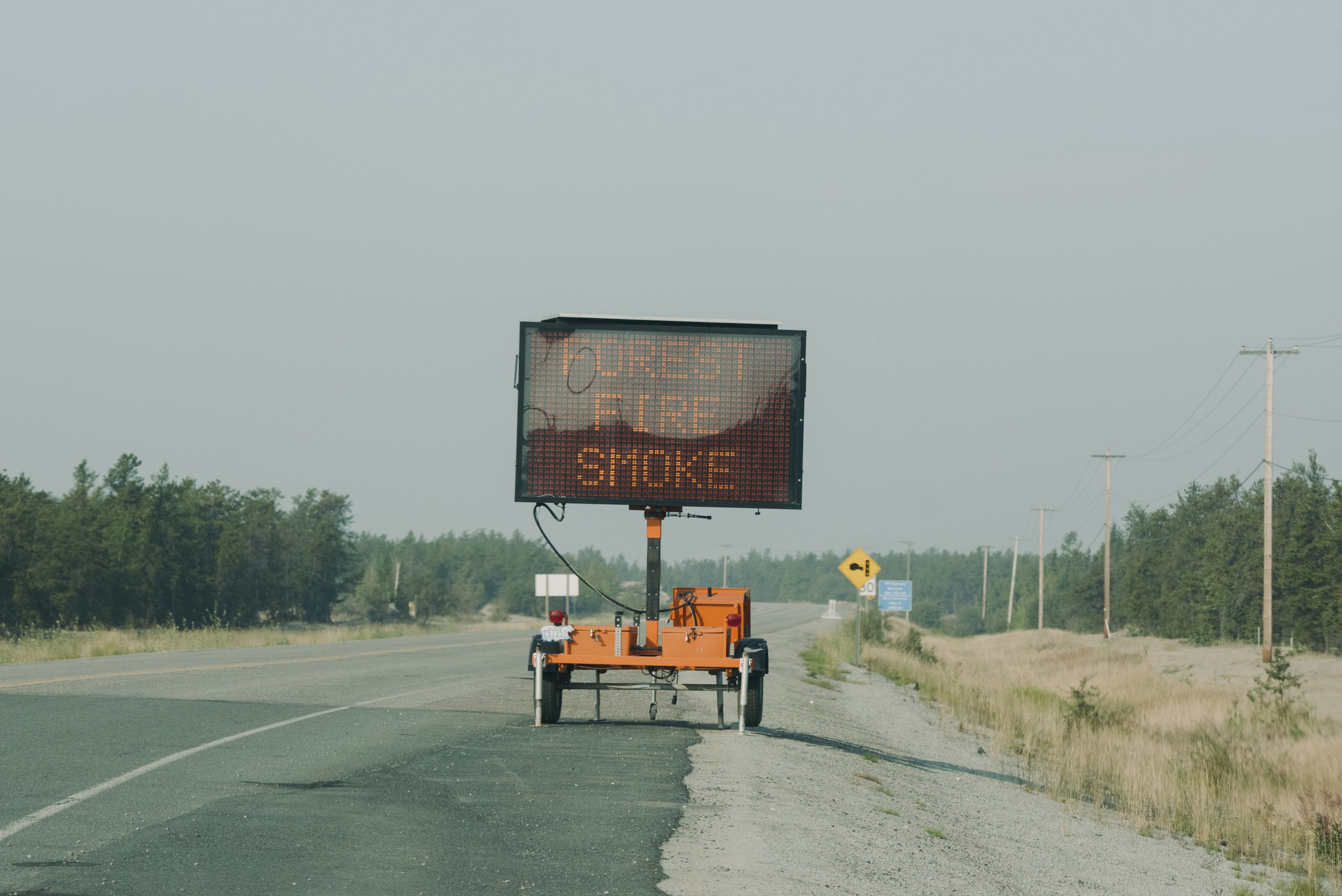
A road sign provides updates on traffic conditions on the only highway in or out of Yellowknife a day after a state of emergency was declared due to the proximity of a wildfire. Photo: Pat Kane
Abandoning home is a familiar feeling for Sadie Vipond, who in 2013 was evacuated to higher ground when the Bow River flooded her neighbourhood in Calgary.
“I was only seven years old at the time. I had to be woken up by my grandmother and told we had to evacuate,” she told The Narwhal. “I was really scared for my home and family.”
The plaintiffs’ individual experiences will inform a multi-pronged argument, one that claims Canada’s Net-Zero Act “sets targets and requires development of plans” but fails to require any reduction in carbon pollution.
Canada produces a fraction of total global emissions but has one of the highest per-capita emissions profiles in the world. It is also the world’s fourth largest producer of oil and gas.
The scale of carbon pollution coming from Canada could grow even more in the coming years as Prime Minister Mark Carney’s government seeks to fast-track several new fossil fuel export projects. That includes a clutch of major liquefied natural gas terminals, as well as the Pacific Link oil pipeline meant to boost bitumen shipments from Alberta’s oilsands to B.C.’s West Coast.
If the court sides with the plaintiffs, the federal government would need to re-write their net-zero policies to be in line with the Charter. The decision would not force the federal government to pursue a specific climate policy, but it would almost certainly challenge the notion that confronting climate change is a purely political question that can be bumped down Ottawa’s list of priorities, David Wu, one of the lead lawyers in the case, said.
“If there is a shift in the politics of the day, the government can’t just wave away its climate change commitments,” Wu told The Narwhal.
“It raises these broad constitutional questions about whether governments have an obligation to protect their citizens.”
Feds argue Canada has ‘little or no control’ over climate change
Federal lawyers pushed back against claims Canada has failed to fulfill its international climate obligations under the 2015 Paris Agreement, whether through its Net-Zero Act or in collaboration with provinces.
In court documents, Ottawa contends the 15 young people have failed to establish a causal link between federal legislation and their alleged harms from climate change. Submissions from government lawyers state Canada’s plan to lower emissions is consistent with its international commitments, including the 2015 Paris Agreement.
Canada’s actions at the federal level have “little or no control over the ultimate impacts of globally-fuelled climate change,” the government claims.
Ottawa also argues the court lacks the “institutional competence” to evaluate the scientific, economic and political complexities of global climate change policy. It also ignores the separation of political and legal powers within Canada’s democratic system by attempting to have the courts weigh in on a government decision.
“It’s an argument we’re expecting,” Wu said. “We’re not asking the court to dictate climate policy.”
“What we’re asking the court to find [is] that Canada has infringed our clients’ rights, and they, the government, need to do better to ensure that those rights are protected.”
Both sides’ arguments have yet to be tested before a judge.
Vancouver trial to test international climate law
The La Rose trial is the latest in a wave of climate litigation supported by the non-profit Our Children’s Trust. Of the nearly 100 rights-based climate change cases currently being brought worldwide, about half are backed by the U.S.-based group, Kelly Matheson, the group’s deputy director of global strategy, said.
The organization has seen some success. One court challenge it supported in Hawaii led to a settlement which pushed the state to aggressively decarbonize its public transportation sector. And in 2024, the Montana Supreme Court sided with 16 young people who had sued the state for violating their right to a “clean and healthful environment” guaranteed under Montana’s Constitution.
What sets the Canadian case apart is that it is among the first in the world to make it to trial following a handful of major international rulings. Chief among those is a 2025 advisory opinion from the International Court of Justice that found states have a general duty under international and human rights law to protect the world’s climate system for present and future generations.
Canada’s legal system is not bound by the international court’s ruling. But it can be used to inform judges’ interpretation of constitutional rights. One federal judge has already cited the case in ongoing litigation involving two Wet’suwet’en Hereditary Chiefs who challenged Ottawa over the full balance of carbon pollution produced by its policies.
“It’s so rare for these cases to go to trial,” Matheson said of the La Rose case. “It will have persuasive weight all over the world — in part because Canada is a big emitter.”
Elsewhere in Canada, seven young people led by Sudbury teenager Sophia Mathur sued the Ontario government in 2019 after the province clawed back its own climate targets.
The youth-led climate case against the Doug Ford government’s decision to weaken Ontario’s emissions-reduction target was brought forward by 17-year-old lead applicant Sophia Mathur (fourth from right) and six others ranging in age from 17 to 29. Photo: David LeBlanc / Ecojustice
And in June, Mathur joined two other young people to launch a parallel legal challenge against the federal government’s Net-Zero Act. That case, which has yet to go to trial, claims Ottawa abandoned or weakened its interim emission reductions plan, thereby failing to adhere to the 2050 plan.
The La Rose case makes a much broader claim, arguing the Net-Zero Act is weak enough on its own to be unconstitutional, said Andrew Gage, a lawyer with West Coast Environmental Law.
Whatever the outcome, many of the young plaintiffs will finally have their chance to tell their stories. When the case was first filed seven years ago, Wright was still in high school and struggled with the thought that they had the responsibility to represent the experiences of an entire generation. In the years since, Wright said they have found ways to be grounded in their own stories.
“I’m a good snapshot of life here in the Prairies,” the 22-year-old said. “I really have grown to see it as a privilege of being able to show people what is happening in the place that I love so much. And to tell them why it matters.”
The Narwhal’s reporters are telling environment stories you won’t read about anywhere else. Stay in the loop by signing up for our free weekly dose of independent journalism.
From The Narwhal | News on Climate Change, Environmental Issues in Canada via This RSS Feed.
cross-posted from: https://lemmy.ca/post/72898394
cross-posted from: https://discuss.tchncs.de/post/69831108
Hacker reverse engineers his Samsung TV and finds on-device AI listening for your dog and baby, watching what you watch, and borrowing your soundbar's mic if the TV doesn't have one. Then OpenAI banned him for reverse-engineering it.


Source:

cross-posted from: https://lemmy.ca/post/72867661
>:(
I hate Mondays; A weather report for my city ("The City") that shows it will only be sunny on Monday. I love rain, and hate Mondays.

I hate Mondays; A weather report for my city ("The City") that shows it will only be sunny on Monday. I love rain, and hate Mondays.