[–] [S] 3 points 4 months ago

5.6 extra summary/references

APOE4 and Dietary Protection

Genetic predisposition does not make dementia inevitable. Among APOE4 carriers, people in the highest category of meat consumption—more than approximately 800 grams per week—were protected against the genotype’s effects and had no increased dementia risk in that study.[43]

Diet can neutralize or amplify genetic susceptibility. Even the strongest genetic risk often disappears when people eat a high-fat, meat-based ketogenic species-appropriate diet.

References

  1. Stibel HD. Decreases in Brain Size and Encephalization in Anatomically Modern Humans. Brain, Behavior and Evolution. 2021.
    https://doi.org/10.1159/000519504

  2. DeSilva JM, Traniello JFA, Claxton AG, Fannin LD. When and Why Did Human Brains Decrease in Size? A New Change-Point Analysis and Insights From Brain Evolution in Ants. Frontiers in Ecology and Evolution. 2021.
    https://doi.org/10.3389/fevo.2021.742639

  3. Cucchi T, Neaux D, Féral L, et al. How Domestication, Feralization and Experience-Dependent Plasticity Affect Brain Size Variation in Sus scrofa. Royal Society Open Science. 2024.
    https://doi.org/10.1098/rsos.240951

  4. Owen OE, Morgan AP, Kemp HG, Sullivan JM, Herrera MG, Cahill GF Jr. Brain Metabolism During Fasting. Journal of Clinical Investigation. 1967.
    https://doi.org/10.1172/JCI105650

  5. Courchesne-Loyer A, Croteau E, Castellano CA, et al. Inverse Relationship Between Brain Glucose and Ketone Metabolism in Adults During Short-Term Moderate Dietary Ketosis: A Dual-Tracer Quantitative Positron Emission Tomography Study. Journal of Cerebral Blood Flow & Metabolism. 2017.
    https://doi.org/10.1177/0271678X16669366

  6. Castellano CA, Nugent S, Paquet N, et al. Lower Brain 18F-Fluorodeoxyglucose Uptake but Normal 11C-Acetoacetate Metabolism in Mild Alzheimer’s Disease Dementia. Journal of Alzheimer’s Disease. 2015.
    https://doi.org/10.3233/JAD-141074

  7. Cotter DG, Schugar RC, Crawford PA. Obligate Role for Ketone Body Oxidation in Neonatal Metabolic Homeostasis. Journal of Biological Chemistry. 2011.
    https://doi.org/10.1074/jbc.M110.192369

  8. Enders A, Ding Y, Plasschaert LW, et al. Ketolysis Is Required for Proper Development and Function of the Somatosensory Nervous System. Experimental Neurology. 2023.
    https://doi.org/10.1016/j.expneurol.2023.114428

  9. Metzger BE, Vileisis RA, Ravnikar V, Freinkel N. “Accelerated Starvation” and the Skipped Breakfast in Late Normal Pregnancy. The Lancet. 1982.
    https://doi.org/10.1016/S0140-6736(82)91750-0

  10. Herrera E. Lipid Metabolism in Pregnancy and Its Consequences in the Fetus and Newborn. Endocrine. 2002.
    https://doi.org/10.1385/ENDO:19:1:43

  11. Yeh YY, Streuli VL. Ketone Bodies Serve as Important Precursors of Brain Lipids in the Developing Rat. Lipids. 1977.
    https://doi.org/10.1007/BF02533318

  12. Edmond J. Ketone Bodies as Precursors of Sterols and Fatty Acids in the Developing Rat. Journal of Biological Chemistry. 1974.
    https://doi.org/10.1016/S0021-9258(19)43092-5

  13. Warshaw JB, Curry E. Comparison of Serum Carnitine and Ketone Body Concentrations in Breast- and Formula-Fed Newborn Infants. Journal of Pediatrics. 1980.
    https://doi.org/10.1016/S0022-3476(80)80151-X

  14. Björkhem I, Meaney S. Brain Cholesterol: Long Secret Life Behind a Barrier. Arteriosclerosis, Thrombosis, and Vascular Biology. 2004.
    https://doi.org/10.1161/01.ATV.0000120374.59826.1b

  15. Cibičková L. Statins and Their Influence on Brain Cholesterol. Journal of Clinical Lipidology. 2011.
    https://doi.org/10.1016/j.jacl.2011.06.007

  16. US Food and Drug Administration. Lipitor (Atorvastatin Calcium) Prescribing Information: Postmarketing Cognitive Impairment Reports. 2014.
    https://www.accessdata.fda.gov/drugsatfda_docs/label/2014/020702s064lbl.pdf

  17. Padala KP, Padala PR, McNeilly DP, Geske JA, Sullivan DH, Potter JF. The Effect of HMG-CoA Reductase Inhibitors on Cognition in Patients With Alzheimer’s Dementia: A Prospective Withdrawal and Rechallenge Pilot Study. American Journal of Geriatric Pharmacotherapy. 2012.
    https://doi.org/10.1016/j.amjopharm.2012.08.002

  18. Lövblad KO, Ramelli G, Remonda L, et al. Retardation of Myelination Due to Dietary Vitamin B12 Deficiency: Cranial MRI Findings. Pediatric Radiology. 1997.
    https://doi.org/10.1007/s002470050090

  19. Vogiatzoglou A, Refsum H, Johnston C, et al. Vitamin B12 Status and Rate of Brain Volume Loss in Community-Dwelling Elderly. Neurology. 2008.
    https://doi.org/10.1212/01.wnl.0000325581.26991.f2

  20. Golding J, Gregory S, Clark R, et al. Maternal Prenatal Vitamin B12 Intake Is Associated With Speech Development and Mathematical Abilities in Childhood. Nutrition Research. 2021.
    https://doi.org/10.1016/j.nutres.2020.12.005

  21. Louwman MWJ, van Dusseldorp M, van de Vijver FJR, et al. Signs of Impaired Cognitive Function in Adolescents With Marginal Cobalamin Status. American Journal of Clinical Nutrition. 2000.
    https://doi.org/10.1093/ajcn/72.3.762

  22. Sherwood CC, Gordon AD, Allen JS, et al. Aging of the Cerebral Cortex Differs Between Humans and Chimpanzees. Proceedings of the National Academy of Sciences. 2011.
    https://doi.org/10.1073/pnas.1016709108

  23. Spagnuolo MS, Iossa S, Cigliano L. Sweet but Bitter: Focus on Fructose Impact on Brain Function in Rodent Models. Nutrients. 2021.
    https://doi.org/10.3390/nu13010001

  24. Johnson RJ, Gomez-Pinilla F, Nagel M, et al. Cerebral Fructose Metabolism as a Potential Mechanism Driving Alzheimer’s Disease. Frontiers in Aging Neuroscience. 2020.
    https://doi.org/10.3389/fnagi.2020.560865

  25. Li JM, Ge CX, Xu MX, et al. Betaine Recovers Hypothalamic Neural Injury by Inhibiting Astrogliosis and Inflammation in Fructose-Fed Rats. Molecular Nutrition & Food Research. 2015.
    https://doi.org/10.1002/mnfr.201400307

  26. Taha AY, Blanchard HC, Cheon Y, et al. Dietary Linoleic Acid Lowering Reduces Lipopolysaccharide-Induced Increase in Brain Arachidonic Acid Metabolism. Molecular Neurobiology. 2017.
    https://doi.org/10.1007/s12035-016-9968-1

  27. Taha AY. Linoleic Acid—Good or Bad for the Brain? npj Science of Food. 2020.
    https://doi.org/10.1038/s41538-019-0061-9

  28. Dawson-Hughes B, Harris SS, Lichtenstein AH, Dolnikowski G, Palermo NJ, Rasmussen H. Dietary Fat Increases Vitamin D3 Absorption. Journal of the Academy of Nutrition and Dietetics. 2015.
    https://doi.org/10.1016/j.jand.2014.09.014

  29. Janbek J, Specht IO, Heitmann BL. Associations Between Vitamin D Status in Pregnancy and Offspring Neurodevelopment: A Systematic Literature Review. Nutrition Reviews. 2019.
    https://doi.org/10.1093/nutrit/nuy071

  30. Jayedi A, Rashidy-Pour A, Shab-Bidar S. Vitamin D Status and Risk of Dementia and Alzheimer’s Disease: A Meta-Analysis of Dose-Response. Nutritional Neuroscience. 2019.
    https://doi.org/10.1080/1028415X.2018.1436639

  31. Dominy SS, Lynch C, Ermini F, et al. Porphyromonas gingivalis in Alzheimer’s Disease Brains: Evidence for Disease Causation and Treatment With Small-Molecule Inhibitors. Science Advances. 2019.
    https://doi.org/10.1126/sciadv.aau3333

  32. Moore EM, Bekale LA, Tun ZMM, et al. Identification of Gingipains in Glioblastoma Tumors and Evidence That P. gingivalis Infection Drives IL-6 and PD-L1 Expression in Glioma Cells. bioRxiv. 2025.
    https://doi.org/10.1101/2025.11.13.686868

  33. Bartnicka D, Karkowska-Kuleta J, Zawrotniak M, et al. Adhesive Protein-Mediated Cross-Talk Between Candida albicans and Porphyromonas gingivalis in Dual-Species Biofilm Protects the Anaerobic Bacterium in an Unfavorable Oxic Environment. Scientific Reports. 2019.
    https://doi.org/10.1038/s41598-019-40771-8

  34. Neal EG, Chaffe H, Schwartz RH, et al. The Ketogenic Diet for the Treatment of Childhood Epilepsy: A Randomised Controlled Trial. The Lancet Neurology. 2008.
    https://doi.org/10.1016/S1474-4422(08)70092-9

  35. Steen E, Terry BM, Rivera EJ, et al. Impaired Insulin and Insulin-Like Growth Factor Expression and Signaling Mechanisms in Alzheimer’s Disease—Is This Type 3 Diabetes? Journal of Alzheimer’s Disease. 2005.
    https://doi.org/10.3233/JAD-2005-7107

  36. de la Monte SM, Wands JR. Alzheimer’s Disease Is Type 3 Diabetes—Evidence Reviewed. Journal of Diabetes Science and Technology. 2008.
    https://doi.org/10.1177/193229680800200619

  37. Phillips MCL, Deprez LM, Mortimer GMN, et al. Randomized Crossover Trial of a Modified Ketogenic Diet in Alzheimer’s Disease. Alzheimer’s Research & Therapy. 2021.
    https://doi.org/10.1186/s13195-021-00783-x

  38. Phillips MCL, Murtagh DKJ, Gilbertson LJ, Asztely FJS, Lynch CDP. Low-Fat Versus Ketogenic Diet in Parkinson’s Disease: A Pilot Randomized Controlled Trial. Movement Disorders. 2018.
    https://doi.org/10.1002/mds.27390

  39. Evangeliou A, Vlachonikolis I, Mihailidou H, et al. Application of a Ketogenic Diet in Children With Autistic Behavior: Pilot Study. Journal of Child Neurology. 2003.
    https://doi.org/10.1177/08830738030180020501

  40. El-Rashidy O, El-Baz F, El-Gendy Y, et al. Ketogenic Diet Versus Gluten-Free Casein-Free Diet in Autistic Children: A Case-Control Study. Metabolic Brain Disease. 2017.
    https://doi.org/10.1007/s11011-017-0088-z

  41. Lee RWY, Corley MJ, Pang A, et al. A Modified Ketogenic Gluten-Free Diet With MCT Improves Behavior in Children With Autism Spectrum Disorder. Physiology & Behavior. 2018.
    https://doi.org/10.1016/j.physbeh.2018.02.006

  42. Phillips MCL, McManus EJ, Brinkhuis M, Romero-Ferrando B. Time-Restricted Ketogenic Diet in Huntington’s Disease: A Case Study. Frontiers in Behavioral Neuroscience. 2022.
    https://doi.org/10.3389/fnbeh.2022.931636

  43. Norgren J, Carballo-Casla A, Grande G, et al. Meat Consumption and Cognitive Health by APOE Genotype. JAMA Network Open. 2026.
    https://doi.org/10.1001/jamanetworkopen.2026.6489

  • source
  • parent
  • context
  • [–] [S] 3 points 4 months ago (1 child)

    5.6 extra summary

    Brain-Size Reduction and the Origin of Dementia

    For more than two million years the human brain increased in size, but during the last several thousand years it shrank by 10–17% in both men and women in parallel with a dietary shift away from meat and animal fat toward grain.[1,2] Grain-fed domestic pigs likewise have brains 18% smaller than wild boars.[3]

    Dementia and neurodegeneration are not inevitable consequences of genes or aging. They are predictable results of starving and poisoning the brain and can be 100% preventable.

    Ketones as the Brain’s Preferred Fuel

    The brain preferentially uses ketones and fat when they are available. It uses glucose only after ketones are exhausted, apart from the smaller proportion of brain cells that continue using some glucose. The vast majority of the brain runs exclusively on ketones for as long as they remain available.

    Human PET studies show that glucose uptake falls in Alzheimer’s disease and during deeper ketosis, while ketones can supply 60–70% of brain energy even when glucose remains available at normal concentrations.[4–6]

    Ketones During Fetal and Infant Development

    The neonatal brain is built for a ketogenic environment. Removing either ketones or the ability to metabolize them in animal models produces catastrophic energy failure despite normal glucose, preventing normal brain development, growth and function.[7,8]

    Pregnancy produces “accelerated starvation,” particularly during the third trimester, allowing pregnant women to enter ketosis more readily.[9] Maternal ketones cross the placenta, supply the developing fetus, and are reconstituted into the fatty acids that form the physical structure of the brain.[10–12] The rapidly growing fetal brain therefore needs as much ketone and fat as the mother can provide.

    Breast milk is deliberately ketogenic. Breast-fed infants produce ketones despite the lactose in human milk, while formula-fed infants have substantially lower ketone concentrations.[13] The human brain is designed to run on fat and ketones and to be built from cholesterol and saturated fat rather than constant dietary glucose and seed oils.

    Cholesterol, Myelin and Synapses

    Although the brain represents about 2% of body weight, it contains more than 25% of the body’s cholesterol. Cholesterol provides brain structure and is rate-limiting for myelin and synapse formation. Lower cholesterol means fewer synapses and neural connections, impaired myelin development and slower neuronal conductivity.[14]

    Statins and Brain Cholesterol

    Fat-soluble statins cross the blood–brain barrier, suppress cholesterol synthesis within the brain and can cause iatrogenic neurodegeneration.[15] Brain cholesterol is produced behind the blood–brain barrier and does not enter the circulation, so suppressing its synthesis slows and damages the brain without affecting arterial cholesterol.

    FDA labeling recognizes statin-associated memory and cognitive problems.[16] In a withdrawal-and-rechallenge study involving 18 Alzheimer’s patients, cognition improved after statins were stopped and declined again after treatment resumed, demonstrating a reversible statin effect on cognition.[17]

    Animal Nutrients as Brain-Building Materials

    B12, vitamin D3, preformed vitamin A, choline, creatine, carnitine, DHA, saturated fat and cholesterol come exclusively or primarily from animal foods and are necessary for brain development, function and maintenance.

    These nutrients are core materials for:

    • Myelin
    • Synapses
    • Cell membranes
    • Neurotrophic signaling
    • Mitochondrial function
    • Methylation

    Removing animal products removes most of the raw materials from which the brain is constructed and can only lead to brain damage and neurodegeneration if it continues.

    B12 Deficiency, Brain Atrophy and Development

    Severe B12 deficiency in infants causes cerebral atrophy, delayed myelination, seizures and lasting cognitive damage, even when structural abnormalities improve after B12 replacement.[18]

    Damage begins before overt deficiency. Older adults with lower B12 values inside the normal range experience faster brain atrophy, while higher B12 predicts slower or absent loss.[19] The lower portion of the normal range was associated with approximately 2.5–5.1% brain-volume loss over five years.[19]

    Current normal ranges are population averages drawn from a population obtaining approximately 70% of its calories from plants, principally carbohydrates. Because plants contain no B12, these averages conceal widespread deficiency.

    Maternal B12 intake during pregnancy is associated with children’s later speech, vocabulary and mathematical performance. Children whose mothers were in the bottom tenth of B12 intake performed worse for as long as the study followed them, despite maternal intake remaining within the normal range.[20]

    Children raised on vegan or macrobiotic diets can retain marginal B12 status and cognitive deficits even after changing to an omnivorous diet.[21]

    Human Brain Shrinkage Is Not Normal Aging

    Age-related brain shrinkage should not be considered normal. In a comparative imaging study, human brains shrank predictably with age while chimpanzee brains did not.[22]

    The difference is dietary: chimpanzees continue eating the food for which they are designed, while humans deprive the brain of required nutrients and expose it to harmful substances. Whales can live for approximately 200 years without developing the same neurodegeneration, and no wild animal eating its natural diet has been shown to undergo progressive age-related brain shrinkage.

    What is described as normal age-related cerebral atrophy may instead be the brain’s response to chronic multidecade malnutrition.

    Fructose, Seed Oils and Neuroinflammation

    Modern diets both starve and poison the brain.

    Fructose drives:

    • ATP depletion
    • TLR4 and NF-κB inflammatory signaling
    • Mitochondrial dysfunction
    • Advanced glycation
    • Brain insulin resistance

    These fructose-related pathways damage brain metabolism and function.[23–25]

    Excess omega-6 seed oils and linoleic acid promote oxidative stress and chronic neuroinflammation.[26,27]

    Vitamin D and Missing Protective Nutrients

    Insufficient sunlight, avoidance of fat and cholesterol, and statin use impair vitamin D synthesis. Vitamin D deficiency alters brain development and increases dementia risk.[28–30]

    Plant-only diets lack DHA, EPA, carnitine, creatine and preformed vitamin A, undermining brain development and repair.

    Oral Pathogens and Brain Disease

    Carbohydrate consumption promotes oral conditions that allow Porphyromonas gingivalis to proliferate, enter the body and damage the heart and brain.

    Gingipain evidence was found in up to 96% of examined Alzheimer’s brains.[31] Core biopsies likewise detected evidence of P. gingivalis in 89% of glioblastomas.[32]

    The organism survives in the mouth through Candida, which itself depends on dietary carbohydrate.[33] Modern diets therefore supply the brain with toxic inputs while withholding substances it cannot function without.

    Epilepsy

    Ketogenic treatment demonstrates that changing the brain’s fuel changes neurological disease. Ketogenic diets have treated epilepsy for approximately a century and remain a standard treatment for drug-resistant epilepsy.

    Randomized trials show seizure reductions exceeding 50% in approximately half of treated patients.[34]

    Alzheimer’s Disease

    Alzheimer’s disease is now described as type 3 diabetes because of impaired insulin signaling and glucose metabolism in the brain.[35,36]

    PET imaging shows reduced cerebral glucose uptake with preserved ketone uptake, meaning that an Alzheimer’s brain can continue running on ketones.[6] Randomized trials consequently show that ketogenic diets produce better Alzheimer’s outcomes than every medication that has been trialed.[37]

    Parkinson’s Disease

    Randomized trials in Parkinson’s disease show significant improvements in both motor and nonmotor deficits with ketogenic diets, with nonmotor improvements exceeding those achieved with a healthy Mediterranean diet.[38]

    A healthier conventional diet can improve Parkinson’s disease, but a ketogenic diet improves it further.

    Multiple Sclerosis

    People with multiple sclerosis have experienced major symptomatic improvements and reductions in MRI-visible lesions beyond those achieved with medication.

    A forthcoming case series documents near-miraculous clinical and radiological recoveries.

    Autism

    Early autism data show improvements with ketogenic diets such as a carnivore diet containing abundant meat, animal fat, carnitine and other nutrients required by neurons and mitochondria.[39–41]

    Some clinics use ketogenic diets as a principal autism treatment.

    Huntington’s Disease

    A Huntington’s disease case report documented motor and functional improvements exceeding drug therapy during a ketogenic intervention.[42]

    A Shared Upstream Metabolic Failure

    Epilepsy, Alzheimer’s disease, Parkinson’s disease, multiple sclerosis, autism and Huntington’s disease are not being treated by unrelated diets.

    The same intervention corrects a shared upstream metabolic failure expressed through different neural vulnerabilities. It supplies essential nutrients and removes damaging inputs.

    The modern dementia epidemic is a preventable brain crisis caused by decades of depriving the brain of ketones, cholesterol and animal nutrients while supplying sugar and seed oils.

  • source
  • [+] -7 points 4 months ago* (1 child)

    Living alone but also with her family of 4?

    Keeping your living space clean isn't a money issue, it's a care issue. It takes nothing to wipe down porcelain bathroom fixtures.

  • source
  • [–] 4 points 4 months ago*

    the study isn't open access, I'm pretty sure nobody has read the study including the nature "article" author.

    it's pretty bad form, and intellectually dishonest, to share a paywalled article on a paywalled paper, just because you like the title... ensuring nobody will read what is actually said is pretty anti-science.

  • source
  • parent
  • context
  • [–] 3 points 4 months ago (2 children)

    also 50g of fibre in the feed diet, maybe the tumors are responding to fibre?

    i'm just skimming right now, but the papers studies each used 2-4 mice, and are not powered at all. it's hard to say even if you WERE a PPAR-CPT1A engineered mouse that these results are relevant... they knocked out ketogenesis in a few of the mice and still saw tumor growth.... let's not forget the genetic engineering here not only induces tumors, but also suppresses bhb production... so maybe these tumors respond well to fatty acids, but would be suppressed by healthy bhb production and ketone metabolism... this paper doesn't know. it's possible the net effect of a healthy ketogenic metabolism would be enough in non-genetically engineered mice to reduce the tumors.... they didn't test that.

    plus...... they didn't measure all cause mortality! so we just know tumor growth for a window... why not actually get all cause mortality data? nothing ruins short term results like long term data.

    the fact we have human interventional studies directly linking tumor growth to glucose intake, and in this mice study we see the opposite only in their genetically engineered tumors.... i'm not sure we can make any meaningful conclusions from that.

  • source
  • parent
  • context
  • [–] 5 points 4 months ago (7 children)

    What were the mice fed? Is this like a vegetarian low carb diet where the fats come from factory fats - seed oils?

    this was the diet used https://researchdiets.com/en/formulas/d06040601 sucrose, corn starch, soybean oil, food dyes... you know... keto stuff.... 6% daily energy from soybean oil

    Were they also fed carcinogens?

    the mice were genetically engineered to develop tumors, so not fed, designed.

    There is reason to think that high meat, high animal fat diets are protective against cancer, as cancer depends on sugar

    This study isn't about keto, its about the pathway of tumor growth in genetically engineered tumor laden mice in a high fat diet.... unless your a mouse engineered to develop tumors genetically this doesn't apply to you.

  • source
  • parent
  • context
  •  

    In a world where it feels like online political arguments end up going nowhere, it turns out there is a legitimate scientific explanation. When political ideology diminished critical thinking, decreases mathematical skill, and attracts the most psychopathic and low cognitive ability participants, the entire arena becomes an incubation room for the worst types of discourse you can have, with no chance of swaying opinion.

    We see what we want to see, even when the cold hard facts are in opposition to our current beliefs. Political ideology and loyalty to it, is a disease.

    summerizer

    The Disease of Online Politics — Summary

    • Politics online is increasingly conflict-driven and polarized across countries, not just in the U.S.
    • People often perceive the economy and other issues through a partisan lens (e.g., evaluations flip depending on which party controls government), illustrating how belief can override neutral assessment.
    • Study evidence #1 (Sweden): syllogistic‐reasoning performance improves when the correct conclusion aligns with a participant’s ideology, and degrades when it conflicts—showing ideological belief bias in formal reasoning.
    • Study evidence #2 (8-country sample): individuals high in psychopathy and fear of missing out (FoMO) are more likely to engage in online political activity; higher cognitive ability is associated with lower levels of online political participation; findings for narcissism are mixed across countries.
    • Study evidence #3 (motivated numeracy paradigm): when a neutral math table (e.g., “skin cream works?”) is reframed as a hot-button political issue, participants—often the more numerate ones—frequently interpret the same numbers in ideologically consistent (but mathematically incorrect) ways.
    • Taken together: online political spaces are disproportionately populated by users prone to lower deliberative reasoning and higher dark-trait tendencies, creating an “incubation space” for dysfunctional discourse.
    • The practical takeaway offered is awareness: deliberately slowing down, checking reasoning against facts, and resisting identity-protective thinking can immediately improve personal participation and reduce the pull of online political dysfunction.

    Papers referenced in the video (with DOIs)


    Ketogenic therapy is a powerful tool for weight loss. But not everyone who cuts carbs is able to achieve their goal weight and metabolic health goals. Could GLP-1s offer the missing piece when low-carb and clean eating aren’t quite enough?

    In this episode of the Metabolic Mind Podcast, Dr. Bret Scher sits down with Dr. Shannon Robinson, a board-certified psychiatrist and addiction medicine specialist, to explore this overlooked population who could benefit most from GLP-1s. Drawing from both her personal journey and clinical practice, Dr. Robinson highlights why lifestyle alone isn’t always enough, and how medications can sometimes be life-changing.

    summerizer

    • Context & Participants

      • Discussion on GLP-1 medications (e.g., Wegovy/Ozempic [semaglutide], Zepbound/Tirzepatide) and how we may be “talking about GLP-1s all wrong.”
      • Guest: Dr. Robinson — board-certified in psychiatry and addiction medicine — sharing her personal and clinical perspective.
    • Personal Background

      • Long history of weight fluctuation; previously tried WeightWatchers, Jenny Craig, MetaFast.
      • On low-carb for ~11 years with strict avoidance of sugar and starch.
      • During a major life stressor (mother in hospice and passing), gained ~20 lbs, then another ~20 lbs despite unchanged intake.
      • Began a GLP-1; has been on it for ~1 year and 3 months at the time of the conversation.
    • Why GLP-1s (for some low-carb patients)

      • Even with consistent low-carb, some people need additional assistance to control appetite/cravings and “food chatter.”
      • GLP-1s can help adherence to dietary changes rather than replace them.
    • Addiction-Medicine Analogy

      • In opioid use disorder, psychotherapy alone leads to ~85% returning to use within a year; combining with medications (e.g., methadone, buprenorphine) dramatically improves outcomes.
      • By analogy, GLP-1s can be a medication “bridge” that enables behavior change (e.g., CBT skills, low-carb adherence) for those who need it.
      • Emphasis on avoiding stigma or shaming toward people who benefit from medication support.
    • Effects & Day-to-Day Experience

      • Marked appetite reduction, especially after dose increases.
      • Easier time entering and maintaining ketosis on GLP-1s; could lower protein somewhat and still achieve ketosis compared with pre-GLP-1.
      • Continues resistance training (lifting twice weekly). Notes some **

    https://www.youtube.com/watch?v=GiIgYSZYtYY


    In this episode of Metabolic Classroom, Ben Bikman takes a detailed look at the pancreas, a small but mighty organ with two major roles—endocrine and exocrine. The endocrine pancreas (just 1–2% of its mass) regulates metabolism by secreting hormones like insulin, glucagon, somatostatin, pancreatic polypeptide, and ghrelin. These hormones work together in a push-pull fashion to control blood sugar, fat storage, appetite, and nutrient use. Importantly, the flow of blood from endocrine tissue directly into the exocrine portion of the pancreas allows these hormones to rapidly influence digestion—a unique design seen in few other organs.

    Dr. Bikman explains that the exocrine pancreas (about 98% of the organ) produces powerful digestive juices that include enzymes for breaking down carbohydrates, fats, and proteins. This fluid is rich in bicarbonate to neutralize stomach acid and protect the small intestine. The enzymes are released in inactive forms and activated only in the intestines to avoid damaging the pancreas itself.

    The endocrine and exocrine systems are closely linked. For example, insulin not only manages nutrient storage but also supports the function and growth of the exocrine acinar cells. Conditions like pancreatitis and type 2 diabetes often affect both systems due to this interdependence. If one side of the pancreas is disrupted—such as when insulin production is impaired—the exocrine side may also begin to fail, leading to digestion and nutrient absorption problems.

    This lecture underscores the critical role the pancreas plays in total metabolic health. From blood sugar control to nutrient absorption, its dual functionality makes it a cornerstone of digestive and hormonal balance. Supporting the pancreas through diet, exercise, and reduced insulin demand is essential for maintaining metabolic health across the board.

    summerizerTitle: The Pancreas — Our Most Underrated Metabolic Organ (Dr. Ben Bikman)

    Core idea:

    • The pancreas has two tightly interconnected systems:
      • Endocrine pancreas: regulates fuels via hormones.
      • Exocrine pancreas: digests food via enzymes and bicarbonate.
    • These systems communicate locally and via the nervous system; when one is unhealthy, the other often suffers.

    Anatomy & layout:

    • Sits behind the stomach; commonly described in three regions: head (near the start of the small intestine), body, and tail.
    • Blood flows through a portal-type arrangement, allowing hormones from one region of islets to act locally before entering general circulation.

    Endocrine pancreas (hormones & control):

    • Islets of Langerhans contain multiple cell types that signal to each other (paracrine signaling):
      • β-cells → Insulin (and amylin): promotes nutrient storage; lowers blood glucose; amylin slows gastric emptying and promotes satiety.
      • α-cells → Glucagon: raises blood glucose (liver glycogenolysis/gluconeogenesis); supports ketone production during fasting/carbohydrate restriction.
      • δ-cells → Somatostatin: broadly inhibits neighboring islet cells, damping hormone release.
      • PP-cells → Pancreatic polypeptide: modulates pancreatic secretions and gastrointestinal function.
      • ε-cells → Ghrelin: influences hunger signals and can affect digestive processes.
    • Autonomic input shapes secretion:
      • Sympathetic activity: tends to increase glucagon and inhibit insulin.
      • Parasympathetic (vagal) activity: tends to increase insulin output.
    • Metabolic flexibility:
      • In fasting/low-carb states, lower insulin and higher glucagon facilitate lipolysis and ketogenesis, decreasing the brain’s reliance on glucose.
      • Loss of this flexibility predisposes to metabolic disorders.

    Exocrine pancreas (digestion & activation safeguards):

    • Acinar cells secrete digestive enzymes for all macronutrients:
      • Amylase (carbohydrates), lipase (fats), and protease zymogens (e.g., trypsinogen, chymotrypsinogen, pro-carboxypeptidase) for proteins.
    • Ductal cells secrete bicarbonate-rich fluid to neutralize stomach acid as chyme enters the small intestine.
    • Hormonal triggers:
      • Gastrin (from the stomach) and particularly CCK stimulate enzyme secretion.
      • Secretin stimulates bicarbonate release in response to acid in the duodenum.
    • Safety mechanism:
      • Proteases are released as inactive zymogens and are activated downstream in the small intestine by enterokinase; this helps prevent self-digestion.
      • Premature activation inside the pancreas is a mechanism underlying pancreatitis.

    Endocrine–exocrine crosstalk & vulnerability:

    • The two sides of the pancreas do not act in isolation:
      • Local paracrine signals within islets and blood-flow patterns allow hormones to modulate nearby cells.
      • Insulin has trophic effects that help maintain exocrine tissue; loss of insulin action can contribute to exocrine atrophy.
      • Conversely, exocrine injury/inflammation (pancreatitis) often coincides with endocrine dysfunction, increasing risk of disordered glucose control.
    • Takeaway: because both systems are interdependent, metabolic health practices that reduce pancreatic strain can benefit overall pancreatic function.

    Practical implications highlighted:

    • Support metabolic flexibility (appropriate fasting/feeding signals) so insulin and glucagon can alternate effectively.
    • Recognize symptoms/contexts where impaired endocrine or exocrine function can signal trouble in the other.
    • Appreciate the pancreas as a whole-organ system: digestion and metabolism are linked; protecting one side protects the other.


    Results - We randomized 26 patients, of whom 21 (81%) completed the ketogenic diet; only one withdrawal was attributed to the ketogenic diet. While on the ketogenic diet, patients achieved sustained physiological ketosis (12-week mean beta-hydroxybutyrate level: 0.95 ± 0.34 mmol/L). Compared with usual diet, patients on the ketogenic diet increased their mean within-individual ADCS-ADL (+ 3.13 ± 5.01 points, P = 0.0067) and QOL-AD (+ 3.37 ± 6.86 points, P = 0.023) scores; the ACE-III also increased, but not significantly (+ 2.12 ± 8.70 points, P = 0.24). Changes in cardiovascular risk factors were mostly favourable, and adverse effects were mild.

    Conclusions - This is the first randomized trial to investigate the impact of a ketogenic diet in patients with uniform diagnoses of AD. High rates of retention, adherence, and safety appear to be achievable in applying a 12-week modified ketogenic diet to AD patients. Compared with a usual diet supplemented with low-fat healthy-eating guidelines, patients on the ketogenic diet improved in daily function and quality of life, two factors of great importance to people living with dementia.

    Full Paper https://doi.org/10.1186/s13195-021-00783-x


    Purpose of review: Although there is an extensive literature on the efficacy of the low carbohydrate diet (LCD) for weight loss and in the management of type 2 diabetes, concerns have been raised that the LCD may increase cardiovascular disease (CVD) risk by increasing the level of low-density lipoprotein cholesterol (LDL-C). We have assessed the value of LDL-C as a CVD risk factor, as well as effects of the LCD on other CVD risk factors. We have also reviewed findings that provide guidance as to whether statin therapy would be beneficial for individuals with high LDL-C on an LCD.

    Recent findings: Multiple longitudinal trials have demonstrated the safety and effectiveness of the LCD, while also providing evidence of improvements in the most reliable CVD risk factors. Recent findings have also confirmed how ineffective LDL-C is in predicting CVD risk.

    Summary: Extensive research has demonstrated the efficacy of the LCD to improve the most robust CVD risk factors, such as hyperglycemia, hypertension, and atherogenic dyslipidemia. Our review of the literature indicates that statin therapy for both primary and secondary prevention of CVD is not warranted for individuals on an LCD with elevated LDL-C who have achieved a low triglyceride/HDL ratio.

    Full Paper: https://doi.org/10.1097/med.0000000000000764


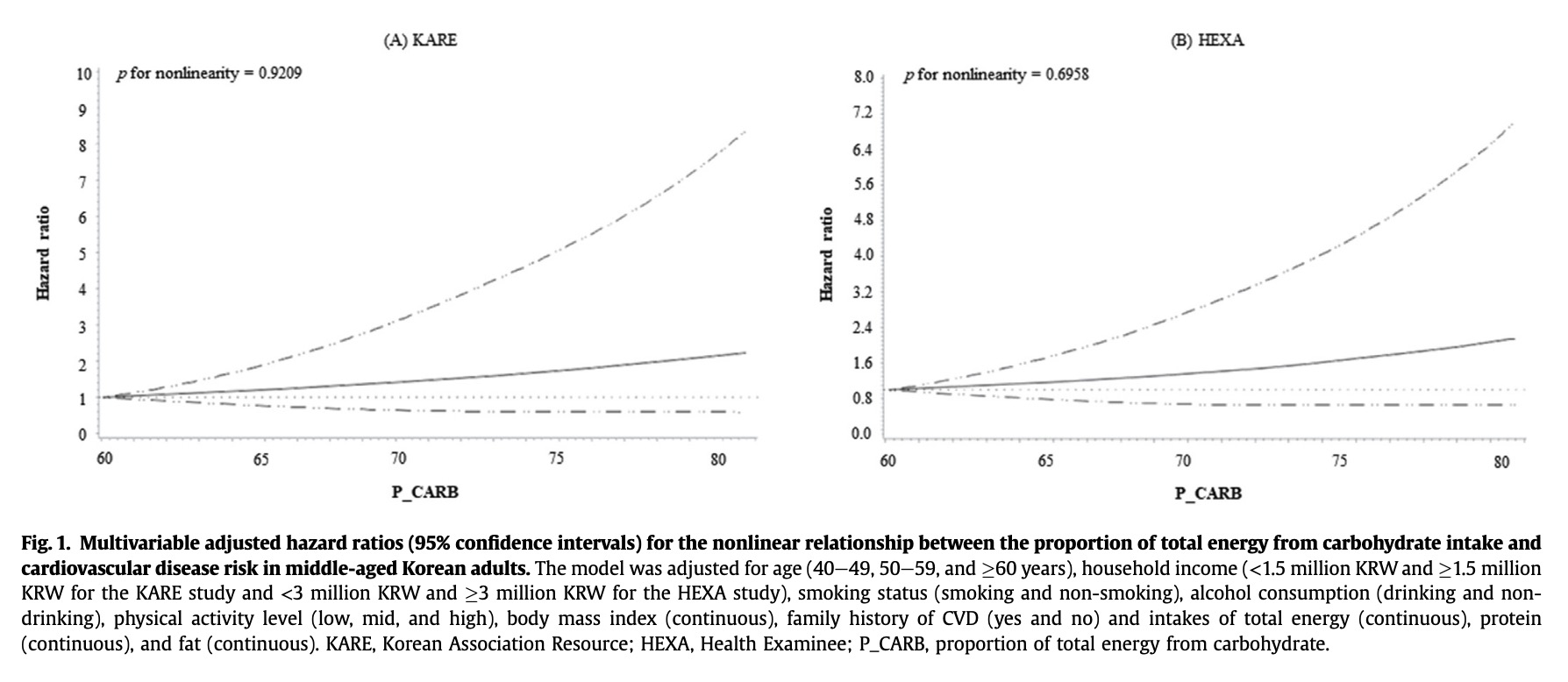
    Results: In the fully adjusted model, significant positive associations between P_CARB and CVD risk were observed in the pooled analysis, showing that the HRs (95% CIs) for CVD across increasing quartiles of P_CARB were 1.00 (reference), 1.16 (0.94-1.44), 1.25 (0.96-1.63), and 1.48 (1.08-2.03). The restricted cubic spline regression analysis confirmed a linear dose-response relationship between P_CARB and CVD risk in both cohort studies, with all p-values for nonlinearity >0.05.

    Conclusion: Our findings suggest that a carbohydrate-based diet high in proportion to total energy intake may increase the risk of CVD among middle-aged Korean adults, underscoring the importance of balanced macronutrient distribution. However, more research is needed to evaluate the sources and quality of carbohydrates in relation to CVD risk in this population.

    Full Paper: https://doi.org/10.1016/j.clnu.2023.06.013


    I thought I had totally lost this! https://www.imdb.com/title/tt1355599/

    A dangerous mission reunites Stingray Sam with his long lost accomplice, The Quasar Kid. Follow these two space-convicts as they earn their freedom in exchange for the rescue of a young girl who is being held captive by the genetically designed figurehead of a very wealthy planet.

    It's on youtube https://www.youtube.com/watch?v=lxfggiZLn60 but only 360p.


    Ever feel like your battle with weight loss is a fight you can’t win, no matter the amount of healthy eating? You’re not lazy, and you don’t lack willpower—you’ve been set up to fail by a food system that has hijacked your biology.

    In this powerful episode of The Dr. Hyman Show, I sit down with the ultimate insider, Dr. David Kessler—a physician, lawyer, and the former FDA Commissioner who famously took on Big Tobacco and won. Dr. Kessler reveals his own 40-pound weight gain after leading the White House COVID-19 response and how it led him to uncover the truth about our metabolic crisis.

    We uncover how the food industry has engineered an alternate universe of ultra-processed foods designed to be addictive, creating a "food carnival" that keeps us coming back for more. Dr. Kessler also unveils his groundbreaking petition to the FDA—a brilliant legal strategy that uses the food industry's own rules against them to potentially transform our food supply forever.

    This conversation is a masterclass in the science of food addiction, the failure of public policy, and the practical steps we can all take to finally reclaim our health.

    In this episode, we dive into:

    Why Dr. Kessler, former head of the FDA, couldn't control his own weight

    The science of food addiction and how dopamine circuits in your brain get hijacked

    How "toxic" visceral fat is the true cause of heart failure, diabetes, and even dementia

    The legal loophole ("GRAS") that allows harmful ingredients in our food

    Dr. Kessler’s plan to hold the food industry accountable, just like Big Tobacco

    summerizer

    “Why We Can’t Lose Weight (and What to Do About It)” — Summary (from the video only)

    Speaker

    • Former FDA Commissioner David Kessler discusses why weight loss is so difficult and what can help.

    Core Thesis

    • The modern food environment exploits hard-wired biology (reward, learning, and metabolic responses), making persistent overeating common. Sustainable weight control requires changing that environment and the types of foods we routinely encounter.

    How Modern Food Hijacks Biology

    • Industrially formulated foods combine sugar, fat, and salt with specific textures and cues (smell, crunch, mouthfeel) to create powerful reward signals.
    • These cues trigger anticipatory (cephalic) responses and reinforce habit loops that drive “conditioned hyper-eating.”
    • Dopamine and related learning pathways are repeatedly engaged, increasing cue-reactivity and making restraint progressively harder in everyday settings saturated with these foods.

    Food Addiction Framework (Yale Food Addiction Scale)

    • A “food addiction” phenotype can be measured behaviorally (e.g., loss of control, continued use despite harm).
    • Cited figure: a large population study estimates roughly 14% of people globally (including adolescents) meet criteria for food addiction by the Yale Food Addiction Scale (YFAS) or its updated version.
    • The term is used to describe a behavioral pattern; it’s not a moral failing but a predictable result of exposure to engineered, highly rewarding foods.

    Papers referenced in the video

    Ultra-Processed Food (UPF) Classification

    • The video references the Brazilian/NOVA framework for classifying foods, noting debates about definitions but emphasizing that the most highly processed products consistently concentrate sugar/fat/salt and sensory engineering.
    • The gist: regardless of taxonomy debates, the most ultra-processed items repeatedly elicit strong reward and drive passive overconsumption.

    Paper referenced in the video

    Why Willpower Alone Fails

    • Constant exposure to cues (packaging, availability, portion size, placement) overwhelms conscious control.
    • Once patterns of cue → craving → consumption are established, everyday environments reliably replay them.

    Medications and Biology

    • GLP-1–based therapies are discussed as biological tools that can reduce appetite and cravings.
    • They can help interrupt compulsive patterns, but environment and food choices still matter; medication alone does not “fix” the food environment that trained the behavior.

    Practical Levers Highlighted

    • Change the food environment: make highly engineered, ultra-palatable products less available and less salient in daily life.
    • Structure defaults toward minimally processed foods to lower cue-reactivity.
    • Portion and placement: smaller default portions; keep trigger foods out of immediate reach/sight.
    • Routine over willpower: build predictable eating patterns that reduce exposure to provocative cues.

    Policy/Regulatory Perspective

    • Past successes (e.g., around tobacco) show that policy can reshape environments (labeling, marketing limits, availability, pricing signals).
    • Similar population-level measures could reduce exposure to the most problematic formulations without banning foods outright.
    • Acknowledges the tension between industry incentives and public health, and the need for evidence-based standards that reflect modern food engineering and its effects on behavior.

    Open Questions Noted

    • How to operationalize definitions that capture the true drivers of overconsumption (beyond simple nutrient lists).
    • Where to draw policy lines that are practical, fair, and actually reduce cue-driven overeating.
    • How medical therapies, nutrition strategies, and policy can synergize to deliver durable weight control at scale.


    Most studies on ketosis have focused on short-term effects, male athletes, or weight loss. Hereby, we studied the effects of short-term ketosis suppression in healthy women on long-standing ketosis. Ten lean (BMI 20.5 ± 1.4), metabolically healthy, pre-menopausal women (age 32.3 ± 8.9) maintaining nutritional ketosis (NK) for > 1 year (3.9 years ± 2.3) underwent three 21-day phases: nutritional ketosis (NK; P1), suppressed ketosis (SuK; P2), and returned to NK (P3). Adherence to each phase was confirmed with daily capillary D-beta-hydroxybutyrate (BHB) tests (P1 = 1.9 ± 0.7; P2 = 0.1 ± 0.1; and P3 = 1.9 ± 0.6 pmol/L). Ageing biomarkers and anthropometrics were evaluated at the end of each phase. Ketosis suppression significantly increased: insulin, 1.78-fold from 33.60 (± 8.63) to 59.80 (± 14.69) pmol/L (p = 0.0002); IGF1, 1.83-fold from 149.30 (± 32.96) to 273.40 (± 85.66) µg/L (p = 0.0045); glucose, 1.17-fold from 78.6 (± 9.5) to 92.2 (± 10.6) mg/dL (p = 0.0088); respiratory quotient (RQ), 1.09-fold 0.66 (± 0.05) to 0.72 (± 0.06; p = 0.0427); and PAI-1, 13.34 (± 6.85) to 16.69 (± 6.26) ng/mL (p = 0.0428). VEGF, EGF, and monocyte chemotactic protein also significantly increased, indicating a pro-inflammatory shift. Sustained ketosis showed no adverse health effects, and may mitigate hyperinsulinemia without impairing metabolic flexibility in metabolically healthy women.

    Full Paper - https://doi.org/10.3390/ijms242115621


    Harvard-trained physician-scientist Dr. Nick Norwitz joins me to unpack the real drivers of metabolic health. He shares how keto sent his severe ulcerative colitis into remission within one week, why “calories in, calories out” is a dead-end tautology, what happened when he overfed ~6,000 calories/day and didn’t gain weight, and how medical training ignores nutrition while Big Food-friendly myths persist. We hit CGMs in med-ed, GLP-1s, statins’ surprising effects on GLP-1, funding unbiased metabolic research, and whether long-term keto is not just therapeutic but optimal.

    summerizer

    Why Doctors Aren’t Taught Nutrition — Dr. Nick Norwitz Exposes The Truth

    Participants: Dr. Eric Westman (host) and Dr. Nick Norwitz (guest)

    Norwitz’s background & health story

    • Undergraduate at Dartmouth (cell biology & biochemistry); PhD at Oxford; admitted to Harvard Medical School.
    • Developed severe inflammatory bowel disease with debilitating GI symptoms.
    • Attempted standard medical approaches without adequate relief.
    • Adopted a Mediterranean-leaning ketogenic diet (fatty fish, olive oil, vegetables; low carbohydrate) and experienced rapid, substantial improvement and recovery.

    Why doctors aren’t taught much nutrition

    • Medical training is designed primarily for diagnosing and treating disease with medications and procedures; prevention and nutrition receive little curricular time.
    • “Evidence-based medicine” is valuable but can be limited by:
      • Overreliance on narrow hierarchies that discount mechanistic and patient-level evidence.
      • Institutional incentives (e.g., drug-centric frameworks) that don’t translate well to diet and lifestyle.
    • Practical nutrition education is often missing, leaving clinicians without clear frameworks or tools.

    Models of obesity & metabolism discussed

    • Calories In/Calories Out (CICO): Critiqued as a near tautology—describes weight change but offers limited mechanistic guidance.
    • Carbohydrate-Insulin Model (CIM): Presented as an alternative framework emphasizing hormonal regulation (insulin) and carbohydrate quality/quantity as drivers of fat storage and appetite.

    Clinical practice considerations raised

    • Many patients achieve meaningful improvements (weight, metabolic health) with low-carb/keto patterns; individual responses vary.
    • Randomized trials and mechanistic studies both matter, but patients ultimately need safe, n=1 experimentation with clinician support.
    • Clinicians are comfortable prescribing FDA-approved drugs (e.g., GLP-1 agonists, SGLT2 inhibitors), but comparable, scalable guidance for nutrition is rarely taught despite potential benefit.

    Statins, GLP-1, and emerging evidence

    • A highlighted human controlled trial reported that statin therapy markedly reduced circulating GLP-1 levels over ~16 weeks, raising questions for primary prevention scenarios with isolated LDL elevation.
    • Framed as hypothesis-generating rather than definitive clinical guidance; underscores the need for open, nuanced discussion about trade-offs.

    Westman’s reflections (host)

    • Early clinical encounters with patients succeeding on very low-carb or carnivore-leaning diets challenged prior assumptions.
    • Longstanding experience suggests such diets can be safe and effective for many, but academic acceptance lagged amid debates over mechanisms.

    Takeaways

    • Nutrition is underemphasized in medical education relative to its potential impact on chronic disease.
    • Competing models (CICO vs. CIM) shape how clinicians and researchers interpret evidence and craft guidance.
    • More practical, patient-centered nutrition training and better translational frameworks are needed alongside pharmacologic options.

    Papers referenced in the discussion (DOIs)

    • Carbohydrate-Insulin Model overview: Ludwig DS et al. “The carbohydrate-insulin model: a physiological perspective on the obesity pandemic.” Am J Clin Nutr (2021). https://doi.org/10.1093/ajcn/nqab270
    • Statins & GLP-1 (human controlled trial): She J et al. “Statins aggravate insulin resistance through reduced blood glucagon-like peptide-1 levels in a microbiota-dependent manner.” Cell Metabolism (2024). https://doi.org/10.1016/j.cmet.2023.12.027
    • Low-carb/keto for T2D (Virta 2-year trial referenced): Athinarayanan SJ et al. “Long-Term Effects of a Novel Continuous Remote Care Intervention Including Nutritional Ketosis for the Management of Type 2 Diabetes: A 2-Year Non-randomized Clinical Trial.” Front Endocrinol (2019). https://doi.org/10.3389/fendo.2019.00348


    Ketogenic therapy for mental illness is gaining attention, with more and more patients looking to incorporate this strategy into their care plan.

    The problem is that sometimes patients struggle to find providers to help them and providers often lack the expertise and confidence to prescribe this strategy.

    These issues led to a light bulb moment for Dr. Kelly, “We’ve got to capacity build, we have to figure this out.”

    In this interview, Dr. Bret Scher speaks with Deanna Kelly, PharmD, internationally recognized for her work in schizophrenia, psychiatric pharmacology, and metabolic health, who is now pioneering an innovative project of her own called *Live it, Launch it*.

    This first-of-its-kind study is Dr. Kelly’s brainchild, designed to train clinicians through direct experience in an effort to increase clinical expertise in metabolic and ketogenic therapies. Participants don’t just learn the science, they actually *live* a ketogenic diet themselves, gaining confidence, competence, and practical insight to better guide patients struggling with psychiatric disorders.

    In this interview, you’ll discover:

    - Why so many families are searching for trained ketogenic therapy clinicians
    - Why personal experience may be the missing link in clinical adoption
    - The potential widespread clinical impact of *Live it, Launch it*.
    - The potential of ketogenic therapy alongside medications like GLP-1s
    - An update on Dr. Kelly’s in-patient ketogenic therapy for schizophrenia study

    By training clinicians to *live it* before they *launch it*, this study could change how psychiatric care is delivered, and help meet the growing demand for clinical guidance in ketogenic therapy.

    *Expert Featured:*
    Dr. Deanna Kelly
    - Director of the Maryland Psychiatric Research Center
    - X: https://x.com/profdeannak

    *Resources Mentioned:*
    *Why Did the Maryland Health Department Halt a Critical Schizophrenia Study?*
    - https://youtu.be/tzPlQ6dJwe8

    *Stanford Study Shows Promise of Keto*
    - https://www.metabolicmind.org/trials/featured/stanford-study-shows-promise-of-keto/

    summerizer

    “The Future of Mental Health Care: Training Doctors in Ketogenic Therapy” — Summary

    Participants

    • Host introduces Metabolic Mind interview with Deanna Kelly, PharmD, BCPP (University of Maryland).
    • Discussion credits and mentions: Denise Potter, RDN, CDCES; Dr. Chris Palmer; Shebani (Shebani) Sethi, MD; Albert Danan, MD; Charlie Foundation; Keto-Mojo.

    Core Topic

    • “Live It, Launch It”: a capacity-building project to train clinicians to use ketogenic therapy for mental illness by having them live the diet briefly themselves, then launch it in practice.

    Why This Is Needed

    • Growing patient demand; the guest previously had a waitlist of ~16–17 families seeking clinicians who could implement ketogenic therapy.
    • Clinicians report interest but low confidence/competence implementing ketogenic therapy safely alongside standard care.

    Program Overview (“Live It, Launch It”)

    • Pilot site: Maryland.
    • Cohort size: ~40 clinicians (set at 40; ~40 consented).
    • Format:
      • Asynchronous online education (~4 hours), including a keto mastery class for psychiatry (developed with the Charlie Foundation and experts).
      • Four-week dietary intervention in which participating clinicians personally follow a ketogenic diet.
      • Weekly group meetings with dietitians for Q&A, troubleshooting, and peer support.
      • Before/after assessments evaluating knowledge gains and self-rated competence to apply therapy with patients.
      • Data collection tools used weekly to capture what may work for specific patient scenarios.
    • Logistics/support:
      • Participants across many U.S. states.
      • Lab slips provided; Keto-Mojo meters mailed to participants with a starter packet.
    • Goal: graduate clinicians who both understand and feel competent to add ketogenic therapy as an adjunct to standard care for psychiatric conditions, with attention to medication and metabolic safety.

    Clinical Context Discussed

    • Serious mental illness (e.g., schizophrenia, bipolar disorder, major depression) often coexists with metabolic dysfunction (weight gain, insulin resistance), partly due to psychotropic medications.
    • GLP-1 agonists (e.g., semaglutide) were discussed in the context of a recent randomized controlled trial in patients on antipsychotics; benefits for metabolic parameters noted, but negative symptoms of schizophrenia and broader functional outcomes may remain unmet by GLP-1s alone.
    • Ketogenic therapy is positioned as adjunctive, potentially addressing psychiatric symptoms and metabolic health together; does not require FDA approval to implement clinically under appropriate supervision.

    Evidence Mentioned (from the conversation)

    • Publications by Shebani Sethi and Albert Danan were cited as evidence that ketogenic therapy can improve psychiatric symptoms (including in schizophrenia) and metabolic markers.
    • Quantitative examples referenced in the conversation:
      • In metabolic disease literature, reports of ~69% decreases in HOMA-IR and >80% blood sugar normalization with ketogenic approaches were cited in passing.
    • An earlier inpatient schizophrenia ketogenic program in Maryland was referenced as having been shut down by the Maryland Department of Health; the guest provides an update on related activities.

    Who It’s For

    • Clinicians (psychiatrists, prescribers, therapists, dietitians, etc.) wanting structured training to safely integrate ketogenic therapy with standard psychiatric care.
    • Patients/families indirectly benefit as trained clinicians expand capacity in this area.

    view more: ‹ prev next ›