[–] [S] 3 points 11 hours ago (1 child)

Definitely not maliciously, but from a sympathetic standpoint. The community discourages political statements, but my thinking behind this is mainly one advocating for proper financial support and helpful social policies. After all, the same social policies that reduce the amount of public begging in Finland (my home country) are the same policies that prevent violent crime from happening as well.

Unfortunately our current government seems to want to be reminded of this the hard way, by budget cuts in financial support. And that is bound to lead to more violent crime as well.

  • source
  • parent
  • context
  • [–] 1 point 2 weeks ago (1 child)

    I don't know how it goes in the US, but in Finland the concept of lex praevia is set in the Finnish constitution.

    Section 8 Principle of legality in criminal law No one shall be held guilty of a criminal offence or be sentenced to a punishment on account of an act that did not constitute a criminal offence under law at the time when it was committed. The punishment imposed for an offence shall not be more severe than that provided by law at the time of commission of the offence.

    While the Finnish constitution is not set in stone, and can indeed be amended via a supermajority, there's practically no government that would actually allow that kind of change to legislation. It's obvious to anyone what breaking said principle would mean and strive for, and doing so would require at least four different parties to agree.

  • source
  • parent
  • context
  • [–] 1 point 2 weeks ago (3 children)

    Well, they can create a law to properly fine such things in the future. If current law doesn't allow imposing a proper fine, it's not possible to amend in a way that allows fining after that.

    At least in Finland you can only get punished according to the law that was in place when you did the act. Not any laws that were passed later. AFAIK the same is true in the US as well.

  • source
  • parent
  • context
  • [–] 1 point 2 weeks ago* (last edited 2 weeks ago)

    Well, Finnish forests are heavily forested and the cut down area was likely farmed/planted as well. They wouldn't have managed to purchase the land for this purpose if there were actual old growth trees there, only few such places remain.

    The environment around the forest matters more, e.g. rivers, ditches, swamps and so on. Most forests here are cut every 40-90 years and replanted after cutting.

  • source
  • parent
  • context
  • [–] 3 points 2 weeks ago* (last edited 2 weeks ago)

    The main issue here has less to do with the forest being felled, and more to do with the incorrect management of things like wastewater and possible endangered habitats. These things are mostly an issue in areas that are zoned. Outside the zoned areas most of Finnish forest is actively managed for forestry and is cut clear and replanted periodically over 40-90 years depending on latitude and type of forest.

    Google would've gotten the rights to cut if they just bothered to wait a bit and fill in the required paperwork. In most of Finland you just tell the government you're going to cut down a forest and get working. Instead they chose to expedite the process and are now being criticized for that purpose.

    Typically forests aren't clear-cut to that extent at a single time, and the top soil remains in place. The scale has a danger of rain washing off the soil and adding nutrients to the nearby river and thus the baltic sea as well. Those should've been properly managed and planning that management was the part they skipped. The forest would've become timber and other products in due time anyway (which it now won't since it's not legally cut).

  • source
  • parent
  • context
  • [–] 1 point 1 month ago (1 child)

    Which is also exactly what the CRT itself is – not all of the electrons pass through the mask. The difference is, that the actual CRT part has a longer field to accelerate the electrons, meaning the hit the mask or cathode with a higher energy leading to higher power x-ray photons. Modern tubes just had shielding so it wasn't a concern, the older ones didn't.

    Technically x-rays are always generated when a particle accelerates. That's why you can get them even from a high power cyclotron where the particle has a constant force applied on it. The actual CRT creates higher energy electrons and thus will generate more x-rays than the rectifier, it's calculated simply from the voltage and the overall distance of acceleration. But if the TV had a tube rectifier it's true that that would generate low power x-rays as well.

  • source
  • parent
  • context
  • [–] 8 points 1 month ago* (5 children)

    More specifically, the (low power) x-rays that are created when the electrons hit the screen and slow down are ionizing. The tube used in an x-ray machine is technically just a simple CRT without the mask, deflection coil, phosphorus and shielding, with the acceleration voltage cranked up a lot higher.

    With your normal CRT the voltage isn't high enough to be properly really though, and lack penetration power, so you can shield the tube quite easily. Which is also why it's not actually harmful for you to sit in front of e.g. a CRT monitor.

  • source
  • parent
  • context
  • [–] 5 points 1 month ago (1 child)

    Laittaisin kiljun köksäntunneille. Kemian tunneilla voidaan tehä pirtua, opettaa vielä tehokkaammin kun on vahvempaa.

    Kaljaviesti ehdottomasti myös osaksi opetussuunnitelmaa. Muutenkin ongelmallista, että lajia joudutaan harrastamaan ihan untuvikkoina kun vihdoin päästään yliopistoon.

  • source
  • parent
  • context
  • [–] [S] 2 points 1 month ago

    Also wrote it in the text on the post, but it's scanned from a negative with a cheap(-ish) dedicated film scanner, and converted to positive digitally. I use NegPy which very closely mimicks the workflow of RA-4 printing (color fotosensitive paper used for printing photos in an analog minilab) in terms of how it calculates contrast, color balance etc.

  • source
  • parent
  • context
  • [–] 1 point 1 month ago (1 child)

    I prefer the edit, the original feels too muted and cold. Maybe due to the white balance of the original scan? Although I do feel like the edit could do with a little bit more aggressive a black point, which the original achieves better.

    Otherwise love the composition and the dominance of the blossoms. A great shot!

  • source
  •  

    One of the quaint nooks in the Turku Castle. I love how much contrast there is always between the dark walls within, compared to the light that casts on the white walls.

    Metered by eye, as I almost always do since I can't be bothered with keeping track of the batteries. Scanning with a Plustek OpticFilm 7600i, Vuescan for raws, Negpy for flipping into a positive.

    Photograph of a sunlit nook in an otherwise dark medieval castle.
    [–] 16 points 2 months ago (1 child)

    If AI continues to be treated as transformative work, there should also be a valid case to kill licensing requirements for sampling music. After all, there you're literally using small clips of someone's music or similar to make undeniably new art.

  • source
  • parent
  • context
  •  

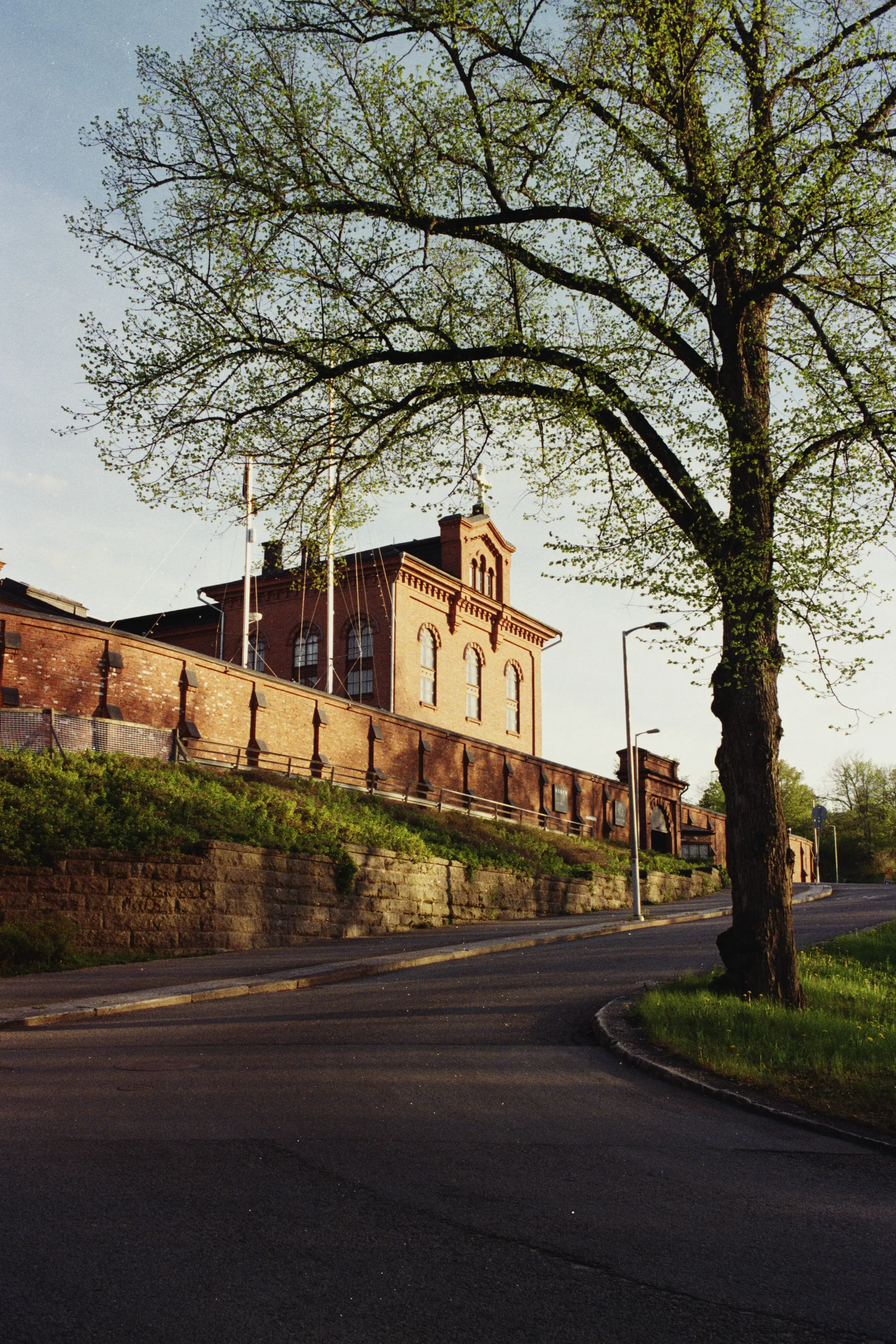
    A picture of the former Kakola prison, now converted to a hotel. The view from the serpentine road up the hill to it is one of my favorite spots in Turku, and a location I've photographed multiple times when testing out cameras.

    Scanned with a Plustek 7600i, converted with NegPy, which is quickly becoming my favorite option for processing negatives.

    This specific AT-1 is unfortunately overdue a shutter replacement. The curtain is starting to exhibit pinholes, and parts of the rubber coating can be seen floating around in the viewfinder. Shame, really, as it's one of my favorite bodies to shoot with, but at least it won't be expensive to replace as they tend to fetch less of a price than the other FD bodies.

    A picture of a late 19th century prison building on top of a hill at springtime.
     

    The tram line has been open for about two years now, but people still have trouble remembering the tram has the right of way. Maybe this will help, the audible warning doesn't seem to be enough since many people have headphones (understandable, noise cancelling is a must if the city has any car traffic).


    Film shot at box speed, stand developed with Rodinal. This is the location of the old Crichton-Vulkan shipyard in Turku, which used to be a major shipbuilder in Finland. Some of the most significant ships to get built here were e.g. the submarines used by the Finnish navy in WWII, first of which was originally built as a prototype for the Reichsmarine. It's still possible to go see one of them, CV-707 or Vesikko, in Suomenlinna where it's on display.

    The shipyard, after multiple restructurings, eventually located to Perno, Turku, and was eventually purchased by Meyer. Now it's mostly known for building the worlds largest cruise ships, such as the Royal Caribbean Icon-class. The old dry-dock and shipyard were developed into new housing, and on the right you can see some of the most expensive homes in all of Turku.


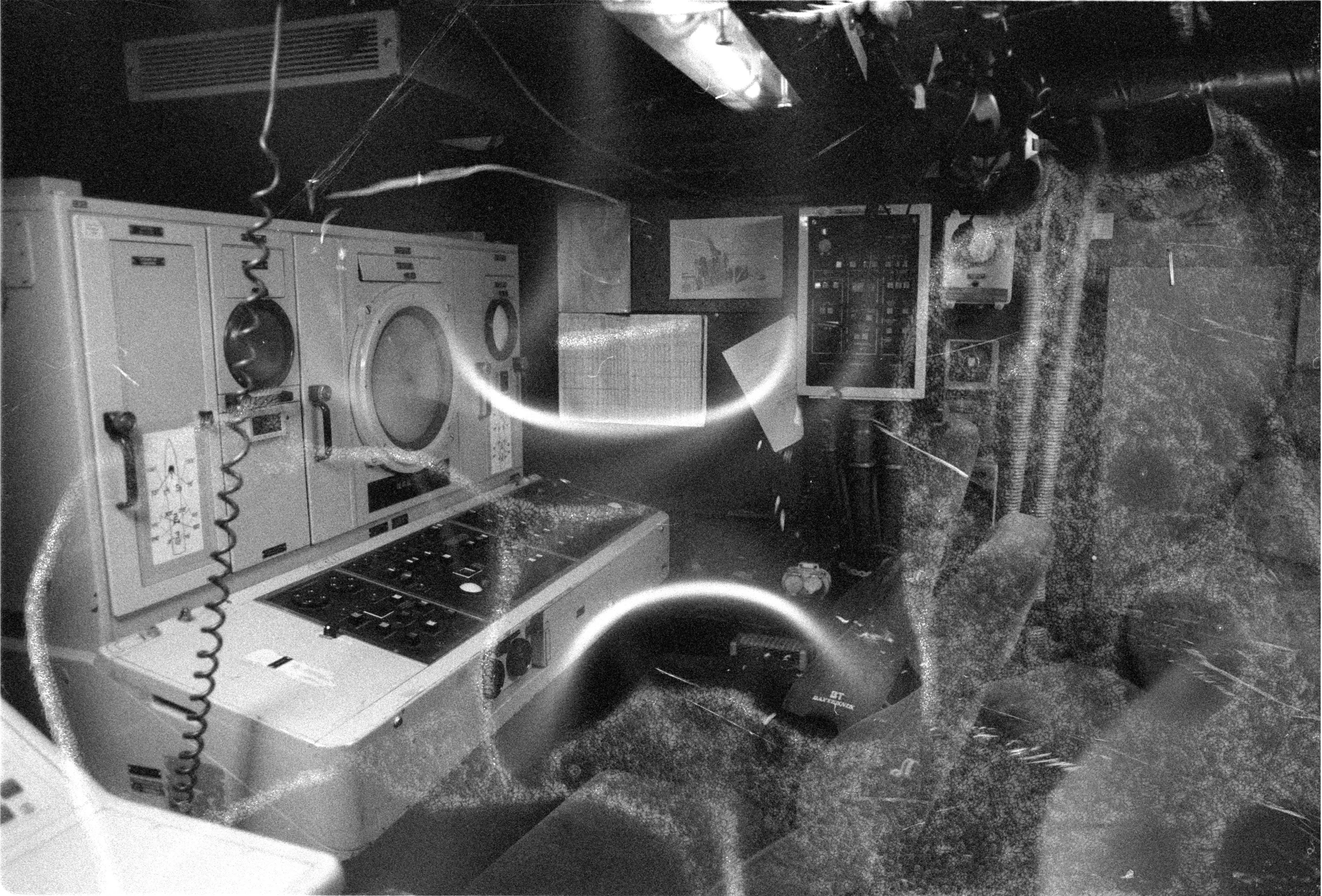
    Shooting my first roll of Delta 3200 went well. The development, however, did not. In this picture there are examples of bent film, fingerprints, film getting wet when being put onto the spiral and sticking to itself – but they end up looking quite cool in my opinion.

    The picture itself is taken from the operations center in the now retired Finnish Navy minelayer Keihässalmi.


    First tests with medium format, with the new-to-me soviet beauty. Finally got my hands to a economical flatbed capable of medium format, in this case an old canoscan 8000f. It doesn't have recent drivers, so my current workaround is a VM running Win 7 – might write SANE drivers for it at some point if it doesn't prove too difficult a task. Resolution is low (2400dpi) but enough for medium format since there's more to work with (I already have a dedicated machine for 135), and it's not like more recent flatbeds are much better in terms of real optical resolution. What these have got going for them is the price, got mine for 15 €.


    First time trying caffenol. Development turned out relatively well, though the film was underdeveloped – also there were some issues with fixing since I wanted to try using a salt bath instead of proper fixer (the real fixer had gone bad). Ended up having to use actual fixer anyway and as a result the film ended up a bit foggy.

    Overall I'm still happy with the results but will probably stick to Xtol and Rodinal for now.

    view more: next ›