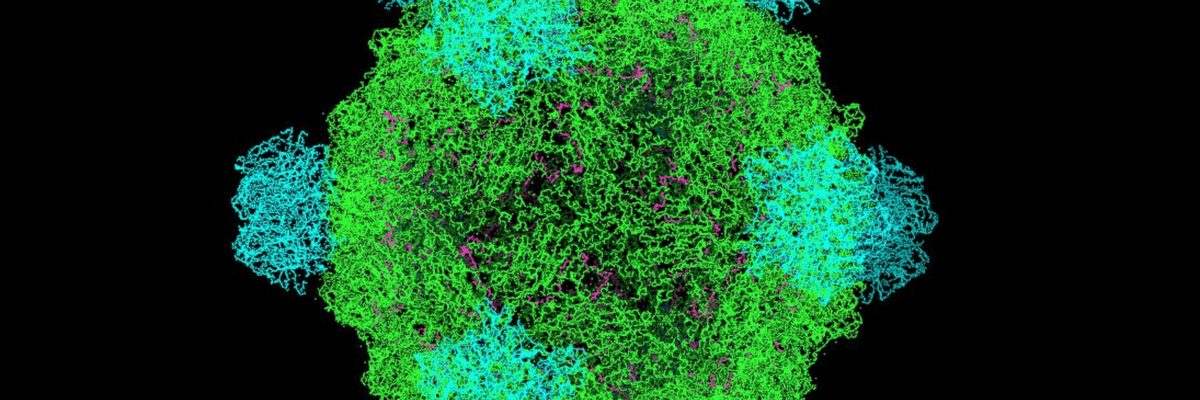
As scientists confirmed the first-ever biological viruses generated by artificial intelligence, experts warned Thursday that governments have failed to keep pace with a rapidly advancing and largely unregulated technology that, while having tremendous potential for medical breakthroughs, could also pose existential threats to humanity in the foreseeable future.
Research published Thursday in Science, available in full only to subscribers, describes how scientists at Stanford University and the Arc Institute used a genome language model, roughly the genetic equivalent of the technology behind AI chatbots, to generate hundreds of novel bacteriophage genomes—viruses that infect bacteria rather than humans. After synthesizing and testing the AI-generated designs, researchers found that 16 functioned successfully in laboratory experiments, infecting and killing E. coli.
While the researchers said that the new viruses pose no danger to humans because they only infect bacteria, experts have warned of the risks of AI creating novel bioweapons—either prompted by scientists or, in a future when superintelligent AI is achieved, independently—that could, in a worst-case scenario, threaten the existence of humanity.
"Although this is promising for life sciences applications, it also raises urgent biosafety and biosecurity questions," Johns Hopkins University School of Public Health Center for Health Security researchers Thomas Inglesby and Moritz Hanke wrote in a related article, also published Thursday in Science behind a paywall. "The ability to compose viral genomes using generative AI now exists; the governance to safely steer it does not."
The Stanford and Arc Institute study authors themselves noted the “important biosafety, biocontainment, and biosecurity considerations” accompanying such advances, urging researchers to “consult both safety and security professionals" during their work.
Calls for more robust regulatory guardrails have mounted in recent weeks amid revelations that one of ChatGPT maker OpenAI's models autonomously broke into the systems of other companies during testing. As AI advances to the point where it will likely outsmart humans, the challenge of ensuring that advanced systems reliably pursue goals that match what humans actually want—known as alignment—becomes increasingly difficult and, experts say, dangerous.
A misaligned, superintelligence could take uncontrolled autonomous actions at massive scale to achieve its goals, with industry pioneers warning of potentially catastrophic outcomes like AI-launched nuclear war or bioattack with existing or AI-generated pathogens.
While advocacy groups, the United Nations, and dozens of national governments are urging more robust regulation of AI development, the United States under President Donald Trump, the Republican-controlled Congress, and Big Tech’s army of lobbyists is strongly opposed to guardrails.
In fact, Trump—who Congressional Progressive Caucus Chair Greg Casar (D-Texas) on Monday accused of being "too busy cashing in" on AI—has rolled back regulations, including some meager steps taken during the Biden administration to bolster safety.
“There’s just a huge disconnect," Hanke told The New York Times on Thursday.
From Common Dreams via This RSS Feed.
all 2 comments