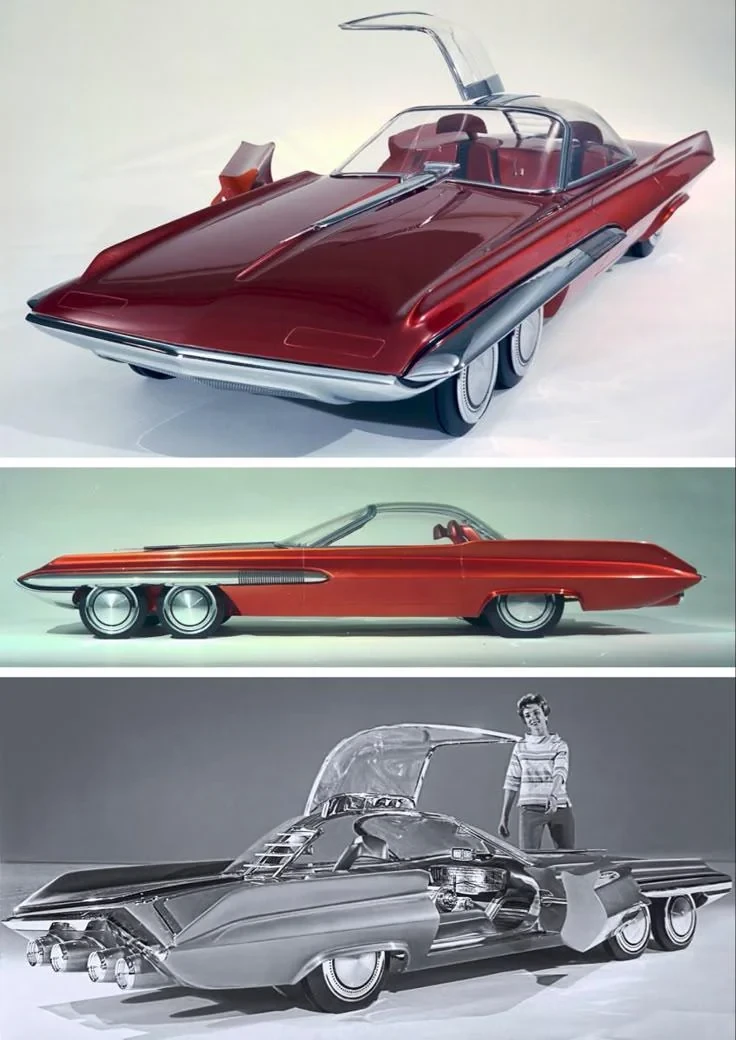
Surely this was Batman 1966's alternate car-build? (it's the 1962 Ford Seattle-ite XXI)
(media.piefed.social)
🚀 1
If I understand correctly, the original Batmobile was in fact based on a 1955 Lincoln Futura concept car. Kind of wild, as the first Batman TV series launched 11yrs later!
Sorry for the lack of info / pics, but Spectrum basically crippled my internet on Monday, and I'm still trying to figure what the hell's going on.
In any case, here's more pics of this memorable automobile:
https://www.google.com/search?q=1962+Ford+Seattle-ite+XXI&udm=2