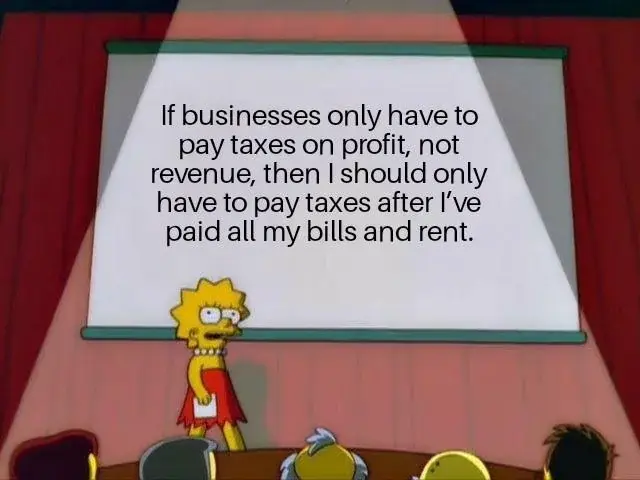
That's how it works in many countries.
Business pays tax on profits (revenue - expenses). Salary has smaller tax for business compared to pure profits, employees don't pay it because it's not profit. So businesses have incentives to keep human employees instead of keeping all the profits for themselves.
And that applies to all businesses. So if you, for example, bought a carrot for $10, tax is included, you don't pay tax on it.
- The distributor bought it for $6, spent $1, pays tax on their profit ($3),
- farmer grew it, used fertilizer, seeds, labor, etc., pays tax on profit (maybe $2),
- the fertilizer company again pays tax on their profit, and so on
In US you pay tax on every transaction. You get salary, you pay tax, you buy a thing, you pay tax, you eat something, again tax. This makes you more aware government is taking money, compared to the first scenario. But it also gives government ways to make complicated rules and give different tax benefits to different people. In the first scenario, government help goes to everyone whether they have a job or not. In this case you only get Tax cuts if you already make money.