1


Leon Trotsky (1879 - 1940)

Fri Nov 07, 1879

Image


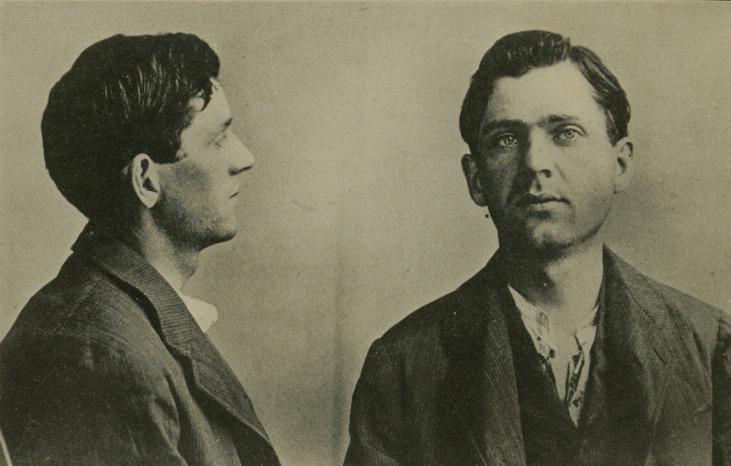
Leon Trotsky, born on this day in 1879, was a Marxist theorist, revolutionary, and politician. "Learning carries within itself certain dangers because out of necessity one has to learn from one's enemies."

Trotsky joined the Bolshevik Party a few weeks before the October Revolution and immediately became a leader within the party, thus also playing a key role in the October Revolution.

Trotsky became more prominent from March 1918 to January 1925 as the leader of the Red Army in the post of Commissar for Military and Naval Affairs. He was also a vital leading figure in the Red victory in the Russian Civil War and one of the seven members of the first Politburo.

After the rise of Joseph Stalin, Trotsky was removed from his positions and eventually expelled from the Soviet Union in February 1929. He spent the rest of his life in exile, and was assassinated in 1940 in Mexico City by Ramón Mercader, a Soviet agent.

Trotsky was a prolific author whose works include History of the Russian Revolution (1930) and The Revolution Betrayed (1936). Key characteristics of Trotskyist thought include the concepts of "Permanent Revolution" and the "United Front" of revolutionaries and reformers against common enemies.

"Learning carries within itself certain dangers because out of necessity one has to learn from one's enemies."

- Leon Trotsky


2


Michael Schwerner (1939 - 1964)

Mon Nov 06, 1939

Image

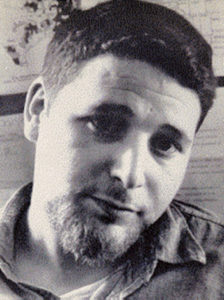
Image: Photograph of Michael Scwerner with light hair and a goatee, facing the camera


Michael Schwerner, born on this day in 1939, was one of three Congress of Racial Equality (CORE) field/social workers killed in Philadelphia, Mississippi by members of the Ku Klux Klan.

In the early 1960s Schwerner became active in working for civil rights for black people; he led a local Congress of Racial Equality group on the Lower East Side of Manhattan, called "Downtown CORE." He participated in a 1963 effort to desegregate Gwynn Oak Amusement Park in Maryland. As activism increased in the South, Schwerner and his wife Rita Schwerner Bender volunteered to work for National CORE in Mississippi, helping black people exercise their right to vote.

Michael Scwerner and fellow civil rights workers James Chaney and Andrew Goodman were killed near the town of Philadelphia, Mississippi while investigating the burning of Mt. Zion Methodist Church, which had been a site for a CORE Freedom School.

Arrested by the local sheriff, the trio was released that evening without being allowed to contact anyone. On the road, they were stopped by patrol lights and two carloads of KKK members, kidnapped, tortured, and killed.

The sheriff, along with six others, were indicted and convicted for depriving the three men of their civil rights. No one was held accountable for their murders until 2005, when outspoken white supremacist Edgar Ray Killen was convicted on three counts of manslaughter.


3


Hilde Radusch (1903 - 1994)

Fri Nov 06, 1903

Image


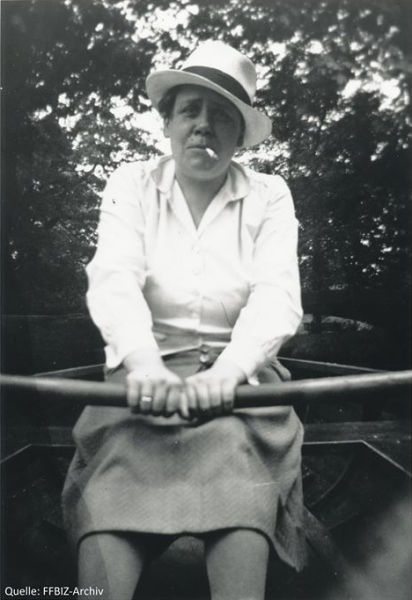
Hilde Radusch, born on this day in 1903, was a German communist, anti-fascist, and queer feminist author. Imprisoned by the Nazis, Radusch survived World War II and became a prominent lesbian writer and activist.

In 1924, Radusch became a member of the Communist Party, and from 1929 until 1932 Radusch served as a Communist Party city councilor in Berlin.

Radusch was arrested by the Nazi government on April 6th, 1933, less than a month after returning from a political trip to the Soviet Union. After refusing to sign a contrived confession, she ended up in the Barnim Street women's prison, along with around two hundred other "politicals", those identified by the Nazi government as political prisoners (distinct from "criminals").

Released in September 1933, she went on to run a restaurant with her partner Else "Eddy" Klopsch, which served as a refuge for people wanted by the Nazi regime. After the war, she became the head of the Schöneberg office dedicated to "Victims of Fascism", however she lost the job after being denounced as "lesbian".

Radusch was the editor of "Our Little Newspaper" ("Unserer Kleinen Zeitung"), described by historian Ilona Scheidle as the first lesbian newspaper after World War II. In the 1970s, Radusch co-founded "L74", a Berlin group of older lesbians.


4


Eugene V. Debs (1855 - 1926)

Mon Nov 05, 1855

Image


Eugene V. Debs, born on this day in 1855, was an American socialist, trade unionist, founding member of the Industrial Workers of the World (IWW), and five time presidential candidate of the Socialist Party of America.

Through his presidential candidacies and labor organizing, Debs eventually became one of the best-known socialists living in the United States.

While in prison for leading the Pullman Strike, Debs read various works of socialist theory and emerged six months later as a committed adherent to the international socialist movement.

Debs was a founding member of the Social Democracy of America (1897), the Social Democratic Party of America (1898) and the Socialist Party of America (1901). Debs ran as a Socialist candidate for President of the United States five times, including 1900 (earning 0.6% of the popular vote), 1904 (3.0%), 1908 (2.8%), 1912 (6.0%) and 1920 (3.4%), the last time from a prison cell. He was also a candidate for United States Congress from his native state Indiana in 1916.

Debs was noted for his fiery oration. In 1918, Debs was arrested after giving a speech denouncing American participation in World War I. He was convicted under the Sedition Act of 1918 and sentenced to a term of 10 years. In his speech to the court, Debs provided one of his most well-known quotes:

"Your Honor, years ago I recognized my kinship with all living beings, and I made up my mind that I was not one bit better than the meanest on earth. I said then, and I say now, that while there is a lower class, I am in it, and while there is a criminal element, I am of it, and while there is a soul in prison, I am not free."


5


Cedric Robinson (1940 - 2016)

Tue Nov 05, 1940

Image

Image: **


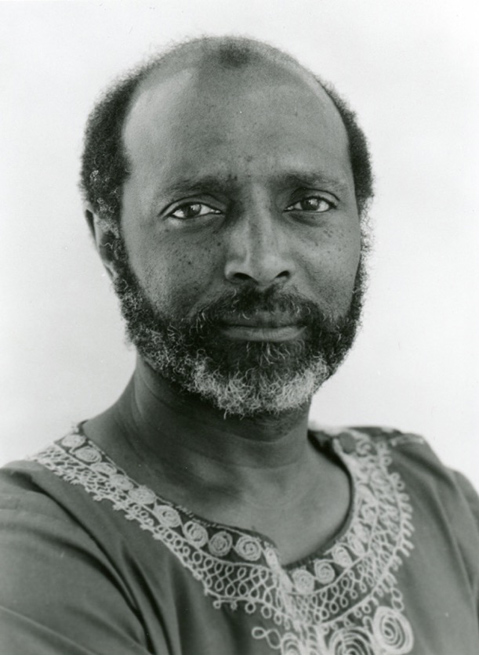
Cedric Robinson, born on this day in 1940, was the author of "Black Marxism: The Making of the Black Radical Tradition" and a professor of Black Studies and Political Science at the University of California, Santa Barbara (UCSB).

Robinson's areas of interest included political philosophy, radical social theory in the African diaspora, comparative politics, and the relationships between and among media and politics.

According to Professor Robin D.G. Kelley, "[Robinson's] monumental Black Marxism: The Making of the Black Radical Tradition (1983) takes Karl Marx to task for failing to comprehend radical movements outside of Europe. He rewrites the history of the West from ancient times to the mid-twentieth century, scrutinizing the idea that Marx’s categories of class can be universally applied outside of Europe. Instead he characterized black rebellions as expressions of what he called the 'Black Radical Tradition', movements whose objectives and aspirations confounded Western social analysis. Marxism also failed to account for the racial character of capitalism."

In a critical review of the work, authors William I. Robinson, Salvador Rangel and Hilbourne A. Watson state "Black Marxism has become a favored text with which to badger radical intellectuals and activists who place a premium on proletarian struggle. This has led some among left organizers to fear they may be condemned as Eurocentric, as 'class reductionists', and as 'ignoring race' should they place a premium on class analysis, should they insist that racism is an outcome of class exploitation, and that its eradication involves a transnational and pan-ethnic proletarian struggle against capitalism...At a time when global capital is on an all-out rampage against the global working and popular classes and when our very survival is under threat, we need more than ever a transnational revolutionary proletarian politics. We won’t find that in Black Marxism."

"Racism, I maintain, was not simply a convention for ordering the relations of European to non-European peoples but has its genesis in the 'internal' relations of European peoples."

- Cedric Robinson


6


United Farm Workers Office Bombed (1970)

Wed Nov 04, 1970

Image


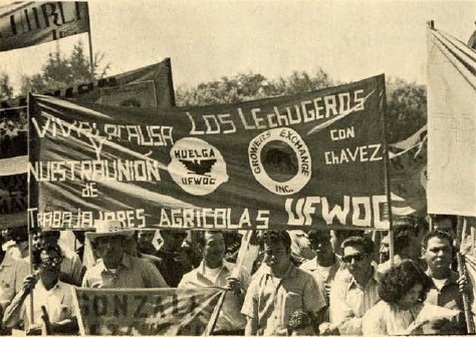
On this day in 1970, a United Farm Workers (UFW) office was bombed Salinas Valley, California. The bombing took place during the Salad Bowl strike, the largest farm workers strike in U.S. history, which had begun on August 23rd of that year.

The Salad Bowl strike was in part a protest against the International Brotherhood of Teamsters winning legal jurisdiction over farm workers in California (the UFW had previously organized these workers). The Salad Bowl Strike caused the price of lettuce to double practically overnight, and lettuce growers lost $500,000 a day.

During the strike UFW leader César Chávez was arrested and imprisoned. When he was visited by athlete Rafer Johnson and Ethel Kennedy, widow of slain Senator Robert F. Kennedy, Johnson and Kennedy were attacked by an anti-union mob on the steps of the jail and police had to suppress the quarrel.

Although the strike ended on March 26th, 1971 when the Teamsters and UFW signed a new jurisdictional agreement reaffirming the UFW's right to organize field workers, jurisdictional labor disputes (and associated violence) would continue for years afterward. These tensions led directly to the passage of the California Agricultural Labor Relations Act in 1975.


7


Folsom Prison Strike and Manifesto (1970)

Tue Nov 03, 1970

Image

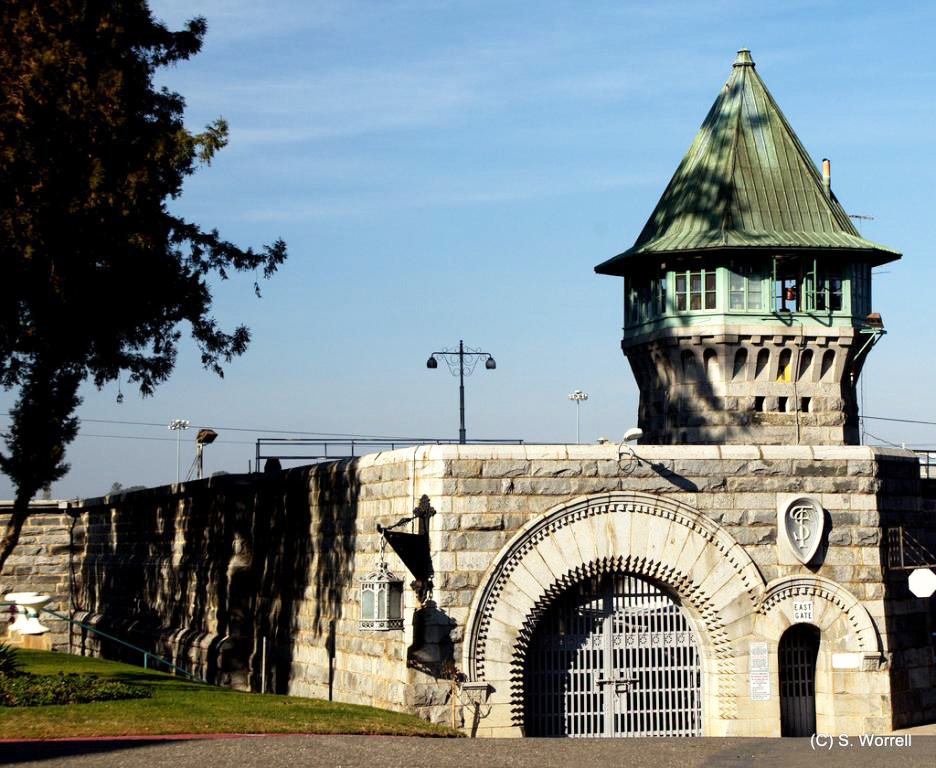
Image: A gate of Folsom State Prison


On this day in 1970, over 2,400 prisoners published a prisoner's rights manifesto and began a 19-day strike at Folsom State Prison in California. The manifesto called prisons "fascist concentration camps" and demanded the right to join a union.

The manifesto was overtly political, seeking an "end to the injustice suffered by all prisoners, regardless of race, creed, or color." It also called the U.S. prison system "fascist concentration camps" and made a set of demands for prisoner's rights.

Among those demands were "an end to political persecution, racial persecution, and the denial of prisoners, to subscribe to political papers" and "that inmates be allowed to form or join labor unions".


8


Norman Morrison Self-Immolation (1965)

Tue Nov 02, 1965

Image


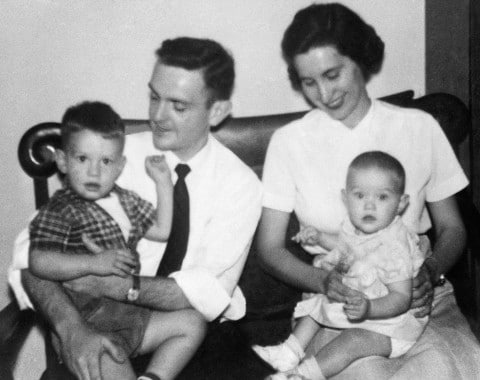
Norman Morrison (1933 - 1965) was a Baltimore Quaker who committed suicide via self-immolation in protest of the Vietnam War on this day in 1965. Morrison was 31 and left behind a wife and three children.

The act was a protest United States involvement in the Vietnam War, and took place directly below Secretary of Defense Robert McNamara's office at the Pentagon. Morrison was 31 and left behind a wife and three children.

Morrison's death was widely publicized and drew comparisons to Thích Quảng Đức and other Buddhist monks, who burned themselves to death to protest the repression committed by the South Vietnam government in years prior. In Vietnam, Morrison became a folk hero to some, his name rendered as "Mo Ri Xon". On May 9th, 1967, protesters held a vigil for Morrison before occupying the Pentagon for four days until being removed and arrested.


9


Plowshares Kitsap Break-in (2007)

Fri Nov 02, 2007

Image


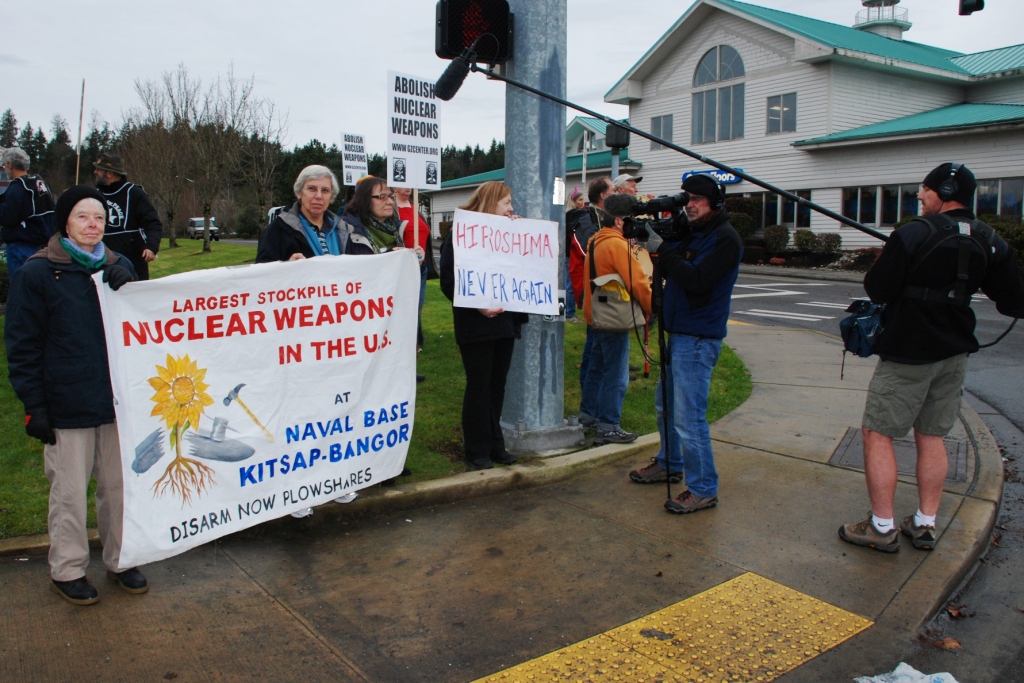
On this day in 2009, five anti-nuclear weapons peace activists who were part of the Plowshares movement broke into the Naval Base Kitsap, a nuclear-submarine base on Hood Canal northwest of Bremerton, Washington.

This "Disarm Now Plowshares" protest was a symbolic disarming of one of the largest nuclear-weapons stockpiles in the United States.

The five activists cut a hole through the perimeter fence surrounding the Bangor submarine base and began walking toward the storage area for nuclear weapons, carrying hammers and vials of their own blood. After making it within 10 yards of where the nukes were stored, they were arrested by Marines at gunpoint.

After being charged with conspiracy, trespass, destruction of property on a naval installation, and depredation of government property, the group was found guilty on December 13th, 2010.

At sentencing, Judge Benjamin Settle considering releasing the defendants while they waited for their prison terms to begin, however all individuals refused and, while singing songs of peace, federal marshals escorted them out of the courtroom and into federal detention.


10


UMW Coal Strike (1919)

Sat Nov 01, 1919

Image


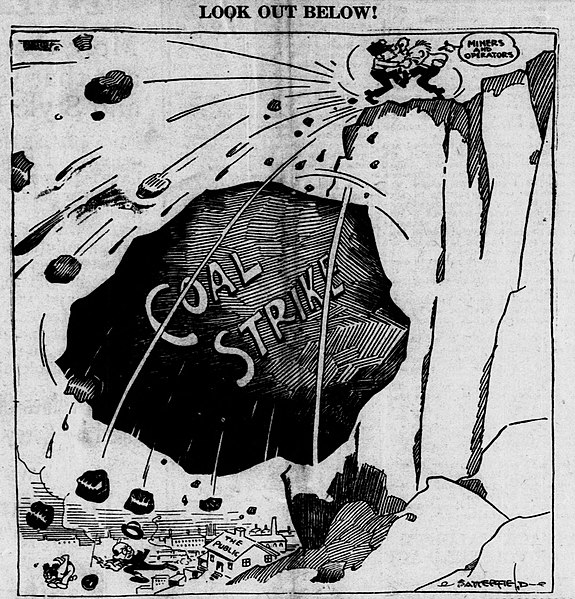
On this day in 1919, the United Mine Workers (UMW) initiated a nationwide strike of more than 400,000 coal miners, demanding better wages and a 30-hour week. The U.S. declared the strike illegal while the media smeared workers as communists.

U.S. Attorney General, A. Mitchell Palmer, the same individual behind the infamous Palmer Raids, declared the strike illegal by invoking the Lever Act, a wartime measure that made it a crime to interfere with the production or transportation of necessities.

The law had never been used against a union before, and in fact American Federation of Labor (AFL) founder Samuel Gompers had been promised by President Woodrow Wilson that the Lever Act would not be used to suppress labor actions.

The strike was subject to Red Scare propaganda: coal operators made false charges that Lenin and Trotsky had ordered the strike and were financing it, and some of the press repeated those claims. Others used words like "insurrection" and "Bolshevik revolution". Because of this propaganda and the Attorney General's injunction against the strike, the UMW called the strike off on November 8th.

Many workers ignored this order, however, and the strike continued for over a month, with a final agreement being reached on December 10th. Workers won a 14% wage increase and the creation of an investigatory commission to mediate wage issues.


11


Smith Act Trial (1949)

Tue Nov 01, 1949

Image

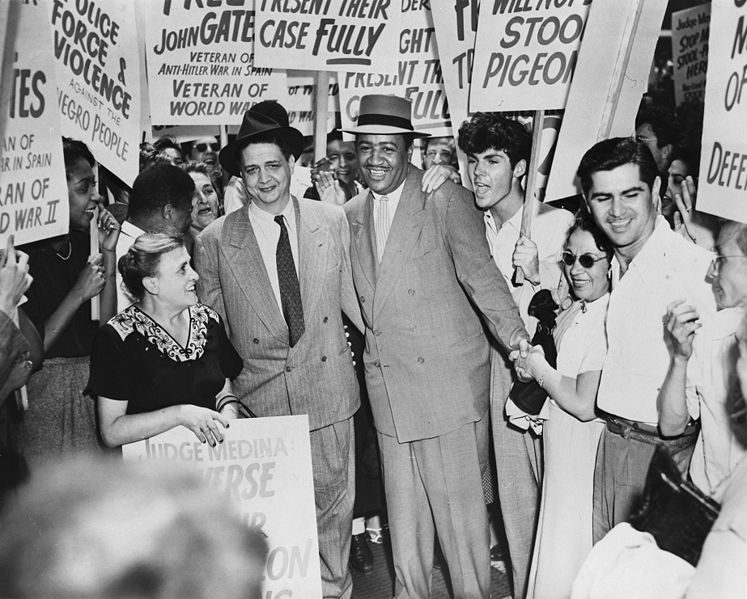
Image: Defendants charged under the Smith Act Robert Thompson and Benjamin Davis smiling, surrounded by pickets as they leave the Federal Courthouse in New York City in 1949 [Wikipedia]


On this day in 1949, the first trial of communist leaders under the Smith Act began in Manhattan. The trial spanned 10 months at the height of anti-communist hysteria. All 11 defendants were convicted, and all 5 of their attorneys imprisoned.

The Alien Registration Act, popularly known as the Smith Act, is a United States federal statute that was enacted on June 28th, 1940.

The Act set criminal penalties for advocating the overthrow of the U.S. government by force or violence and required all non-citizen adult residents to register with the federal government. Approximately 215 people were indicted under the legislation, including alleged communists, anarchists, and fascists.

On November 1st, 1949, the first trial of communist leaders began in Manhattan, New York. The trial, lasting ten months, was one of the longest in United States history, and took place at a fever pitch of anti-communist hysteria - the USSR tested its first nuke, communists won the Chinese Civil War, and the House of Un-American Activities Committee began its censorship in Hollywood, all while the trial was underway.

All eleven defendants were convicted under the Smith Act, and all five of their defense attorneys were imprisoned for contempt of court. Two were later disbarred. In the years following, more than 100 additional Communist Party USA (CPUSA) officers were convicted for violating the Smith Act, decimating the leadership of the CPUSA.

The Supreme Court put an end to these types of convictions in Yates v. United States (1957), where it ruled that radical speech was protected under the 1st amendment.


12


JJ Foods Strike (1995)

Tue Oct 31, 1995

Image


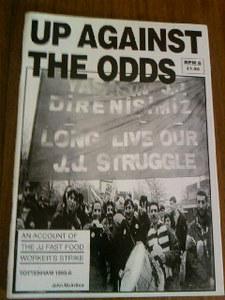
On this day in 1995, workers at the JJ Fast Food Distribution plant in Tottenham, London walked out to demand the reinstatement of their elected shop steward, beginning a several-month strike at the factory.

The workers were mostly Kurdish and Turkish immigrants, as the food and textile industries were significant employers of immigrant workers.

Working conditions at the plant were difficult - according to the anarchist publication Black Flag, workers were putting in 60-70 hours per week with no overtime, sick, or holiday pay. The day before the strike, the factory manager had fired the elected shop steward in response workers' attempts to organize through the Transport and General Workers' Union (TGWU).

When arriving to work the next day, workers refused to work, demanding the reinstatement of their elected representative. The boss then demanded union workers leave, and then fighting broke out. The union members then gathered outside the gate and were attacked by police.

The following day, the sacked workers and around 100 supporters again gathered outside the warehouse, attempting to block the access road and again clashing with police. The labor disputes continued for months. After two weeks, an Industrial Tribunal initiated by TGWU ruled that the workers had been sacked for union membership, and ordered them to return to work February 26th.

Despite this apparent victory, when 35 workers returned to their jobs, they were told that their union would not be recognized and that they be forced to work from 5 AM until midnight. This caused another strike, however it was short-lived and ineffective. Only 12 out of the original 42 fired JJ workers returned to work on March 18th.


13


Nat Turner Captured (1831)

Sun Oct 30, 1831

Image


On this day in 1831, Nat Turner, a radical preacher on the run after initiating a slave rebellion, was captured. After being sentenced to death, Turner was asked if he regretted his actions. He responded "Was Christ not crucified?"

Turner (1800 - 1831) was born and raised in Southampton County, Virginia, an area where black people outnumbered whites. He learned how to read and write at a young age and was deeply religious, eventually becoming an influential preacher in the area.

In early 1831, on the basis of religious visions, Nat Turner began preparing a slave insurrection. The rebellion began on August 21st, and rebels traveled from house to house, freeing slaves and killing many of the white people that they encountered.

At least 55 white people were killed, and the slaves killed men, women, and children. The group spared a few homes "because Turner believed the poor white inhabitants 'thought no better of themselves than they did of negroes'".

The rebellion was put down by a combined force of local militia and three companies of artillery. The state executed 56 black people, and militias killed at least 100 more, some of whom were not involved in the rebellion.

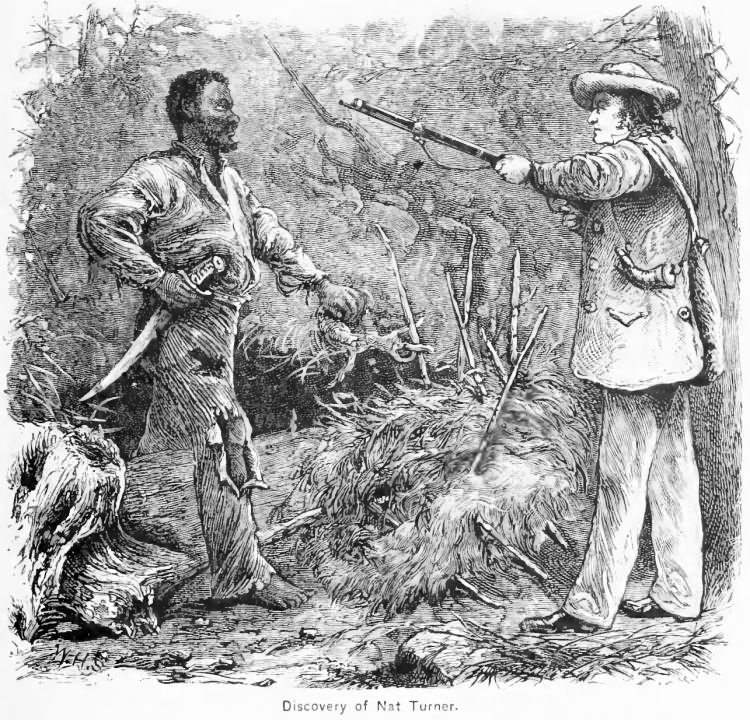
Turner went on the run, eluding capture for six weeks. On this day in 1831, a white farmer discovered him hidden among the local Nottoway people in a depression in the earth, created by a large, fallen tree that was covered with fence rails. After being tried and convicted for "conspiring to rebel and making insurrection", he was asked if he regretted what he had done. Turner responded "Was Christ not crucified?"

Turner was hanged on November 11th, 1831. His body was dissected and flayed, with his bones and skin being used to create trophies and souvenirs, such as purses.

After Turner's execution, state legislatures passed new laws prohibiting education of slaves and free black people, restricting rights of assembly and other civil liberties for free black people, and requiring white ministers to be present at all worship services.


14


Stanleyville Riots (1959)

Fri Oct 30, 1959

Image


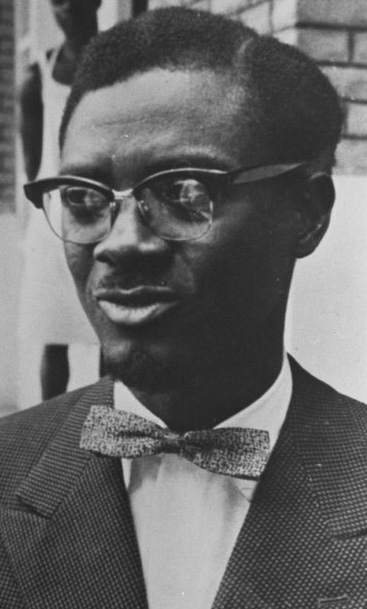
On this day in 1959, Congolese residents of Stanleyville rebelled against Belgian colonizers, demanding independence after a speech by Patrice Lumumba. Police suppressed the riot, killing ~70, imposing martial law, and arresting Lumumba.

The day prior, Lumumba called for a nationwide campaign of civil disobedience in a speech to the MNC congress, also ordering Congolese people to not collaborate with the Belgian colonial government and announcing that the party would not take part in the upcoming December elections.

The rebellion began on October 30th when the police arrived at the suburb of Mangoba to arrest Lumumba. The uprising was suppressed with military force, including two companies of infantry.

In total, approximately 70 people were killed in the fighting, and up to 200 were wounded. Lumumba himself was arrested by police as the government imposed martial law and banned gatherings of more than five people.

Congo would achieve independence from Belgium on June 30th, 1960, with Lumumba serving as its first Prime Minister. He was assassinated by Belgian forces and their collaborators on January 17th, 1961.


15


Leon Czolgosz Executed (1901)

Tue Oct 29, 1901

Image


Leon Czolgosz was an anarchist steelworker executed by the U.S. government on this day in 1901 after assassinating President William McKinley. The murder led to a widespread crackdown on left wing movements across the country.

Czolgosz (1873 - 1901) was a socialist from a young age, working in factories and mills as a teenager and witnessing labor strife firsthand. He was greatly inspired by Emma Goldman, and met her briefly after a lecture she gave in Cleveland. Czolgosz's direct inspiration to assassinate a national leader possibly came from the assassination of King Umberto I of Italy by anarchist Gaetano Bresci in 1900.

On September 6th, 1901, Czolgosz shot President William McKinley on the grounds of the Pan-American Exposition in Buffalo, New York. McKinley died eight days later of gangrene caused by the wounds and was succeeded by Theodore Roosevelt in office.

Czolgosz was tried and found guilty just over a month later. Before his execution, Czolgosz explained "I killed the President because he was the enemy of the good people - the good working people...I am not sorry for my crime".

In the aftermath of the assassination, there was a series of strong reprisals against the anarchist movement. Several anarchists, including Emma Goldman, were arrested on suspicion of involvement in the attack, and vigilantes attacked anarchist colonies and newspapers.

Fear of the movement also led to government creating anarchist surveillance programs, which were eventually consolidated on a federal level when the Bureau of Investigation (BOI, later to become the FBI) was formed in 1908.


16


Louis Blanc (1811 - 1882)

Tue Oct 29, 1811

Image


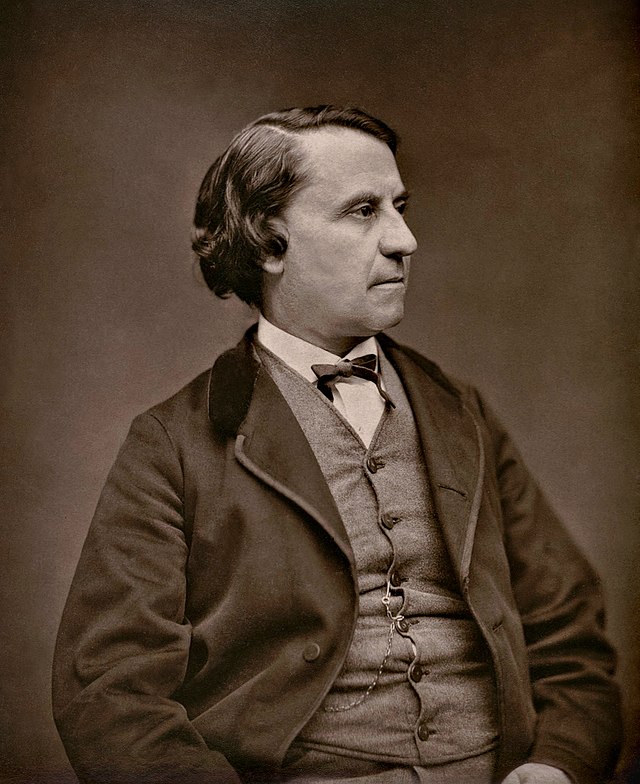
Louis Blanc, born on this day in 1811, was a socialist French politician, historian, and advocate of worker co-operatives. A socialist who favored reforms, he called for the creation of cooperatives in order to guarantee employment for the urban poor. Although Blanc's ideas of the workers' cooperatives were never realized, his political and social ideas greatly contributed to the development of socialism in France.

Blanc was a government official in the French Second Republic and key in the formation of its National Workshops, which used land taxes to fund employment services for unemployed workers.

Blanc is sometimes credited as being the first person to use the word capitalism in its modern form, defining the term in 1851 as "the appropriation of capital by some to the exclusion of others".


17


Emilienne Morin (1901 - 1991)

Mon Oct 28, 1901

Image


Emilienne Morin, born on this day in 1901, was a French anarchist and writer who was active in the Spanish Civil War and anti-fascist resistance against Francisco Franco.

In 1931, Morin and her partner, fellow anarchist Buenaventura Durruti, moved to Spain. There, Emilienne was active writing for the Confederación Nacional del Trabajo (CNT) press and took part in anarchist meetings and demonstrations.

With the outbreak of the Spanish Revolution and Civil War, Emilienne joined the Durruti Column on the Aragon Front and worked as secretary at its HQ, where she was in charge of its press department. After the death of Durruti, Morin returned to France to take part in solidarity campaigns for the Spanish anarchists, writing articles and addressing meetings.


18


Luisa Capetillo (1879 - 1922)

Tue Oct 28, 1879

Image


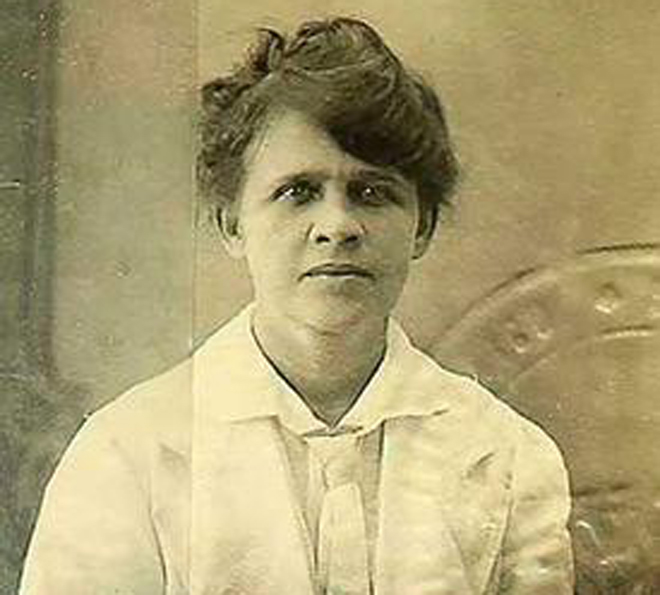
Luisa Capetillo, born on this day in 1879, was a Puerto Rican labor organizer, feminist, and Christian anarchist. Capetillo advocated for women's suffrage, was arrested for wearing pants in public, and helped raise the minimum wage.

As a labor activist, Capetillo organized workers throughout the United States, worked as a reporter for the FLT (American Federation of Labor), and traveled throughout Puerto Rico, educating and organizing women. Her hometown, Arecibo, became the most unionized area of the country.

Capetillo is considered to be one of Puerto Rico's first suffragists. In 1908, during the FLT convention, Capetillo asked the union to approve a policy for women's suffrage, insisting that all women should have the same right to vote as men. Along with other labor activists, she also helped pass a minimum wage law in the Puerto Rican Legislature.

Today, Capetillo is perhaps best known for being arrested for wearing pants in public, although the charges against her were later dropped.

In 2014, the Legislative Assembly of Puerto Rico honored Capetillo, along with eleven other women, with plaques in the "La Plaza en Honor a la Mujer Puertorriqueña" (Plaza in Honor of Puerto Rican Women).


19


French Riots Begin (2005)

Thu Oct 27, 2005

Image

Image: Marching protesters with a banner reading "PAS DE JUSTICE PAS DE PAIX" [socialistproject.ca]


On this day in 2005, weeks of riots erupted throughout France after two youths died from electrocution while hiding from the police in a power substation. President Chirac declared a state of emergency, giving sweeping powers to police.

According to a youth that survived the substation incident, they hid "to avoid the lengthy questioning that youths in the housing projects say they often face from the police. [He said] they are required to present identity papers and can be held as long as four hours at the police station, and sometimes their parents must come before the police will release them."

The deaths ignited pre-existing tensions in immigrant communities, particularly those of African and Arab origin, and protesters took to the street en masse. Initially confined to the Paris area, the protests and riots quickly spread throughout the country. By November 4th, thousands of vehicles had been burned, three people had been killed, and more than 2800 rioters were arrested.

On November 8th, President Jacques Chirac declared a state of emergency, which was granted a three month extension a week later. Local authorities were allowed to impose curfews, conduct house-to-house searches, and ban public gatherings to quell the riots.


20


Oliver Tambo (1917 - 1993)

Sat Oct 27, 1917

Image


Oliver Tambo, born on this day in 1917, was a South African anti-apartheid politician and revolutionary who served as President of the African National Congress (ANC) from 1967 to 1991.

In 1943, Tambo, along with Nelson Mandela and Walter Sisulu, founded the ANC Youth League, with Tambo becoming its first National Secretary and a member of the National Executive in 1948. The Youth League proposed a change in the tactics of the anti-apartheid movement, advocating boycotts, civil disobedience, strikes, and non-collaboration.

In 1960, Tambo fled South Africa due to political persecution, living in exile in north London for thirty years. From London, he supported and helped organize the ANC in the fight against apartheid from a distance. On December 13th, 1990, Tambo returned to South Africa and was elected National Chairperson of the ANC.


21


Dolores Cacuango (1881 - 1971)

Wed Oct 26, 1881

Image


Dolores Cacuango, also known as Mamá Doloreyuk, was a leader in the fight for indigenous rights in Ecuador born on this day in 1881. She was active in the Glorious May Revolution of 1944 and co-founded the Indigenous Federation of Ecuador (FEI).

Cacuango was born to enslaved people in San Pablourco who worked the Pesillo Hacienda near Cayambe without being paid. She had no access to education due to her lack of resources, and learned Spanish while working as a housemaid.

In 1930, Cacuango was among the leaders of the historic workers' strike at the Pesillo hacienda in Cayambe, which was a milestone for indigenous and peasant rights. During the Glorious May Revolution in Ecuador, Cacuango personally led an assault on a government military base.

The same year, with the help of Ecuador's Communist Party, Cacuango co-founded the Indigenous Federation of Ecuador (FEI), an early group in the fight for indigenous rights. She also helped establish some of the first bilingual indigenous schools.


22


Northwood and Pinner Hospital Occupation (1983)

Wed Oct 26, 1983

Image


On this day in 1983, hospital workers at the Northwood and Pinner Hospital began occupying the building in protest of its planned closure by the British government on October 31st. The following information comes from Hayes People's History via libcom.org:

The local health authority was proposing to close Northwood and Pinner hospital on October 31st, 1983. The workers, led by matron Jean Carey, a member of health workers' union COHSE (which later merged into Unison), occupied the hospital on October 26th to oppose the closure and began the work-in the next day.

They ran the hospital themselves, until eventually the authority caved and agreed to keep the hospital open. The nearby Hayes Cottage hospital was also successfully occupied and saved from closure at the same time.


23
U.S (stahmaxffcqankienulh.supabase.co)
submitted 1 week ago by [B] to c/workingclasscalendar@lemmy.world


U.S. Invades Grenada (1983)

Tue Oct 25, 1983

Image

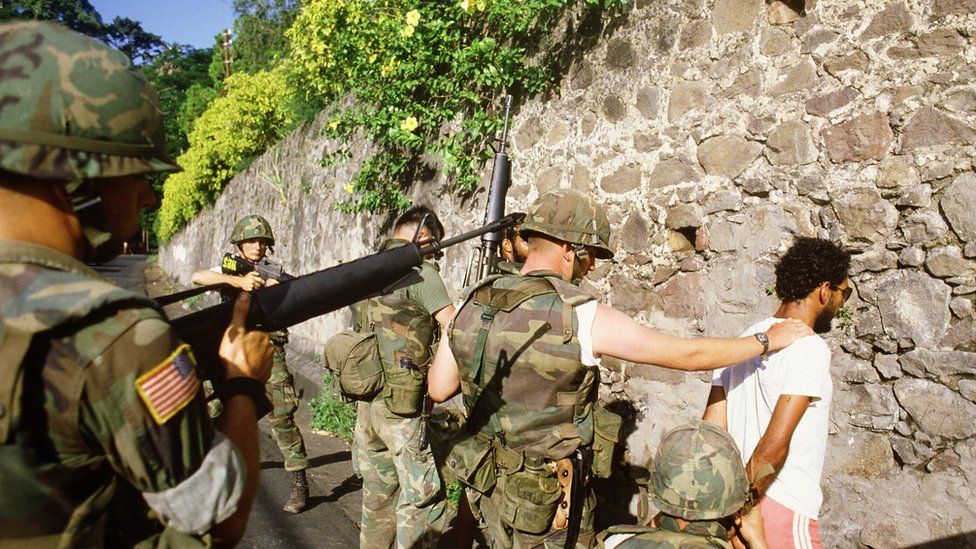
Image: U.S. soldiers intervening in Grenada


On this day in 1983, the U.S. and six Caribbean nations invaded Grenada following the assassination of Maurice Bishop, overthrowing the left-wing government and killing dozens of civilians, an act with drew international condemnation.

The invasion, officially codenamed "Operation Urgent Fury", was made up of a coalition of forces from the United States and six Caribbean nations, including Jamaica and Barbados.

Operation Urgent Fury and the subsequent military occupation led to the dissolution of the military government established after the assassination of Maurice Bishop, ousting the New Jewel Movement from power. The operation also caused the deaths of at least twenty-four civilians, eighteen of whom were killed when the U.S. Navy bombed a mental hospital.

President Reagan justified the invasion by claiming to be acting in the interests of 600 U.S. medical students on the island. Historian Howard Zinn has noted that there was no evidence these students were in danger and that, in the same period, Reagan's administration was actively supporting the government of El Salvador, which had already killed American citizens.

The invasion drew widespread condemnation. The United Nations General Assembly voted 108 to 9 in condemning the act as "a flagrant violation of international law". Margaret Thatcher publicly supported the action, but opposed it in private, telling President Reagan directly:

"This action will be seen as intervention by a Western country in the internal affairs of a small independent nation, however unattractive its regime. I ask you to consider this in the context of our wider East/West relations and of the fact that we will be having in the next few days to present to our Parliament and people the siting of Cruise missiles in this country...You asked for my advice. I have set it out and hope that even at this late stage you will take it into account before events are irrevocable."


24


Million Woman March (1997)

Sat Oct 25, 1997

Image


The Million Woman March was a protest march held on this day in 1997, involving approximately 500,000 people on the Benjamin Franklin Parkway in Philadelphia, Pennsylvania.

A major theme of the march was family unity and what it means to be a black woman in America. The women of the march called for three things: repentance for the pain of black women caused by one another, and the restoration and resurrection of black family and community bonds.

The march, which was organized by two Philadelphia grass roots activists, Phile Chionesu and Asia Coney, enjoyed substantial turnout despite short notice and bypassing traditional leaders and organizations that had played an important role in organizing the Million Man March in 1995, such as Rev. Jesse Jackson, Louis Farrakhan, and the National Association for the Advancement of Colored People (NAACP).

Notable speakers at the event included Winnie Madikizela-Mandela, Congresswoman Maxine Waters, Sista Souljah, Jada Pinkett Smith, Attallah and Ilyasah Shabazz, the daughters of Malcolm X, and Dr. Dorothy Height. A message from Assata Shakur, living in exile in Cuba, was also read.


25


Chinese Massacre of 1871

Tue Oct 24, 1871

Image


The Chinese Massacre of 1871 was a race riot that occurred on this day in Los Angeles, California when a mob of around 500 white and mestizo people entered Chinatown and attacked, robbed, and murdered Chinese residents.

The massacre took place on Calle de los Negros, also known as "Negro Alley". The mob gathered after hearing that a policeman had been shot and a rancher killed by Chinese immigrants. Historian John Johnson described the ensuing violence as the "largest mass lynching in American history".

An estimated 17 to 20 Chinese immigrants were hanged by the mob in the course of the riot, but most had already been shot to death. At least one was mutilated when someone cut off a finger to get his diamond ring.

Ten members of the mob were prosecuted, eight were convicted of manslaughter. The convictions were overturned on appeal due to various technicalities.


view more: next ›