The strange economic role of software (economists call it fancy names like non-rivalrus, zero marginal reproduction costs etc.) and in particular the radical nature of open source software is not really internalized.This has some bizarre implications. Case in point: coding "AI" that is supposed to be a real "business model", one which is worth "trillions". It would literally not have been possible without all the open source repositories and most likely will end up being open source itself.
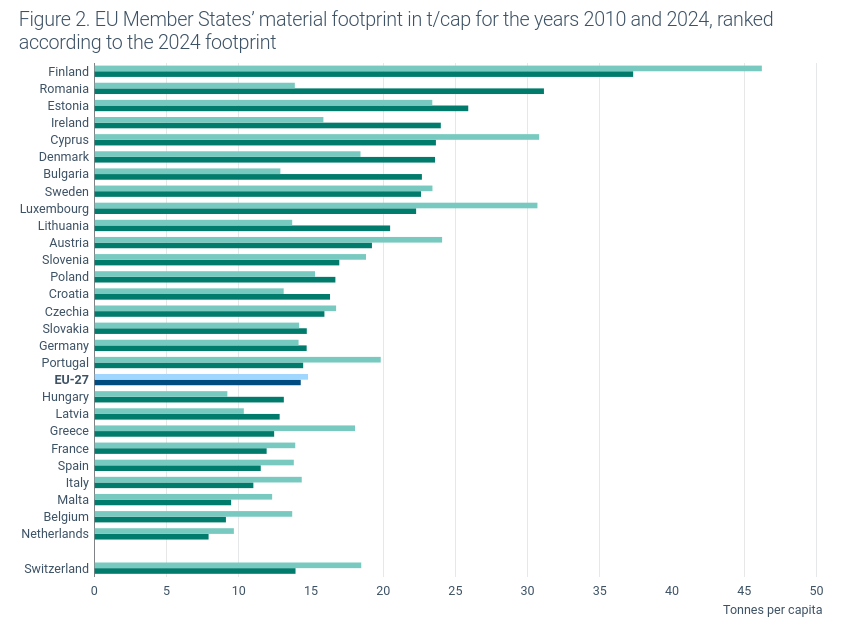
EEA indicator update: EU's material footprint stood at 14.3 tonnes/capita in 2025, down by 3.4% since 2010, including a recent dip of 8.4% from 2022 to 2023. The level of material footprint in the EU is considered unsustainable and above the global average. Based on historical trends and projections for future material use, it appears unlikely that the EU will significantly reduce its material footprint in the next decade. #sustainability #circulareconomyeea.europa.eu/en/analysis/indi
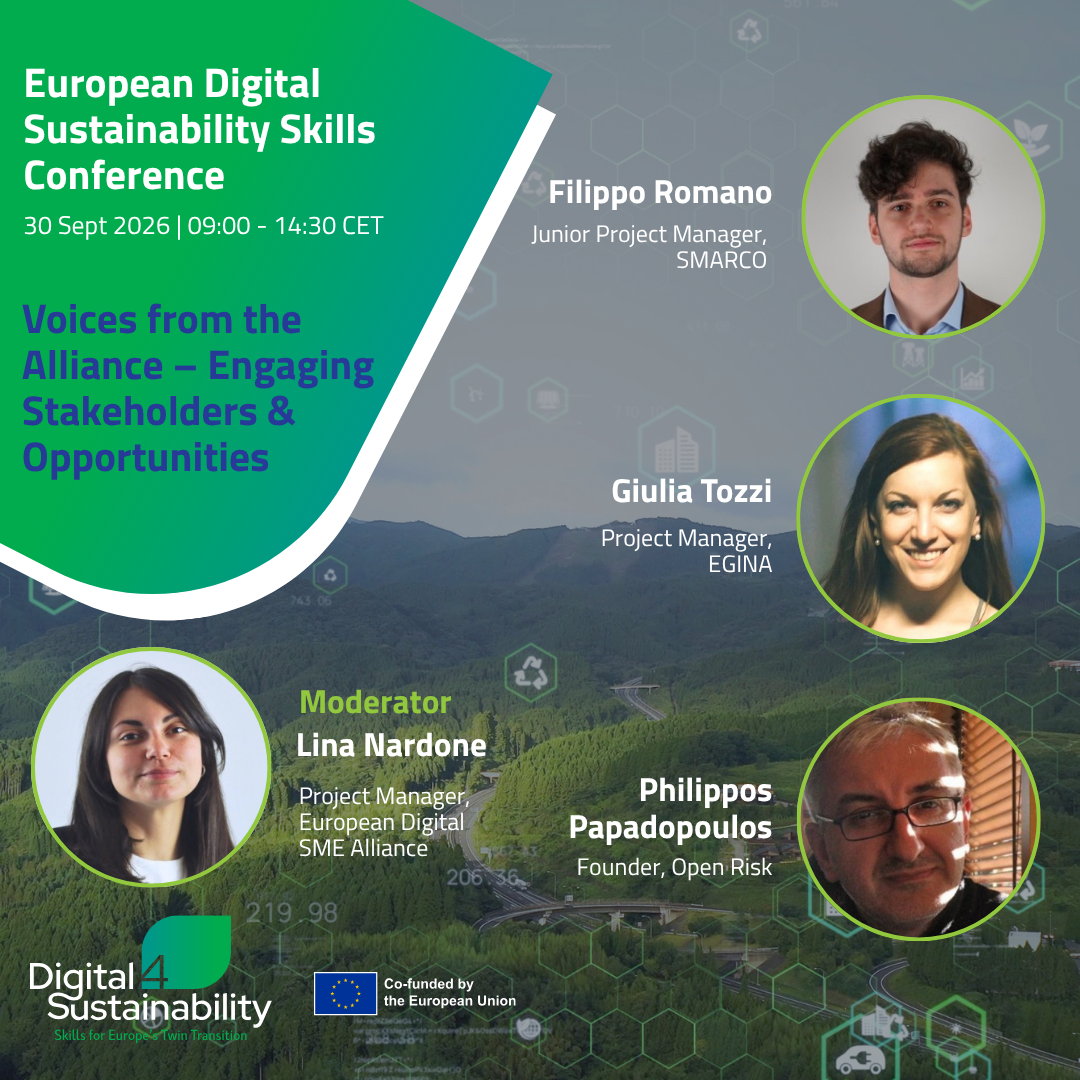
@noam Online participation is possible (registration is required)digital4sustainability.eu/euro
I will be joining and speaking at the European Digital Sustainability Skills Conference on 30 September 2026 in Brussels, organised by the # ...
(files.mastodon.social)
I will be joining and speaking at the European Digital Sustainability Skills Conference on 30 September 2026 in Brussels, organised by the #Digital4Sustainability project. We’ll discuss the Digital4Sustainability Alliance Community, how it can empower digital professionals towards a sustainable digital future, the opportunities and how to get involved.Looking forward to the exchange with experts and stakeholders from across Europe!#DigitalSkills #TwinTransition #Sustainability
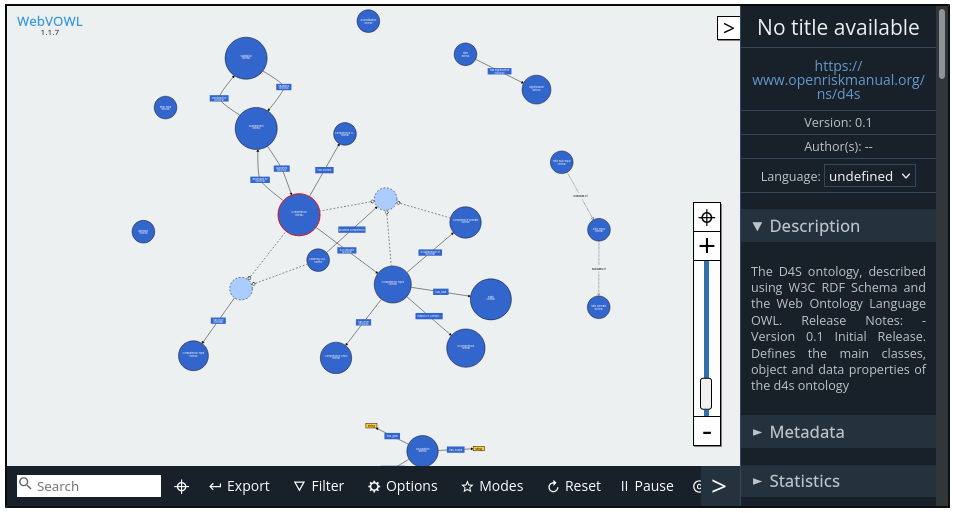
In a new post we start exploring how the # digital4sustainability competence framework can be expressed as a # semanticweb ontology
(files.mastodon.social)
In a new post we start exploring how the #digital4sustainability competence framework can be expressed as a #semanticweb ontology.openriskmanagement.com/towardsWe review various relevant taxonomies (#GreenComp e-CF, #ESCO) and start shaping an OWL based ontology to model the knowledge base. A first version of the ontology is online here openriskmanual.org/ns/d4s/inde#sustainability
Very happy to announce that # OpenRisk joined the # Digital4Sustainability Community, a European initiative dedicated to advancing digital and # ...
(files.mastodon.social)
Very happy to announce that #OpenRisk joined the #Digital4Sustainability Community, a European initiative dedicated to advancing digital and #sustainability skills required to accelerate the twin transition. The transparency and empowerment of #OpenSource and #OpenData are levers that can be used to great effect for social and economic transformation and sustainability requires both and urgently.More about D4S and the rationale for joining 👇openriskmanagement.com/joining
@yala Are you referring to specific flaws of Hardin's historical article and views or more broadly the concept of negative externalities?
@Gord1i what characterises this wretched era is that - from a pure digital technology perspective - collecting, processing, disseminating "ground truth" has never been easier.Yet somehow our trajectory is the exact opposite, factual reality increasingly buried under hard to identify "AI" creations and other algorithmic manipulation 🤦
So instead of waiting like lemmings to fall over a cliff before we change direction, we need to change directions, adjust our consensus smoothly and continuously, as new factual information arises. It sounds ambitious, if not completely utopic, but this is ultimately imho the real task for the #fediverse and genuine #socialnetworks more broadly.Its not a technology issue - all the hardware and software exists. Its primarily a sociopolitical choice to better ground discourse on reality.
This innate conservatism and resistance to change is of course well known. This is why we have expressions like "never let a crisis go to waste". The idea is that during stress periods collective behavior is more open to extraordinary measures and changes. But as a strategy for steering ourselves to a safer place this is a deeply problematic approach. Leaving aside that waiting for crises to change anything is absurdly risky, it is also very undemocratic: Bypassing consensus at gun point.
@mindaugas the most critical aspect imho (and it's not trivial neither philosophically nor practically) is to be able to establish "ground truth", less affected by opinion. People were excited about early Twitter because it seemed to provide a completely new digital platform to do so. Everything went wrong afterwards, but it did hint there is a new era of possibilities. The fediverse is still too immature but if people start building credible digital institutions on it it may evolve to be that.
@oopsallnaps yep, security updates are totally essential but I doubt those daily "refresh" activities (which I see increasingly being adopted by many open source projects) are security related.In fact these "too frequent" updates will induce people to disable or delay updates and will achieve the opposite goal (the cry wolf effect) 😟
@Npars01 their shorttermism and narrow, personal self-interest is breathtaking. As if they don't have families, children and grand children that must grow and live in a livable planet.This absurd, self-defeating behavior is the direct result of systematic selection and augmentation of psychopathic traits in order to win in economic / poower games.This is why sustainability requires to change the incentive structure of our economies and the accountability and transparency of our governance.
view more:
next ›