Photo: Liam Richards / The Canadian Press
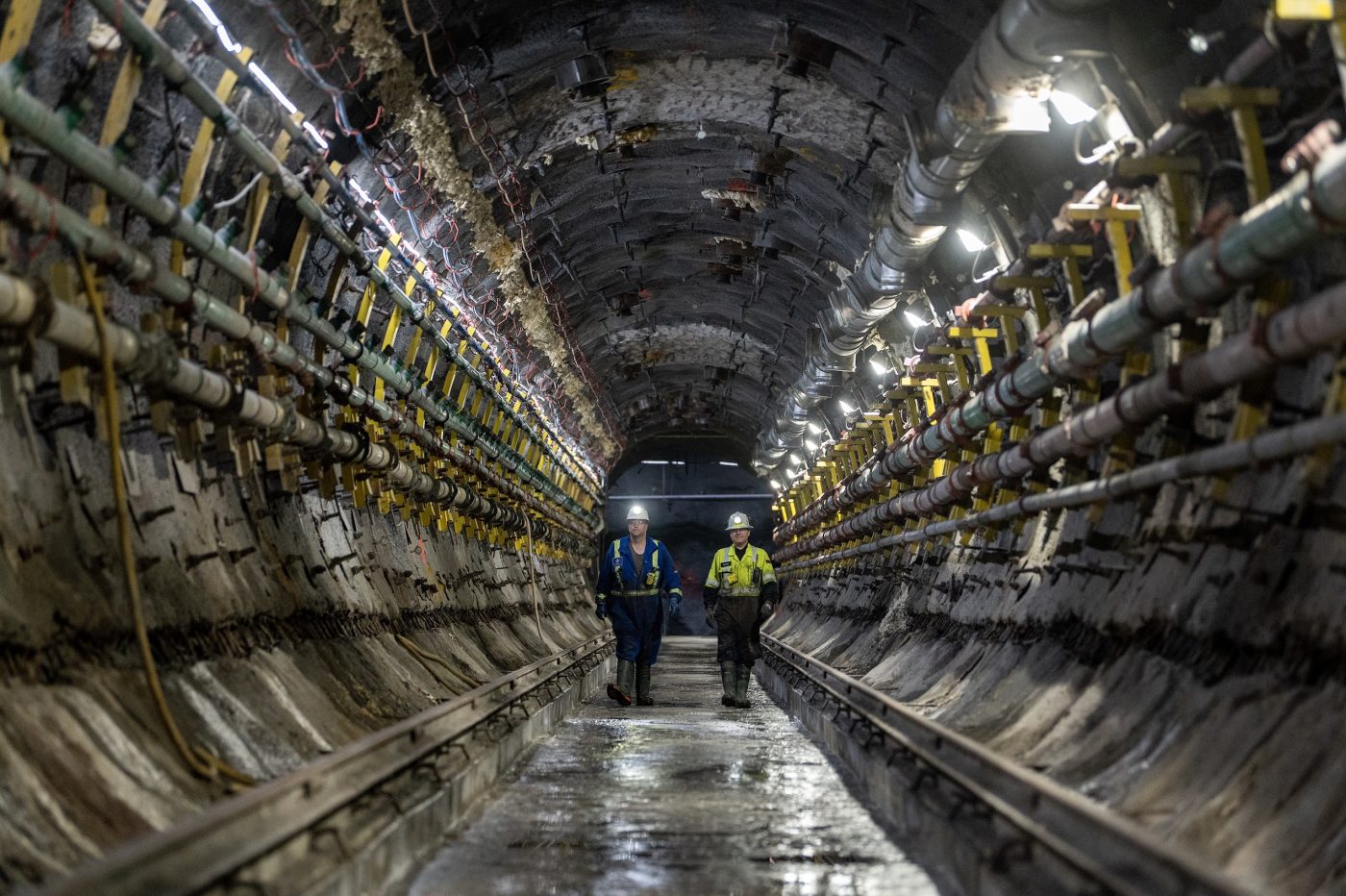
Saskatchewan has a lot of uranium. The government wants to move fast to mine more of it — and use it to power nuclear plants — but the plan isn’t without challenges, including ensuring an explosion of exploration doesn’t infringe on Indigenous Rights.
With international demand for nuclear power growing, Premier Scott Moe’s government is pushing for increased uranium exploration and production, while also leaning into nuclear power as the future lynchpin of the provincial electricity grid.
The moves would not only feed a hungry international market, it would also create new markets within Canada.
This year, the federal Canadian Nuclear Safety Commission approved two new mines in northern Saskatchewan. The province is studying the construction of small modular reactors in the southeast of the province and the potential of two large reactors in the north.
In short, things are ramping up.
But those moves aren’t without risk. Traditional nuclear plants take years to build and are notorious for going over their significant budgets and past their deadlines. Small modular reactors promise savings and shorter timelines, but are unproven at scale and are already struggling to meet that promise, including in Canada.
At the same time, some First Nations in the province are keeping a close eye on how the boom will impact their territories. The Clearwater River Dene First Nation in northwestern Saskatchewan, established a checkpoint earlier this year in response to increased uranium activity. Its press release stressed that it was not a roadblock, but a way for the nation to collect data on both industry and community land use, saying it is “open to responsible uranium exploration and mining development and will continue working constructively with governments, regulators and companies that respect Indigenous Rights, meaningful engagement and Nation-led monitoring processes.”
The uranium market, meanwhile, has seen its share of booms and busts over the years, often leaving behind sites that require care, maintenance and monitoring for decades. And that’s not to mention industry towns once teeming with workers that are hollowed out in busts, and Indigenous lands left off limits to traditional practices either from contamination or land disturbance.
“I think that the demand will only continue to increase,” Eduardo Buriticá, director of external affairs for Canadian Uranium Corp., said in an interview. “So I think the necessity for mines will only continue to increase.”
Let’s have a look at what’s happening, where the government wants to go and the costs and benefits of a nuclear future on the Prairies.
A sellers’ market, at least for now
Saskatchewan is already the second-largest global uranium producer after Kazakhstan, producing 24 per cent of global supplies in 2025, according to the province. Its deposits are the highest grade in the world, essentially meaning it takes less processing to get more usable uranium.
Kazakhstan has the world’s largest deposits, but is considerably less politically stable. Recently, the country introduced legislative changes that gave more control to state-owned Kazatomprom. Russia also produces uranium, but is under international sanctions.
Those factors, alongside global increases in nuclear power generation, led to record-breaking sales in 2024 and 2025. The government’s Saskatchewan Growth Plan aimed for sales of $2 billion by 2030, but the industry exceeded those goals, hawking $2.6 billion of uranium in 2024 and $3.2 billion in 2025.
So far, 2026 hasn’t been quite as rosy, with sales down 19 per cent through to the end of September. Royalties are also expected to be five per cent lower — down to $276 million — due to increased capital costs at mines.
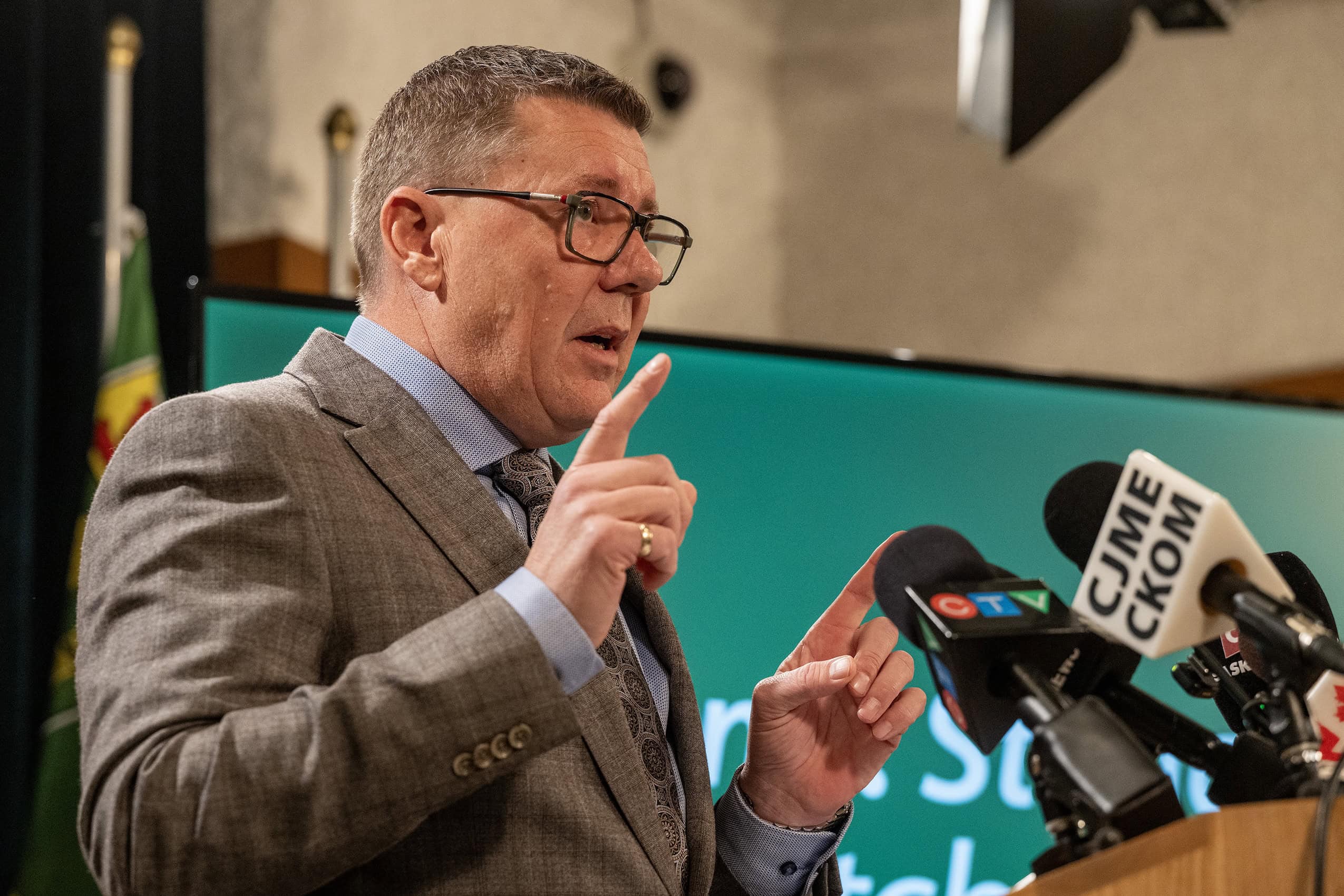
Saskatchewan Premier Scott Moe wants to boost uranium mining and nuclear energy generation. Photo: Liam Richards / The Canadian Press
Meanwhile, the World Nuclear Association notes reactor capacity is growing slowly and those that are online are running more efficiently.
Neither the Saskatchewan government or industry expect a significant slowdown anytime soon, however. The government forecasts prices will rise alongside demand and the industry appears to be galvanized by government enthusiasm.
Prime Minister Mark Carney helped secure a trade deal with India in March that includes a $2.6-billion agreement for Cameco, one of the world’s largest uranium producers and a dominant force in Saskatchewan, to supply the country with uranium.
Earlier this month, Cameco CEO Tim Gitzel told SaskNow the company is excited about its prospects.
“We’re going to walk shoulder-to-shoulder with the Saskatchewan government as they go on their nuclear journey,” he said. “But in the meantime, I think there’s about 80 reactors — new ones — under construction around the world, 440 that are operating now, and they need fuel, and that’s our market. So as that increases, as those new reactors come on, we will have the fuel available for them.”
‘Anybody can acquire a parcel of land’
Saskatchewan may be a global leader, but it doesn’t (yet) have many mines. The province’s record-breaking uranium sales came from just three sites — Cigar Lake, McClean Lake and McArthur River — and processed at two mills located at the latter two sites.
In August, NexGen Energy started construction on a new uranium mine, Rook 1 approximately 160 kilometres north of La Loche in northwest Saskatchewan, which the company says could be the largest in the world when complete. In June, Denison Mines started construction on another, Wheeler River approximately 480 kilometres north of La Ronge.
Those mines represent the end of a long process that starts with exploration, which is exploding in Saskatchewan, with spending expected to be up 23 per cent this year, to $483 million.
That means a sector dominated for years by two companies, Orano and Cameco, has a lot of new companies scouring for deposits. One is Canadian Uranium Corp., a company with extensive properties in Saskatchewan.
“Anybody can acquire a parcel of land,” Buriticá of Canadian Uranium Corp. said. “Acquiring a parcel of land with sound geology, with economics that makes sense for the time and within a profitable jurisdiction? That is when it becomes a little bit trickier.”
The race to find rich uranium deposits to meet the global demand hasn’t been without tension. The relationship between Indigenous communities and uranium companies can be complicated, resulting in both economic partnerships and long-lasting disputes.
Several First Nations have signed impact benefit agreements — deals which ensure nations receive economic benefits — with NexGen for the Rook 1 project, for example. The Peter Ballantyne Cree Nation, which consists of eight communities spread across northern Saskatchewan, went to court to fight Denison’s Wheeler River project in 2025. Earlier this year, it announced its support for the mine after striking an agreement with the company that will ensure economic benefits and establish an environmental monitoring program funded by the company.
The Clearwater River Dene Nation, which established a checkpoint on its territory this summer to keep track of those exploring on the land, has some concerns about the current boom. The nation did not respond to a request for comment from The Narwhal, but Chief Teddy Clark told La Ronge Now in August that while his nation sees benefit in uranium exploration and mining, it’s not a blank cheque.
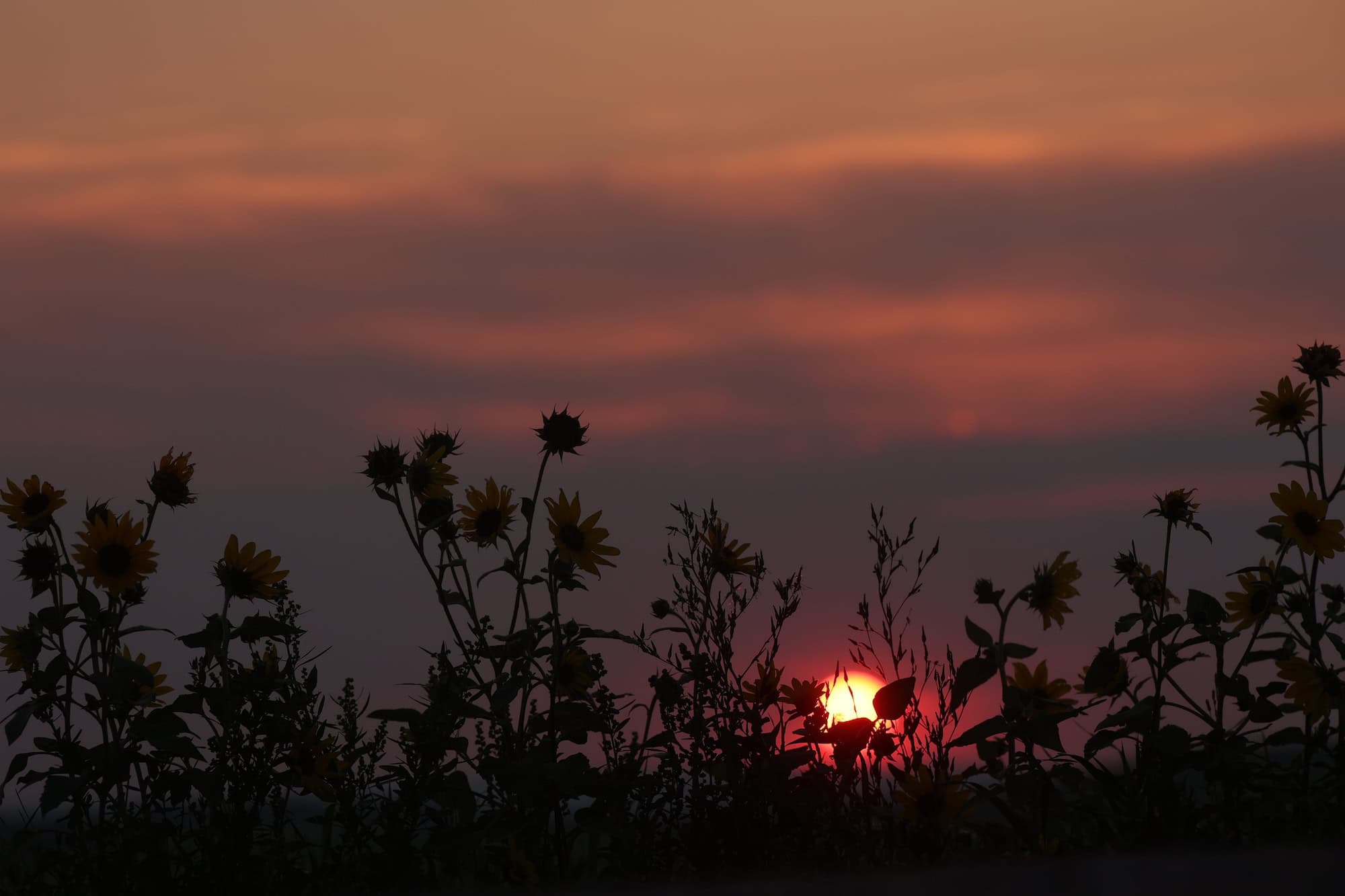
As mining companies scour Saskatchewan for new uranium deposits, First Nations are keeping a close eye on how the boom might impact their territories. Photo: Tim Smith / The Narwhal
“We are open to an extent,” he told the publication. “We cannot just say yes, go ahead to every, every, every company.”
The Narwhal also contacted the Federation of Sovereign Indigenous Nations, which represents 74 First Nations in the province, but did not receive a response.
Buriticá acknowledged the exploration boom can attract bad actors, which can make conversations more difficult with local communities. He said the only thing Canadian Uranium Corp. can control is its own actions.
“It honestly opens a different door for a more honest conversation as to how Canadian Uranium plans to not only sort of rectify that sentiment, but really have a meaningful relationship that’s long lasting,” he said.
All-in on nuclear power in Saskatchewan. Maybe.
Beyond exploration and new mines, the province is also aggressively pushing for nuclear power. A lot of nuclear power.
The Moe government previously announced its intentions to build two small modular reactors near Estevan, in the southwest of the province. Then, in September, it announced it was also exploring whether to build up to two full-size reactors in the north.
The total potential power output for the large reactors would be almost enough for the entire province. The potential for both reactors is pegged at 2,600 megawatts per day, nearly 70 per cent of the province’s record power demand, according to SaskPower’s latest annual report. Each small reactor could produce 300 megawatts.
But those reactors are a long way off, or may never be built at all.
The two small reactors have a target of the mid-2030s. But Ontario is currently building the same model of small modular reactor in Darlington, Ont., a project that is already over its $7.7-billion budget. It’s also the first such reactor built in the G7, making it a test case for Canada’s ability to fulfill small reactors’ promise of cheaper, quicker construction, which has yet to be proven at scale.
The small reactors will definitely require enriched uranium, which essentially involves separating the more radioactive isotopes and compacting the final product into pellets for fuel — and the large reactors likely will as well. This means Saskatchewan’s raw product will have to be shipped to a foreign processing plant and then imported back into Canada, which currently does not have facilities to enrich uranium.
At a press conference in September, Moe said his government is committed to nuclear technology.
“We must invest in a future source of power that is reliable in every season, available around the clock [and] is affordable for decades to come,” Moe said.
“But also most importantly, [it must be] affordable for the families that live here. And that source is none other than nuclear power.”
There’s no cost estimate yet for his reactor dreams, but the ambitions come at a time of federal largesse for big projects.
Ontario’s small modular reactor build will receive up to $2 billion from the Canada Growth Fund plus hundreds of millions in federal Indigenous loan guarantees. It has also been referred to the Major Projects Office for fast-tracking.
Given the federal push for increased grid connections between provinces, Saskatchewan’s nuclear ambitions could fit comfortably into a bigger power scheme, and attract federal dollars at the same time.Whether that ultimately dovetails the local priorities of residents and First Nations remains to be seen. For now, the majority of Saskatchewan residents appear to support nuclear power and some successful negotiations between First Nations and mining companies.
Given the long timeline it takes to make such massive projects happen, though, there’s plenty of time for any impacts on utility bills, provincial budgets, the landscape or local lifestyles to shift the mood.
The Narwhal’s reporters are telling environment stories you won’t read about anywhere else. Stay in the loop by signing up for our free weekly dose of independent journalism.
From The Narwhal | News on Climate Change, Environmental Issues in Canada via This RSS Feed.
no comments (yet)