A new report examining more than a dozen of the Earth’s life-sustaining systems paints a pretty bleak picture. Published last week in BioScience, the seventh annual State of the Climate report shows how global warming is producing significant shifts in the planet’s overall health and destabilizing the climate as a whole.

Key climate indicators are going in the wrong direction: greenhouse gas emissions, sea-level rise, glacier thickness, ice mass, and more. These shifts should no longer be taken as warning signs about some distant future, the authors write; instead, they amount to a “diagnosis” of how climate change is impacting the planet today — and where things will go if human behavior doesn’t change quickly or sufficiently enough.

Concentrations of carbon dioxide, methane, and nitrous oxide, stemming primarily from the burning of fossil fuels, hit record highs this year. Meanwhile, glacier thickness and Greenland ice mass are at record lows. Things are also not looking good for the Earth’s energy imbalance, a measure of how much energy the planet absorbs from the sun versus how much of that energy exits the atmosphere. This measure has been rising, a sign of how the planet, essentially, is heating up.

Of the 16 climate indicators examined by the authors, seven — or 44 percent — are at record extremes. The paper also discusses worrisome feedback loops, or how existing warming might be further accelerated by phenomena like wildfires or permafrost melting that release greenhouse gases into the atmosphere and are themselves made more likely by climate change.

Read Next
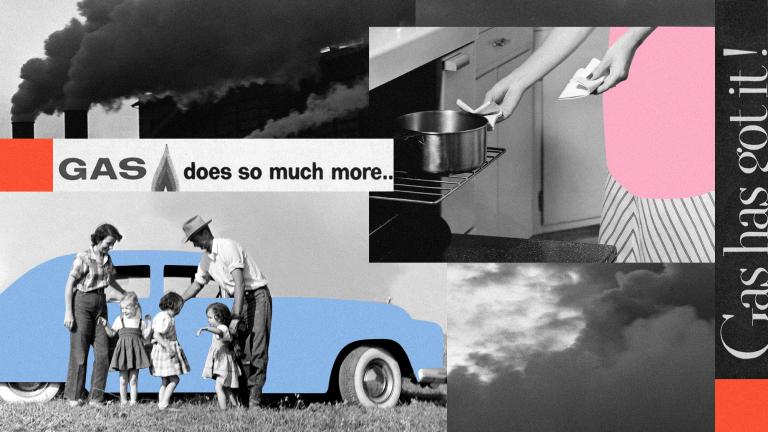
Collage of smokestacks, ad snippets, family beside a car, and woman pulling a pan out of the oven

The hidden history of how Big Oil invented the American Dream

Kate Yoder

But the authors also wanted to delve into how human activities like agriculture, transportation, and energy usage — in other words, things within our control — contribute to climate change. Changes within our food system, in particular, present some of the easiest opportunities for individuals to help reduce greenhouse gas emissions, especially methane.

That’s because some animals raised for human consumption — such as cattle, sheep, and goats — emit methane as part of their digestive process. These animals are called ruminants, and in 2024, there were more ruminant livestocks than at any other point since the 1960s, according to the study. Per capita meat production also hit a record high in 2024.

These two figures reflect “important pressures from the global food system,” said William Ripple, professor of ecology at Oregon State University and one of the report’s lead authors. They point to meat’s growing role in our global diet, as well as the environmental cost of that shift. Ripple says they looked at ruminant livestock populations because methane is such a powerful greenhouse gas; it only stays in the atmosphere for roughly 10 years, but it is 28 times better than carbon dioxide at trapping heat. There is a silver lining to that, though: For these same reasons, reducing methane emissions is an effective tool to curb warming in the short term.

One way of doing that, clearly, is producing and eating less meat. “I think this is an important opportunity for climate action that sometimes gets overlooked,” said Ripple. “Shifting toward more plant-based diets, especially in countries with high meat consumption, could make a meaningful difference.”

Raising cattle for human consumption is also one of the main drivers of deforestation, which contributes to warming by eliminating carbon sinks. Timothy Searchinger, a senior research scholar at Princeton University who studies the relationship between agriculture and the climate, noted that “we can’t solve climate change unless we stop” such clearing of carbon-rich habitats, “and we probably cannot stop that unless the world’s wealthy eat less meat, and particularly less beef.” (Searchinger was not involved in the report.)

He added, “Just eating 1.5 hamburgers a week on average instead of 3 is one of the basic ways Americans can help address climate change.”

Ripple and his co-authors also point out that such high levels of meat production create a wildly inefficient agricultural system, since cattle need so much land to graze and farmers are compelled to dedicate land to grow crops like corn and soy that ultimately go to feed cattle. That land could be used instead to grow carbon-sinking ecosystems or food that feeds people directly.

“At a time when climate change is threatening food security, we can hardly afford a food system that uses so much of its productive capacity inefficiently,” said Ripple.

The bottom line, he said, is that there is no way to address global warming without also making changes to what we eat and how it’s produced. “Our growing demand for meat is putting enormous pressure on the climate, land, and water at a time when all three are already under stress,” he said.

This story was originally published by Grist with the headline The planet’s vital signs are getting worse. One of the easiest fixes is your diet. on Oct 23, 2026.


From Grist via This RSS Feed.

top 7 comments

sorted by: hot top controversial new old
[–] 19 points 2 weeks ago

The easiest change to your diet that will make the biggest impact is eating the rich.

🎯 1
  • source
  • [–] 11 points 2 weeks ago

    And until governments start heavily taxing meat, this is nothing but preaching to the choir

  • source
  • [–] 8 points 2 weeks ago (4 children)

    Don’t call things a “fix” if they don’t fix things.

  • source
  • hideshow 4 child comments
  • [+] -1 points 2 weeks ago (3 children)
  • [–] 3 points 2 weeks ago

    Private jets.

  • source
  • 22 comments in c/fediverse_vs_disinfo@lemmy.dbzer0.com view that post
    [–] 38 points 2 weeks ago (3 children)

    On one hand, yes, eat less meat, compensate by getting better quality and making it a treat.

    On the other, let's maybe do something about the pollution by the 1%

  • source
  • hideshow 3 child comments
  • [–] 13 points 2 weeks ago (11 children)

    I'm down to half a kilo of chicken kebab per week and up to a bit over 1 kilo of red lentils a week.
    It's not hard, and lentils and beans are more filling, not to mention 4 times cheaper than meat.
    But even just switching beef out with chicken and pork is 3x better CO₂ wise, that's how bad cow farts are.

  • source
  • hideshow 11 child comments
  • [–] 5 points 2 weeks ago (10 children)

    Hang on, if the difference is coming from cow farts, that CO₂ would have been released back to the atmosphere eventually anyways when whatever the cow would have eaten decayed.

    As I understand it, the main process that reduces atmospheric CO₂ (other than the ocean, which is more of a reserve than a sink) is when it reacts with silicon/silica in the rocks, which is more or less a constant process, though increased frequency of things like landslides can increase it. Most of the CO₂ that gets used by plant life is just temporary until animal or microbial life converts it back to CO₂ for energy.

    At least that's how I understand it. Though if you mean greenhouse gases in general, maybe it's extra methane being produced by the cow's digestive process rather than going straight to CO₂?

  • source
  • parent
  • hideshow 10 child comments
  • [–] 5 points 2 weeks ago* (last edited 2 weeks ago) (1 child)

    While methane is a potent greenhouse gas; the main issue is CO²-equivalent per produced calorie. Growing edible plant is orders of magnitude more efficient than growing them + converting it to meat, before consumption.

    There is just a lot of lost energy in the meat production chain. Therefore we have to produce so much more plants to feed the meat. And any production has a greenhouse cost to it.

    Countries should ban import of meat and stop any subsidies for their own meat production. Then prices would influence customer choices appropriately; with dramatic drops in CO²-equivalent emissions.

    this requires political will and less corruption.

  • source
  • parent
  • hideshow 1 child comment
  • [–] 1 point 2 weeks ago

    Yeah, I did some more reading about it and if I'm understanding correctly, the main issues are from the machines involved in the process (eg, fertilizer production chain, farm machines used to plant, grow, harvest, and process the feed crops, transport of the feed and the animals) and the carbon being converted to and released as methane from the cows themselves.

    Chickens and pigs aren't as bad because they convert their calories to meat more efficiently and chickens don't release as much methane from their digestive process (not sure about pigs, didn't dig that far).

    Land use is another issue, though that's more for biodiversity than climate change. Though all the land that used to be forests did contain some of the carbon, even if it was just temporary, new trees would replace the old in forests but that doesn't happen in pastures.

  • source
  • parent
  • [–] 2 points 2 weeks ago (5 children)

    The difference lies in the amount of feed required for one(1) kilogram of meat and that ruminant livestock emits quite a bit more methane than others.

  • source
  • parent
  • hideshow 5 child comments
  • [–] 2 points 2 weeks ago (4 children)

    i went looking for the paper that this is based on. i can't find it.

  • source
  • parent
  • hideshow 4 child comments
  • [–] 1 point 2 weeks ago (3 children)

    It is from videnskab.dk if you scroll to the bottom there’s a list of their sources.

  • source
  • parent
  • hideshow 3 child comments
  • [–] 2 points 2 weeks ago (1 child)

    The article I read about the difference between pork/chicken (which I recall was roughly similar) and beef was in a Danish article a good while back, and as I recall it it was including transport of the animals but also the transport of the food of which a lot of soy is imported from Brazil IIRC. And it is possible they just talked about greenhouse gasses in general.

  • source
  • parent
  • hideshow 1 child comment
  • [–] 19 points 2 weeks ago (2 children)

    The worst part about the "personal responsibility" astroturfing is it's not even technically disinfo, this would actually help if the consumer was the customer. all that land will be cleared and all those cows turned into hamburger if you eat it or not because feeding people isn't the goal.

    They will get your tax money in subsidies and burn fossil fuels to move the food anyway; so it might as well be as calorie dense as possible.

  • source
  • hideshow 2 child comments
  • [–] 8 points 2 weeks ago

    The camel's back has to break at some point though right? The subsidies can't cover all the cost of production and shipping, and as stores are pulling in less and less of a return on their purchases of animal products, they'll buy less from the subsidised farms. Subsidised farms eventually reach a point where even the subsidies aren't making ends meet, so they have to pull production down.

  • source
  • parent
  • [–] 4 points 2 weeks ago

    Economics get in the way, too. As demand for beef for ethical or environmental reasons go down, that just reduces the optimal price for beef, which means those who would have bought more but didn't because of the price can now buy more of it.

    Not saying this is a reason to not reduce your beef consumption, just that the system is so complex and the results are delayed (farmers need to guess how many calves are worth raising for beef/dairy vs just turning to veal long before any of that meat will make it to market, and those calves are getting made either way because that's how the dairy industry works: milk requires pregnancy).

  • source
  • parent
  • [–] 4 points 2 weeks ago (2 children)

    Its that fucking easy and people still won't do it lol. Human trash.

    I enjoy meat sometimes and a burger maybe once or twice a week. Otherwise rice and beans yo. But Holy shit the people I talk to think to be a MAN you are required to eat meat on every single meal. I hate people.

  • source
  • hideshow 2 child comments
  • [–] 3 points 2 weeks ago

    Give literally just roast vegetables a try, if you haven't! One of the easiest things you can cook, and so absolutely packed with flavour its somewhat insane.

    roast vegetables process for anyone who might be reading this who might not knowTake a random assortment of medium to large vegetables, get them down to roughly similar sizes (about the size of a golf ball if not smaller), a light drizzle of olive oil and a generous sprinkling of salt, and bang those bad boys in the oven at 170-180°c for about 30-40 minutes. Set a timer and forget about em, go watch TV or read a book or whatever. Pull em out and eat as much as you want, its practically impossible to eat an amount that would push you beyond your recommended calorie intake and it is packed full of nutrients. Take care with fibrous vegetables if your diet doesnt typically involve much fibre - pace yourself or your stomach will revolt :P

    Rice and beans are great though, and so nice and filling. I really like mujadara, lentils and rice w onions and spices - yum!

  • source
  • parent