Digitizing VHS (piefed.cdn.blahaj.zone)
 

I have noticed on the handheld cameras and on this VCR, which I use for digitization, that they are quite smart in the way that (even) if I fast forward the tape, the counter stops as soon as there is no video/data, which is really useful when setting up bash scripts for the recording. However, some tapes display video and audio when monitored - in my case with mpv on Linux - while the VCR's counter is still. The video and audio signals are perceivably degraded with a lot of noise and distortion.

Does this mean that VHS tapes lose magnetic charge over time? Does it mean that all ferromagnetic media lose charge over time?

I hope my ungrateful colleague (see this post) will still be happy for the little I was able to recover without professional equipment. ๐Ÿฅฒ

a stack of analog media equipment, from the top and downwards, a vinyl record player, a VCR and DVD player combo and a cassette deck

all 9 comments

sorted by: hot top controversial new old
[โ€“] 6 points 2 weeks ago (4 children)

Yes they lose charge but a bigger problem is the glue that holds the iron oxide weakens and flakes off over time because of the bending and stretching of the tape being unwound, wrapped over the heads, and the heads scraping the tape.

  • source
  • hideshow 4 child comments
  • [โ€“] [S] 1 point 2 weeks ago (1 child)

    Holy crap. Now I'm terrified to eject the tape in 2 hours 30 minutes ๐Ÿ˜ฑ if that has indeed happened to this one, I hope the flakes are removable buy compressed air and/or a vacuum.

  • source
  • parent
  • hideshow 1 child comment
  • [โ€“] 2 points 2 weeks ago* (last edited 2 weeks ago) (3 children)

    Does this mean that VHS tapes lose magnetic charge over time?

    I don't know, but I have seen old VHS that looked like shit on a screen. The only way to play them properly was to use a Super VHS player. The player itself was some kind of magical enhancer.

    You DO have a S-VHS player, right? Right?

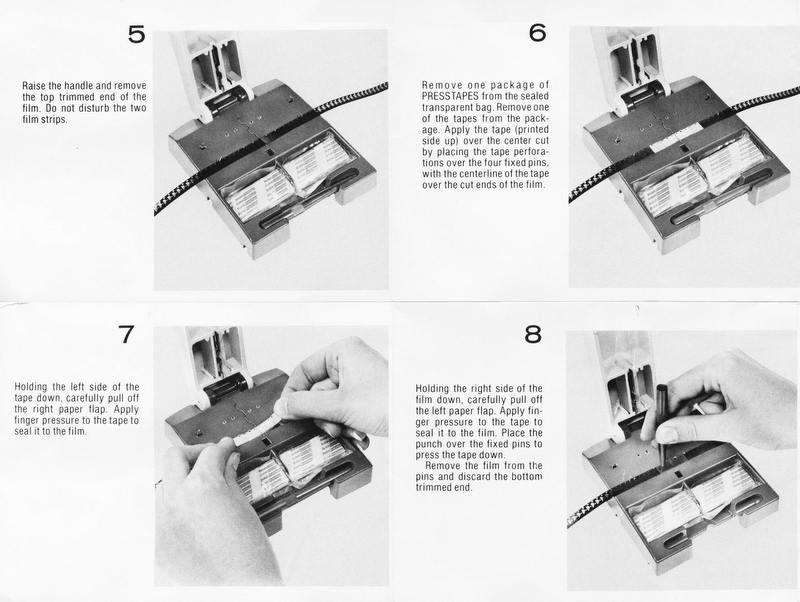
    Also I have never seen Hi8 before but it reminded me of the Super 8 which was great for home movies. Since you could see all the frames, you could cut it physically and glue the pieces of tape to do whatever you wanted. Something like that, it was fun: http://www.mondofoto.com/manuals/kodakpresstapesplicer/kodak_presstape-universal-splicer_03.jpg

  • source
  • hideshow 3 child comments
  • [โ€“] [S] 2 points 2 weeks ago (2 children)

    Thanks! Now I have to get myself one of those S-VHS players! ๐Ÿคฃ

    This makes me believe, that some of the material that I'm digitizing as we speak was originally recorded on some variation of 8-mm tape, because the label says "1962"!

  • source
  • parent
  • hideshow 2 child comments
  • [โ€“] 3 points 2 weeks ago (1 child)

    I don't know how S-VHS worked but it was like writing the word Titanic on a piece of paper, and getting back a 4K version of the movie instead.

    But don't trust me on that, there is a more realistic explanation for how it worked.

  • source
  • parent
  • hideshow 1 child comment