Last month, Washington insisted that training models on other people’s work without permission is so obviously fair that licensing requirements would be ruinous to national innovation. It also insisted that training models on other people’s work without permission is an act of industrial predation posing a grave threat to national security.

Both propositions cannot hold simultaneously. Either the outputs of these systems are protectable under the law, in which case the writers, musicians, artists, and programmers whose work American models were built on can hold a claim that the Justice Department has denied. Or they are not, in which case the six Chinese laboratories accused of “malicious and targeted” distillation attacks have not done anything that Elon Musk has not freely admitted to under oath, without consequence.

other discussions
 

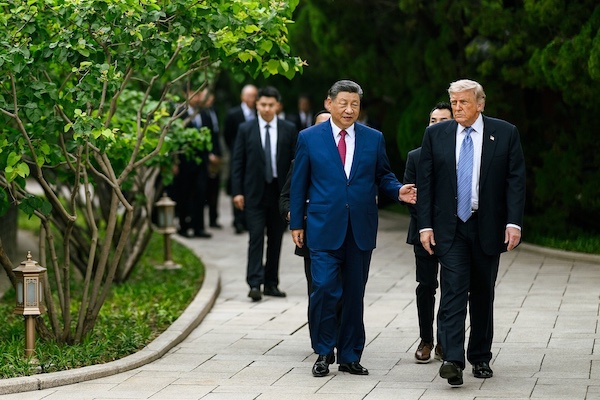
(The White House, https://tinyurl.com/474tumcr; Public Domain, https://creativecommons.org/public-domain/)

When U.S. labs train models on the world’s writing, Washington calls it fair use. When Chinese labs train on U.S. outputs, it’s a “malicious attack.” It can’t have it both ways.

The post The AI model distillation paradox appeared first on MR Online.


From MR Online via This RSS Feed.