Patrice Lumumba (1925 - 1961)
Thu Jul 02, 1925
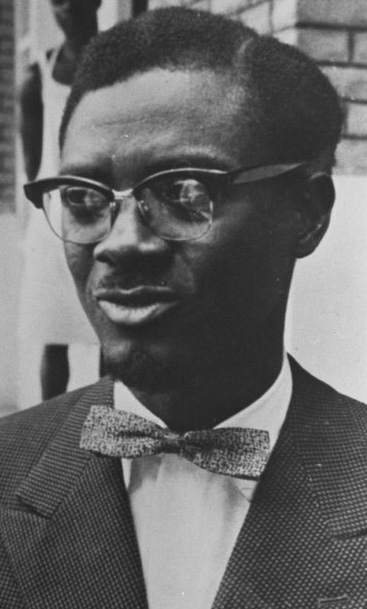
Patrice Lumumba, born on this day in 1925, was a Congolese anti-colonial revolutionary who served as the first Prime Minister of the independent Democratic Republic of the Congo from June until shortly before his assassination in 1961.
Lumumba played a significant role in the transformation of the Congo from a colony of Belgium into an independent republic. Ideologically an African nationalist and pan-Africanist, he led the Congolese National Movement (MNC) party from 1958 until his assassination on January 17th, 1961 in a coup by Joseph-Désiré Mobutu, backed by Belgian colonizers.
Lumumba did not express a pro-capitalist or pro-communist ideology, attempting to remain neutral in Cold War politics. He sought assistance in stabilizing the new Congolese Republic from both the United States and the Soviet Union, accepting military aid from the latter after the U.S. refused to help him.
On Lumumba's legacy, his friend and colleague Thomas Kanza wrote "he lived as a free man, and an independent thinker. Everything he wrote, said and did was the product of someone who knew his vocation to be that of a liberator, and he represents for the Congo what Castro does for Cuba, Nasser for Egypt, Nkrumah for Ghana, Mao Tse-tung for China, and Lenin for Russia."
- Date: 1925-07-02
- Learn More: en.wikipedia.org, www.sahistory.org.za.
- Tags: #Birthdays, #Colonialism.
- Source: www.apeoplescalendar.org