Whatever makes you sleep at night bud
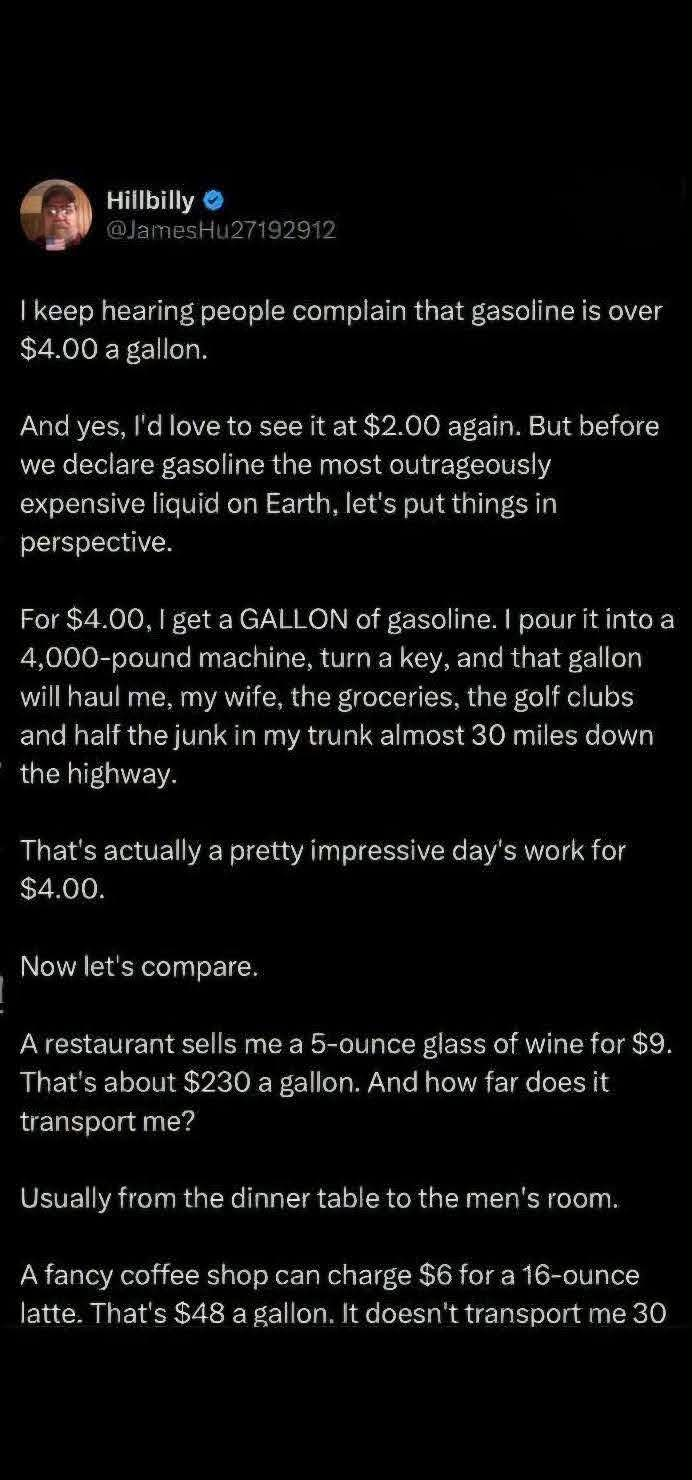
Whatever makes you sleep at night bud
Interestingly, it depends on how you measure efficiency.
Per unit of sunlight that hits a patch of land, solar panels capture about 20% of the sunlight that hits. Charging a vehicle battery and powering the motor might result in a 25% loss, so that we're basically converting about 15% of the sunlight into movement.
In contrast, plants convert only about 1-2% of sunlight energy through photosynthesis. Feeding that plant biomass to be converted into stored energy in an animal, and then that animal moving its muscles to propel a vehicle, we might be talking a huge loss there, too, so that we're looking at less than 1% of the sunlight being turned into motion.
If you want to most efficiently convert sunlight into movement, bypassing any and all biological processes is probably the most efficient thing to do.