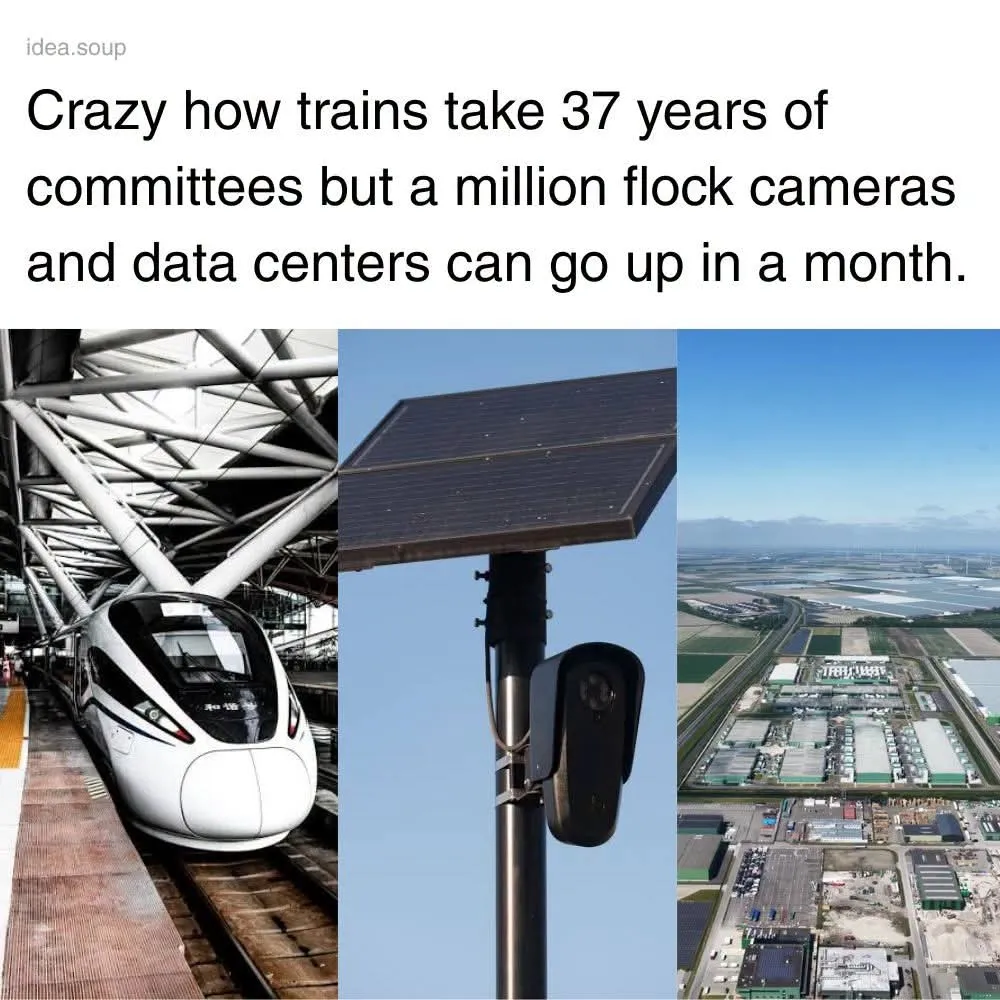
Trains take up a lot of space, and if you want them to be useful, they need to be where the population density is high enough. That means high cost for land, often buying up big amounts of smaller lots where you have to work something out with a multitude of land owners who might not want to part with their - often prime location, because it's in the city - land. A single land owner not selling their land can grind a project like this to a halt, at least if there is hesitancy using eminent domain, which is a crowbar approach and leads to resistance to your project.
There's also interference risks. My city was building out their train network, and had to do extensive testing to make sure that the trains didn't disturb the university's experiments. An entire planned hospital was scrapped because it was too close to the tracks, and the trains would interfere with the hospital equipment.
A data centre or cameras wouldn't have the same risk, so wouldn't need to go through the same level of approval/testing.