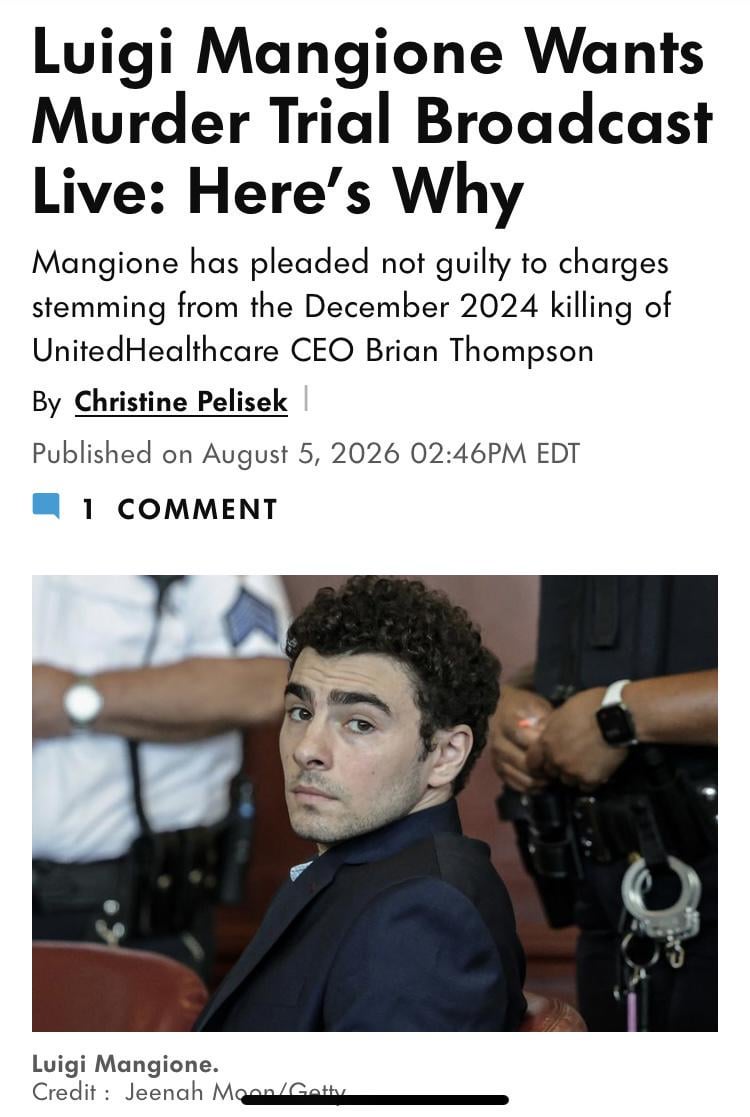
Luigi Mangione wants his trial televised and open access to as much media and public as possible. Prosecution does not.
(discuss.online)
In practice that's now how hung juries work, even for high-profile cases. No DA wants to have the shame of repeatedly trying the same trial, even if double jeopardy doesn't apply. At some point it looks to the voters that you're just wasting taxpayer resources.
Instead what tends to happen is that the charges get less severe with each trial, and that the defendant gets a better plea offer each time. For example, maybe Mangione gets a hung jury for the capital murder trial. In the next trial they charge him in a way the death penalty isn't on the table. If first degree murder fails, the next trial they charge him with second degree murder. It becomes easier to get a conviction with each trial, as jurors are less likely to practice jury nullification as the stakes of the trial decrease.
Eventually the defendant just accepts a plea deal. Every trial is still a roll of the dice for the defendant. If he kept getting hung juries, maybe eventually Mangione accepts a plea deal for manslaughter.
No one wants to do infinite trials. The prosecutor doesn't want to seem weak or a waster of taxpayer resources. The defendant doesn't want to keep rolling the dice with their life. With each passing trial, the charges decrease. With each trial, conviction becomes easier. Eventually the defendant just accepts a plea deal to eliminate the possibility of spending the rest of their life in prison.