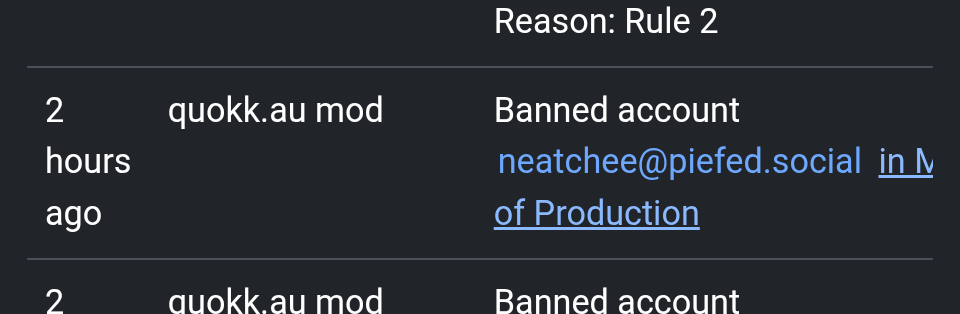
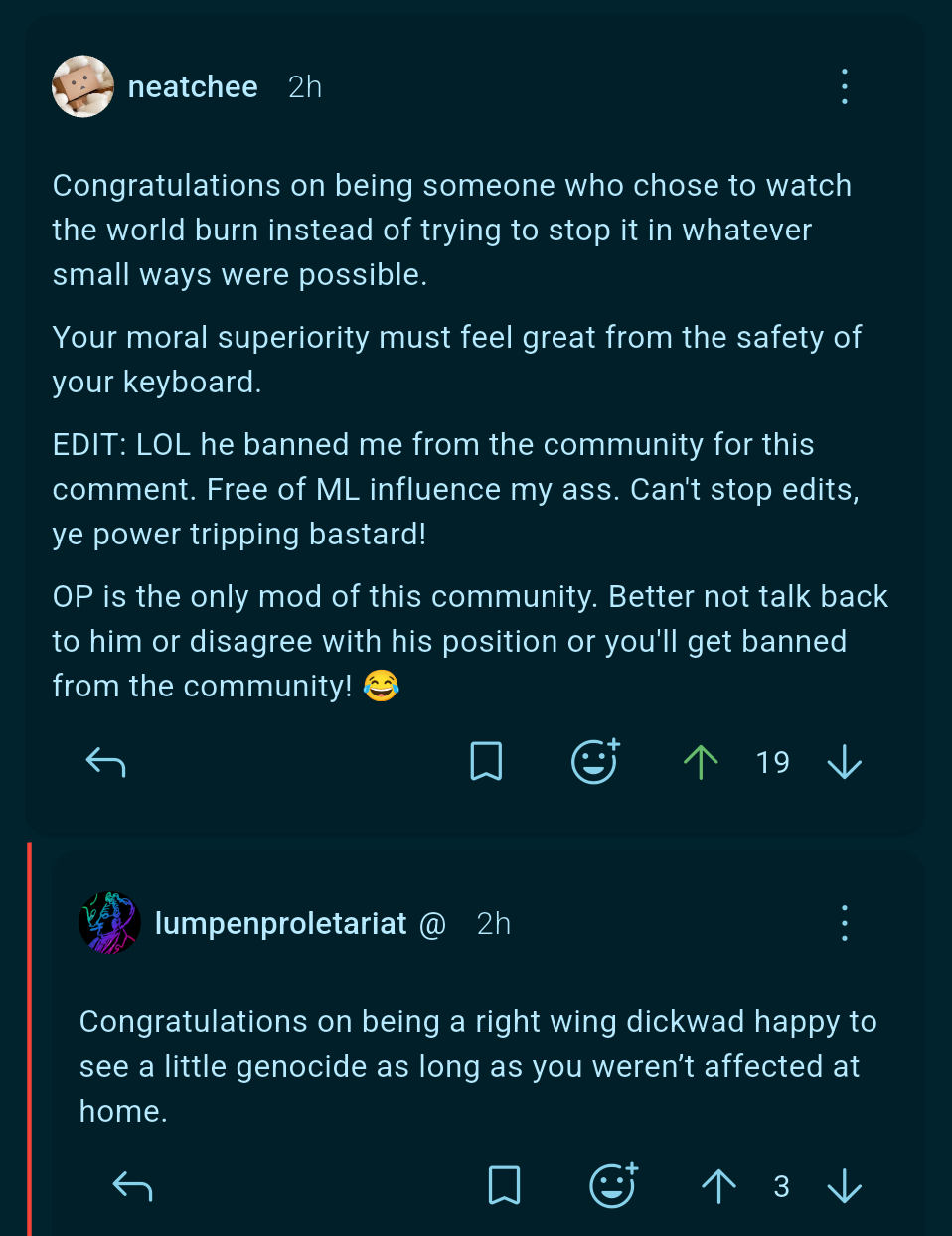
This is a community in the spirit of "Am I The Asshole" where people can post their own bans from lemmy or reddit or whatever and get some feedback from others whether the ban was justified or not.
Sometimes one just wants to be able to challenge the arguments some mod made and this could be the place for that.
Posting Guidelines
All posts should follow this basic structure:
- Which mods/admins were being Power Tripping Bastards?
- What sanction did they impose (e.g. community ban, instance ban, removed comment)?
- Provide a screenshot of the relevant modlog entry (don’t de-obfuscate mod names).
- Provide a screenshot and explanation of the cause of the sanction (e.g. the post/comment that was removed, or got you banned).
- Explain why you think its unfair and how you would like the situation to be remedied.
Rules
- Post only about bans or other sanctions that you have received from a mod or admin.
- Don’t use private communications to prove your point. We can’t verify them and they can be faked easily.
- Don’t deobfuscate mod names from the modlog with admin powers.
- Don’t harass mods or brigade comms. Don’t word your posts in a way that would trigger such harassment and brigades.
- Do not downvote posts if you think they deserved it. Use the comment votes (see below) for that.
- You can post about power trippin’ in any social media, not just lemmy. Feel free to post about reddit or a forum etc.
- If you are the accused PTB, while you are welcome to respond, please do so within the relevant post.
- Keep the comments in YPTB posts about the moderation action itself, not about the general topic in which the moderation took place.
Expect to receive feedback about your posts, they might even be negative.
Make sure you follow this instance's code of conduct. In other words we won't allow bellyaching about being sanctioned for hate speech or bigotry.
YPTB matrix channel: For real-time discussions about bastards or to appeal mod actions in YPTB itself.
Some acronyms you might see.
- PTB - Power-Tripping Bastard: The commenter agrees with you this was a PTB mod.
- YDI - You Deserved It: The commenter thinks you deserved that mod action.
- YDM new - You Deserved More: The commenter thinks you got off too lightly.
- BPR - Bait-Provoked Reaction: That mod probably overreacted in charged situation, or due to being baited.
- CLM - Clueless Mod: The mod probably just doesn't understand how their software works.
Relevant comms