you are viewing a single comment's thread
view the rest of the comments
[–] 58 points 1 year ago (18 children)

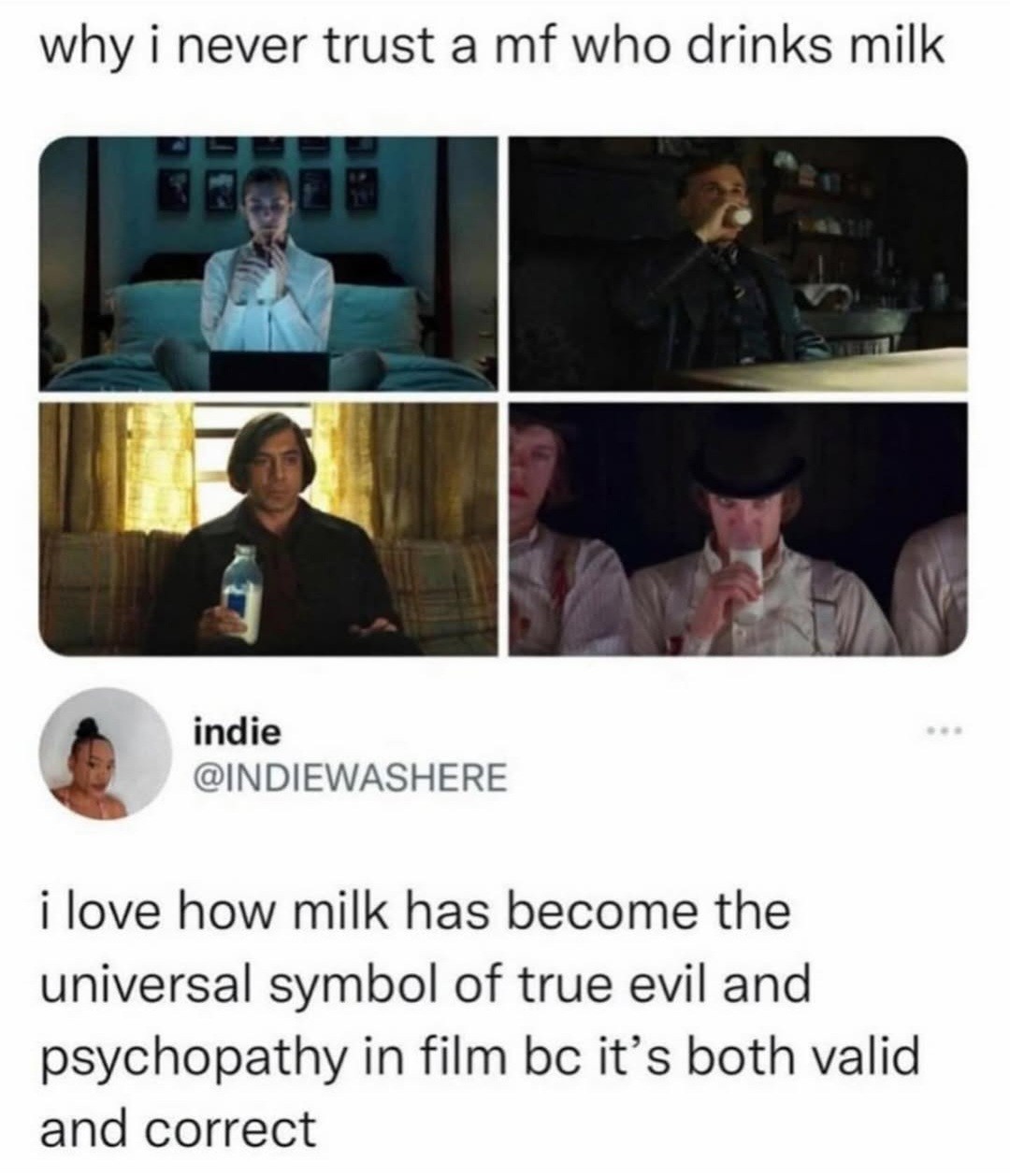
I've always thought the trope was based on the idea of stunted development. Kids are heavily encouraged to drink milk, so films making a point of adults drinking it are indicating that there's some part of growing up that they've missed.

  • source
  • hideshow 18 child comments
  • [–] 6 points 1 year ago (3 children)

    You sound like a high school English teacher.

  • source
  • parent
  • hideshow 3 child comments
  • [–] 23 points 1 year ago (2 children)

    You sound like a high school student

  • source
  • parent
  • hideshow 2 child comments
  • [–] -2 points 1 year ago (1 child)

    It wasn't meant as any sort of insult, more of the trope of overanalizing innocuous things.

  • source
  • parent
  • hideshow 1 child comment
  • [–] 4 points 1 year ago

    I was considering just not replying to this but I decided that this mindset makes me too sad.

    If an artist decides to include something in their work, it is likely going to be relevant in some way.

    To use the stupid meme example of "the curtains were fucking blue" your teacher wasn't telling you that blue curtains = sadness, they were telling you to think critically about what the writer chose to include in the text.

    "The curtains were fucking blue" can be a valid interpretation, but the issue is when people stop their thinking at that surface level and ridicule any deeper analysis of a work.

  • source
  • parent
  • [–] 5 points 1 year ago (11 children)

    It's also not made for adults, it's literally baby food for mamals.
    While some parts of the world have been drinking it out of necessity to survive (in colder climate) most of the world haven't developed a lactose tolerancy.
    Adult milk drinkers are indeed freaks.

  • source
  • parent
  • hideshow 11 child comments
  • [–] 6 points 1 year ago (1 child)

    Yet several cultures across the world developed means to drink milk and eat cheese. The mongols' fermentation process allows them to eat and drink despite being lactose intolerant, not to mention they make kumis from mare milk

  • source
  • parent
  • hideshow 1 child comment
  • [–] 9 points 1 year ago (2 children)

    Now I'm gonna drink even MORE milk today. Mwahahaaa! MWAHAHAHAHA!

  • source
  • parent
  • hideshow 2 child comments
  • [–] 19 points 1 year ago (1 child)

    I'll stick to milking my almonds, even if it's a tedious job bcs their tits are very small.

  • source
  • parent
  • hideshow 1 child comment
  • [–] 2 points 1 year ago

    It's actually really easy, you put them in a blender with water and then squeeze them in a cheesecloth so the proteins come out. And you can make crackers with the dried leftovers.

    But oat milk > almond milk and for that you do unfortunately have to milk thousands of tiny little oat titties.

  • source
  • parent
  • [–] 7 points 1 year ago (5 children)

    Well it's not like plants are made for us to eat but we still eat them

  • source
  • parent
  • hideshow 5 child comments
  • [–] 4 points 1 year ago* (2 children)

    Actually lots of the plant parts we eat did evolve being eaten as part of the survival plan. Fruits disperse seeds and keep us less interested in eating more vital parts of the plant.

  • source
  • parent
  • hideshow 2 child comments
  • [–] 5 points 1 year ago (1 child)

    Not particularly by us, the same as milk didn't evolve to be particularly drunk by humans

  • source
  • parent
  • hideshow 1 child comment
  • [–] -1 points 1 year ago*

    "Not particularly by us" OK then not particularly by anything by that logic, as we're very much included in the wide range of animals who's dietary needs have conditioned the evolution of fruit-based seed dispersal. Fact of the matter is we've been eating and pooping out seeds for the entire existence of our species and likely the entire existence of our mammalian lineage. We did evolve to eat fruit and they did evolve to be eaten by us.

    We evolved to benefit from our own milk, too. Though only for the first year or so of life.

  • source
  • parent