Apparently a page from an internal IBM training manual. Some further attempts at source it
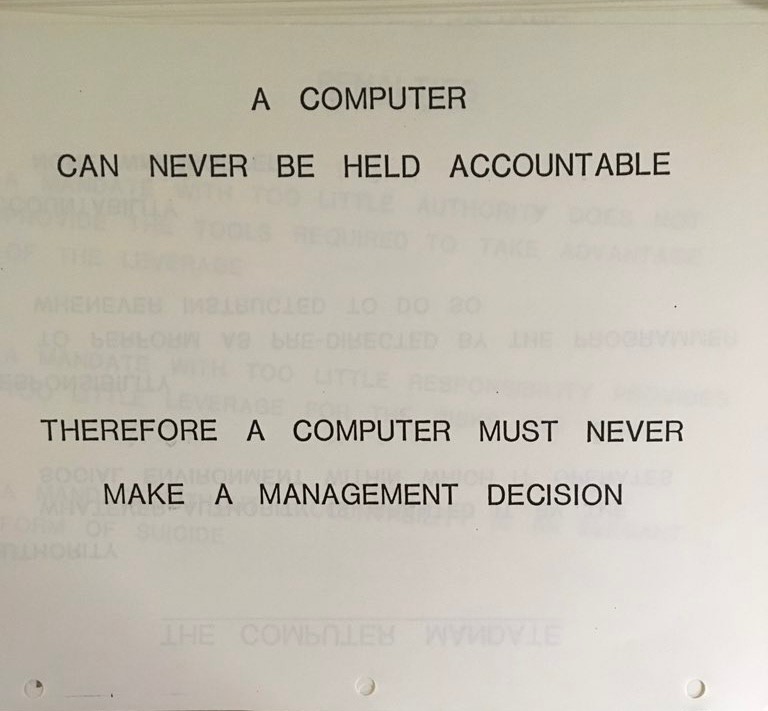
Ancient IBM wisdom (from 1979) that the bosses just straight up promptly forgot
you are viewing a single comment's thread
view the rest of the comments
[–] 2 points 1 year ago (2 children)

Imagine however, that a machine objectively makes the better decisions than any person.

You can't know if a decision is good or bad without a person to evaluate it. The situation you're describing isn't possible.

the people who deploy a machine [...] should be accountable for those actions.

How is this meaningfully different from just having them make the decisions in the first place? Are they too stupid?

  • source
  • parent
  • hideshow 2 child comments
  • [–] 1 point 1 year ago* (last edited 1 year ago) (1 child)

    You can evaluate effectiveness by company profits. One program might manage a business well enough to steadily increase profit, another may make a sharp profit before profit crashes (maybe by firing important workers) . Investors will demand the best CEObots

    Edit to add: of course any CEObot will be more sociopathic than any human CEO. They won't care about literally anything unless a score is attached to it

  • source
  • parent
  • hideshow 1 child comment
  • This... requires a person to look at the profit numbers. To care about them, even. I'm not really sure what you're getting at.

    I think you're saying that computers can be very good at chess, but we are the ones who decide what the rules to chess are.

  • source
  • parent