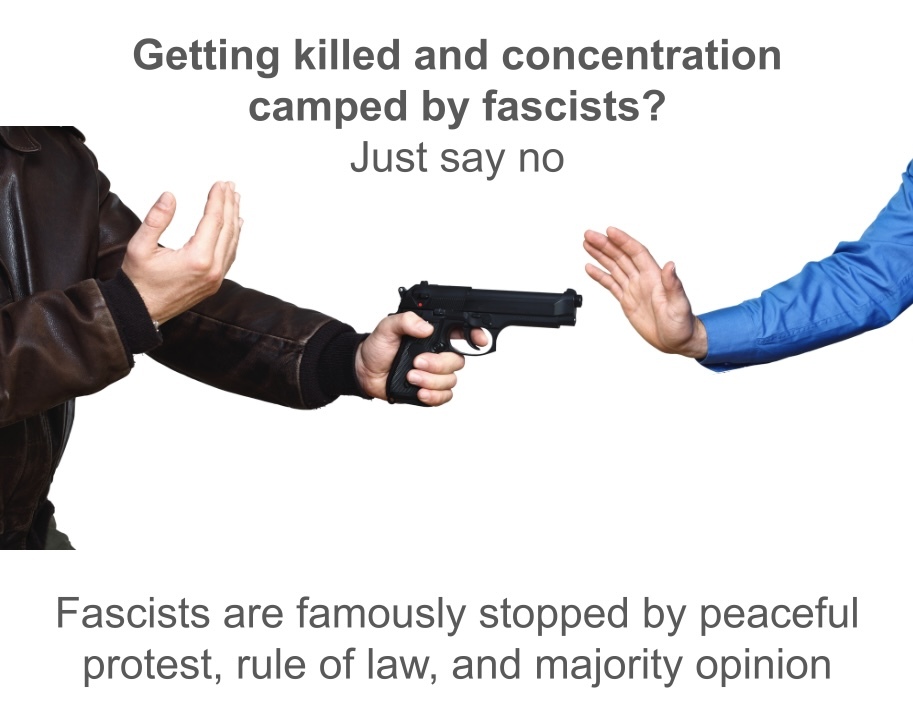
First, the amount of violence right now is a tiny fraction of what they could be doing. Look at Gaza for a more accurate picture of that scenario.
Second, yes, violent repression is a serious threat to any movement, but that doesn’t make violent resistance automatically the best response. Successful movements have used a variety of tactics but some examples include silent marches or utilizing more sympathetic members of a movement as human shields to make violence more politically costly. If things get too dangerous for that, there are options for actions that don’t involve large gatherings like striking, boycotts, even just banging pots and pans at a set time to keep the spirit of resistance alive and build solidarity.
That’s not to say that these tactics are guaranteed to work. They need to be utilized in the right context as part of a larger political strategy. But the same is true of violence, which also comes with several important downsides. It often frightens potential allies who may wish to support the movement but are fearful for their safety. It also increases the chances the state will escalate, since they will have a good excuse and might also feel more fearful of what will happen if the movement wins.
All tactics have their place. There are some situations where violence may be the only option. I don’t blame Palestinians for fighting back in the face of genocide. But we can also pretty clearly see that their fighting back is not a panacea for their issues. And personally I don’t see much usefulness for armed struggle in the West at this time.