1


Researchers [...] have analysed precipitation and river flow records in more than 10,000 rivers between 1951 and 2020. In nearly one-third of rivers, they found that flow trends did not match with the changes observed in rainfall and snow.

2


Abstract

Trees planted around rain gardens present an opportunity to remediate stormwater pollutants, diversify habitat, and cool impervious surfaces in municipalities. In semi-arid regions where water resources are scarce however, it is unclear whether stormwater captured in these basins is sufficient to sustain urban trees without supplemental irrigation. This seven-year study examined whether soil moisture could be significantly improved at parking lot curb cuts with rain gardens compared to curb cuts without rain gardens. Hourly volumetric water content (VWC) was measured at 6-inch depth intervals down to 30 inches in a soil profile predominantly composed of clay loam textures. Results indicate that average VWC in rain garden soils was significantly higher at four out of five measured depths and when averaged across the full 30-inch profile compared to sites without rain gardens. Rain gardens also regularly replenished and retained soil moisture above an irrigation threshold across seasons and during periods of drought.

TLDR: Water harvesting techniques like rain gardens and curb cuts are awesome anywhere

3
 
 
  • On Jan. 8, 2026, the Eastern Band of Cherokee Indians Tribal Council unanimously passed a resolution recognizing the inherent legal rights of the Longperson (Ganvhidv Asgaya), an interconnected waterway system whose headwaters rise in the Great Smoky Mountains and end in the sea.

  • The resolution was brought forward by the NAIWA Daughters, a group of Indigenous girls aged 10 to 17, making it the first all-female-led rights-of-nature effort in the U.S., and only the second such youth-led resolution passed by a Tribal nation.

  • The effort followed 18 months of grassroots organizing and built on the foundations of the rights-of-nature movement, which holds that ecosystems and natural entities should have legal standing to exist and flourish.

  • The Longperson resolution grants the waterway five inherent rights and has already spurred related action, including a separate tribal resolution to raise funds for removing the Ela Dam.

4
 
 
  • When a 2022 drought hit Bolivia’s Ascensión de Guarayos, restoring traditional paúros helped the community survive after the municipal reservoir ran dry.

  • The youth-led effort to revive paúros has grown into a broader conservation project, including a legally protected urban ecological corridor.

  • The initiative is part of a global trend to restore Indigenous water systems as low-cost, climate-resilient solutions to growing water scarcity.

  • Experts say blending traditional and modern approaches can strengthen water security — but only if local communities lead and retain control.

5
6
7
 
 
8


"Conventional desalination technologies such as reverse osmosis can remove salts, but they do not selectively separate valuable or toxic metal ions from background salts," [...] "Meanwhile, chemical precipitation can remove metals, but it relies on added chemicals and often produces hazardous sludge."

"Our method replaces that physical solution switching with rapid changes in the electrical circuit, allowing ions to move continuously in one direction through the system."

The study

9


seawater contains more than just salt. Coastal waters near ports and industrial areas are often contaminated with oil, which can clog the specialized membranes used in desalination systems.

To address this challenge, a research team [...] has developed a new multifunctional hydrogel membrane for solar-driven desalination. [...] Rather than treating oil separation and desalination as separate processes, the researchers designed a single membrane architecture that does both.

The study will be published the journal Desalination on October 15, 2026.

10
11
 
 
  • Conservationist Manzoor Ahmad Wangnoo says restoring Kashmir’s lakes and wetlands depends on partnerships between communities, government agencies and local stakeholders.

  • Nearly half of the lakes recorded across Jammu and Kashmir in the 1960s have disappeared or shrunk, reflecting decades of pollution, encroachment and unplanned urbanization. Through Mission Ehsaas, Wangnoo and the Nigeen Lake

  • Conservation Organisation have helped revive degraded water bodies, showing how community-led conservation can drive ecological restoration.

  • Wangnoo discussed the ecological significance of Kashmir’s wetlands, the region’s beauty — and his optimism for the future.

12


A deal to bring Colorado River water to Native American communities in northern Arizona, where a third of homes lack running water, is being blocked by neighboring states, caught up in a broader battle over how to divide the dwindling river.

The largest tribal water rights settlement in U.S. history — the product of decades of negotiations to secure water for the Navajo Nation, Hopi Tribe and San Juan Southern Paiute Tribe — was on the verge of being realized before Colorado, New Mexico, Utah and Wyoming stepped in to oppose it being codified by Congress.

13
14


Removing river barriers that no longer have any use and which can entail a safety problem due to the lack of maintenance, can help climate change challenges [...] can help recover fisheries, which used to constitute a local and self-sustainable food source in the past.

15


Crossposted from https://slrpnk.net/post/38511362

In a single-paragraph assent this week, the U.S. Supreme Court accepted a deal between Texas and New Mexico, ending the 13-year lawsuit between the states and the federal government over the waters of the Rio Grande.

With the dismissal of the case, the deal establishes new rules in the stretch of Rio Grande below Elephant Butte, an area reshaped by water scarcity and agriculture. Among other agreements, the parties will divide irrigation water into a 57-43% split, with the majority going to New Mexico farmers. The agreement also mandates less groundwater pumping by New Mexico.

16
 
 
  • A new desalination method produces drinking water from seawater without chemical additives.

  • The solar-powered system uses specially engineered black metal to absorb sunlight.

  • Its self-cleaning surface separates and collects salts, instead of dumping them as harmful brine waste.

  • From the salts, the system can extract lithium, a key material for rechargeable batteries.

  • The approach could help address global water shortages and growing mineral demand.

17


Crossposted from https://slrpnk.net/post/38332896

A Colorado uranium company recently submitted a finalized operation plan to New Mexico officials, signaling that it — along with multiple other out-of-state companies — is increasingly serious about mining uranium in the state.

Energy Fuels, Inc. submitted a 273-page operations and “reclamation” plan earlier this month that details how it plans to extract uranium from more than 1,600 feet below the surface within the Cibola National Forest boundaries in McKinley County, then transport it to its mill in Blanding, Utah.

New Mexico Environmental Law Center Legal Director Eric Jantz told Source NM on Tuesday that the plan represents the company’s renewed intent to receive a permit following more than a decade on hiatus.

“We’re taking it seriously,” he said of the plan. “And we’re going to be doing what we can to make sure that this environmental review is done properly, and that community interests are protected.”

18
19


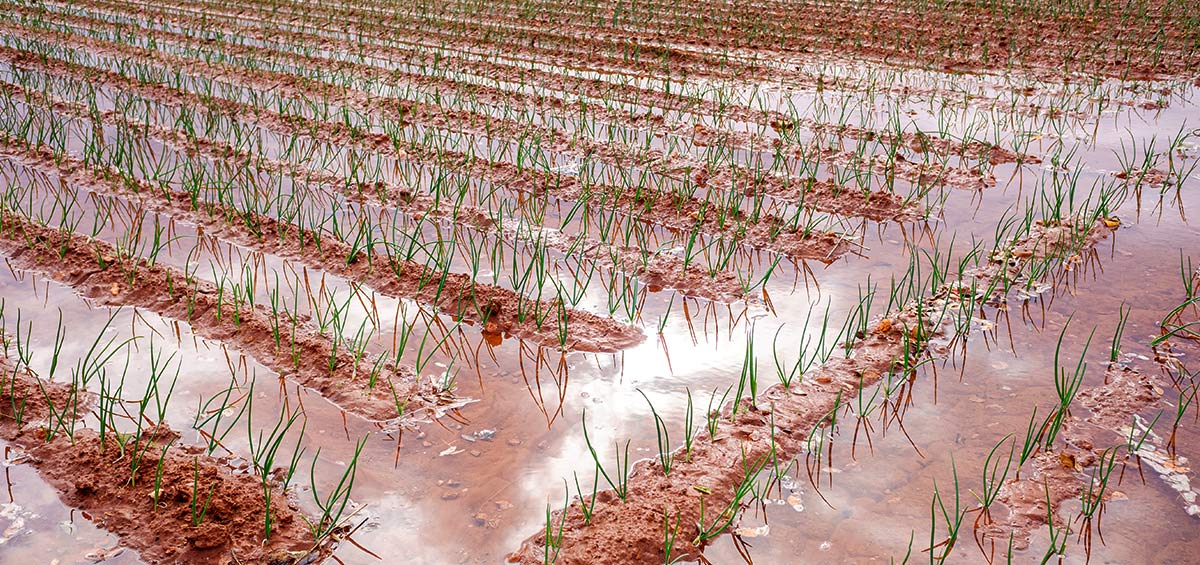
I live somewhere in the Rio Grande river valley. The farm land here uses flood irrigation to water. For those unfamiliar, water from the river is diverted into various irrigated ditches, those ditches can then be used to flood entire fields.

As I was walking home with my dog from our morning river hike, I started to wonder about conditions for peak evaporation. We water our plants at home in the evening as the sun is setting and the temperature drops. But how much does that change evaporation? Is the 20ish% relative humidity more of a factor? Or is air movement?

Many of the farms seem to irrigate in the mornings, when it is still relatively cool. But while it was 64°/17.7° when I left the house at 6:30 this morning it will be 85°/29.4° by 11am and the daily high of 91°/32.7° by 2pm. Giving the ground very little time to absorb the water. Would it be better to water at 8pm at sunset giving over 12 hours of cooling temps?
20


No modern American city has ever run out of water. But chances are rising that Corpus Christi, Texas, could be the first. Absent a biblical rainfall event, its reservoirs are on track to completely dry up by next year.

That raises baffling questions for the future of Texas’ eighth-largest city and one of the nation’s major petrochemical hubs.

21


The pH levels in some rivers in Alaska and northern Canada have dropped to 2.3, comparable to the acidity of vinegar.

n Alaska, the most recent satellite imagery indicates that the affected rivers now cover an area more than 600 miles wide.

22
23
 
 
24
25


Antibiotics are accumulating in a major Brazilian river, especially during the dry season when pollution becomes more concentrated. Scientists even detected a banned drug inside fish sold for food, raising concerns about human exposure. A common aquatic plant showed promise in removing these chemicals from water—but it also altered how fish absorb them, creating unexpected risks.

view more: next ›