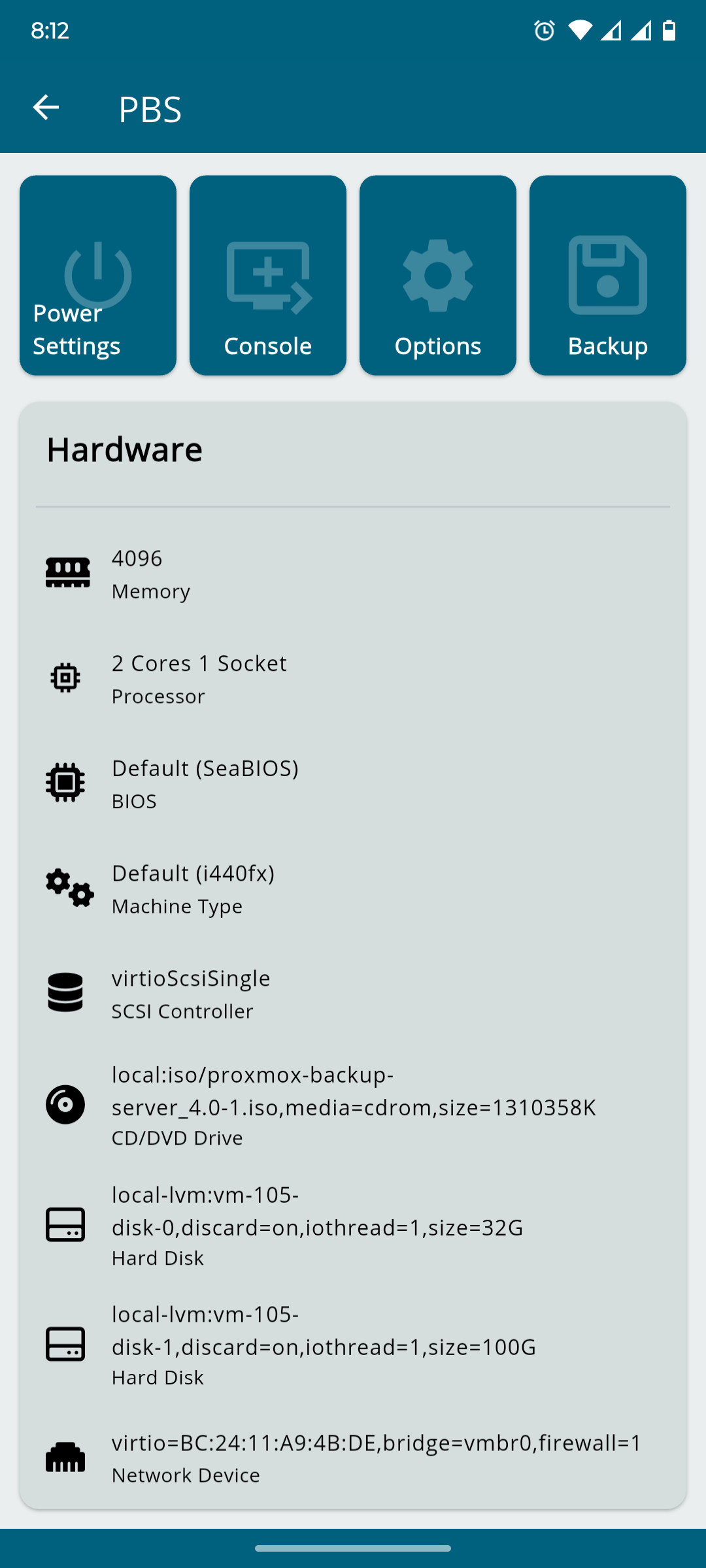
I suggest you pass through a hard drive(s) directly and it up with zfs within pbs. This allows pbs to utilize all of the features of zfs.
I use a USB HDD for this just so I can grab my backup drive and plug it in somewhere else if I need to.
I suggest you pass through a hard drive(s) directly and it up with zfs within pbs. This allows pbs to utilize all of the features of zfs.
I use a USB HDD for this just so I can grab my backup drive and plug it in somewhere else if I need to.
I was thinking about getting a USB Ethernet Adapter. Will it help me to resolve the issues easily?
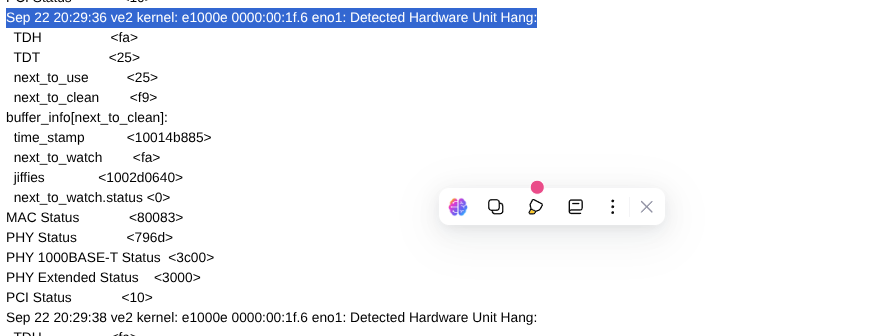
You guys are right!
I had the same thing with the intel nic having hardware hang issues. Definetely recommend mitexleo check out that link. If it is the same thing, you can unplug and replug the ethernet cable to at least get communication to the host again without restarting the computer.
Are you able to check the logs at all?
This may be totally off base but: I recently had some issues with the intel networking adapter on one of my Dell Optiplexes. Still not sure specifically why, but when it was at high load (including during one backup), it was crashing. I found Intel e1000 errors on the host and was able to follow these instructions which seemed to resolve the host become unavailable:
https://forum.proxmox.com/threads/e1000-driver-hang.58284/page-4#post-302307
What is your PBS using for storage? Vmdisk or native zfs disk?
I exposed the some applications using Pangolin and some using Cloudflare Tunnel. When I shutdown a VM, I can access applications in other vm using local IP (192.168.x.x) from my home network. But they seem to lose outside internet connection. Is this what what you wanted to know?
From the reply on the original post, are they in the same VPN and are using the VPN for connection?
As in, you have routed all traffic down the VPN?
If you want the search to be flexible like handling things like root stemming (i.e. for matching words that are pluralized etc) you might want to put the text into an Elasticsearch database.
You might run into problems with the field length if these are long documents. A possible solution to that would be an putting each page into its own field inside of the document.
If this is for a non tech user to search, the Kibana interface should be relatively easy for anyone to use.
Would Papra work for you? I like it better than Paperless-NGX personally, which others have mentioned. But I'll admit I'm not sure it'll fit in your use case as I'm feeding it newly scanned documents for mine rather than existing file/folder hierarchy.
Search them for words? Try pdfgrep with recursive - very easy to setup and try. If you feel like that's taking too long, you probably need to accept some simplifications/helper structures.
Maybe take a look at paperless-ngx, it will take care of the OCR for you and make it searchable. Just not sure if it will show the path correctly.
What is the server are they on?
If they are just on a windows server, then the indexing service is actually good for fast results on a network share. If it's a windows 10/11 pc, I think you need to enable classic search for it to provide results to clients over the network.
Alternatively I believe everything (the program) supports indexing network locations.
If tag/classification based and automated sorting is not the thing the end-user can live with, then Paperless-ngx isn't the solution, but if you have Nextcloud and you add both the to-be-preserved directory structure and Paperless-ngx's consume directory as external storage, you can have both with a little manual labour.
I'm a fucking dolt that dabbles and picks up the gist of things pretty quick, but I'm not authority on anything, so "grain of salt":
You're already familiar with OCR so my naive approach (assuming consistent fields on the documents where you can nab name, case no., form type, blah blah) would be to populate a simple sqlite db with that data and the full paths to the files. But I can write very basic SQL queries, so for your pops you might then need to cobble together some sort of search form. Something for people that don't learn SELECT filepath FROM casedata WHERE name LIKE "%Luigi%"; because they had to manually repair their Jellyfin DB one time when a plugin made a bunch of erroneous entries >:|
My problem is paperless is the fact that it doesn’t preserve the directory structure, losing essential info
What's a bajillion? If the OCR output is less than a few GB, which is a heck of a lot of text (like a million pages), just grepping the files is not too bad. Maybe a second or two. Otherwise you need search software. solr.apache.org is what I'm used to but there are tons of options.
Might be a little heavy handed for your needs but I've found paperless-ngx to be amazing.
Suggested resources:
Can follow updated to the list with: Track Awesome List
There's also a alternative front end for awesome selfhosted
Thanks for sharing!
I only picked the site recently, I find the whats new bit more helpful then the updates.
As I read the reg via RSS and have all the software I run in https://newreleases.io/
Yea I noticed that too. I wound up pulling it off my feed because it stopped being useful or interesting.
This is all I know but rhetoric is in the public zeitgeist in America and that’s no bueno. https://www.cnet.com/tech/services-and-software/new-bill-aims-to-block-both-online-adult-content-and-vpns/
Not sure if this is the kind of thing you’re after, but I think learning a little about the very fundamental pieces of these systems really helps to understand the mechanisms at work.
One place that was really useful to me was years ago, the Security Now podcast did a series called “How the Internet Works” ( I think). Steve Gibson went over all the principles layer by layer and it helped my understanding a ton. This was many years ago, so the rest of each episode is probably filled with really old security news, but the main bits are as relevant as ever.