1
M83: The Southern Pinwheel (assets.science.nasa.gov)
submitted 1 month ago by to c/photos@piefed.world


Full photo size.

Beautiful and bright spiral galaxy M83 lies some twelve million light-years away, near the southeastern tip of the very long constellation Hydra. Prominent spiral arms traced by dark dust lanes and blue star clusters lend this galaxy its popular name, the Southern Pinwheel. Still, reddish star forming regions that dot this cosmic pinwheel's spiral arms have suggested another nickname, the Thousand-Ruby Galaxy. A mere 40,000 light-years across, smaller than the Milky Way, M83 is a member of a group of galaxies that includes active galaxy Centaurus A. In fact, the core of M83 itself is bright at x-ray energies, showing a high concentration of neutron stars and black holes left from an intense burst of star formation. This sharp, groundbased telescopic view also features foreground Milky Way stars and distant background galaxies.

M83: The Southern Pinwheel
2
Pluto in Enhanced Color (assets.science.nasa.gov)
submitted 1 month ago by to c/photos@piefed.world


Pluto is more colorful than we can see. Color data and high-resolution images of our Solar System's most famous dwarf planet, taken by the robotic New Horizons spacecraft during its flyby in 2015 July, have been digitally combined to give an enhanced-color view of this ancient world sporting an unexpectedly young surface. The featured enhanced color image is not only esthetically pretty but scientifically useful, making surface regions of differing chemical composition visually distinct. For example, the light-colored heart-shaped Tombaugh Regio on the lower right is clearly shown here to be divisible into two regions that are geologically different, with the leftmost lobe, Sputnik Planitia, also appearing unusually smooth. After Pluto, New Horizons continued on, shooting past asteroid Arrokoth in 2019 with enough speed to escape our Solar System completely.

Source: NASA APOD.

Pluto in Enhanced Color
3
4
submitted 2 months ago by to c/photos@piefed.world


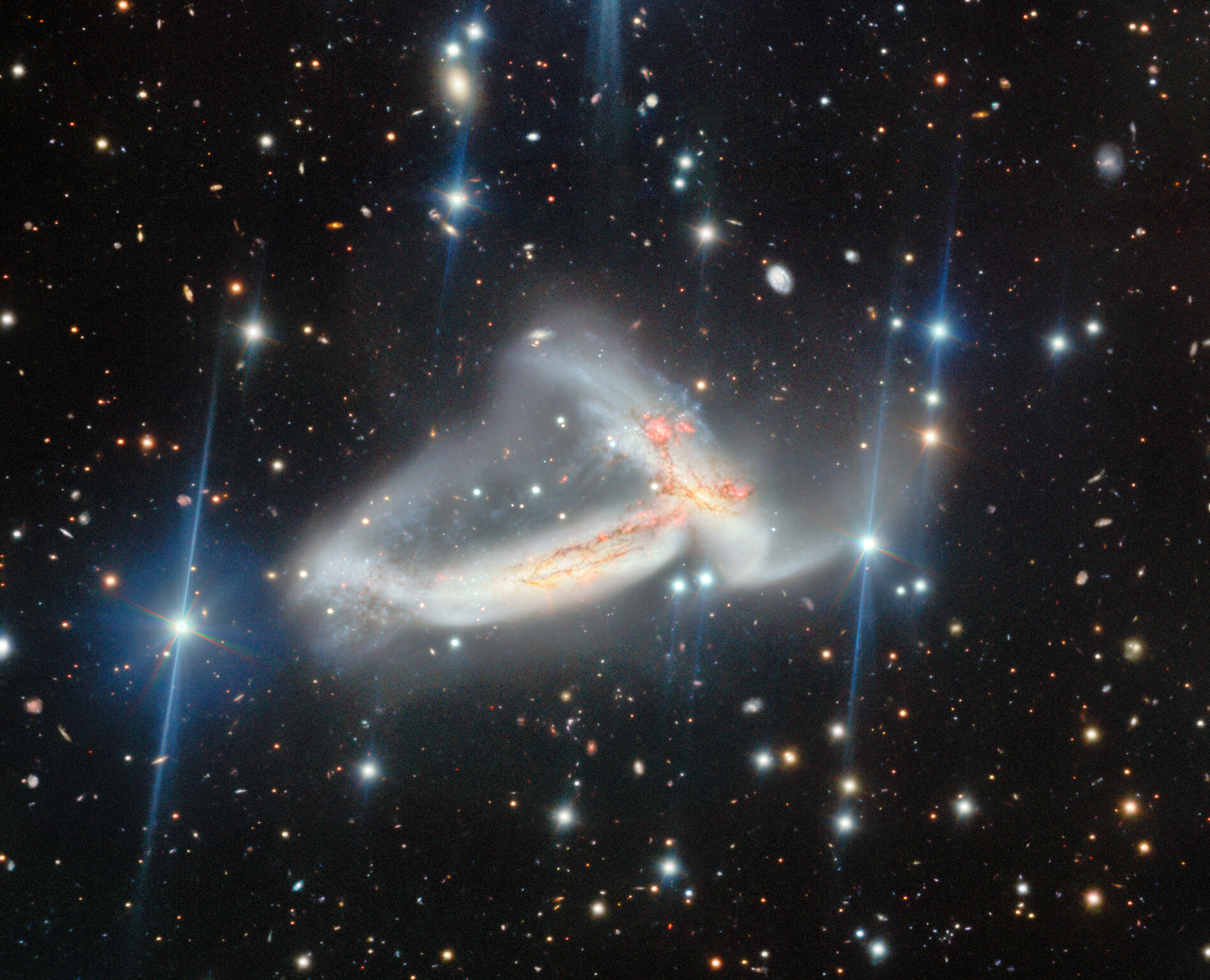
Nā ʻUhane Māhoe Huki Pū i ke Ola, is the Hawaiian name given to this image of a pair of spiral galaxies locked in a mutual gravitational embrace. Some 200 million light-years distant toward the high flying constellation Pegasus their spectacular, galactic scale merger is captured in sharp detail in the image from the 8.1 meter Gemini North telescope on Maunakea, Hawai‘i. The galaxy pair, known as NGC 7253 and Arp 278, was chosen as a target, researched, and given a Hawaiian name by high school students in the joint Gemini Observatory and University of Hawaiʻi Project Hōkūlani internship program. The name translates to "The Twin Spirits Pulling Together Creating Life". That's both culturally and astronomically appropriate for galaxy collisions that trigger a cosmic maelstrom of star formation from galactic reservoirs of elemental building blocks of life. These merging galaxies are found within a region of Pegasus identified as the Hawaiian navigational constellation Ka Lupe o Kawelo.

Source: NASA APOD.

5


The USS Abraham Lincoln aircraft carrier visibly weathered, with heavy rust and worn paint after 286 days at sea and months of Middle East operations. Arriving in Thailand
6
7
8
submitted 2 months ago by to c/photos@piefed.world


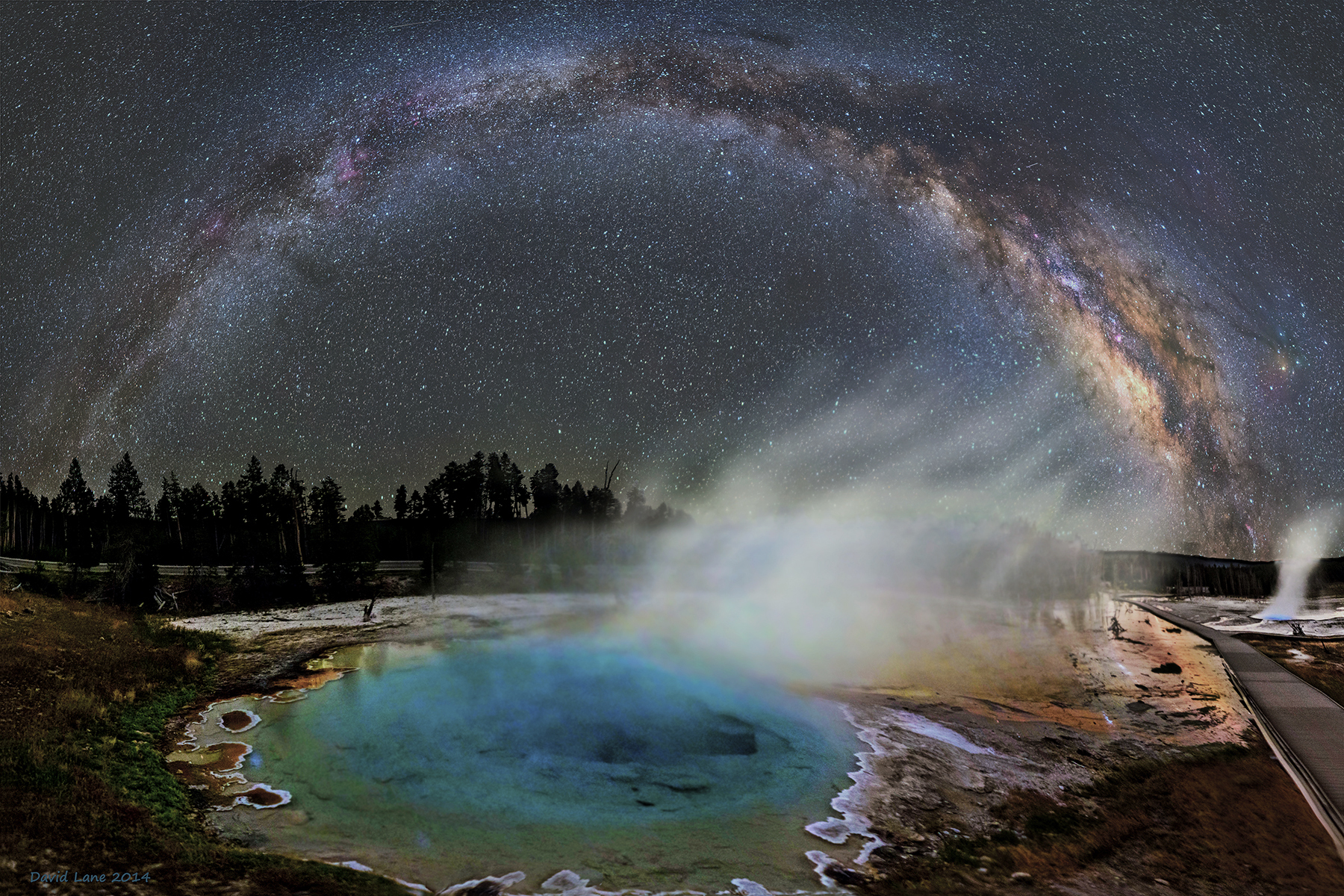
The Milky Way was not created by an evaporating lake. The colorful pool of water, about 10 meters across, is known as Silex Spring and is located in Yellowstone National Park in Wyoming, USA. Illuminated artificially, the colors are caused by layers of bacteria that grow in the hot spring. Steam rises off the spring, heated by underground magma associated with the Yellowstone Hotspot. Unrelated and far in the distance, the central band of our Milky Way Galaxy arches high overhead, a band lit by billions of stars. The picture features a 16-image panorama taken in 2014. If the Yellowstone Hotspot causes another supervolcanic eruption as it did about 640,000 years ago, a large part of North America would be affected.

Source: NASA APOD.

Milky Way over Yellowstone
9
submitted 2 months ago by to c/photos@piefed.world


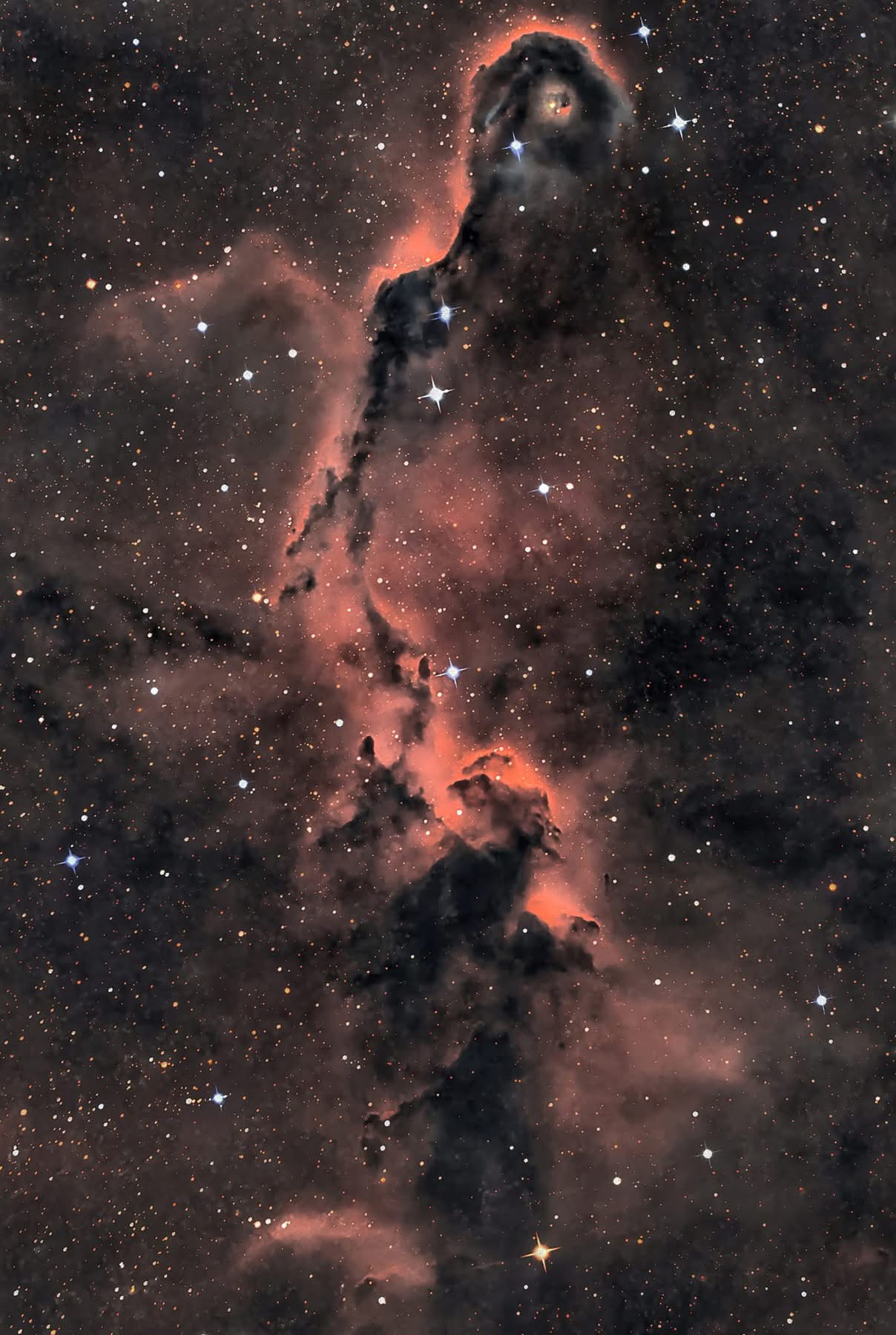
Like an illustration in a galactic Just So Story, the Elephant's Trunk Nebula winds through the emission region and young star cluster complex IC 1396, in the high and far off constellation of Cepheus. Also known as vdB 142, this cosmic elephant's trunk is over 20 light-years long. The detailed telescopic view features the bright swept-back ridges and pockets of cool interstellar dust and gas that abound in the region. But the dark, tendril-shaped clouds contain the raw material for star formation and hide protostars within. Nearly 3,000 light-years distant, the relatively faint IC 1396 complex covers a large region on the sky, spanning over 5 degrees. Top to bottom this proboscidean-like rendition reaches across an almost 1 degree wide field of view, though. That's a little less than the angular size of 2 full moons.

Source: NASA APOD.

The Elephant's Trunk in Cepheus
10
The Lion's Head Nebula (apod.nasa.gov)
submitted 2 months ago by to c/photos@piefed.world


Are we looking at the future of our Sun? The James Webb Space Telescope captured today’s composite image of the Lion’s Head Nebula (NGC 2392) with its NIRCam and MIRI instruments. The Lion’s Head Nebula is the remnant of a Sun-like star. This star was unable to sustain the nuclear fusion in its core needed to remain stable. It began to shed layers of gas and dust into space, forming this planetary nebula. A hot stellar core, called a white dwarf, is left behind within the lion’s nose. Do not boop this nose! Intense radiation from the white dwarf is ionizing the gas as it expands, creating the irregular bubble that makes up the lion’s face. Dust clumps that have survived the white dwarf’s radiation and a cloud of ionized gas make up the lion’s mane. This new and more detailed view of the nebula will help humanity learn more about how the gas and dust interact with each other and the white dwarf radiation.

Source: NASA APOD.

The Lion's Head Nebula
11
12
Colorful Collage of Tarantula Nebula (assets.science.nasa.gov)
submitted 2 months ago by to c/photos@piefed.world
 
 
Colorful Collage of Tarantula Nebula
13
 
 
Giraffe in Kruger National Park, Mpumalanga, South Africa
14
 
 
Soviet FD20 steam locomotive exposed at Zuyevka railway station, Kirov Oblast, Russia
15
Negativ-Positive Sculpture (upload.wikimedia.org)
submitted 3 months ago by to c/photos@piefed.world
 
 
Negativ-Positive Sculpture
16
 
 
Adult woman of the Laarim Tribe smoking in a pipe, Kimotong, South Sudan.
17


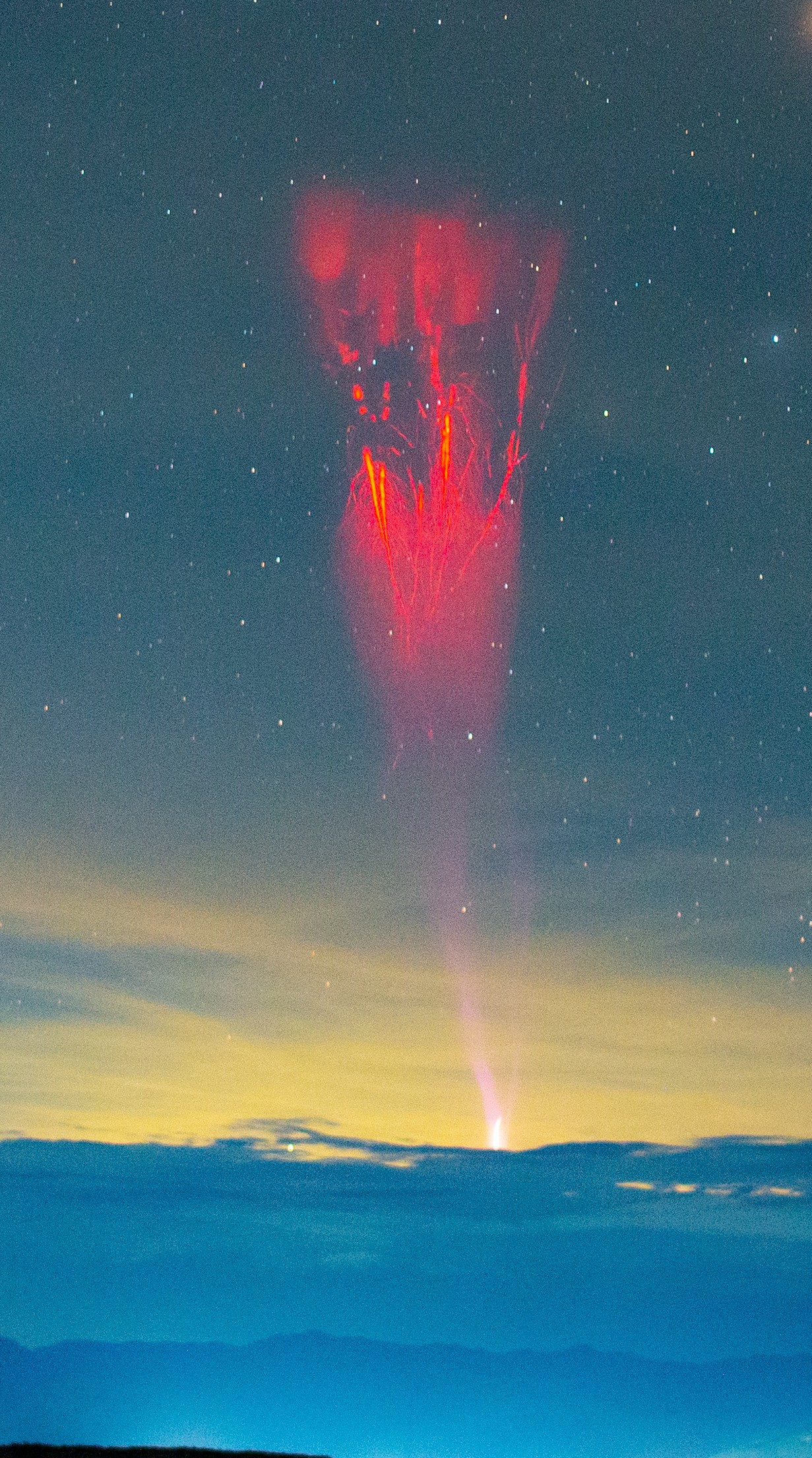
Is there an angry Sith using force lightning in the Tatacoa Desert? This is not science fiction, but a red sprite with multiple streamers! Ordinary lightning occurs when thundercloud particles collide, lose their electrons, and build up negative charge at the cloud bottom. The cloud’s negative charge repels negative charge deeper into the Earth, leaving Earth’s surface positively charged. The opposite charges attract, reaching towards each other and superheating the air into a white strike of plasma. Red sprites are millisecond events triggered by positive cloud-to-ground lightning. They extend up into the mesosphere where the air is too thin for thunder. Their red glow comes from heated molecular nitrogen. There are several potential causes for red sprites, including that the preceding positive lightning exposes the negatively charged cloud core to the positively charged upper atmosphere, allowing those charges to connect. NASA’s Juno has observed sprites on Jupiter, indicating that sprites occur on other planets!

Red Sprites in the Tatacoa Desert
18


Gigantic ‘Iran War Participation Trophy’ for Trump appears near National Mall
19
 
 
Cheetah Blepping at a wildlife rescue in Nanyuki, Kenya
20


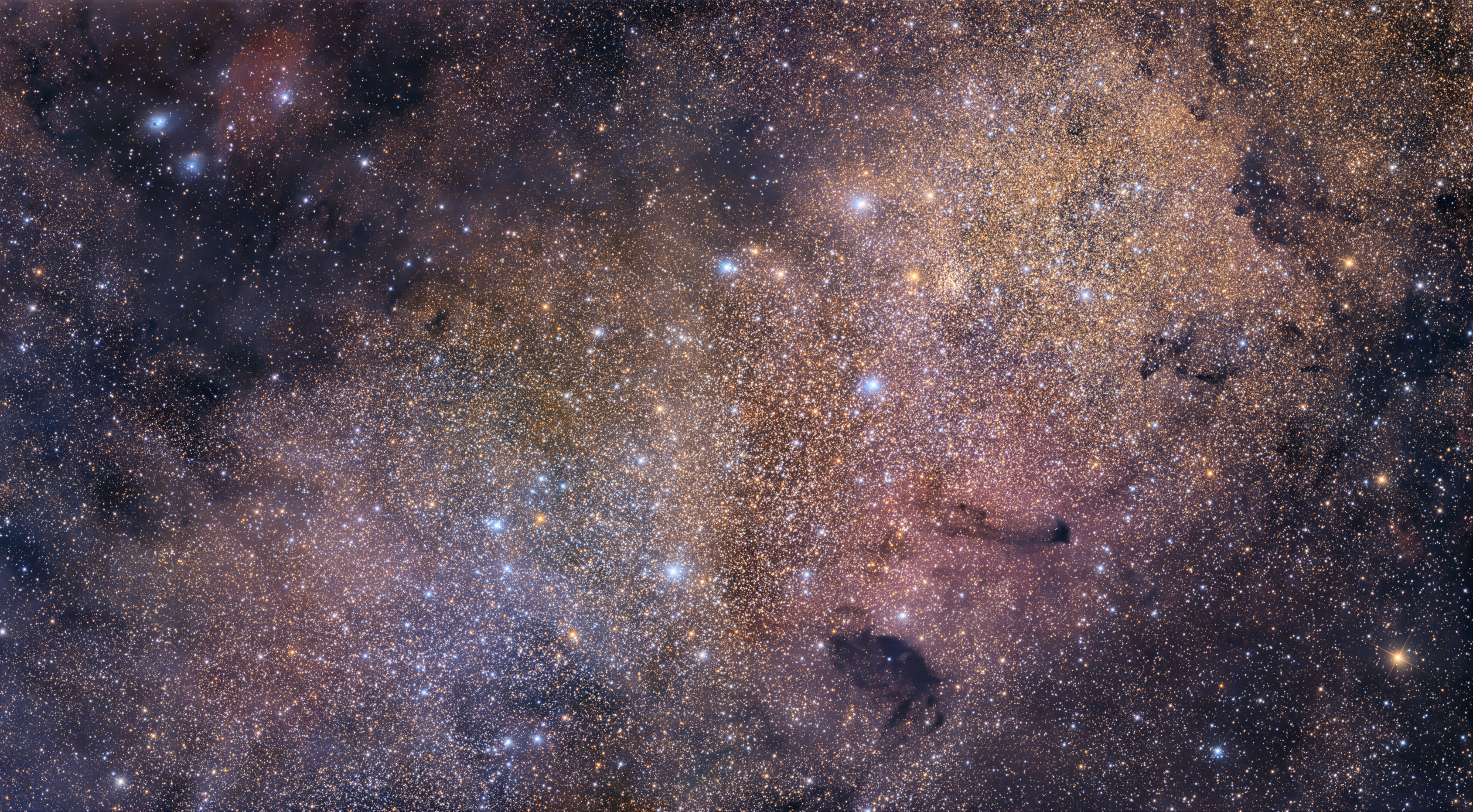
Unlike most entries in Charles Messier's famous catalog of deep sky objects, M24 is not a bright galaxy, star cluster, or nebula. It's a gap in nearby, obscuring interstellar dust clouds that allows a view of the distant stars in the Sagittarius spiral arm of our Milky Way galaxy. Direct your gaze through this gap with binoculars or a small telescope and you are looking through a window over 300 light-years wide at stars some 10,000 light-years or more from Earth. Sometimes called the Small Sagittarius Star Cloud, M24's luminous stars stretch across this gorgeous interstellar scene. Spanning over four full moons on the sky toward the constellation Sagittarius, the telescopic field of view includes dark markings B92 and B93 near the center of M24, along with other clouds of dust and glowing nebulae toward the center of the Milky Way.

Messier 24: Sagittarius Star Cloud
21
 
 
The Lower Vistula Valley in Kokocko, Poland
22
 
 
A bright orange sunburst illuminates Earth’s atmosphere during an orbital sunrise
23
24
25
Black Eye Galaxy (www.nasa.gov)
submitted 4 months ago by to c/photos@piefed.world


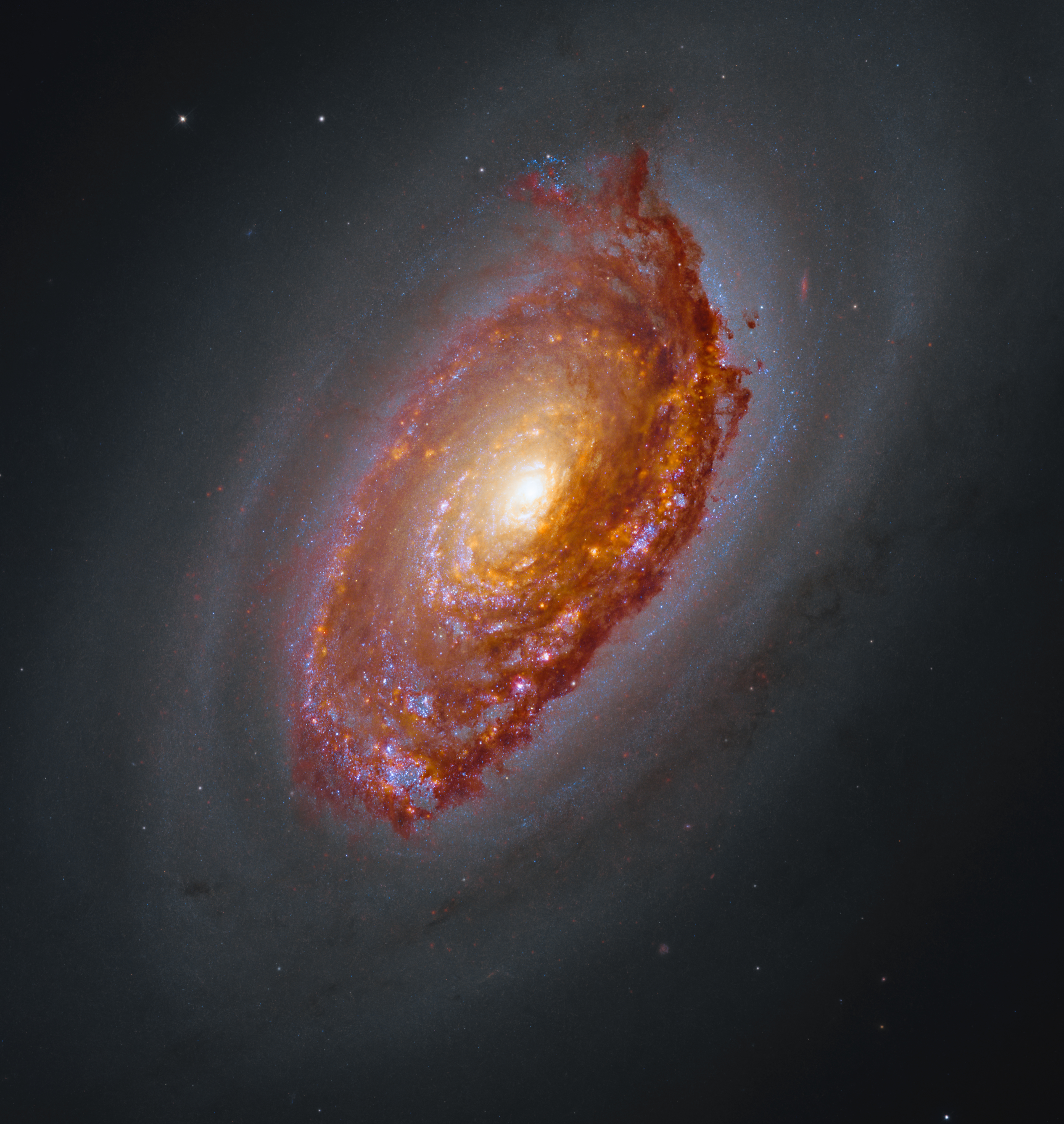
This March 20, 2026, image of Messier 64, or the Black Eye Galaxy, is a composite view from NASA’s Hubble Space Telescope and James Webb Space Telescope. It shows Messier 64 captured at near- and mid-infrared wavelengths by Webb, while Hubble’s image shows the galaxy in ultraviolet, visible, and near-infrared light.

Messier 64 is characterized by its bizarre internal motion. The gas in the outer regions of this spiral galaxy is rotating in the opposite direction from the gas and stars in its inner regions. This strange behavior may be the result of a merger between M64 and a satellite galaxy over a billion years ago.

Black Eye Galaxy
view more: next ›