1


Two howler monkeys, Alouatta iroi and Alouatta matogrossensis, separated by genome-wide analysis of 11 howler species across South and Central America. They are the first new howler species recognised in 84 years, with major Amazonian rivers acting as the barriers that split the lineages. Alouatta matogrossensis lives in southern Amazonia, one of the fastest-deforesting regions on Earth. News article: https://www.pro-manchester.co.uk/newsrooms/scientists-discover-two-new-species-of-howler-monkey/

2


A shrubby bamboo from Qifen Mountain in Lingchuan County, Guangxi, at 1,057 m, with erect culms 1 to 1.5 m tall. It sits closest to Sinosasa huapingensis and is set apart by glabrous upper culm-leaf sheaths, only 3 to 6 foliage leaves per ultimate branch, and many auricle bristles 5 to 10 mm long. Its flowers and fruits are still unknown, and it is known only from its type locality. News article: https://bioengineer.org/new-shrubby-bamboo-species-sinosasa-subglabra-described-from-guangxi-province-china/

3


Three flowering plants from Colombia's Cordillera Occidental. Columnea baqueroi is a nomadic climber from Cerro El Inglés in Chocó with a white tubular corolla and no floral bracts. Columnea galeanoi carries inverted purple-red leaf pigmentation and a yellow corolla with purple stripes. Columnea magnicalyx, known only from the Mesenia-Paramillo Nature Reserve near Jardín, has calyx lobes more than half the length of its corolla. News article: https://bioengineer.org/botanists-discover-three-distinctive-new-columnea-plant-species-in-western-colombia/

4


A new agamid lizard from the Yuqu River valley in Chayu County, eastern Xizang, found at 2,500 m. Males measure 54.8 to 69.6 mm, with a yellowish-green gular spot, a concealed tympanum and 50 to 56 middorsal crest scales. It is sister to Diploderma laeviventre and brings the genus total to 51 species worldwide. News article: https://bioengineer.org/research-report-a-new-species-of-diploderma-reptilia-squamata-agamidae-from-eastern-xizang-china/

5


A cicada from the Albany Thicket Biome of South Africa, separated from Albanycada albigera by dark markings around the hind-wing veins and a pigmented, burnt-orange wing base. Its song centres on about 9.0 kHz with a pulse rate of about 160 Hz, and the two species are estimated to have split about 5 million years ago. It is known from only two sites about 190 km apart and may qualify as Critically Endangered. News article: https://bioengineer.org/hidden-cicada-species-uncovered-in-south-africas-thicket-biome/

6


A flowering plant from Zijin County, Guangdong, with silvery-white hairs on the upper leaf surface and a pink corolla 12 to 15 mm long. Its two fertile stamens have fused anthers, and it sits closest to Oreocharis acaulis and Oreocharis dinghushanensis. A single population of about 800 mature individuals grows in 0.4 sq km, and it has been provisionally assessed as Vulnerable. News article: https://bioengineer.org/silvery-leaved-pink-flower-joins-gesneriaceae-as-new-species-from-guangdong/

7


A giant rodent from southern Thailand, known from two fossil teeth, a lower molar and an incisor, found at a coal mine in Krabi province. It lived in the Eocene and is estimated at around 30 kg, about half the size of a large capybara, making it one of the largest rodents of its era. It belonged to the Ischyromyidae, an extinct family of early rodents. Its genus name joins the Thai word for giant with the Greek word for mouse. News article: https://phys.org/news/2026-11-prehistoric-giant-rat-thailand-fossil.html

8


A deep-sea zoanthid found living on Pleurocorallium coral colonies at the entrances of karst caves near Minamidaito Island in southern Japan, collected at 385 m. Its polyps are bright yellow, and its name, aureus, means golden. When disturbed it flashes green light, the first documented bioluminescence inside a deep-sea cave. No spontaneous light was observed and no symbiotic bacteria were found, so the flash may serve a defensive or burglar-alarm role, though its function is not yet known. News article: https://www.europesays.com/japan/118009/

9


A small translucent pygmygoby from the northern Red Sea, known from two specimens of 12 and 17 mm collected at 30 m at a cave entrance on a steep reef slope at Walih Island and not seen again since. It carries a broad orange-red stripe and golden spots on the tail that resemble gold coins, and it has an unusual four-part eye. Its name refers to Charon, the ferryman of Greek mythology. Eleven Trimma species are now known from the Red Sea. News article: https://phys.org/news/2026-11-species-pygmygoby-edge-red-sea.html

10


A racerunner lizard from the Chagai Desert in Balochistan, near the Afghanistan and Iran borders, documented at four localities in Chagai District. It has distinctive maze-like winding brown markings across its back, kept in both juveniles and adults, a body of about 5.7 cm and a tail more than twice the body length. DNA and scale comparisons separate it from Eremias graphica of Iran. It lives in loose sand and low dunes and burrows, and its provisional assessment is Data Deficient. Eight Eremias species are now known from Pakistan. News article: https://reptilesmagazine.com/new-racerunner-lizard-species-discovered-in-pakistan/

11


A perennial herb in the Colchicaceae family found at Garbhanga Reserve Forest, at Laisong in Dima Hasao, and at Barapani in Meghalaya, growing on cliffs under bamboo. It reaches up to 180 cm tall, taller than its relative Disporum calcaratum, with branched stems, broad yellowish-green leaves and star-shaped white flowers. Its name joins Kamrupa and the Khasi Hills. Only a few small populations are known, and it is described as potentially endangered, with road expansion, over-exploitation and deforestation as threats. News article: https://newire.in/articles/new-plant-species-discovered-in-assam-and-meghalaya-forests

12


Four new spider-hunting wasps from China: Platydialepis bidentata, P. flavipectoralis, P. frontimaculata and P. prominula. A taxonomic review raises the Platydialepis species recorded from China from one to six and provides the first identification key for them, with P. ryoheii also reported from China for the first time. Specimens come from Chongqing, Guangdong, Guangxi, Henan, Hubei, Jiangxi, Sichuan, Yunnan and Zhejiang, and are deposited at Yunnan Agricultural University in Kunming. News article: https://bioengineer.org/four-new-spider-hunting-wasp-species-discovered-in-china/

13


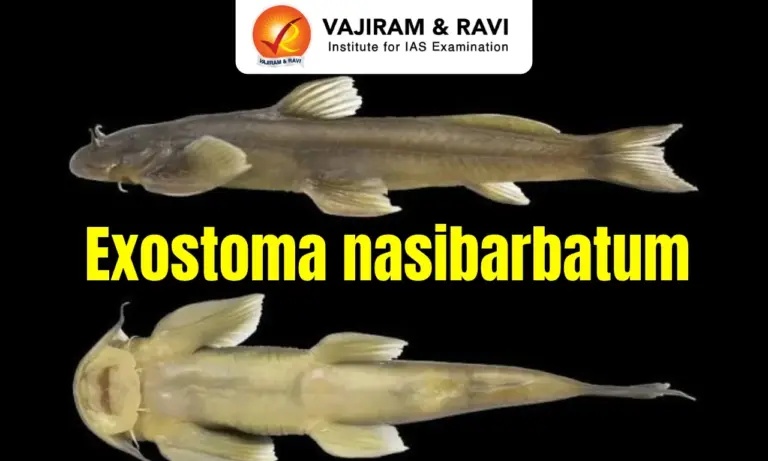
A glyptosternine catfish found in the Bupal stream, a tributary of the Dujang River in the Chindwin river system of Manipur, near the Myanmar border, in fast-flowing rocky habitat. It has a strongly flattened head and body, enlarged paired fins with adhesive striae, and a prominent nasal barbel extending beyond the back margin of the eye — the trait its name refers to. The genus Exostoma now has 23 recognised species, seven of them in the Chindwin-Irrawaddy drainage. News article: https://vajiramandravi.com/current-affairs/exostoma-nasibarbatum/ — Image: specimen photograph, carried on the Vajiram & Ravi page.
14


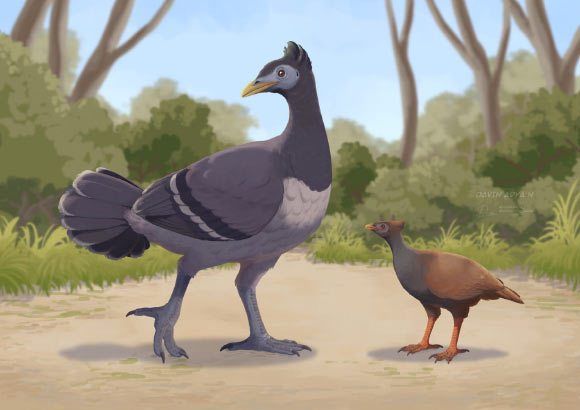
An extinct megapode identified from a single fragment of lower leg bone excavated at Liang Bua on Flores, the cave known for Homo floresiensis. The bird is estimated at about 3.9 kg, several times heavier than the living orange-footed megapode on Flores, and it is the first fossil megapode described from Wallacea. The species name honours Indonesian zooarchaeologist Rokus Due Awe. News article: https://www.sci.news/paleontology/megapodius-rokusi-15170.html — Image: Megapodius rokusi (left) next to Megapodius reinwardt (right), reconstruction, credit Davin Arya Nirwasita.
15


A perennial herb described by Botanical Survey of India researchers from streamside rocky walls near Osla village in Govind Pashu Vihar National Park and Sanctuary, Uttarakhand, at about 2,550 m. It grows up to 80 cm tall, with red-tinged upper-leaf margins and umbellules of 10 to 20 flowers. Only one population of three mature individuals is known, in an area of about 4 km², and it has been formally assessed as Critically Endangered. News article: https://researchmatters.in/news/botanists-discover-critically-endangered-plant-species-in-uttarakhand

16


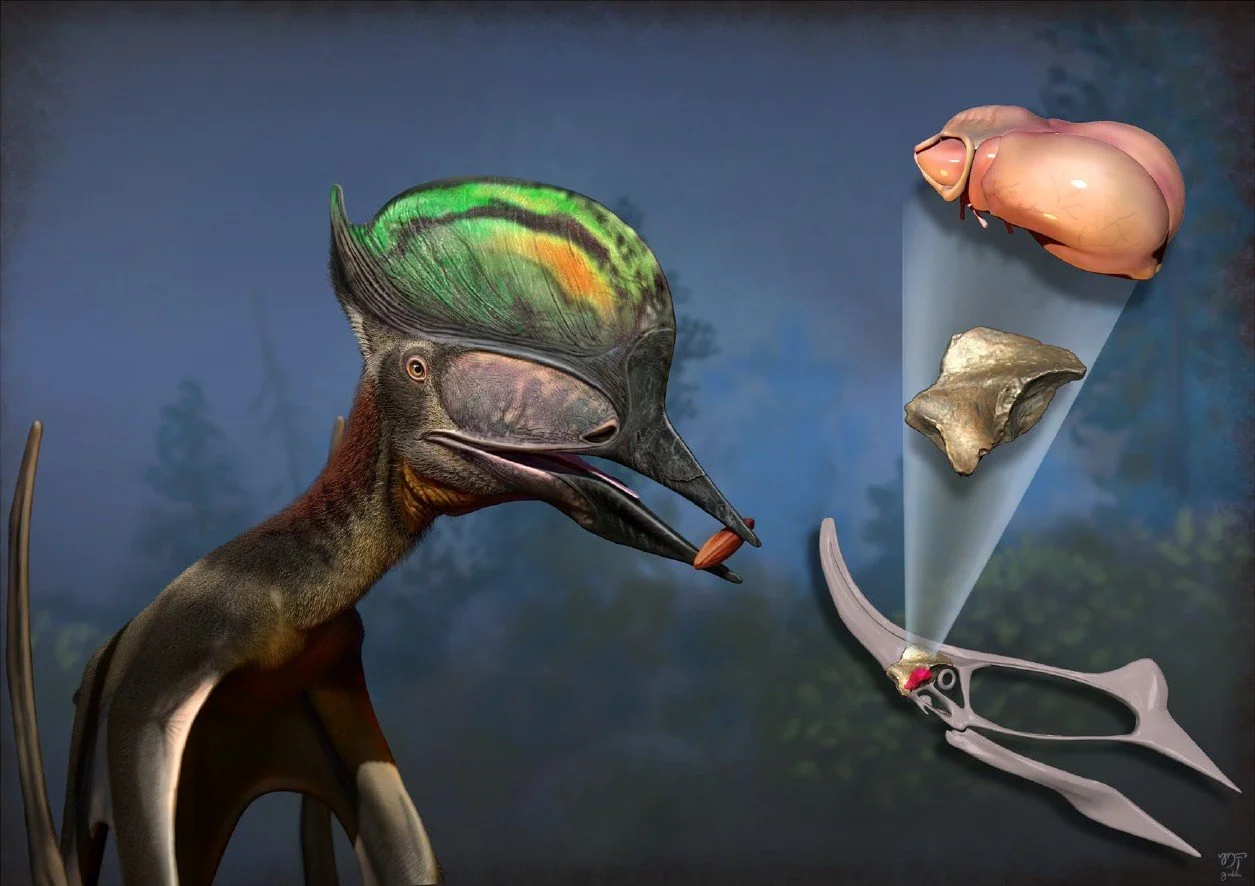
A tapejarid pterosaur from the Cambridge Greensand of England, based on a partial skull roof first described in 1870 and long lumped into other genera. CT scanning of the specimen produced new data on its brain. The animal lived in the late Albian, about 105 to 100 million years ago, and its remains were later reworked into younger Cenomanian deposits. The species name honours Tilly Edinger, the founder of modern palaeoneurology. News article: https://tetzoo.com/blog/2026/10/31/1tapejarid-pterosaur-from-cambridge-greensand — Image: reconstructed life appearance, credit Matheus Gadelha.
17


A jumping spider found at Madhugundi village in Chikkamagaluru district, Karnataka, named for the Malenadu region of the Western Ghats. It was found exclusively on two plant species, Memecylon umbellatum and Memecylon malabaricum, and both male and female specimens of the genus were identified for the first time. It is the first recorded sighting of the Pilia genus in over 120 years, the last having been identified in Kerala in 1902. News article: https://www.dhyeyaias.com/current-affairs/daily-pre-pare/view/new-spider-species-pilia-malenadu

18


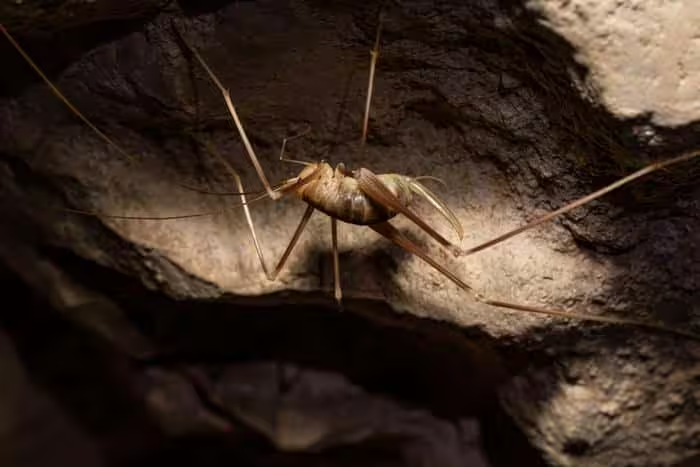
A cave cricket found in a 25-metre-deep man-made tunnel on the slopes of Mount Vigla, on the Greek island of Kastellorizo. It has a brown body and elongated, curved limbs built for gripping the tunnel's vertical and overhead surfaces, and it was confirmed as a separate species by both morphology and DNA. It is named for the Balrog of Tolkien's The Lord of the Rings. The genus Dolichopoda now holds 68 recognised species, 51 of them in Greece. News article: https://www.bioscience.com.pk/en/subject/genetics/scientists-explored-a-man-made-tunnel-on-a-tiny-greek-island-and-discovered-something-unknown-to-science — Image: female specimen in the Kastellorizo tunnel, credit Konstantinos Kalaentzis.
19


Two bandicoot species recognised through a ten-year reassessment of hundreds of museum specimens, using DNA and skull measurements. Isoodon microtis, the little brown bandicoot of South Australia, is newly described and believed to have gone extinct about a century ago. Isoodon moresbyensis, the New Guinea brown bandicoot, is raised from a subspecies of the northern brown bandicoot to a full species. The same work also extended the known historical range of the quenda eastward into South Australia. News article: https://phys.org/news/2026-11-bandicoot-species-trawling-museum-drawers.html — Image: artist's impression of Isoodon microtis, credit Nellie Piese / WA Museum.

20


A wormlion fly from Yadong County in the southern Himalayas, the fifth recognised Vermitigris species and the first found outside tropical Southeast Asia. Its larvae dig funnel-shaped pit traps in loose soil and wait at the bottom for prey, the same hunting method as antlions, reached by convergent evolution. Adults are up to 19.5 mm long with a wingspan of nearly 16 mm, a warm reddish-brown to yellowish-brown abdomen and an exceptionally short rostrum, and may not feed at all. The species is named for Tsangyang Gyatso, the sixth Dalai Lama. News article: https://www.bioscience.com.pk/en/subject/biology/a-mysterious-creature-spotted-in-the-himalayas-in-1978-has-finally-been-identified-and-it-shouldnt-exist-there — Image: Vermitigris tsangyanggyatso, habitats and physical features, credit ZooKeys.
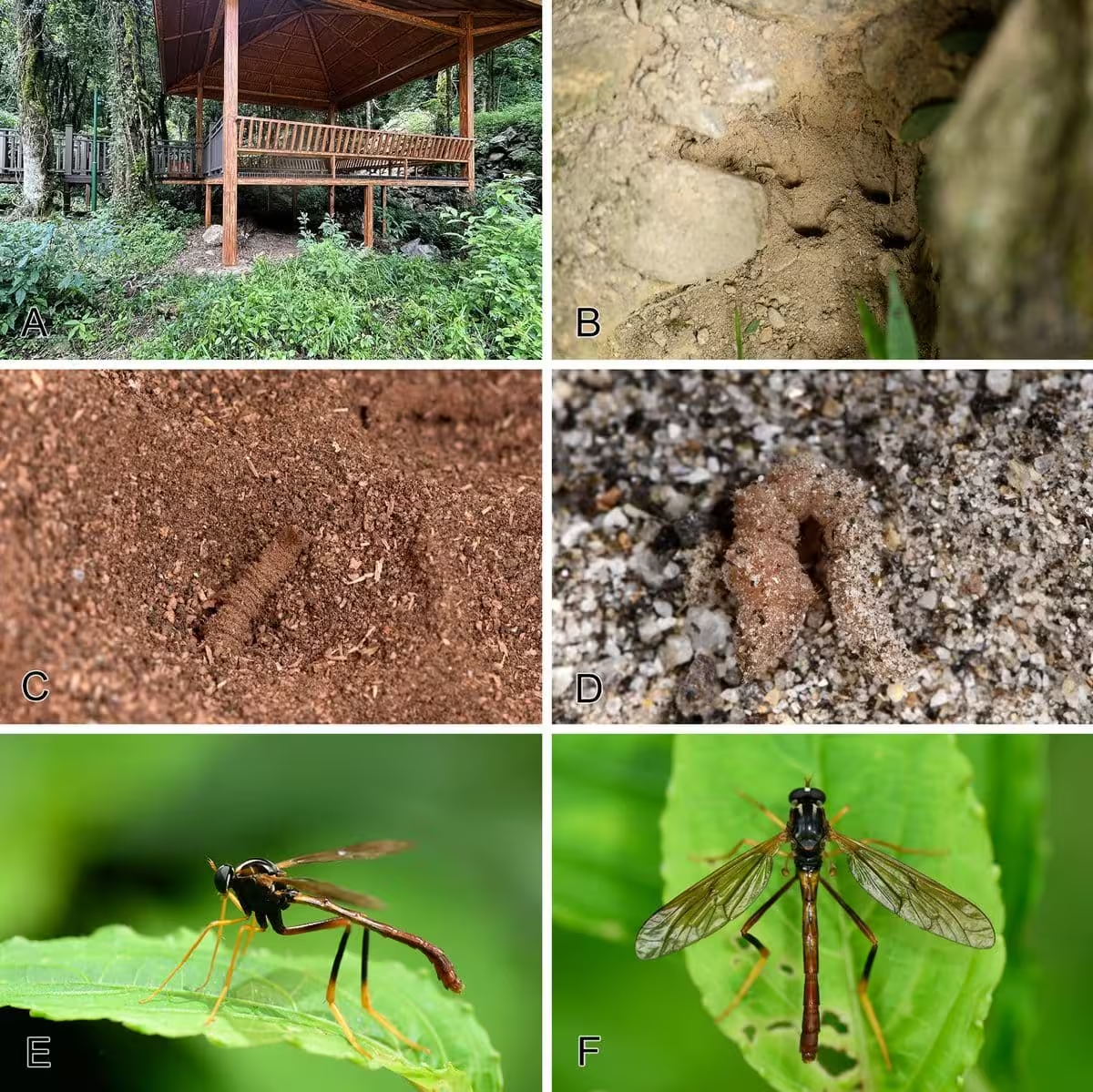
21


A new damselfly from Karbi Anglong District, Assam, India, recognised after decades of confusion with Dysphaea walli from Myanmar. Five males were netted along a partially shaded lowland forest stream running through the Nambor and Garampani Wildlife Sanctuaries, and the female was described from citizen-science photographs. It is set apart by opaque black wing bases, narrow opaque wing tips and an intricate blue pattern along the top of the abdomen, and it is the tenth recognised Dysphaea species worldwide. Its home forest is threatened by clearing for agriculture and urbanisation. News article: https://researchmatters.in/news/new-damselfly-species-from-assam-clarifies-decades-of-confusion

22


An extinct gavial crocodile from the Mokattam Formation in northeastern Egypt, known from a nearly complete skull collected in the 1920s from 45-million-year-old shallow-marine limestone, the same rock carved into the Great Sphinx of Giza. First described in 1927 as Tomistoma, CT scanning showed raised rims around the eye sockets absent in Tomistoma, so it was re-examined as a new species, named for the falcon-headed god Heru. Unlike living gavials, it likely lived in saltwater. News article: https://www.ucl.ac.uk/news/2026/oct/analysis-how-sphinx-helping-answer-riddle-about-extinct-crocodiles

23
24
25


A small horned toad from Mt. Wushan, Yunxiao County, Fujian, China, known only from 770–900 m elevation at its type locality. Paper in Asian Herpetological Research. Expanding lowland loquat plantations have isolated it in upland remnants. News article: https://biotech.einnews.com/pr_news/952890508/mountain-refuge-yields-new-horned-toad-as-lowland-plantations-spread — Image: life aspect of the male holotype and female paratype, credit EIN Presswire release.

view more: next ›