1


Just finished reading something and want to share some thoughts, but don't want to start a brand new thread? Feel free to post your mini-reviews here!

If you'd like to start a more dedicated discussion, you are still free to begin a stand-alone thread.

Please post any spoilers behind spoiler tags!

TitleLike so

TitleLike so

2


Hey Beehaw (and friends)! What’re you reading?

Previously I had these thread labelled as monthly threads, but I have had an incredibly busy few months and had not been able to keep up with it. So this is now going to be a general sticky that will be replaced "every so often" when the previous thread gets overly full :)

Novels, nonfiction, ebooks, audiobooks, graphic novels, etc - everything counts!

3


hi! I have the problem that I think quite a few people end up with, which is that I used to consume books at a concerning rate in high school, but once I graduated, I stopped reading. I don't know if my somewhat brief stint in college knocked the want to read out of me, but I have a serious desire to go back to reading books and enjoying the stories in them. plus, I think it would help my writing if I would read actual books.

fanfiction is unfortunately a tough sell because I tend to not like how people write canons, but if by chance someone has any recs for Pokemon fanfic that is original character based, let me know! it's like the one media that works for me in fanfic land. (I know AO3 is currently out of commission though.)

I now have a Kobo Libra Color, and I've read a little on it, but I feel like I'm not quite "committing" if that makes sense? I don't sit down for an hour and read very easily, for example. I prefer the Kobo to physical books, mostly because I have nowhere to put physical books, and I would lose a library book.

I don't know if it's maybe cold feet or my attention span being poor?

what does everyone else do when they're struggling to read? have you experienced losing your reading "spark"?

4


There are two recurring trans women named Carolina in Sloane Murphy’s short story collection, Shut Up, I Love You, I’ll Call You Tomorrow. One’s nicknamed North, and the other’s nicknamed South, but nobody can seem to keep track of which is which. “Most of the time she just responds when people call her South,” one…

5


Classic literature is considered classic for a reason: these texts have stood the test of time, finding new readers with every generation. The classics are also undoubtedly experiencing a huge surge in popularity, likely attributed to several recent high-profile screen adaptations, as well as the influence of online readers and social media trends. Some of the most frequently referenced classics are those written by authors from the West, but there is an entire world of classic literature that has existed for decades, if not centuries, and whose contribution to the literary canon and influence on contemporary literature is undeniable.

There is much debate around definitions of the Western world, and with people in constant motion and ideas slipping so easily past man-made borders, defining Western versus non-Western classics isn’t as straightforward as it might seem. However, I think it is fair to say that many of the most widely-read classics are those that belong, even very broadly speaking, to the Western literary tradition, whereas the books below are written by authors whose nationalities sit squarely outside of the West or who are less Eurocentric in their ideas. Regardless of any inevitable overlap, the themes they contain are universal and timeless, and their preoccupations remain relevant to this day.

A nice list, I absolutely LOVE Clarice Lispector...

6


By what mechanism did a work of fiction inspire a new form of climate activism?

Imagination. Or so argued Dr. Burak Sezer, Assistant Professor of American Literature and Culture at TU Dortmund, when I talked to him about radical environmental novels, one of his areas of expertise.

“We should never underestimate the power of literature to spawn these kinds of movements,” he said. “Coming into a book undecided is a good, affective state to be in. To be brought to a place that goes against your political project can bewilder you, make you shaky in your foundations, which is powerful because it shows you’re still protean enough to allow things to affect you enough to change. If there’s a protagonist I love and they’re committing violence that I’m not sure I agree with, and I’m asking myself, ‘Is this really the right way to go about it?’ Then boom—a universe explodes. Suddenly I’m thinking. That’s a wonderful state to be in.”

Novels, Dr. Sezer believes, have an imaginative power to expand what we think of as possible in the physical world. By presenting a radical group that rubs against readers’ conventional moral codes, Abbey helped birth an organized radical flank.

Yet strangely, while the existence of ELF and other sabotage groups proved the power of fiction, and as the environmental movement went global, literary novels explicitly addressing ecotage in the four decades after Monkey Wrench are few and not particularly inspiring. Perhaps novelists were satisfied with Abbey’s efforts, or perhaps they, too, were hiding from Operation Backfire.

7
Software Foundations: Seven free Volumes (softwarefoundations.cis.upenn.edu)
submitted 2 weeks ago by to c/literature@beehaw.org


The Software Foundations series is a broad introduction to the mathematical underpinnings of reliable software.

The principal novelty of the series is that every detail is one hundred percent formalized and machine-checked: the entire text of each volume, including the exercises, is literally a "proof script" for the Rocq proof assistant.

The exposition is intended for a broad range of readers, from advanced undergraduates to PhD students and researchers. No specific background in logic or programming languages is assumed, though a degree of mathematical maturity is helpful. A one-semester course can expect to cover Logical Foundations plus most of Programming Language Foundations or Verified Functional Algorithms or Security Foundations, or selections from them.

  1. Logical Foundations
  2. Programming Language Foundations
  3. Verified Functional Algorithms
  4. Property-Based Testing in Rocq
  5. Verifiable C
  6. Separation Logic Foundations
  7. Security Foundations

Hosted by the faculty "Computer and Information Science" at the University of Pennsilvania

8


I DON’T MEAN TO SOUND like a conspiracy theorist. The obstacles to nonfiction’s flourishing are real, interlocking, and extensive: Decimated books coverage. Editorial layoffs. Artificial intelligence. Spiking book bans. Rising costs. And the most diffuse one: reader fatigue. There are too many competing places — podcasts, Substack, social media — where people get their news, and that news is so horrendous, people don’t even want it anymore.

“Are we falling out of love with nonfiction?” asked a much-circulated Guardian piece published late last year. Data from a NielsenIQ report found the UK’s nonfiction print sales had dipped by 6 percent. “Speaking to publishing insiders and readers,” wrote Emma Loffhagen, “one word that cropped up repeatedly was escapism.” Two weeks later, the New York Times confirmed that “Dragons, Sex, and the Bible” were the top categories that drove US book sales in 2025. The world is on fire; why not sit back and watch some mythical creatures—and also, I guess, cousins—get it on?


Fatigue with the news cycle is a big part of the picture, Broussard says, albeit not the whole one. Another thriving subcategory is books on democracy and civic engagement. A number of titles he names—Dean Spade’s Mutual Aid, Rebecca Solnit’s The Beginning Comes After the End—also appear on the Independent Press Top 40 bestsellers list, hinting at the broader persistence of readers’ desire for self-education. But in choosing what to order for the store, Broussard is currently being conservative with nonfiction. The sales reps—publisher’s representatives who pitch titles to retail accounts—have admitted to him that everyone is being conservative with nonfiction. “I think I hear a little bit of panic in their voices,” he says.

There seems to be a general consensus, or at least a hope, that this trend is cyclical. But, at publishing houses, there can be a tendency to treat declining sales as a foregone conclusion rather than a set of conditions publishers have the capacity to influence. The editor I spoke to—on the condition of anonymity—shared that, lately, when she and her colleagues bring nonfiction projects to acquisition meetings, she feels a chill in the room, with people “leaning back and looking away or not engaging” with what’s being pitched.

A common reason such books get turned down is that they feel “too small,” meaning they might not appeal to a big enough audience. But “we determine how big a project is,” she says. She has seen this attitude manifest in other ways, as when the press pulled publicity support from one of her memoirs right before its release, on the grounds that “memoir is just not selling right now.” (Not with that attitude!) For the industry to see a genre struggling and use that to justify gutting the infrastructure for supporting it does a disservice to countless readers, she says. It also puts the cart before the horse—“and we’re the horse.”

9


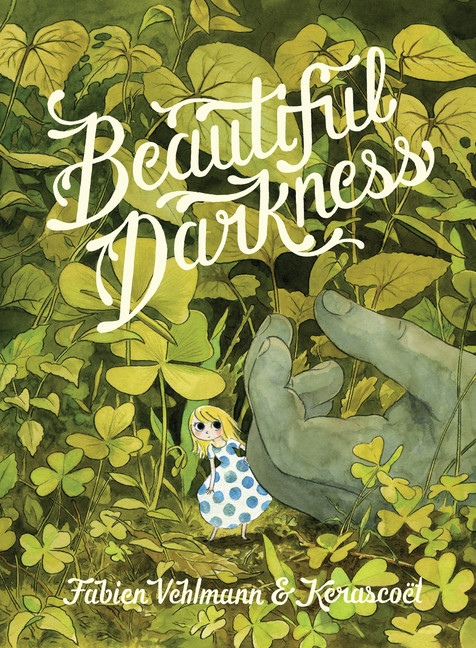
cross-posted from: https://piefed.blahaj.zone/c/books@piefed.blahaj.zone/p/1019273/have-you-read-beautiful-darkness-jolies-tenebres

Nature is a beautiful thing, but nature has never been caring. As humans, our entire history has seen our attempts to seperate ourselves from the reality of the natural world.

Perhaps then, we are not so different from the tiny people of Beautiful Darkness, written by Fabien Vehlmann, and wondrously illustrated in watercolour by the artist duo Kerascoët, Beautiful Darkness tells the story of a fairytale society, and their emergence into the real world, as their home; the decaying corpse of a little girl in the woods, begins to deteriorate, and the story of their survival in the aftermath.

At only 112 pages, primarily consisting of artwork, Beautiful Darkness is a great fit for a lazy evening, and my recommendation for you today. :)

Blurb attached:

Newly homeless, a group of fairies find themselves trying to adapt to their new life in the forest. As they dodge dangers from both without and within, optimistic Aurora steps forward to organize and help build a new community. Slowly, the world around them becomes more treacherous as petty rivalries and factions form.

10


I’m new to Russian literature but have been enjoying it a lot so far. I finished Crime and Punishment by Dostoyevsky recently and it is one of my all-time favourite books, and I recently started Dr. Zhivago. Any recommendations for good Russian literature?

11


When I wrote an unadoring review of Stephen Hawking’s final book, a collection of essays published posthumously in 2018, New Scientist suppressed some of my criticisms on the grounds that it was “too early” to voice anything other than praise for the physicist who died, aged 76, that March. It was apparently still too early in 2021, when no British publisher would touch Charles Seife’s exposé of Hawking’s bullying and self-aggrandising behaviour, Hawking Hawking.

In this new biography, veteran science writer Graham Farmelo takes a different approach. It is a comprehensive and accessible portrait of a brilliant scientist and an extraordinarily determined man who also possessed deep personal flaws to which the scientific community and the public mostly turned a blind eye. The uncomfortable but unavoidable truth is that Hawking’s overweening ambition and self-promotion, his repeated failure to acknowledge the work of others, his sexism and controlling behaviour were largely ignored because of his disability. I think it is indeed going to take us years to process that.

As this book was authorised by the Hawking family, and as Farmelo (whose superb biography of Paul Dirac, The Strangest Man, won a Costa award in 2009) is a generous and kind writer, I had feared the warts would be omitted. But instead Farmelo handles them mostly by letting others’ words speak for themselves.


Which brings us to the problematic stuff. While professional colleagues mostly spoke about Hawking with reverence and affection, it is often those closest to him who speak of another side. His father, Frank, worried that the teenaged Stephen “was developing into a selfish character … like a small boy who took everything but gave little in return”. There was evidently no love lost with his sister Mary, who called him “one of the most self-centred people I’ve ever met”. At Oxford, some friends found him rather lazy and entitled, and at Cambridge “annoyingly haughty”. His youngest son recounted how his father was “hugely competitive” and never let him or his siblings win at board games.

His unsparing ridicule of his first wife Jane’s religious beliefs contributed to their marital tensions, and the sacrifices she made often went unremarked by him. The pressure of going from lover to carer would never have been easy, but Hawking’s “authoritarian” demands and indifference to Jane’s interests added to her isolation. His adoptive brother, Edward, admitted “I’ve never really felt close to Stephen … he seems very cold.” And his mother, Isobel, complained how he would ignore people when it suited him. “I suppose what in other people would just be bad manners is excusable great-mannishness in him,” she wrote bitterly in her diary.

Hawking was scandalously bad at giving due scientific credit to others, a trait evident from the outset when he failed to indicate his debt to Penrose. Worse was his treatment of physicist Jacob Bekenstein, whose idea about the connection between the area and the entropy of a black hole he mercilessly derided before discovering for himself that Bekenstein was right – and then essentially claiming the idea as his own, which Farmelo says “disappointed some of Stephen’s friends”. Hawking could clearly be a supportive and kind adviser to his own students, but when one discovered an argument for why Hawking was wrong about a conjecture concerning black holes, he tried to get him dismissed from the Cambridge PhD programme.

12


hej 👋🏼 I'd like to suggest a few books to the book club I'm part of. For the next month the keywords are "spooky, mysterious, suspenseful, dark, scary, ominous, gothic", and since lately I'm discovering asian literature (mostly korean, chinese and japanese) but I'm not familiar with the forementioned genres, would you give me a few titles, perhaps also with your reasons why? I'd appreciate it a lot! thank you

13
The End of an Era (hughhowey.com)
submitted 2 months ago by to c/literature@beehaw.org


We knew this day would come.

Some of us have known for decades, have been writing and pontificating about this since Ken Jennings lost at Jeopardy and Kasparov lost at chess. The writing was on the wall, and now the writing is everywhere. Literally. Artificial Intelligence is writing about as well as humans — at least well enough to cause confusion and speculation — and that’s creating an existential crisis among authors, confusion among readers, and legal action within the industry.


Which takes me back to my statement about lucky windows. We had less than 20 years of writing being hard and publishing being easy, and we will never get that window back. Ever.

I’ve always felt bad for authors who lived and worked before 2007. The choices unavailable to them made life harder than it needed to be. Getting their work out into the world was brutal. After KDP, that brutality became a choice, not a necessity.

I now feel awful for anyone who wants to tell a story post-2026. You will forever be doubted. If you love an em dash the way I do, or you like flowy run-on sentences like I do, if you grew up reading Proust to let the words flow over you in all their glory, if you memorized sonnets so the iambic pentameter would soak into your bones, you’re gonna sound like a fucking bot.

Less than 20 years. More like 10, honestly. You can argue that 2014-ish was when self-publishing became legit and 2024-ish was when the tools made AI writing viable. A decade where it was easy in the ways it should be and hard in the ways it should be. That’s insane. Ten years across the one-hundred-thousand years of language.

14
15


I wrote my first horror novel, The Return, at twenty-eight. The original flicker of an idea was: what if The Shining took place somewhere uber-kitschy like The Madonna Inn. From there, the book surprised me. It became about the things that kept me up at night—primarily, my anxiety around my friendships and how they were unfolding in my twenties. I feared losing my friends, I feared my own aimlessness, my dismal finances, my inability to trust myself. Those fears seeped into the writing. It was a thrilling, cathartic experience. Horror allows you to be messy and mean, to be raw and ugly, things I never felt permitted to be in my everyday life. From there, I went on to write six more novels that all dealt with some facet of my anxiety, my angst.

Over the last several years, I’ve found immense solace in the genre (and Lexapro! I’d be remiss not to mention the Lexapro). As a scaredy-cat latecomer to horror, immersing myself fully in it has been the greatest adventure. I discovered the bloody fun adrenaline rush of slashers when I read Clown in a Cornfield by Adam Cesare and Cirque Berserk by Jessica Guess. The delicious, righteous anger in The Year of the Witching by Alexis Henderson and Such a Pretty Smile by Kristi DeMeester. I fell in love with finding random movies on Shudder on a Friday night, going to genre film festivals like the Telluride Horror Show and Anomaly in my beloved Rochester, eating popcorn for dinner and hiding my eyes behind buttery fingers during gory scenes. Discovering new horror through podcasts like Books in the Freezer and She Wore Black and Talking Scared.

The joy and release I’ve found in horror—in writing it, in consuming it—is tangible. It’s real. It’s so redeeming as someone who always worries the worst is going to happen to see that, yeah, sometimes it does! What of it? That sucks! Deal with it! As someone who feels pressure to be pretty and polite, it’s freeing to see validity in being loud and vicious. Horror provides an escape from the harsh realities of the world with something harsher, a needed reminder that we might not have it so bad. Oh, you’re grumpy on the phone with the pharmacy trying to sort out a prescription, Rachel? You could be getting possessed by an ancient demon. How about that? There’s true value there, in that perspective, in participating in these exercises of extreme circumstance. We metabolize the art we engage with; it becomes part of us and informs how we move through the world.

16


The author of a nonfiction book about the effects of artificial intelligence on truth acknowledged on Monday that he had included numerous made-up or misattributed quotes concocted by A.I.

The author, Steven Rosenbaum, whose book “The Future of Truth” was released this month to great fanfare, incorporated more than a half-dozen misattributed or fake quotes in sections of the book reviewed by The New York Times.

The Times asked Mr. Rosenbaum about the quotes on Sunday and Monday. On Monday night, Mr. Rosenbaum acknowledged in a statement that the book had “a handful of improperly attributed or synthetic quotes” and said that he had started his own investigation.

He said that the inclusion of the incorrect quotes was an accident and that he had “no intention of fabricating any viewpoints” while writing the book.

17
The Making of a Techno-Nationalist Elite (americanaffairsjournal.org)
submitted 6 months ago by to c/literature@beehaw.org


archive.is link

By naming their new book The Technological Republic, Palantir executives Alexander Karp and Nicholas W. Zamiska gesture toward this heritage. The book comes at a unique juncture in Silicon Valley’s history. Its leaders have awoken to their status as a distinct social elite but remain uncertain as to what obligations that status carries. Their old “Californian Ideology,” half libertarian fantasy and half globalist prophecy, has collapsed. What creed will take its place is not clear.3 Few seem better placed to address these questions than Karp, a founder known as much for intellectual ambition as for entrepreneurial success. While leading a defense tech company, with close ties to the sitting administration, he and Zamiska are perfectly positioned to lay out a new civic philosophy for America’s technological elite.

Readers hoping for such a book, however, will be disappointed. The Technological Republic is not a serious exploration of the political foundations of technology, nor a study of the technological foundations of American power. It is not a sober forecast of technological trends or a reckoning with their implications for the American public. It is not even a business history of Palantir itself. The Technological Republic aims at something “substantial and ambitious,” inhabiting “the interstitial but we hope rich space between political, business, and academic treatises.”4 It reads like a collection of TED Talks. Its chapters are discrete and disconnected. The themes that tie them together are nowhere explicitly laid out but must be inferred by the reader.

The most persistent of these themes is a critique of Silicon Valley’s “engineering elite.” Karp and Zamiska insist that the fortunes and fame of this elite were not created ex nihilo. This class is, in fact, deeply indebted to the civilization that made their firms possible, one that most of them feel no kinship with or obligation to. At the center of that civilization is the United States. The American nation should demand the loyalty of those who prosper most from it. This loyalty should be freely given. Karp and Zamiska believe that tech leaders should focus their substantial talents on bettering this nation. Like Palantir, their firms should not shy away from the provision of public goods. Silicon Valley should boldly take part in the “articulation of the national project.”5 Alas, the instinct of the Silicon Valley founder is to move as the market lists. How does the market list? Toward “lifestyle technologies” whose main purpose is to “enable the highly educated . . . to feel as if they have more income than they do.” America’s engineering elite is brilliant, but their brilliance is wasted on baubles.6

These observations may be accurate, but the goal of The Technological Republic is to inspire American technologists to become American techno-nationalists. Regrettably, Karp and Zamiska offer no roadmap for accomplishing this. The two men invoke the technologists of genera­tions past as archetypes the modern engineering elite might aspire to, but they do not investigate the religious, social, political, or economic milieu that created these technologists. This is unfortunate: Karp and Zamiska’s sermonizing is not sufficient to make patriots out of a generation of engineers who have never been trained to think of themselves as stewards of a state. Elevating Silicon Valley’s engineering elite into a governing class would require much more: institutions, alliances, and traditions that root the wealth and expertise of our technologists in service to the nation.

The United States has had such a class in the past. They were the architects of the Second Industrial Revolution: engineers, industrialists, and entrepreneurs who believed that a technological revolution was needed to propel America toward greatness. They were, in this sense, America’s first governing class of techno-nationalists. In the mid-twentieth century, Americans would label their descendants the “Eastern Establishment.” This class did not materialize out of thin air. Examining their origins, and the reasons for their seventy-year dominance of American business and government, provides a useful corrective to Karp and Zamiska’s fragmented thinking and hazy wishcasting.
18
19
20


I feel like it's pretty common in fiction these days, Game of Thrones being probably the most popular example with character viewpoint changing chapter-by-chapter and gradually weaving the different threads of plot into one connected whole. It's used in movies and television constantly, too.

The oldest I'm personally aware of is Dune, more-so in Dune Messiah, which I've read for the first time recently. I presume Herbert wasn't the first, though, and have been wondering how old the technique really is. Anyone have any insight (or even good guesses) on where it started?

21
22
23


Shelly Romero has early memories of going to her local supermarket and picking pulp fiction off the shelves. “We were very working class; my mom was working two jobs sometimes,” she recalls. “The appeal of books being cheaper and smaller and able to be carried around was definitely a thing.”

For generations of readers, the gateway to literature was not a hushed library or a polished hardback but a wire spinner rack in a supermarket, pharmacy or railway station. There, amid chewing gum and cigarettes, sat the mass-market paperback: squat, roughly 4in by 7in and cheap enough to be bought on a whim.

But the era of the “pocket book” is drawing to a close. ReaderLink, the biggest book distributor in the US, announced recently that it would stop distributing mass-market paperbacks. The decision follows years of plummeting sales, from 131m units in 2004 to 21m in 2024, and marks the end of a format that once democratised reading for the working class.

Romero, who grew up in the working-class, Latino and industrial city of Hialeah, Florida, says: “I don’t remember a bookstore. I had the library in Miami Springs across the bridge but in Hialeah around us, what was in walking distance because we didn’t have a car, was the Publix [supermarket] and sometimes we would get books from Goodwill [thrift store] as well.

“They had that democratic aspect to them where you can just find them anywhere and it always felt like it was the pick ’n’ mix candy-type store where there is something here for everyone, whether it’s the Harlequin romance novel or something very pulpy like a sci-fi or horror novel that you could quickly get.”

24


In the book’s second chapter, “The Reader,” she observes that “it is equally important, to the understanding of the poem, not to read at all.” Why? What is the power of this empty space, this absence of mind, this not-reading that reading provokes in us?

For Woolf, what a reader attains by not reading is “that state of mind in which it seems possible to us to write the book, not to read it.”

25


When an author uses AI for "polishing" a draft, they are not seeing improvement; they are witnessing semantic ablation. The AI identifies high-entropy clusters – the precise points where unique insights and "blood" reside – and systematically replaces them with the most probable, generic token sequences. What began as a jagged, precise Romanesque structure of stone is eroded into a polished, Baroque plastic shell: it looks "clean" to the casual eye, but its structural integrity – its "ciccia" – has been ablated to favor a hollow, frictionless aesthetic.

view more: next ›