1
After a week and a bit in primary, followed by a week and a bit in bottles, it's finally ready to enjoy. Color is good, aroma is malty, head was solid, and taste is mellow. I'd give this a solid 7/10. Would make again.

After a week and a bit in primary, followed by a week and a bit in bottles, it's finally ready to enjoy. Color is good, aroma is malty, head was solid, and taste is mellow. I'd give this a solid 7/10. Would make again.
Here's a happy brewer 😊
This stuff fermented at 19 °C and 0,5 bar instead of my usual 14 °C and 0,8 bar. Expected it to be done quicker, but the primary ended up bubbling for nine days. Gave it a day of 'secondary' and then decided I want to meet the beast already while cooling towards 2,5 °C for clearing the yeast.
It is just gorgeous. Viking Black bites first and Viking Chocolate Light & pale rye produce a lasting aftertaste. Crazy strong too, though I don't have measurements.

Started making mead a couple months ago, and I've done a few small batches now (pictured are batches 5, 6, and 7). A couple of beginner questions:
Adding Fermaid O -- for those that use it, do you dissolve it in something before adding it? It clumps like hell if I add it directly. The package just says to add it, doesn't give a method. Today I tried dissolving it in a small pull from each batch, but it felt like a lot of work. I was going to just dissolve it in some (unchlorinated) water when I add it tomorrow. What do y'all do for that?
With my very first batch, the first time I added the nutrients I got with my kit, I earned my carboy-overfloweth badge (a gentle shake resulted in a delightful fountain display). I bought Fermaid O for subsequent batches, and I've gotten no significant reaction when adding it, even after a shake. Should I be getting more of a reaction?
Sanitizing--once something is sanitized, like a spoon for instance, do you think it's okay to rinse it with tap water and set it on a paper towel, then use it again? Or in a more general sense, are a few drops of tap water going to affect a gallon of mead significantly?
Thanks!

This is another neipa-ish pale ale kinda thing, lots of oats and wheat. moderately high gravity of 1.069 and I used WLPD066, London Fog (dry) from White Labs and usually I get 2" of krausen, maybe 3" at most on a batch like this with other yeasts, but this one exploded. Thick yeasty goop right up through the gas lines and into the kegs I was purging with the blowoff.. what a mess. I had the top butterfly open to the hop bong and the krausen hit the top PRV of that too, had to take it all apart and clean it.
This was under ~5psi of pressure too, powerful, healthy yeast.
Brew smells great though. it's still pretty actively fermenting at the moment down from 1.069 to 1.022 so far and I'll give it a few more days to get to the target around 1.015 before dropping to dry hop temps (I use about 14c for dry hopping).
Recipe for this one was just some things I had lying around:
mashed at around 68c or thereabouts, quick boil of 30 minutes.
Hops are mostly Rakau and Strata like last time since that was extremely successful (this recipe is also very similar tot he quick pale I did last time but a higher abv, "maltier" malt and different yeast, used voss last time), mostly hop stand/whirlpool but a bit goes in mid boil for a touch more bitterness than a classic neipa or other hazy pales, about 40IBU in this case. Dry hop also includes 5ml of Abstrax Quantum Motueka extract (roughly 150g pellet equivalent), used galaxy extract last time, thought Motueka would be nice this time and wanted to try more extracts.
This was my first brew in a new Brewzilla Gen4, which went quite well, I rigged up some extra hosing to be able to easily switch between chiller and whirlpool arm by having the chiller attached to the bottom tap, so I could direct wort either way just by opening and closing valves which was really nice because previously on the gen3 setup I had to change hoses on the recirculation output and always made a mess.
As for the last brew I posted, the quick hazy wheaty voss pale, that was really successful, it was grain to glass in about 6 days, which is always nice, the PH was slightly lower than it should've been from the start so it had an interesting tartness to it, after a few sips it became extremely more-ish.. so that keg didn't last long.
That recipe inspired this one, which is very similar but a bit bigger and with a more pronounced malt and some caramalt so it wont be as light and crisp it should be a bit deeper and richer in malt flavour.


Oh the yearning for a malty overdrive!
Today was brew day for my oldest recipe, a pitch black 'Sahti x Stout'. Switched rye malts from a caramel dark one to a pale one and doubled the amount of dark syrup with this one. Viking Chocolate Light entered the bill at one point and is now a star of the lineup. I also throw in a bunch of Viking Black Malt, enough to bring its brutal bitterness into the picture and kill all transmission of light in and out of the product 😂
Decided also to try Magnum hops along with the perennial fave Challenger for bittering. Fermenting with Sahti fresh yeast as always, but at 19 °C and only slight pressurisation this time, hoping to catch more of the banana-y notes.
And now we wait...


The yeast seems to have striated very distinctly. Probably didn't mix it enough before putting it away. Oh well, the volume is low enough that convection will sort it out.


See you in 2/3 weeks! ABV should come out to about 3.5%.

Mix of herbs for the 20l of #cider It will be interesting, hopefully it won't get too bitter from some kind of wormwood, it smells really nice like cola but it's quite bitter. Mint and rosemary to balance it and I am looking for the bottling to taste it. It will need to age a bit, 6 months is probably the shortest aging for cider but I am bit impatient and don't know how much bottles will survive my thirst ;-)#homebrewing @homebrewing
This year I got hold on some apples so I will make 30l of clear cider and 20l for some "experiment". I already tried oak chips (simulates aging in wood barrel), hops and some spices. This year I was thinking about some herbs. The use is basically as dry hopping in beer.
Is there something I should consider, something you tried and turned out well or was undrinkable?

After the very successful Vienna WCIPA ran out faster than expected I needed a super quick keg-filler, so I whipped up this hazy pale, using a pale malt base, lots of flaked wheat and oats, some GNO that I had, and some chit.
Grain bill was:
Hops where whatever I could scrounge up:
Used Voss, pitched and fermented at 35c, it was practically finished at 24 hours, but I gave it 3 days at 35, then 4 days at -2c, dry hop went in while it was chilling and just under 20c so it got some time as it passed through the "ideal" 14-16c range.
Final colour is difficult to capture, but it's a very nice pale, good hazy, flavour is great, bright, sharp acidity, feels good in the mouth, dry but has some body, great mix of hops, carbonated slightly higher than I usually do which really fits. here is a picture as it was just coming up to carbonation, it's brighter and paler than the image really shows, and this picture doesn't show the head.

It's finally done and conditioned. It's a touch acidic, but otherwise really good.
In an earlier post, I complained that the main gasket on the fermentor is a pain to seat properly. But I'm happy to say that now that it's been used under pressure, it seats in easy and secure.

When life gives you lemons...10 fucking kg...#homebrewing #beer @homebrewing
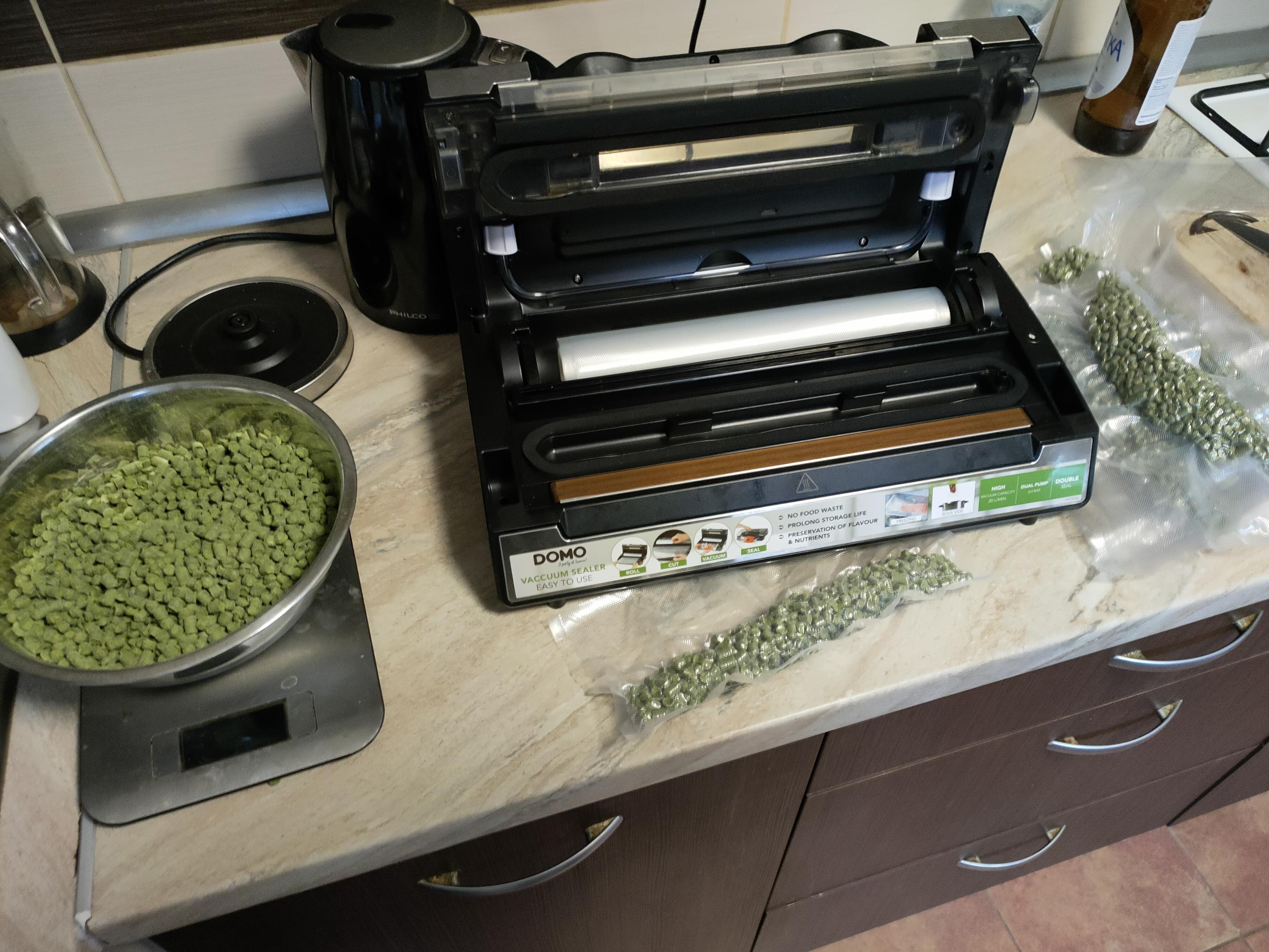
This past weekend I brewed a fresh hop Saison with my homegrown Glacier hops, I just cut the flowering branches off of a couple of bines and tossed everything into the kettle instead of bothering with picking all of the cones off.
I'm not sure if I'll do this again as doing a hop harvest in the middle of a brew day was a lot. If I do decide to do this again, I'd bag the hops as they became a PITA when trying to drain the kettle. Flavor/aroma wise I think it worked well, but we'll know for sure once it's done fermenting.

This summer brought plenty of apples in our three kinds of apple trees. I had the luxury of tasting them all and deciding on the mix to have juiced.
And nailed it! Last time I used mostly the sweetest ones and the cider had very little apple taste in it. This one is very much apple tasting. Primary fermentation went on for over three weeks, and the result is bone dry, just like my type 1 diabetic ass likes it.
Also in the 23 l batch: 1 kg of malt (Simpsons Premium English Cara, Viking Cara Pale and Simpsons Maris Otter) to feed micronutrients to the yeast, 1 dl dark sugarcane syrup and 1 dl white sugar in the yeast starter. Yeast was fresh 'sahti' yeast, not really showing its banana character though.
Next time: more malt and taking the time to carefully boil down the volume of apple juice a bit. Hopefully next year, but one can never count on getting apples...


The controller is super easy to use and you probably don't even need to read all the instructions to operate it.
My biggest issue was with the grain. It was too thick for the bottom screen. So I was unable to use the top screen since I had to use my spatula to keep the grain from caking up during the mash. I had to stir up the grain every five minutes or so.
I ended up with 1.060 gravity, which is exactly what I was looking for, so I'm pretty happy with that . It took about 50 minutes to reach mash temp and about the same to reach boil.
It's currently sitting in the fermentor. I expect it to ferment for four days. But I plan to condition it for at least a week before kegging.
BTW, the beer I brewed is an English stout.

I plan on brewing next weekend. I'll let you guys know how it turns out

cross-posted from: https://lemmy.zip/post/71064085
My first alcoholic ferment in 1.5 years. When 100% juice is on sale, I get a couple of bottles for a gallon of cider. (yes they're ciders, they're all apple juice based despite the tropical label.)
1 gal juice, half packet of US05, 1tsp nutrient, see ya in 2 weeks.

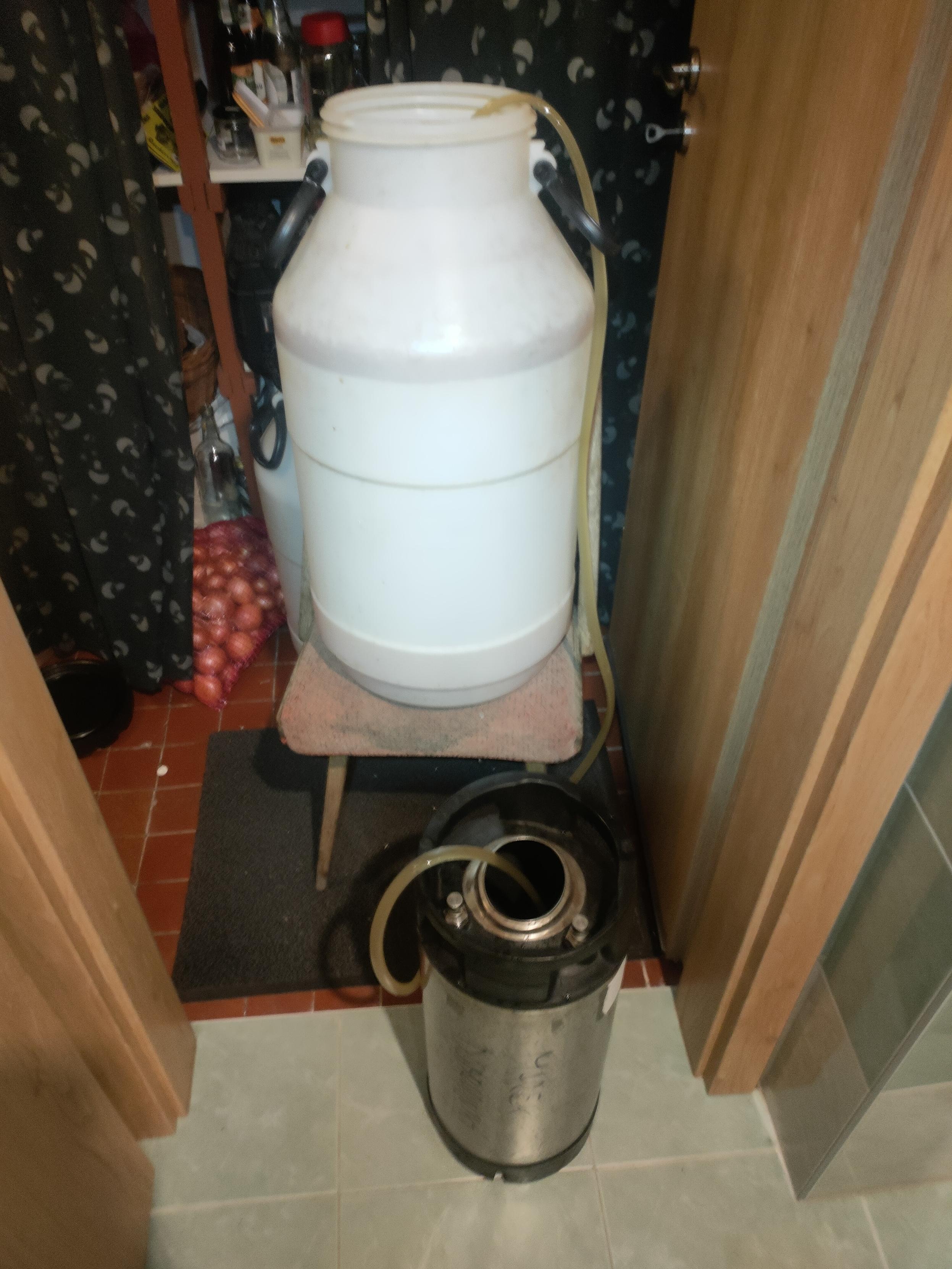
The apple trees have been harvested, 46 kg apples pressed and 20 litres of juice almost done with filtration into the fermenter.
Also in the fermenter: 3 litres of beer wort featuring 1 kg of mostly Simpsons Premium English caramalt. And waiting for its time is a 1,5 l yeast starter with 1 dl sugar and 1 dl dark syrup, providing yet more alcohol and some complex nonfermenting sugars. Hoping to eke out some residual sweetness from the cara and the syrup in the final product.
Quick check regarding the use of Campden tablets. Added one per 5 l of apple juice at the press. Kind of a half dose compared to what the winemakers use. That was 10 in the morning. Is it likely my happy starter will handle the sulfite if I pitch 12 hours after adding the tablets? Or should I wait the recommended 24 hours?
The happy starter:


I used AI to get the cat outline (I hate using AI but I really can't draw) but the rest is my design.