An Atlantic Forest treefrog, Aplastodiscus leucopygius, at the edge of a rocky forest stream in Brazil's Atlantic Forest, transitioning between aquatic and terrestrial environments. New research led by Penn State biologists found that amphibians in connected natural forests and aquatic habitats were more likely to host beneficial skin microbes that inhibit a deadly fungal pathogen. Credit: Shannon Buttimer, Penn State
Maintaining connections between natural habitats may support beneficial microbes that help wildlife defend against disease. In a new study of tropical amphibians, a team led by Penn State biologists found that amphibians in connected natural forests and aquatic habitats were more likely to host beneficial skin microbes that inhibit a deadly fungal pathogen. But when these habitats become spatially separated due to planted crops, infrastructure development or other human land use, those microbial defenses weaken and pathogen infection levels can increase with potentially deadly results.
The findings, published in the journal Proceedings of the National Academy of Sciences, reveal a previously underappreciated link between landscape connectivity, beneficial microbes and disease resistance in wildlife, according to the researchers.
"Animals rely not only on their immune systems, but also on beneficial microbes that live on their bodies and help protect them from pathogens," said Gui Becker, associate professor of biology in the Eberly College of Science at Penn State and senior author of the study.
"Our results show that when natural habitats become disconnected, these microbial defenses can be disrupted."
The researchers explained that habitat loss and fragmentation are widely recognized as major drivers of biodiversity decline, but scientists are increasingly realizing that environmental change can also alter the microbiome—the community of microbes that live in and on animals and often play key roles in health and immunity.
A fragmented rainforest landscape in Brazil's Atlantic Forest. Credit: Renato Martins
"Our study provides evidence that connectivity among habitats is essential for maintaining multiple levels of biodiversity, from host-associated bacteria with protective functions to their respective host species," said first author Daniel Medina, previously a postdoctoral scholar in Becker's lab at Penn State and currently a lecturer in tropical forest ecology and resource management at The School for Field Studies.
"It highlights a critical link between environmental disturbance, microbial defenses and disease dynamics."
To investigate the connection between habitat fragmentation and animal microbiomes, the researchers studied amphibian populations in Brazil's Atlantic Forest, a biodiversity hotspot that has experienced extensive habitat alteration. Many amphibians depend on both forest habitats and aquatic breeding sites, requiring them to move between these environments during different stages of their life cycle.
The researchers focused on a phenomenon that Becker—a member of the Penn State One Health Microbiome Center—previously coined as "habitat split," where natural forests and aquatic habitats become separated by agriculture, development or other land uses.
Across multiple frog species—collected from 40 sampling sites during the amphibian breeding season—the team found that animals living in landscapes with higher habitat split hosted fewer bacteria known to inhibit the deadly fungus, Batrachochytrium dendrobatidis, which has caused dramatic amphibian declines worldwide. In some species, infection levels of the fungus also increased as habitat split intensified.
"We showed such a link by indicating that spatial separation between critical habitats, such as natural forests and aquatic breeding sites, may impair amphibians' ability to recruit protective skin bacteria that defend against the fungus," Medina said.
Becker Lab researchers conducting fieldwork in Brazil's Atlantic forest. Credit: Augusto Gomes / João Marcos Rosa
The researchers propose that in intact landscapes, animals regularly encounter both environmental microbes and low levels of pathogens, which may help maintain microbial communities capable of suppressing disease. When natural habitats become disconnected, those ecological interactions can break down.
Although the study focused on amphibians, the researchers said the findings could extend to many other animals that depend on multiple habitats throughout their life cycles.
"These results suggest that connected landscapes allow animals to maintain microbiomes that are better equipped to fight pathogens," Becker said.
"Many species—from migratory birds to fish and large mammals—move among different habitats as they feed, breed or disperse. When those habitats become disconnected, it may not only affect movement but also alter how animals interact with beneficial microbes and pathogens."
Tropical treefrog Boana faber along an Atlantic Forest stream. Credit: Augusto Gomes / João Marcos Rosa
Restoring and maintaining ecological connectivity between multiple classes of natural environments could serve as a critical strategy not only for fostering genetic diversity in wildlife populations but also for supporting the natural microbial defenses that help them resist disease.
This could include habitat restoration strategies such as protecting riparian zones—vegetation-rich areas at the edges of bodies of water—and reconnecting riparian habitats to larger areas of natural terrestrial vegetation, according to Becker.
"Protecting habitat connectivity may help preserve multiple layers of biodiversity, from the animals we see to the microbial communities that help keep them healthy," Becker said.
posts
The new amphibian species, with the scientific name Gastrotheca mittaliiti, measures 2.7 to 3.3 centimeters (1 to 1.3 inches).
Scientists have discovered a new species of miniature marsupial frog in the Peruvian Amazon that carries its young in a natural pouch on its back, a research institute reported Wednesday.
The new amphibian species, with the scientific name Gastrotheca mittaliiti, measures 2.7 to 3.3 centimeters (1 to 1.3 inches) and was discovered in a mountainous ecosystem in the Amazonas region bordering Ecuador.
The frog is bright green and has small protuberances on its back. The number of specimens in the wild is not known.
Its pouch enables the marsupial frog to nurture its young rather than, as other frogs, rely on aquatic environments for egg development.
The study says the amphibian is at "high risk" because its habitat is suffering the effects of climate change and the impact of fires started by farmers clearing the region.
"This is further evidence of the enormous natural wealth we possess... If we continue our research, there are many species still waiting to be discovered," Manuel Oliva, director of the Ceja de Selva Research Institute for Sustainable Development, part of the Toribio Rodriguez de Mendoza National University, told AFP.
The discovery was published in the New Zealand scientific journal Zootaxa and undertaken in collaboration with research departments at Florida International University and the University of Seville in Spain.
Desert Rain Frog, Breviceps macrops. Credit: Keir and Alouise Lynch, CC BY-NC-ND
Why are frogs diverse in some parts of Africa's rainforests and less so in others? The patterns of cooling and glaciation during the last ice age would probably not have been your first answer or even your last-ditch guess, but it is, nonetheless, correct.
"When the glaciers were at their maximum global extent, the earth's climate was cooler and drier, and forests that are continuous today contracted to what were essentially islands in a sea of savannah," said Gregory Jongsma, the acting curator of Zoology at the New Brunswick Museum.
Jongsma is the lead author of a new study, conducted by researchers at the Florida Museum of Natural History and published in the journal Ecology and Evolution, which shows that even though it's been 12,000 years since the last ice age, tropical African frogs still haven't forgotten about it.
The study specifically focuses on the Lower Guinean Forests of Central Africa, part of what's better known as the Guineo-Congolian rainforest or, more simply, the Congo. Centered around 0 degrees latitude, these forests are a visual representation of the planet's obliquely unequal heating by the sun, which wrings water from the atmosphere like a damp rag onto the equator, creating a humid belt of jungle prominently bookended by deserts.
"I became obsessed with this area of the world, and Gabon specifically, around the age of 10," Jongsma said. "I read a series of National Geographic articles about this individual named Mike Fay doing what was called a mega transect, where he walked from the Republic of Congo west across Gabon."
Afrobatrachian frogs account for roughly half of all frog diversity in Africa, and their modern distribution is significantly influenced by a global climate event that ended 12,000 years ago. Credit: Gregory Jongsma
Fay was a conservationist who made the 2,000-mile, cross-jungle trek wearing sandals and shorts, his blistered feet regularly coated in iodine and laminated in duct tape to stave off infection. He and his crew bushwhacked their way through trailless forest until they reached the Atlantic Ocean, 456 days after they'd started. He undertook the trip to record biological data and stopped frequently to do things like identify the seeds embedded in elephant dung, count gorillas and chimpanzees, and take video recordings of anything that moved, slapping away the maddeningly insistent mosquitoes and tsetse flies all the while.
"So Gabon became enlarged in my brain at a young age, which worked out really well, because it's an incredibly interesting part of the world from the standpoint of an evolutionary biologist," Jongsma said.
Documenting biodiversity is the first, most essential step toward understanding how species in a given area have evolved and why their ecologies look and function in a particular way. Scientists have learned a lot about the diversity of Africa's rainforests since the time of Mike Fay, to the extent that they can now answer some of these higher-order questions.
Jongsma's specialty is frogs. For several years, while working on a doctoral degree at the Florida Museum of Natural History, he'd frequently travel to Central Africa to tick off the miles on his own Fay-esque expeditions in Cameroon, Uganda, Angola, the Republic of Congo and Gabon, collecting frogs along the way.
Slowly, he began to notice a pattern. Some lowland forests that seemed perfectly suitable for frogs strangely supported less diversity than others. Additionally, endemic species—those that live in a restricted area defined by geographic or cultural borders—were mostly clumped together in what appeared to be random spots in Cameroon and Equatorial Guinea.
Back in Florida, Jongsma looked to see whether environmental conditions in central sub-Saharan Africa could explain the distributions he'd seen.
Hyperolius ocellatus. Credit: Gregory Jongsma
African frog clade under the microscope
He narrowed his focus to frogs in the clade Afrobatrachia, a group that study co-author David Blackburn, curator of herpetology at the Florida Museum, has studied since his own days as a graduate student doing fieldwork in Central Africa.
Afrobatrachia was ideal for answering this sort of question for several reasons, not least of which because it accounts for more than half of all frog diversity on the entire African continent. And although species in this group were once thought to be distantly related to each other, with geographic origins in multiple parts of the world, work done by Blackburn and others has shown that it's actually a tight-knit clade that evolved in and is endemic to Africa.
It includes the rainfrogs, known for their visual and auditory similarity to an angrily deflating balloon. It also includes the hairy frog, which has long, hair-like structures protruding from its abdomen and internal claws that it can only deploy against adversaries by breaking its fingers and pushing the claws out through its skin.
Most importantly for this study, there are species in Afrobatrachia that are specialized to live in all sorts of forest environments. Some live in the canopy, others in burrows. Some prefer the more typical pond or stream habitat, while others have evolved a degree of independence from water by skipping the tadpole stage of their lifecycle and laying eggs that hatch into fully assembled frogs.
The environmental conditions most closely associated with frog diversity were sure to be discernible in this ecologically varied group.
The Guinea snout-burrower, Hemisus guineensis. Credit: Gregory Jongsma
Testing present versus past conditions
The next thing to consider was whether the distribution of frogs aligned most closely with current or historical conditions.
"There are two competing hypotheses when predicting diversity," he said. "The ecological hypothesis says species are essentially in equilibrium with current conditions. Therefore, if there's high rainfall and temperature or productivity, you're going to have high diversity."
This was true in some of the areas he'd been to, but the seemingly suitable lowland forests that maintained less frog diversity were just as hot and wet as the others. Current environmental conditions similarly did nothing to explain why endemics showed up where they did.
So Jongsma moved on to the alternative hypothesis.
"In the evolutionary camp, you'd say it's the past conditions that have the largest impact on current-day diversity."
Scientists infer the climatic conditions of past environments using multiple lines of evidence, including the composition of greenhouse gases trapped in the air bubbles of ancient glaciers, the types of plants that grew in a given time period based on spores and pollen preserved in lake sediments, and the ratio of oxygen isotopes in the fossils of marine protists. This type of data has been collected and compiled for several decades and is easily accessible to anyone attempting to reconstruct general patterns of temperature and rainfall on Earth over the past few million years.
The authors created a 2.58 million-year historical climate map for Central Africa, but the resolution wasn't fine enough to track the distribution of frogs. Earth's complicated topography creates atmospheric currents and eddies as air flows over it, and these local patterns become increasingly hard to measure and predict as climate changes drastically on a global scale, as notably occurred during the last ice age.
Hyperolius ocellatus. Credit: Gregory Jongsma
Modeling frog niches through time
The authors needed another variable in the mix to determine whether historical conditions in sub-Saharan Africa were responsible for the modern diversity of frogs.
So, naturally, they added more information about frogs! This time Jongsma chose ten abundant species that were not in Afrobatrachia, for which he created niche models.
"They're common, widespread, and largely co-distributed, so there's enough data there to build a really robust model of their distribution," he said.
The extra step of modeling their distributions meant they could tie modern rainfall and temperature to the presence or absence of a frog species in a particular area, then hindcast back through time to see whether the general diversity of Afrobatrachian frogs would have been high or low in an environment based on the historical climate data.
Having done this, the authors used their analyses to peer into the past and compare what they observed to what exists now.
Ice age refuges shape diversity
For the most part, the Congo rainforest remained stable throughout the Pleistocene ice ages. But as Earth's climate cooled and dried, the Congo's forest borders receded in some places, creating pockets of more or less stable forested areas called refugia. The name comes from the idea that when the global climate rapidly warms or cools, environments that remain stable offer a refuge to species that are otherwise displaced in areas that undergo significant change.
According to the study's results, the ancient forest refugia in Central Africa aligned with the modern diversity of frogs. They are also closely aligned with the small distributions of endemic species.
There are two main reasons why refugia may harbor more diversity than surrounding areas, even after they've ceased to be a refuge.
The first is a sort of lag effect. As suitable environments contract during climate change, species crowd into refugia, and when environments expand again, they fan out. But this doesn't happen automatically. Though the 12,000 years since the last ice age seems like a long time to humans, who live on the order of decades, it's hardly even worth mentioning on the vast scale of geological processes on which evolution and migration operate. It's possible, therefore, that frogs simply haven't had enough time to even out their distributions since the last cold snap.
Secondly, the isolation that's inherent to living in a refugia does funny things to species. Most notably, it makes more of them.
"Refugia have been proposed as species pumps," Jongsma said.
In this case, explained Blackburn, that might look like a frog that once had a wide distribution throughout much of the historic Congo. As the forest was partitioned by climate change, this one big population of frogs would have become several smaller populations, all isolated from each other. If this went on long enough, these populations would eventually evolve into new species. Refugia tend to have higher rates of diversity as a result.
Conservation lessons from ancient patterns
Additionally, while some species expand back out into their former ranges when the climate reverses course, others stay put for one reason or another, which explains the higher rate of endemism in refugia.
The results have implications far beyond the interests of frog enthusiasts.
"All of the countries where this study was conducted have signed on to the 30X30 goal, which is an initiative to conserve 30% of their country's land area by 2030," Jongsma said. "If you're going to expand a protected area or create a new one, considering where forests have been most stable might be an important consideration, depending on what you're trying to conserve."
Additional co-authors of the study are Narayana Barve of the Florida Museum of Natural History; Julie Allen of Virginia Tech; and Hannah Owens of the University of Florida.
Publication details
Gregory F. M. Jongsma et al, Pleistocene Forest Stability Predicts Patterns of Frog Diversity in Central Africa, Ecology and Evolution (2026). DOI: 10.1002/ece3.73207
Journal information: Ecology and Evolution
cross-posted from: https://r1b.it/post/38416
With mander.xyz being down for so long, I've really started to miss my nerdy science memes. So, being an instance owner, I decided to fix that! !memes@r1b.it is the perfect home for all of your biology, chemistry, physics, math or otherwise scientific shitposts and memes :)
This is a drop-in replacement for the late !science_memes@mander.xyz. Like with my other mander replacement, !herps@r1b.it, I do not expect anyone to stick around if/when mander comes back. This is just a temporary home for all of us science lovers. If you do decide to stay tho, I greatly appreciate it!
Live holotype of Nymphargus dajomesae sp. nov. QCAZ-A 68586. (A) dorsal view, (B) ventral view, (C) Frontal view and (D) lateral view. Photos by BIOWEB-Museo QCAZ-A archive. Credit: Masache-Sarango et al., 2026, PLOS One, CC-BY 4.0 (https://creativecommons.org/licenses/by/4.0/)
Researchers have discovered a new species of glassfrog in Ecuador—the Dajomes glassfrog—named after Neisi Dajomes, the first Ecuadorian woman to receive an Olympic gold medal, which she won in Tokyo 2020 in women's 76 kg weightlifting. Mylena Masache, a Biology student of the Pontificia Universidad Católica del Ecuador, and colleagues describe the frog in a new study published April 8, 2026 in the journal PLOS One.
Glassfrogs are a group of about 167 species of frogs that live in trees in tropical forests in Central and South America. While most glassfrogs are green on top, they get their name from the transparent skin that covers the underside of some species in the group. This see-through skin sometimes reveals their heart and other organs in great detail.
Researchers encountered the Dajomes glassfrog in 2017 and 2018 during biological surveys conducted in El Quimi Nature Reserve, which is located in a mountainous region in southern Ecuador. The new species has uniformly green skin with a pebbly texture across the top of its body. On its underside, it has a white membrane covered in specialized light-reflecting cells that covers its heart, esophagus, stomach and kidneys, but other internal membranes are clear. Based on comparisons of its DNA to related species, Masache's team estimated the new species likely originated during the Pliocene Epoch, about 4.5 million years ago.
Currently it is unknown whether the frog is threatened or endangered. The first Dajomes glassfrog was found just a few miles from an agricultural region and a large-scale mining operation. Mining in the area has caused a decline in local amphibian populations and may threaten this species in the future.
The new species was discovered at a place where many species were unknown to science, a biodiversity hidden world. Credit: PUCE-BIOWEB (CC-BY 4.0, https://creativecommons.org/licenses/by/4.0/)
After fieldwork, genomic samples were analyzed at the molecular laboratories of Pontificia Universidad Católica del Ecuador in Quito. The results demonstrated that the population found represented a new species. Credit: PUCE-BIOWEB (CC-BY 4.0, https://creativecommons.org/licenses/by/4.0/)
Habitat at the type locality, Reserva Biológica El Quimi. (A) Slow-flowing blackwater stream rich in tannins. (B) Surrounding vegetation composed of dense shrubs, bromeliads, and mosses. Credit: Masache-Sarango et al., 2026, PLOS One, CC-BY 4.0 (https://creativecommons.org/licenses/by/4.0/)
During the two expeditions to El Quimi Nature Reserve that yielded the Dajomes glassfrog, more than 85% of the amphibian species observed were previously unknown. The researchers suggest this region could be a "lost world of amphibian diversity," and call for continuing biodiversity surveys and species identification efforts in southeastern Ecuador and across the border in northeastern Peru.
The authors add, "We were astonished by the high number of new species found at the site. Few places in the tropical Andes harbor amphibian assemblages as novel as the one found at El Quimi."
Author Dr. Diego Cisneros adds, "It is especially meaningful that this discovery is led by a young woman scientist and honors an Ecuadorian Olympic champion—this species becomes a symbol of how science and society can recognize and celebrate women shaping the future."
Saw in New Mexico yesterday.
Amphibian and reptile conservation is asking residents of the Scottish Solway coast to listen out for the iconic call of Scotland’s rarest amphibian, the natterjack toad.
The natterjack toad (Epidalea calamita) can only be found at a handful of locations in Scotland, all on the Solway coast.
Natterjack numbers have declined dramatically in recent years, largely due to habitat loss caused by sea level rise, coastal erosion, agricultural intensification, urban expansion and commercial forestry. Natterjack breeding habitat – shallow, seasonal pools found near the coast - is especially susceptible to extreme weather events such as prolonged periods of drought or severe winter storms, which are becoming more frequent due to climate change.
The natterjack toad is now Scotland’s rarest amphibian. It is a target species for ‘Species on the Edge’, a partnership programme of NatureScot, ARC, and six other nature charities, all working together to fight the decline of Scotland’s rarest and most vulnerable coastal species.
Through the Species on the Edge programme, action to boost Scotland’s natterjacks is in full swing on the Solway coast. Conservation activity includes habitat creation and enhancement work to address the decline in suitable natterjack breeding and hibernation habitat.
Photo: The distinctive Natterjack Toad—with its bold yellow stripe and unmistakable presence—stands as one of the remarkable species spotlighted by Species on the Edge, a programme dedicated to protecting some of the UK’s rarest wildlife. <Credit: ARC>
As part of this suite of conservation activity, ARC is asking Solway locals to listen out for and report if they hear the natterjack toad. These reports will help ARC assess the impact of ongoing conservation activity and help inform future efforts to support this struggling species.
Male natterjack toads call to attract a mate during the breeding season, which usually starts in April and can run until July. They have a loud, rasping call which can be heard up to 1km away. The toads are most active on warm evenings following periods of heavy rain.
Species on the Edge Project Officer for the Solway Coast, Liam Templeton, said:
“The natterjack toad is truly a 'species on the edge' - in more than one sense. Here in Scotland the natterjack is at the very edge its range; the Solway Coast is the most northerly place on earth you'll find it. And with its coastal habitat now being at almost
constant risk, whether from storms, droughts, or sea level rise, it's future in Scotland is teetering on the brink.
In order to ensure the survival of the natterjack toad on the Solway coast, it's vital we understand how populations are faring. Local residents have a brilliant opportunity to help by reporting any natterjack calls they hear – a simple action that could make a real difference to the future of this rare and much-loved species."
If you hear the natterjack toad, you can let ARC know by sending the date, time and location of where the toad was heard, and, if possible, an audio recording, to sote@arc-trust.org.
For more information on the natterjack toad and how you can get involved in conservation efforts, visit www.speciesontheedge.co.uk/natterjack-toad or www.arc-trust.org.
Meet kungaka—'the hidden one.' This ancient lizard could be the rarest reptile in Australia
Credit: Tom Parkin, CC BY-ND
Hidden among the red sandstone escarpments of Mutawintji National Park in western New South Wales lives a rare lizard, long isolated in this arid landscape.
Known to Wiimpatja Aboriginal Owners as kungaka—"the hidden one"—we have now scientifically described it as a new species: Liopholis mutawintji.
For decades, this little lizard was thought to be an isolated population of a widespread skink. However, through a research collaboration between Wiimpatja and scientists, we have confirmed it as a distinct species found nowhere else on Earth.
We have been monitoring them for 25 years. We believe there may only be up to 20 individual kungaka remaining. It may be one of Australia's rarest reptiles.
A kungaka peeks out from underneath a rock. Credit: Tom Parkin, CC BY-ND
How we identified this new species
The kungaka was previously thought to be a highly isolated population of White's skink (Liopholis whitii), a widespread species that lives in rocky habitats across southeastern Australia.
But through analyzing its genetics and variations in body shape, we confirmed this skink is actually three distinct species. Two of these, the southern White's skink (Liopholis whitii) and northern White's skink (Liopholis compressicauda) occur across large areas of southeast Australia. The third—the kungaka—is restricted to Mutawintji National Park, about 500km from its closest relatives.
The kungaka represents an ancient lineage that likely originated during earlier, wetter periods in Australia's history. As the continent dried, this skink persisted in humid rocky refuges. Today, it survives in a tiny, isolated pocket of sheltered gorge in Mutawintji, surrounded by a hot and dry expanse of saltbush and stony plains.
Wiimpatja have worked alongside ecologists and the NSW National Parks and Wildlife Service to monitor the kungaka population since 2000, with surveys intensifying since 2019. Over that time, the outlook has become increasingly concerning. Fewer than 20 individuals have been counted since surveys in 2024, using pattern recognition methods from photographs. And there has been a decline in its range, the number of skinks observed and the habitat where it lives.
A feral goat in Mutawintji National Park. They overgraze vegetation and trample fragile rocky areas. Credit: Tom Parkin, CC BY-ND
Goats, cats and foxes
One of the most significant threats to the kungaka is feral goats. These occur in large numbers in the region and damage the environment by overgrazing vegetation and trampling fragile rocky areas.
This damages the rocks kungaka rely on for shelter, and exposes them to predators and extreme temperatures. Goats are also a significant threat to Mutawintji's endangered Wangarru, or yellow-footed rock-wallaby, as they compete for the same food and shelter. However, conservation work for Wangarru has been a major success story, with the population growing over the past decade.
Other threats are compounding the problem for the kungaka. Introduced predators such as cats and foxes may prey on them, while climate change is intensifying heat and drought across the region. The 2017–19 drought was the hottest and driest on record for far western NSW. For a species with such a small population, these pressures may be overwhelming.
Kungaka as family
From Warlpa Thompson: For Wiimpatja, the kungaka is inseparable from people, country and culture. Every animal and every plant have people attached to them. There would have been people whose meat, their blood, their family is the kungaka. And these people are now gone. But the lizards aren't.
In some places, the animal is gone out of the landscape, but the people are still there. Like the bilby mob that live in Wilcannia, or the dingo mob from Mutawintji. With the kungaka, we've got the reverse. The people are gone but the lizards are still here.
Our old people had to fight for the right to get their country back. Now we've got it, we're looking at how do we bring things back. How do we bring culture back? How do we bring our animals back?
The Wangurru, or yellow-footed rock wallaby, in Mutawintji National Park. Conservation work for Wangarru has been a success story, with the population growing over the past decade. Credit: Tom Parkin, CC BY-ND
The numbers of Wangurru have boomed in the last ten years. Hopefully we can do the same with the kungaka. A big part of that is making sure that our young people are involved so they know what it means to look after Country, and the plants and animals from our country.
It's important our kids don't just get the cultural knowledge from us, but they get the scientific knowledge and understanding, so they know everything that it is to talk for that animal, not just balanced with one side or the other.
The future of the kungaka
There is a shared responsibility to protect and conserve the kungaka. We need to control goats, cats and foxes, search for additional populations and monitor them long-term. Given the kungaka's extremely small population size, actions such as captive breeding may be required.
Scientific description of the kungaka is just the first step. If fewer than 20 individuals remain, it stands on the brink of extinction. The survival of this unique lizard will depend on sustained, long-term collaborative partnerships.
From Warlpa Thompson: Whatever we do needs to be done on Country, and led by Wiimpatja. That knowledge has to be driven by us but we need help to look after this lizard. It's in such a bad position that we're going to need everyone working together, in a culturally grounded way.
Acknowledgements: scientific description and conservation of the kungaka has been a truly collaborative effort, made possible through the dedication and knowledge of many individuals. We acknowledge the important work and contributions of Gerry Swan, Lyndy Marshall, Keanu Garni Bates, Ray Hunter-McKeller, Nhalpa Thompson and Dane Trembath, whose involvement have been integral to this research and its outcomes.
I think it's a Goulds based on the yellow tail tip:

Look at the claws on this bad boy!

Scientists in Brazil described a new-to-science species of poison dart frog last year. It was first found among the leaves of wild banana plants on a research expedition to the Juruá River Basin in the western Amazon in 2023.
The frog, around the length of a paperclip (14–17 millimeters, or 0.5-0.7 inches), is reddish-brown and blue on top, bright blue with black spots underneath, and has copper-colored legs. It was named Ranitomeya aetherea, in reference to the word “ethereal.”
“We attribute this name to one’s feeling of enchantment and delicacy when encountering these frogs, as if they were from outside this world,” the study’s authors wrote in the species’ description.
The species has only been found at one site, where it lays its eggs in the small pools of water that collect inside plant leaves. This remote habitat is largely intact, with no immediate threats from deforestation or wildfires, creating a shield of protection from human-led activities.
This is in stark contrast to most other amphibian species, 40% of which are threatened with extinction. However, researchers stressed that biopiracy — the illegal collection and trade of rare species — and climate change are still threats.
The frog’s exact toxicity is unknown, but the whole Ranitomeya family is known to be poisonous, with toxins on their skin and bright colors to alert would-be predators.
“We know it’s poisonous to those that try to prey on it,” lead author Alexander Mônico, a researcher at the National Institute for Amazonian Research (INPA), told Mongabay. “But for us it’s fine, we’re able to handle them with our bare hands. We just need to be careful about any cuts.”
March 20 is World Frog Day. Frogs and toads have inhabited Earth for hundreds of millions of years, but 40% of amphibians species are now at risk of extinction, according to the latest conservation assessments.
Every year, roughly 150 new amphibian species are described. But many are immediately listed as threatened or endangered due to habitat loss, disease and climate change.
“Some species may not even get named before they go extinct,” biologist Zeeshan Mirza told Mongabay in December 2025.
Over the last year, Mongabay’s reporters have covered pressing threats facing frogs in all corners of the world. Here are a few.
Rare galaxy frogs threatened by photo tourism in India
Seven rare galaxy frogs (Melanobatrachus indicus) disappeared from southern India’s Western Ghats rainforest after a small group allegedly spent four hours handling and photographing the animals, an anonymous informant reported.
Researchers studying galaxy frogs, named for their resemblance to a night sky, found overturned logs and trampled vegetation at the site where the frogs had lived among rotting wood and stones.
“These beautiful yet rare frogs are unlike anything else on our tiny corner of the universe,” K.P. Rajkumar, a Zoological Society of London fellow, told Mongabay reporter Liz Kimbrough. “This sad event is a stark warning for the consequences of unregulated photography.”
Endangered mountain yellow-legged frog reintroduced again in California
Conservationists released 350 endangered mountain yellow-legged frogs (Rana muscosa) into Bluff Lake in Southern California earlier this year.
The species was once highly abundant in the region, but in 2023, there were fewer than 200 adults, even following several previous frog releases produced through captive breeding.
Non-native rainbow trout have decimated the species. Climate-driven wildfires and drought paired with a chytrid fungus outbreak have made their survival in the wild even more difficult.
“I think for most species, we’re really hoping for recovery, right? But in this case, we’re trying to prevent extinction,” Debra Shier of San Diego Zoo Wildlife Alliance told Mongabay contributor Sean Mowbray. “We have to try everything in the conservation toolbox.”
Three ‘unassuming’ brown frogs described in Peru
Three new-to-science frog species were described in the remote Cordillera de Huancabamba in the northwestern Peruvian Andes: Pristimantis chinguelas, P. nunezcortezi and P. yonke.
Scientists behind the discovery found the species during a series of night expeditions between 2021 and 2024. They said satellite imagery from the area already showed habitat loss from fire, agriculture and cattle ranching.
“They’re small and unassuming, but these frogs are powerful reminders of how much we still don’t know about the Andes,” lead author Germán Chávez of the Peruvian Institute of Herpetology told Mongabay.
Got the proper camera out since my last post and snapped this one today. Close up shot as well.
I've got a bunch more which I'll post another time.

Arvoreznha, Brazil — Meet the admirable red-belly toad — a tiny amphibian found nowhere else on Earth but a small forest patch in southern Brazil. Don’t let its size fool you.
In 2014, it made history by halting the construction of a hydroelectric dam that would have wiped out its only home.
With just over 1,000 individuals left in the wild, the species is listed as critically endangered. In addition to climate change, the little toad suffers from the advance of agriculture and the threat of wildlife trafficking.
But this tiny hero doesn’t shy away from a challenge. In 2024, catastrophic floods swept through southern Brazil, submerging entire landscapes — including the fragile habitat this little survivor depends on. Did it make it through? Or was this finally too much? Michelle Abadie, a researcher who has been studying the species for more than 15 years, went to the field to find out. Mongabay joined her on this mission to discover why even the smallest creatures can have an outsized impact.
Curious to see what happens next? Press play.
This tiny toad stopped a giant dam. Then historic floods hit.
The video is about 6’30” long. The post also contains a transcript which I haven’t copied here.
This guy let me get close enough to take this photo on my walk today. Wasn't the largest I saw but was the least bothered by me.
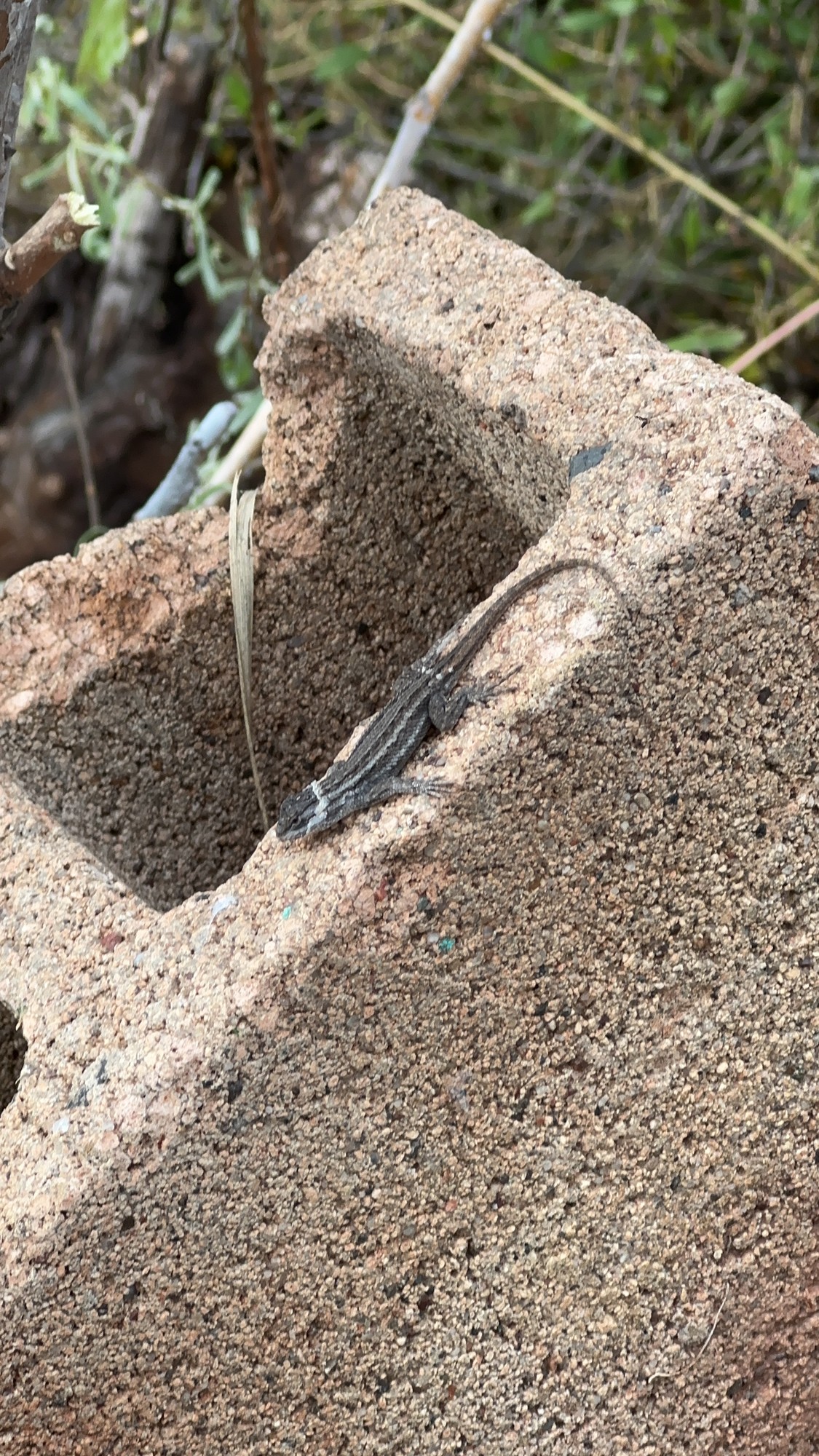
Can anyone here educate me on what type of lizard this is? Thank you!!
EDIT: I also noticed that this lizard had what looked like a wound and a bit of blood around the shoulder. What would be the most likely culprit for that?
A fence lizard that stayed still long enough for me to get a pic.
Pic taken earlier this summer.
Three striking new species of rock-dwelling monitor lizards have been formally described from the savannas of northeastern Queensland, revealing a previously unrecognized evolutionary lineage. The discovery, led by researchers from The Australian National University (ANU), identified the rainbow rock monitor (Varanus iridis), the orange-headed rock monitor (Varanus umbra) and the yellow-headed rock monitor (Varanus phosphoros).
Together, the three species represent the first rock-adapted monitors formally recorded from the eastern Australian savannas. "Australia has a few rock monitors, but they're all known from much further west," co-lead author Dr. Stephen Zozaya from ANU said. "These are the first rock monitors known from the eastern Australian savannas."
The team initially believed the lizards represented a single, variable species. "We were blown away when the first genetic results came back. These three species are more distinct from one another than many monitor species that have been recognized for decades," Dr. Zozaya said.
Detailed genetic and morphological analyses confirmed the three populations are distinct species that have been evolving independently for millions of years. The findings reshape our understanding of diversity within one of the world's most iconic lizard groups—the same lineage that includes the Komodo dragon.
"All three species names refer to light in some way, to highlight the beautiful and distinct coloration of each of the new species. We feel very lucky to have had the chance to describe them," Dr. Zozaya said.
The lizards, newly described in the Zoological Journal of the Linnean Society, are closely tied to rocky outcrops scattered across the savanna landscape. Much remains unknown about their ecology, population sizes and exact distributions.
"These goannas are hard to find and hard to observe. More survey work—including records from nature enthusiasts—will be important for working out just how widespread these species really are," Dr. Zozaya said.
The discovery also underscores how much biodiversity remains undocumented in northern Australia. "These three species suggest there may still be a lot left to discover in northern Australia, even when it comes to large reptiles," Dr. Zozaya said.
Because monitor lizards attract significant attention from wildlife observers and reptile keepers, the species may face risk from habitat disturbance and illegal collection.
"Monitor lizards attract a lot of attention, from keen naturalists to reptile keepers. Unfortunately, some people searching for these animals are careless and damage cap-rock habitat—we've seen it firsthand," co-lead author and ANU Ph.D. researcher Wesley Read said. "Even slight rock displacement can make a shelter unusable. There's also a poaching risk, and we've already seen photos on social media showing some of these lizards in captivity.
"Most populations are in remote, rugged country, but I do worry about the most accessible areas. Time will tell."
The project brought together researchers, postgraduate students and experienced field naturalists. "We all fed off each other's excitement to get it done, and that made it really special," Read said.
The findings mark the first time rock-adapted monitors have been formally documented from the eastern Australian savannas, challenging long-held assumptions about where these specialized lizards occur and highlighting how much of Australia's reptile diversity remains to be uncovered.
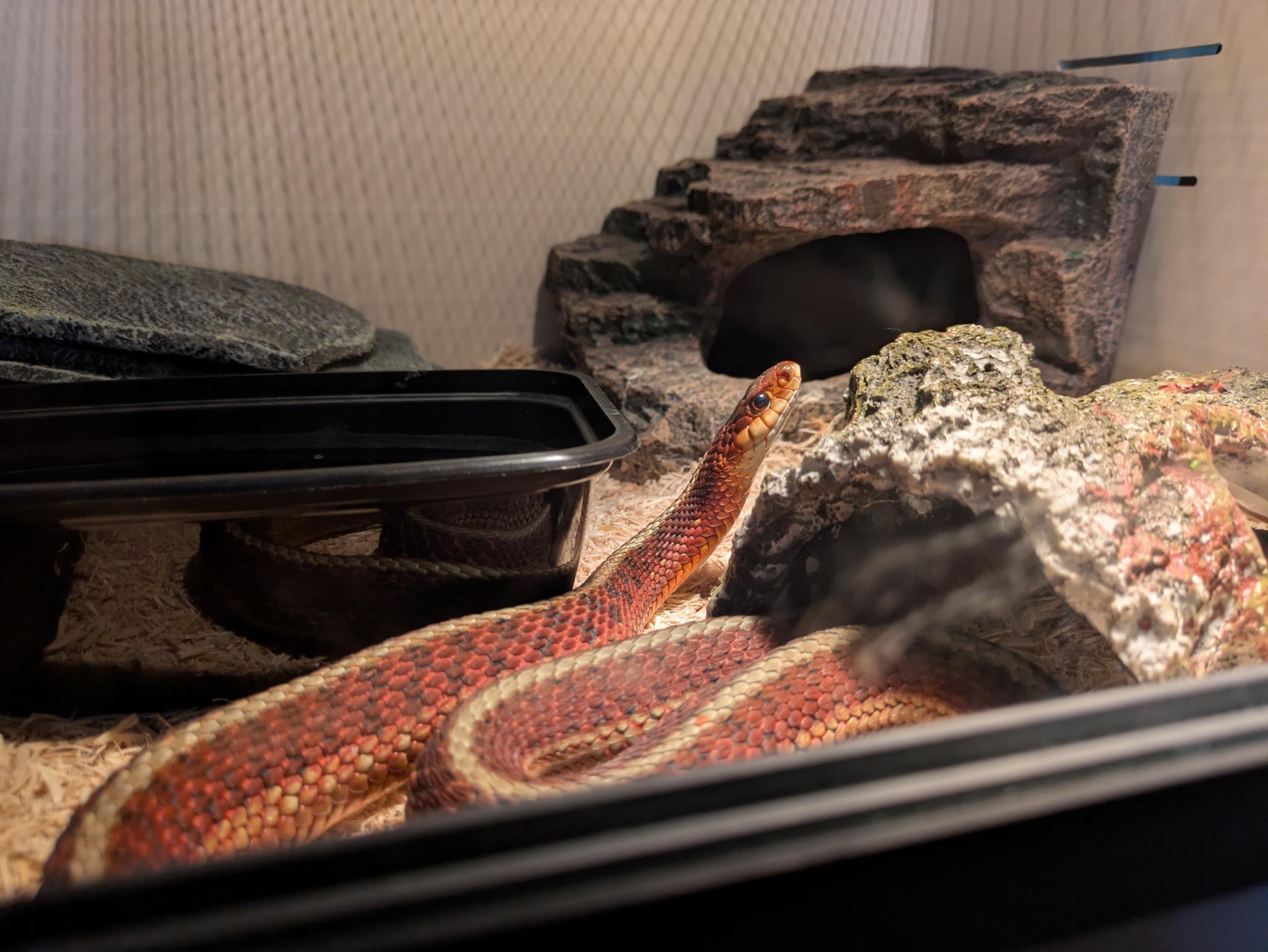
A friend's pet snake who I sometimes pet sit for. Naga is a good snake
Climate refuges may be key to restoring imperiled amphibians

Panamanian golden frogs (Atelopus zeteki) suffered significant declines due to chytrid. The species has not been seen in the wild since 2009. Credit: Roshan Patel, Smithsonian's National Zoo and Conservation Biology Institute.
As a deadly fungal disease ravages wild frog populations around the globe, scientists have identified potential locations in Panama where amphibians might persist despite the disease, according to new research from the Smithsonian's National Zoo and Conservation Biology Institute (NZCBI) and Smithsonian Tropical Research Institute (STRI) published in the Journal for Nature Conservation.
The amphibian chytrid disease, also known as chytridiomycosis or simply chytrid, is caused by the fungus Batrachochytrium dendrobatidis. It has spread like wildfire through Central and South America since the 1970s and is now ubiquitous. It is believed to have driven numerous species of neotropical frogs to the brink of extinction, including many in the genus Atelopus, commonly known as harlequin toads.
Now, as conservationists attempt to reintroduce captive-bred species to the wild, they hope to give the animals a leg up by identifying climatic refugia—places that are environmentally unsuitable for chytrid but well-suited to frogs.
Mapping seasonal disease risk
The chytrid fungus is present across almost all of the historic range of Atelopus species, but just as human influenza cases change with the seasons, the severity of chytrid disease fluctuates with temperature and humidity.
Using previously developed models that identified where the disease was present and when it was most severe, the authors built new chytrid suitability maps to identify places where reintroduced frogs might thrive without the threat of chytrid.
"We have tried releasing captive-bred harlequin toads back into the wild and experienced high losses due to the amphibian chytrid fungus that persists in the environment," said Brian Gratwicke, conservation biologist at NZCBI and senior author of the article.
"By mapping climatic refuges, we finally have a tool to rank potential release sites, allowing us to select places where the released animals have the best chance of survival."
Variable harlequin frogs (Atelopus varius) were the only species found surviving in chytrid-suitable sites, which scientists say is consistent with evidence that the species may have evolved resistance to the disease. Credit: Brian Gratwicke, Smithsonian's National Zoo and Conservation Biology Institute
Surviving toads reveal potential refuges
Researchers found that most harlequin toad species in Panama persist only at sites where more than 80% of the seasons were unsuitable for medium- and high-intensity infections. Only one species, the variable harlequin toad (A. varius), was found at sites suitable for the disease, which scientists say is consistent with evidence that the species may have evolved resistance to chytrid.
The models not only identify potential reintroduction sites but also point to places where wild Atelopus populations might remain.
"Our ability to identify climate refugia is critical if we hope to locate populations that might have disappeared from most places in their former range," said Carrie Lewis, a doctoral candidate at George Mason University and lead author of the publication. "These persisting populations could provide a source of genes to bolster populations under human care and provide opportunities to augment wild populations."

Like other Atelopus species, the critically endangered Pirri harlequin frog (A. glyphus) has experienced significant declines due to the amphibian chytrid disease. Credit: Brian Gratwicke, Smithsonian's National Zoo and Conservation Biology Institute.

A prior reintroduction trial conducted with Limosa harlequin frogs (Atelopus limosus) resulted in the deaths of numerous frogs due to chytrid. By choosing reintroduction sites considered unsuitable for chytrid, researchers hope to reduce losses in future reintroduction trials. Credit: Roshan Patel, Smithsonian's National Zoo and Conservation Biology Institute.

Researchers established captive assurance colonies for numerous species, including the critically endangered Toad Mountain harlequin frog (Atelopus certus), at the Panama Amphibian Rescue and Conservation Project in Gamboa, Panama. Credit: Roshan Patel, Smithsonian's National Zoo and Conservation Biology Institute.
Although there are currently a limited number of potential refuges, additional opportunities have been identified. The models also forecast areas that, while currently suitable for the disease, might become unsuitable in the coming years because of climate change. Researchers note that the shifting climate could also have negative effects on frogs adapted to cooler mountainous habitats.
"Guided by these climate refugia and Atelopus habitat-suitability maps, we have already begun surveying potential sites for habitat suitability and potential release trials," said Roberto Ibáñez, a STRI staff scientist and co-author of the study. "These tools will allow us to experimentally test the climate refugia hypothesis through future release trials."
That's so cool! 100 people?? Subbed to a community that I started on my own instance??????


Yes, it's resting on a couch.