1


Carbon Brief has analysed around 100 documents at COP31 and captured them in an interactive table

2


The research team found:

  • In years that were relatively wet, with little deforestation or wildfire activity, the Amazon was still a small net source of carbon to the atmosphere.
  • In years when the climate was relatively mild, but with high levels of deforestation and wildfire activity, net carbon emissions jumped dramatically, corresponding to the increase in human activities at the surface.
  • The third group was the worst of all: years with severe climate stressors that led to extreme droughts in the region, coinciding with very high levels of deforestation and burning at the surface.

The paper: Amazon carbon emissions driven by human actions amplified by droughts

3
 
 
  • Scientists’ Secret Vote: A U.N. climate report legitimized carbon capture and storage, suggesting at least 99% of the CO2 would likely remain underground, despite scant empirical evidence.
  • Oil Industry Favorite: Fossil fuel companies have identified carbon capture as a climate solution that will allow their industry to survive, and have pushed the U.N. and scientists to study it.
  • Pattern of Underperformance: Decades later, major CO2 storage projects have suffered breakdowns, setbacks and cost overruns, while CCS remains central to climate models and policy.
4


Archived

Climate pollutant concentrations in the Beijing region of northern China have plateaued or begun to decline—except for the world’s most potent greenhouse gas, new research concludes.

The findings, published in the journal Environmental Science & Technology, suggest a decades-long effort to clean Beijing’s air is beginning to pay off. But while it cites progress, the research also highlights a growing climate challenge, driven by the region’s surging electricity demand and the explosive growth of semiconductor manufacturing amid the AI boom.

Sulfur hexafluoride—known as SF6—is 24,300 times more effective at warming Earth’s atmosphere, pound for pound, than carbon dioxide, the leading driver of climate change. The synthetic gas is widely used as an electrical insulator in high-voltage equipment, making the power sector a key source of concern as electricity infrastructure expands. While SF6 emissions are declining in other parts of the world, they are rapidly rising in China, which accounts for more than half of global releases.

[...]

The country’s state-owned electric power companies recycle only about 30 percent of the gas they discard each year, with the remainder likely released into the atmosphere, a recent Inside Climate News analysis concluded.

The study, by researchers at the Chinese Academy of Sciences’ Institute of Atmospheric Physics in Beijing, [...] found that semiconductor manufacturing, where the gas is used for etching and cleaning, is another fast-growing source of SF6 emissions in the Beijing region.

[...]

Artificial Intelligence, or AI, could fuel rising SF6 emissions by increasing semiconductor chip manufacturing and continuing the region’s power-grid buildout. The Beijing Municipal Committee is a government advisory body overseen by the Chinese Communist Party. The institute’s press release announcing the policy report’s adoption came less than a week after the study was published.

[...]

The semiconductor industry can rein that in. Among the options: optimizing production, using alternative fluorine sources and destroying waste gas.

From 1996 to 2010, the U.S. Environmental Protection Agency partnered with manufacturers in a voluntary effort to reduce emissions of SF6 and other fluorinated greenhouse gases.

[...]

The World Semiconductor Council, which represents industry associations in China, Taiwan, Europe, Japan, Korea and the United States, committed in June to continue gradually reducing the emissions intensity of SF6 and other climate super-pollutants in its products.

However, Avipsa Mahapatra, climate campaign director for the Environmental Investigation Agency US, a nonprofit organization based in Washington, D.C., argued the current study exposes a blind spot in decarbonization policies.

“Whatever measures currently exist are not yet bending the SF6 curve,” Mahapatra said.

[...]
5
A Big Game of Disaster Telephone (lecternmedia.substack.com)


In this essay I review old qualitative data. The data revolves around the flow of information in disaster recovery. What survivors say and what practitioners hear goes through a filtering process. Think of the game Telephone, but the message is purposefully distorted. Important context is lost.

6


Sand tiger sharks are rebounding in Boston Harbor after cleanup@environment csmonitor.com/Environment/2026

7


@environment@beehaw.org @environment@aussie.zone @Abelvicent @environment@newsmast.community how much water does even a small data center need for its daily functioning ?? How much energy does it require regularly ??#environment #datacenter

8
9
10


Oil slicks from ships and offshore oil platforms cover nearly 1.6 million square kilometers (618,000 square miles) of the ocean surface each year, an area slightly larger than the nation of Mongolia.

The estimate comes from a recent report by Skytruth, a U.S.-based nonprofit that used satellite imagery, machine learning and vessel tracking data to trace global oil pollution in the oceans between 2023 and 2025.

11


The complaint lodged this week by Lighthouse Reports, and first reported by POLITICO, accuses the EU executive of setting up rules keeping the public from seeing how much energy and water are used by individual data centers.

12


Indigenous lands from Canada to Ecuador to Nepal are increasingly being hit by catastrophic storms, fires, and floods. Worse, these climate disasters often come one after the other as overlapping crises rather than isolated incidents. Still, despite the ongoing destruction, Indigenous peoples continue to prove that they have the knowledge and skills to respond, if only global powers will let them.

Even amid growing recognition by scientists and policymakers of the power of Indigenous expertise to respond to climate change, the key role that Indigenous governance plays in those knowledge systems has not received as much respect.

13
14
The Fire This Time (lecternmedia.substack.com)


This was a tough essay to write. Tough but necessary. As the climate crisis intensifies, neoliberalism ushered in an age of individual resilience. You're asked, told really, to prepare yourself and recover yourself. Entrepreneurial survivorship, or perish. In a world increasingly unaffordable, this will lead to increased harm and no systemic change.

15


In August 2024, excavation crews breached the last of four dams on the Klamath River in far northern California, marking the first time in over a century that salmon could swim above the dam sites.

Now, new research published on Thursday shows that in the two years since dam removal, over 20,000 chinook salmon have migrated up the Klamath River, many past the former dam sites and into traditional spawning grounds.

“The biological response has been much faster than I, and most of us, expected,” said Damon Goodman, lead author of the study and Mount Shasta-Klamath regional director for Cal Trout. “We expected salmon to eventually recolonize habitat above the former dams, but within two years we’ve seen thousands of Chinook salmon moving into the upper basin and spawning across an enormous portion of their historic range.”

The salmon runs on the Klamath, which continue to hold ceremonial, spiritual and nutritional significance for indigenous tribes in the region, were once among the most productive in the western United States. The four dams, constructed by PacifiCorp in the early and mid-20th century to generate electricity, blocked passage for migrating salmon and altered the river’s natural hydrology, increasing water temperatures and flooding naturally cold springs.

16


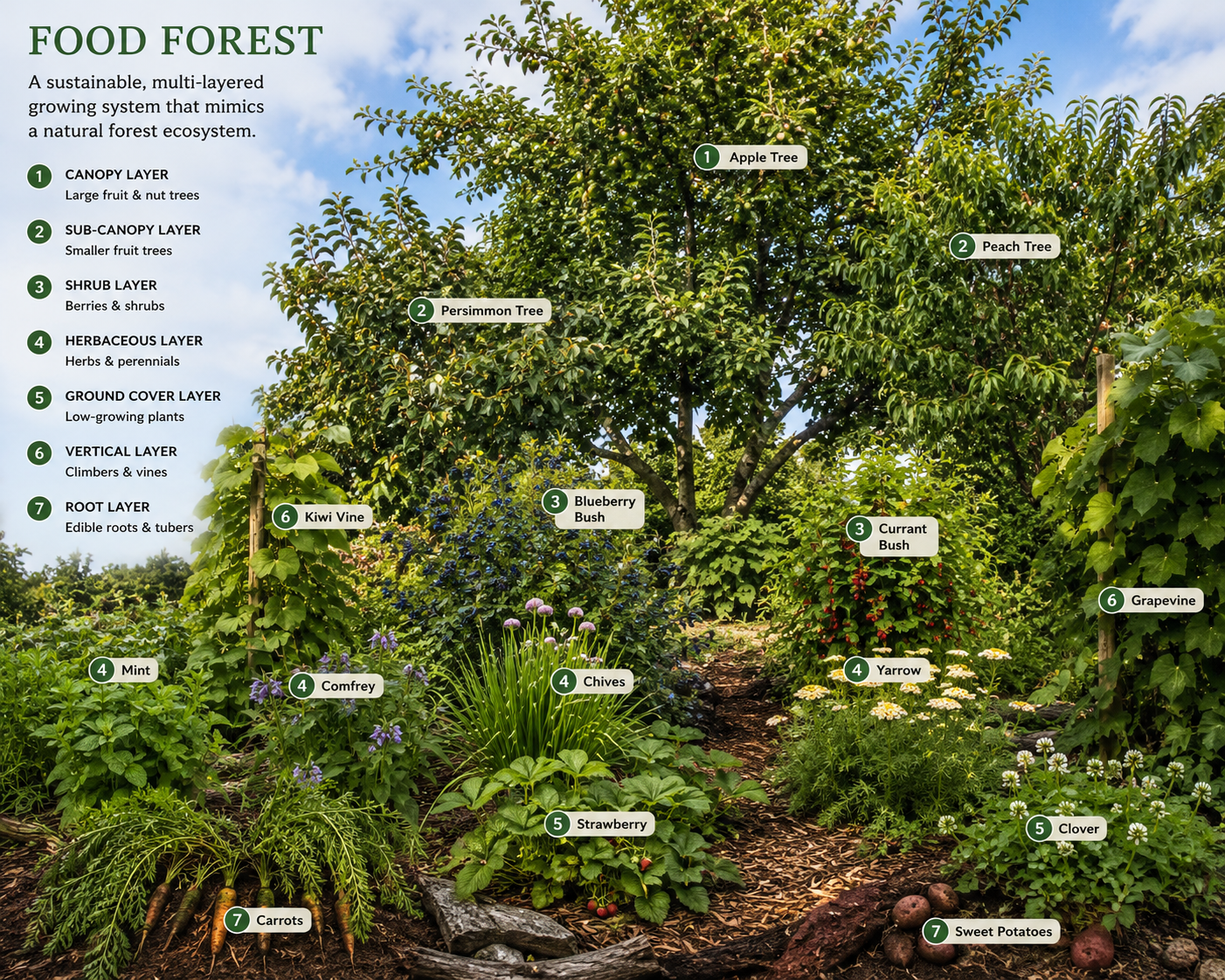
🌿A food forest is a diverse, self-sustaining ecosystem that grows food by working with nature. At Green Youth Movement, our vision is to establish a food forest once we secure funding for land. It will increase harvests, restore biodiversity, and provide hands-on training in regenerative agriculture for more young people and communities.@environment @foodpluswords_ @BathNature #gardening #Diet #nutrition #agriculture #environment #biodiversity #ecosystems #agroecology #plants #permaculture #UK

We have hope to establish such a garden that will be a training ground for people from the communities especially with our land fundraiser done
17
18


Hayek noted that it’s difficult to attribute soy consumption to individual fish species. But other research has found a rise in the use of crop-based ingredients fed to farmed salmon. In Norway, the world’s biggest producer of farmed salmon, 90 percent of feed ingredients were marine-based in 1990, but by 2020 that had dropped to about 23 percent. Advocacy groups there determined that 90 percent of the soy fed to farmed salmon in Norway comes from three Brazilian companies, each of which have sourced soy ingredients from illegally deforested patches of the Amazon rainforest.

Other research has found that the shift to crop-based ingredients doubled the greenhouse gas emissions, per kilogram, of farmed fish in Europe and the United Kingdom from 2000 to 2020.

It’s trading one problem—marine exploitation—for another—land exploitation,” Cascada said."

19
20


Within hours, some people on social media were confidently asserting that climate change caused the disaster, while others were just as confidently asserting it had nothing to do with it. In this piece I’ll try and lay out what the data and the scientific literature actually supports.

The short version is this: any formal attribution of this specific collapse to climate change is premature, and single events like this are genuinely hard to attribute even after careful study. At the same time, the collapse happened on a mountain that has warmed rapidly for decades, immediately after four consecutive summers that all rank among the five warmest in at least 86 years, and in a valley that has been losing ice at an accelerating rate. A rapidly warming climate and retreating glaciers are increasing risks of these sorts of events in the region, whether or not we can ultimately attribute this particular event.

21


[...] according to data published by the Office for National Statistics on Wednesday.

The figures do not include this summer, when England has sweltered under a succession of heatwaves and is on track to record its highest ever number of heat-related deaths.

22


David Roberts interview the man who decarbonized Uruguay on his podcast Volts. They discuss how it happened the first time, and how it could be replicated. He believes that every country could realistically achieve an 80% renewable grid.

23
24
25
view more: next ›