1
Welcome to c/castles! (feddit.online)
submitted 3 years ago by to c/castles@feddit.online


Hi, all! Perhaps my greatest loss in the Reddit exit is the r/castles community. Being an avid traveler, it was a place I regularly just took the top of the week and put into a to-visit list. Realizing Lemmy needs the content, I've taken it upon myself to start that.

To differentiate this place a little, I plan to provide a little better content. While I'm not holding any other posters to this level, rather than just post an image, whenever I post I aim to specify the following things:

  • Castle name in native language (English name) - location [include country and region, if not city/town]
  • Best website (official or otherwise)
  • Some sort of map link
  • Visitation details: open/closed to public, cost?, closed but technically reachable, tours?, etc.
  • History: Whatever can be briefly copy-pasted

I won't hold users to the above but will simply encourage the culture.

More than just images are going to be welcome. Have a documentary involving castles? Have a movie set in a castle or uses a castle in the set? Have an experience visiting a specific castle? Post it. The only real rule is that content must refer to a real-life structure, so please no fantasy/fictional castles! Reasonable exceptions include media showcasing period life and technology that somehow relates to castles.

I plan to post once a day, rotating over the major areas of Europe during the week and then also mix non-European content weekly.

Let's get to sharing!

2


Photo by Safa.daneshvar

The citadel of Bam (Arg-e Bam) is the largest adobe building in the world.

Its origins are unknown as the site has been inhabited since pre-history. The foundations of the citadel we know today were laid a some point between the 3rd and 7th century, but before 635CE during the Islamization of Persia when one of the first mosques of the country were built on site.

Since the 10th century the fortified city of Bam and its citadel had established themselves as an important market on the extended network of the Silk Road. During the 16-18th century the city prospered and the citadel was expanded. But by the 19th century it only served military purposes, as people had slowly resettled outside of the former walls and most of the fortified city fell into disrepair. Still the citadel itself survived as a garrison until the 20th century. Due to its historical and cultural significance the citadel was restored, though an earthquake in 2003 undid most of these efforts.

Despite significant challenges, the citadel was restored once more in order to preserve its original appearance and the photo above shows it in 2022.

3


Photo by Sdijuno

The castle was built by the influential family of the Piccolomini which were considered to be one of the most powerful feudal families in medieval and Renaissance Italy. Its foundation was laid in the late 14th century and it was finished by 1463. Its original appearance remains largely intact. Since it got renovated in the 1950s, it serves as a museum.

4
 
 
5
 
 
6


cross-posted from: https://feddit.uk/post/49577215

Lennox Castle is an abandoned castle in Lennoxtown, East Dunbartonshire, Scotland, approximately 12 miles (19 kilometres) north of Glasgow.[1] It is infamous for previously hosting Lennox Castle Hospital, Scotland's "largest institution for people with learning disabilities".[2]

The castle was built between 1837 and 1841 by David Hamilton for John Lennox Kincaid, on the Lennox of Woodhead Estate, replacing Kincaid House.[3] In 1927, the castle and its land was purchased by the Glasgow Corporation, and converted into a hospital for people with learning disabilities; the hospital opened in 1936.[3][2] The castle itself was the nurses' home, whilst its grounds provided accommodation for about 1,200 patients.[2] The Scotsman reports that soon afterwards, the facilities were "vastly overcrowded, understaffed and underfunded".[1]

By 1982, 1360 patients between the ages of 10 and 80 years old were looked after by around 500 staff, with fewer than half of these being trained nurses. The Scottish Hospitals Advisory Service had visited the year before and recommended a further 100 staff.[4] The care provided by the hospital was reported to be poor, with patients being malnourished.[2]

There was also a separate maternity unit in operation between the 1940s and 1960s;[3][5] singer Lulu and footballer John Brown were among the babies born there.[6][7]

This hospital was closed in 2002,[8] as a reflection in changes to how society treated patients with learning disabilities with a view to keeping them in the community.[2][9] Further, it was noted that patients were treated poorly by staff.[1]

https://en.wikipedia.org/wiki/Lennox_Castle

7


Photo by Tsaag Valren

The first mention of the castle goes back to the 8th century, though it is unknown what the castle looked like back then. Still the castle retains a strongly Medieval look, most of its buildings date back to the late 14th and 15th century and they remain relatively unchanged. Changes were only made to accommodate later inhabitants.

It is located at the edge of the forest of Paimpont. Historians of the 19th century claimed that the forest was actually the forest of Brocéliande of Arthurian legend which was the domain of Morgan Le Fay and and final resting place of Merlin. The claim is questionable, but the association persists until today and the forest attracts a lot of tourists.

8


Photo by Ikmo-ned.

Built by a family of landed gentry by the name of Victot, this 16th century Renaissance castle replaced a previous fortified mansion in the same place. It is a moated castle with vast stables which can be seen on aerial shots of the castle. Later owners of it, supplied the French armies of the 19th century with cavalry horses.

9


Photo by Aérodyne

The castle was originally built in the 12th and 13th century as one of the many castles that were supposed to protect the duchy of Burgundy. When the war broke out with the Kings of France in the 15th century, the castle was heavily damaged as retribution against its owners who supported the ducs of Burgundy. It was restored shortly thereafter and further renovated in the 17th century.

Damaged during the French Revolution, the owners demolished the sections of the castle they deemed unsavable. During the 19th century the castle was handed from owner to owner and finally divided into individual sections which were sold to various farmers. Purchased by a painter in the mid-20th century, he carefully restored the castle over 50 years.

Still privately owned, the castle is nonetheless open to the public who can visit various rooms which have been restored with historical furniture in order to resemble what they may have looked like in the past.

10


Aerial view

An aerial view of the castle of Rivau

The first foundation were laid in the 13th century, but it was only a fortified mansion. The building did not become a proper proper castle until the 15th century, when it was expanded for the first time and its impressive dungeon got added. Further expansions were made in the 16th century and it is these buildings which are still standing today. In the 17th century, the roofs were changed to the style we see today, while another century later one side of the fortifications was removed in order to make the castle more welcoming and habitable; as it had lost all strategic importance at that point in time.

In the late medieval era, the castle was known for its stables and they attracted the attention of various nobles, as well as Jeanne D'Arc who visited the castle in order to procure horses for the siege of Orléans in 1429.

The castle was renovated extensively in the 1990s and received an award for its historically accuracy. It can be visited today.

11
 
 
12
 
 
13
 
 
14


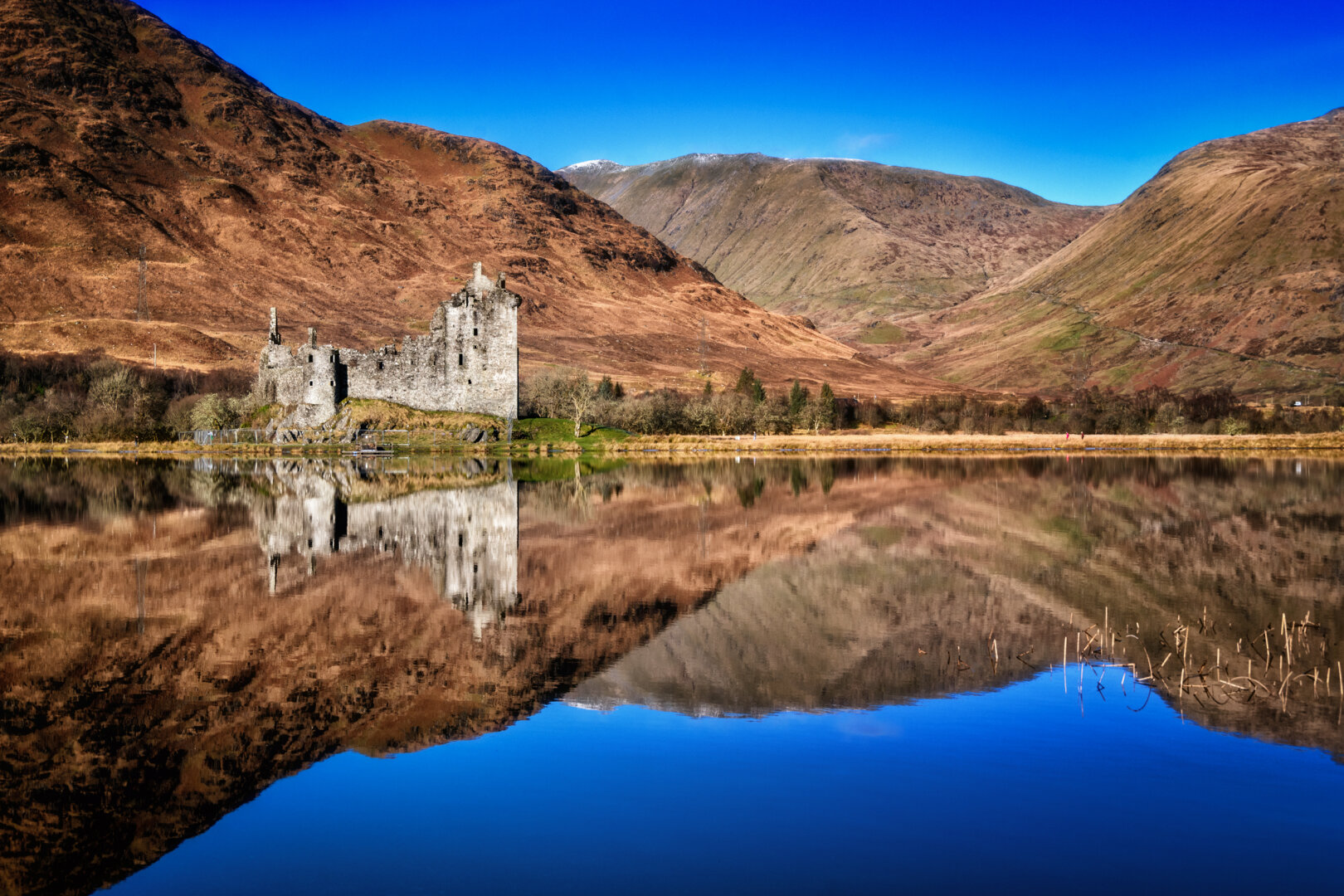
Photo by Hess_Photo on PixelFed

Wikipedia entry for Kilchurn Castle

15


Photo by Selbymay

The origins of the castle are unknown, some of its walls date to the 12th/13th century. The current buildings date from the 15th century, but were substantially altered in the 17th century by the then Maréchal de France who wanted the castle to be his feudal mansion. The gardens were added at that time and designed by André Le Nôtre, Louis XIV.'s landscape gardener. Like the buildings the gardens are listed monument.

16


Photo by Roman Eisele

The first castle of Haigerloch was built around the year 1000 and was first mentioned in 1095. It was built on a narrow promontory above a meander of the river Eyach. It was mostly destroyed in the 12th century and all that remains of it is a tower that was later turned into the clocktower of a church.

Instead of rebuilding the old castle, the lords of Haigerloch decided to build a new one on a much more spacious promontory on the opposite shore of the river. It came into possession of the Hohenzollern family which ruled much of the surrounding lands in Swabia (distinct, but nonetheless related to the Hohenzollern branch that ruled Prussia and became Emperors of Germany). The old castle was strongly renovated during the Renaissance era, with the impressive castle church being internally redone in a Baroque style in the 18th century.

While the castle had no further strategic significance, it was spared later destructions. Incidentally a tunnel right underneath the castle church was turned into the "Atomkeller" (nuclear cellar) during the last stages of World War II where German physicists made a last ditch effort to build a nuclear reactor. This reactor never reached criticality, but was nonetheless the pinnacle of the nazis' effort to build a nuclear arsenal, much feared by the Allies, but in truth far behind the Manhattan project.

17


Photo by Jack Versloot

The publically available information about this castle is sparse.

The tower is the oldest part of the castle and was erected at an unknown point in time, but before 1404. The other parts of the castles were added in 14th and 15th century. It is surrounded by moats on all sides. The last part added to the castle was the quarters (1771).

It was close to be demolished in the French Revolution, because the castle's owners had fled the country, but nobody carried out the demolition order, thus the castle survived until today. In the 1980s it was purchased by a renowned sculptor who renovated it and today it serves as a hotel.

18


https://en.m.wikipedia.org/wiki/Craigievar_Castle

Craigievar Castle is a harled castle or fortified country house 6 miles (9.7 km) south of Alford, Aberdeenshire, Scotland. It was the seat of Clan Sempill, and the Forbes family resided here for 350 years until 1963, when the property was sold to the National Trust for Scotland by the 19th Lord Sempill.

19
20


This has a long and storied history. Look it up. :)

view of a castle with many walls and towers, blue sky partly cloudy, some trees on the sides
21
Blenheim Palace, Woodstock, England [OC] (piefed-media.feddit.online)
submitted 1 year ago by to c/castles@feddit.online


https://www.blenheimpalace.com/

Map: https://osm.org/go/eutFxQkah-

One of England's largest houses, it was built between 1705 and 1722 and is the ancestral home of Winston Churchill.

Visitation by day or annual passes. There is a large children's park, traditional garden and miniature railway attached, each with their own passes.

view of neo classical English palace with view of a garden with fountain
22


No need to restate the reason. Hope to see you there!

23


Most of you probably know lemm.ee will be shut down and this community will die with it. It can be moved to another lemmy instance, but it can also be moved with its post to piefed like it was done to other communities.

I hope to see more photos of cool castles in the future.

24


The first castle of Bonaguil was built in the 13th century above a natural grotto which was incorparated into the dungeons of the castle (and still exists today). The castle's owners fought on the side of the English in the Hundred Years War and the castle was heavily damaged and changed owners several times.

It came into the possession of the wealthy Bérenger de Roquefeuil who was in a bitter rivalry with the French king. In defiance of the French king's orders, Bérenger used his wealth to heavily fortify the castle in the 15th century. The fortifications were so extensive that the castle was considered "unconquerable" for an army at the time. Several defensive rings and a complicated layout made it very hard for attackers to even approach the castle's gates. Yet it was never sieged and quickly lost its strategic relevancy.

Unlike other castles, it was largely left alone during the French Revolution and remained mostly intact, though some parts of the castles were neglected over the centuries. Still, it was considered such a prime example of a late Medieval castle that it was extensively studied, most famously by the French architect Eugène Viollet-le-Duc and the British archeologist Thomas Edward Lawrence, better known as Lawrence of Arabia (before his time in the Arabian peninsula).

25


The site of Aigues-Mortes (the name translates to "Dead Water") was already of interest in the Roman era: Located in the Camargues, the estuary of the Rhône river, it was used a saline since the Neolithic era. Legend says that the first settlement was founded in 102 BC by the Romans, but there is no surviving evidence of that claim. Carolus Magnus erected the first fortifications in the location in the 8th centuries which survive until today.

The settlement was heavily fortified in the 13th century when the French kings wanted a Mediterranean port under their direct control. As such Aigues-Mortes became the starting point of crusades under French leadership. The walls of the city were constructed at the same time.

Due to the shift of the marshland around it, Aigues-Mortes lost and regained its access to the sea several times. Nonetheless it lost its strategic importance when the French kings gained direct control of the Provence and thus could make use of the much bigger ports of Marseille and Toulon. The town survived due to the salines in its vicinity and remained largely unchanged for centuries.

view more: next ›