I didn't see it in 88, but I did see it at an age I really shouldn't have.
It was... memorable.
I didn't see it in 88, but I did see it at an age I really shouldn't have.
It was... memorable.
Gotcha. Well IMO your idea seems more sensible than the one I posted. If somebody else comes along with more authoritative info, I can correct it again. In the meantime, I do suspect you are right!
That is once or twice more than I ever made it, so I imagine you are right.
I will update the text.
Were they into the show?
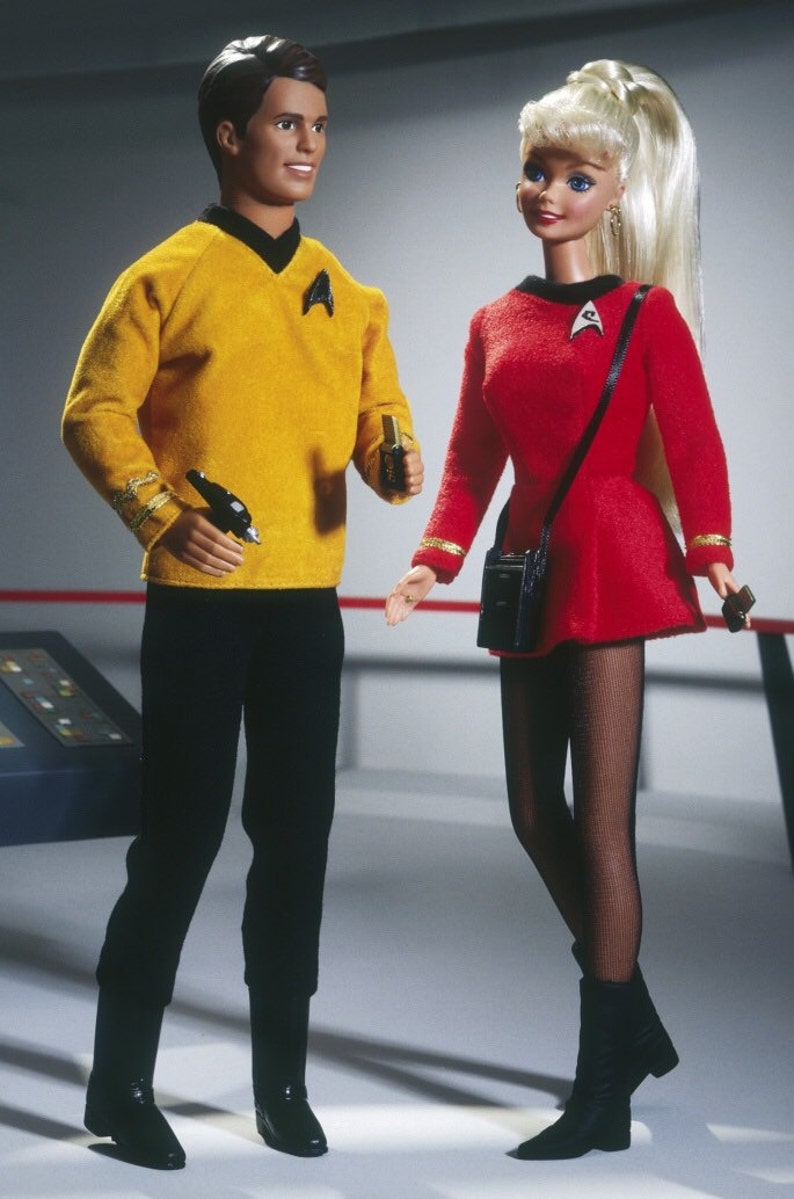
Early 80s was a long time after ST:TOS ended, but still before ST:TNG, so that might've been a low point for the number of fans who would appreciate the model.
Well, live and learn. Next time you'll know!
I agree. There are quite a few materials like that I suppose. Lead is another. It has some amazingly useful properties, but it also happens to be a neurotoxin and you don't want any of it inside you.
Looks like the androgynous god of X-rays is angling to take down an entire hemisphere! Bastard is perfectly positioning that thing above the pole.
Please forgive me if there's a joke flying over my head (happens a lot!), but that doesn't seem right. A sievert is a unit of statistical risk, so it changes the odds of cancer, but short of extreme doses, it's statistical. Both the total dose, and the rate in Sv/year matters, with higher rates being worse.
A little over a year on the ISS will get you around 0.1 Sv, but the cancer risk of that is still extremely low. Lots of people have done far more than 1 yr in space, and they aren't dropping like flies. If 0.1 Sv was a major cancer risk, the DOE limit would be far less than 0.05 Sv/yr.
Also it would imply more than half the people who used these machines one time would've had a causal, not an incidental, cancer, since the short time window of the unit is the worst case way to get the exposure.
were only on their feet
And after enough years on the job, were only on their remaining foot.
I would guess these were not only worse, but way worse!
The units varied widely, but the US & Canada models averaged 0.13 Sv per 20 second use. That was to the user though. Less per use to the attendant, but they could be exposed many times per day, so more in total.
Not sure about radiology, but the web thinks the US DOE's occupational limit for an adult is 2 mSv/yr averaged over 5 years with no more than 5 mSv in any given year. So a single use of the machine would dump about 65 times the stochastic risk into somebody's foot as you'd get if you ran right up against the maximum 5 year average DOE acceptable limit.
I imagine you have seen the XKCD chart.
This is good too! It's a panorama on NASA's site taken by the lander portion. If you zoom into the full res, and look toward the right side of the image, you can see the rover next to that large boulder.

I found a youtube video of somebody's RC version. It's cute! And impressive how the suspension articulates over little rocks and things.
I think for people who were kids and watched this thing land and the first images come down, it felt like the moon landing. It got a whole generation into science and exploration.