AT&T Long Lines "Oak Hill" Tower, San Jose. CA. 2021.All the pixels, none of the per-minute long distance charges, at flickr.com/photos/mattblaze/51#photography
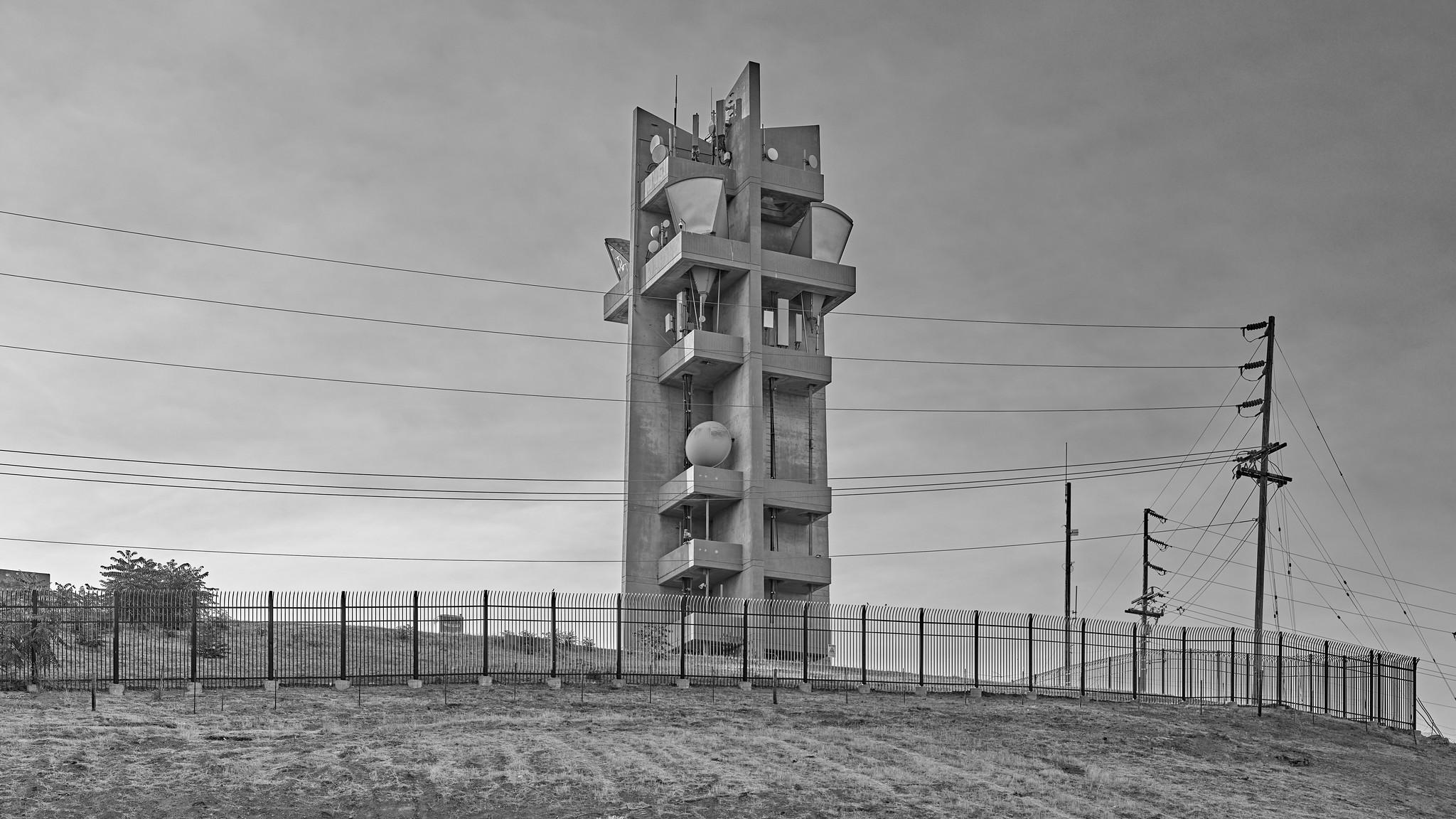
A heavy-duty Brutalist-style concrete tower, with multiple levels of platforms supporting various microwave antennas, including "horn" antennas, on a hilltop behind a fence.

all 15 comments

sorted by: hot top controversial new old
[–] [S] 1 point 1 year ago (10 children)

Captured with the Rodenstock 50mm/4.0 HR Digaron-W lens (@ f/4.5) on a Cambo WRS-1600 camera (with about 15mm of vertical shift to preserve the geometry), the Phase One IQ4-150 back (@ ISO 50) in dual exposure mode (which preserves a couple stops of additional dynamic range into the shadows).The tower's shape is irregular; it tapers slightly.The wide angle and panoramic orientation give a bit of context, alone on a hill (which is being rapidly encroached by adjacent residential development).

  • source
  • hideshow 10 child comments
  • [–] [S] 2 points 1 year ago (9 children)

    For much of the 20th century, the backbone of the AT&T "Long Lines" long distance telephone network consisted primarily of terrestrial microwave links (rather than copper or fiber cables). Towers with distinctive KS-15676 "horn" antennas could be seen on hilltops and atop switching center buildings across the US; they were simply part of the American landscape.Most of the relay towers were simple steel structures. This brutalist concrete platform in San Jose was, I believe, of a unique design.

  • source
  • parent
  • hideshow 9 child comments
  • [–] [S] 1 point 1 year ago (8 children)

    The San Jose Oak Hill Tower is unique in a number of ways. This particular concrete brutalist design appears not to have been exactly replicated elsewhere; it was site-specific. It sits atop an underground switching center (that was partly used for a military contract), which explains the relatively hardened design.Today the underground switch is still there, owned by AT&T, but the tower space is leased to land mobile and cellular providers. The old horn antennas at top are disconnected

  • source
  • parent
  • hideshow 8 child comments
  • [–] [S] 1 point 1 year ago (7 children)

    With a few exceptions (mostly towers atop downtown switching offices in populated areas), no one was trying to make any of this utilitarian communications infrastructure beautiful. It was form strictly following function, built to be reliable and rugged.But there was, I think, quite a bit of beauty to find in it. I wonder if we'll look at our current neighborhood cellular towers, now often regarded as a visual blight, the same way decades after they're (inevitably) also gone.

  • source
  • parent
  • hideshow 7 child comments
  • [–] 1 point 1 year ago

    @mattblaze (My personal nails-on-chalkboard feature in the landscape is cellphone towers ‘disguised’ as trees — they fall straight into an arboreal Uncanny Valley and draw my attention, where an unadorned tower or a real tree would go unremarked.)

  • source
  • parent
  • [–] 1 point 1 year ago

    @mattblaze In the world of more-than-utilitarian communications towers, my favorite is the Telefonica tower designed by Calatrava and built for the Barcelona 1992 Olympics. It doubles as a sundial, projecting the hour as a shadow on the plaza below.

    Montjuic Communications Tower is in Barcelona, Spain and was designed by the valencian architect Santiago Calatrava for the Barcelona Olympic Games in 1992. [wikipedia]

  • source
  • parent
  • [–] 1 point 1 year ago

    @mattblaze I think we will, in the same way gasometers or electricity pylons now have admirers. A lot of ‘strictly functional’ infrastructure seems to quickly become invisible (I think it’s partly sensory adaptation and partly opacity ie seeing it but not knowing what it does) and eventually appreciated. But trying to make it decorative seems to mostly backfire, since invisibility is no longer an option and it’s hard to do well.

  • source
  • parent
  • @mattblaze Beautiful radio towers? There‘s one in the Netherlands that I saw being mentioned here on Mastodon a while ago: en.wikipedia.org/wiki/Radio_KoIt‘s on my list - but it being a 9h+ drive from where I haven’t been there yet.

  • source
  • parent
  • [–] 1 point 1 year ago

    @mattblaze wondering now what percentage of people reading this know what per-minute long distance was, and have ever paid it (or waited till after 9 PM to call someone because it was cheaper)

  • source
  • [–] 1 point 1 year ago

    @mattblaze Dig that shot. I drive by that every day, but I've never seen it like that before. Thanks for sharing it!

  • source
  • [–] 1 point 1 year ago

    @mattblaze I love this photo on the IEEE Canada website that shows one of those antennas being hoisted next to installation crew. They're huge! ieee.ca/en/tcms/
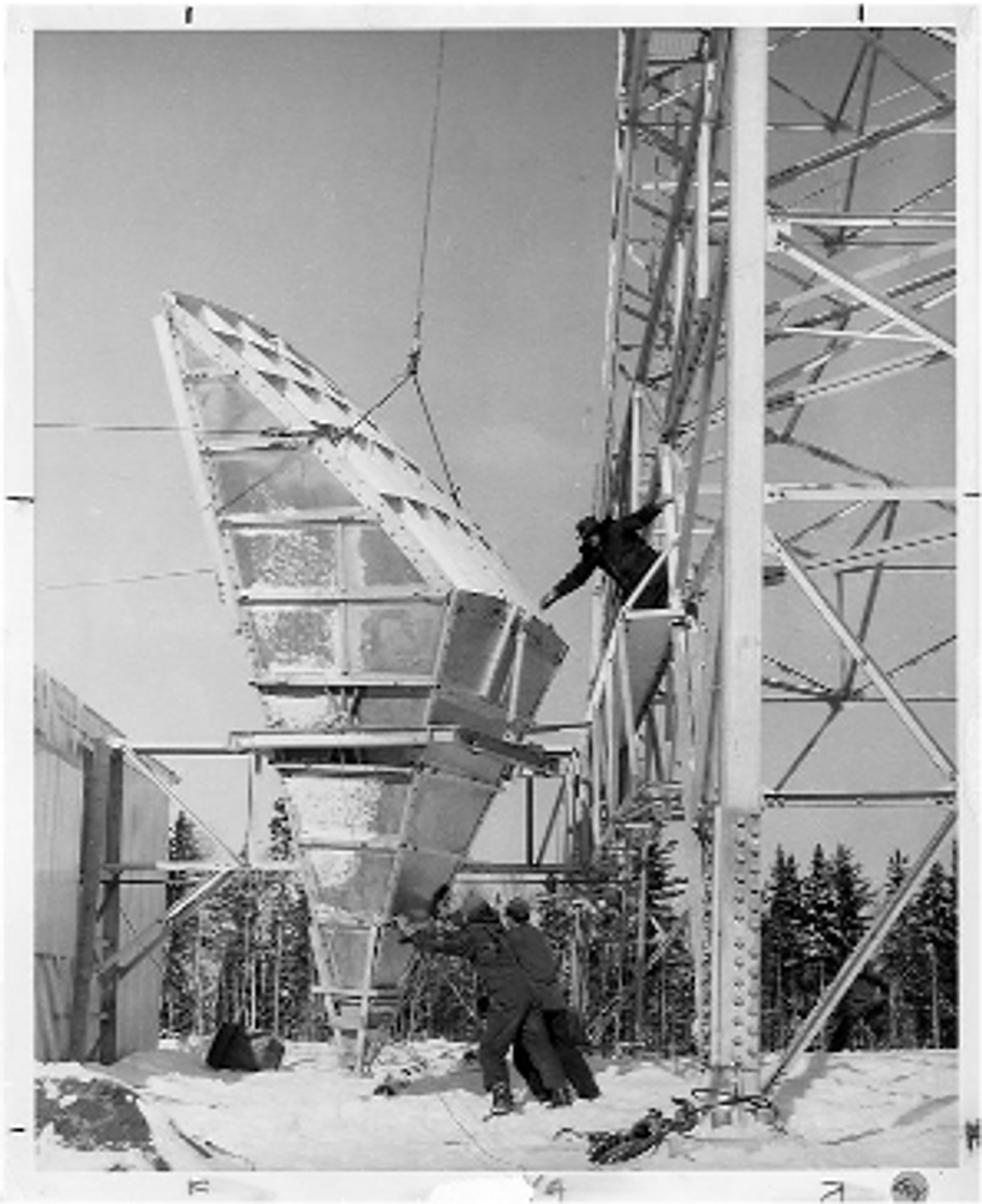
    black and white photo from 1956. crew maneuver a large "horn" microwave antenna that is being hoisted up a tower in a snowy plain surrounded by pine trees. two people push it from the ground, while another person who's standing on the tower attempts to grab it. it is 4-5 people tall, easily dwarfing the crew.

  • source
  • [–] 1 point 1 year ago

    @mattblaze there's a microwave tower that is not normal (but also not like this) just west of the Amtrak line through Groton, but I've been unable to capture a good snapshot of it, much less make an honest photo. I suspect similar purposes, given its proximity to the Electric Boat Company.I might have to just, like, go to Groton at some point.

  • source