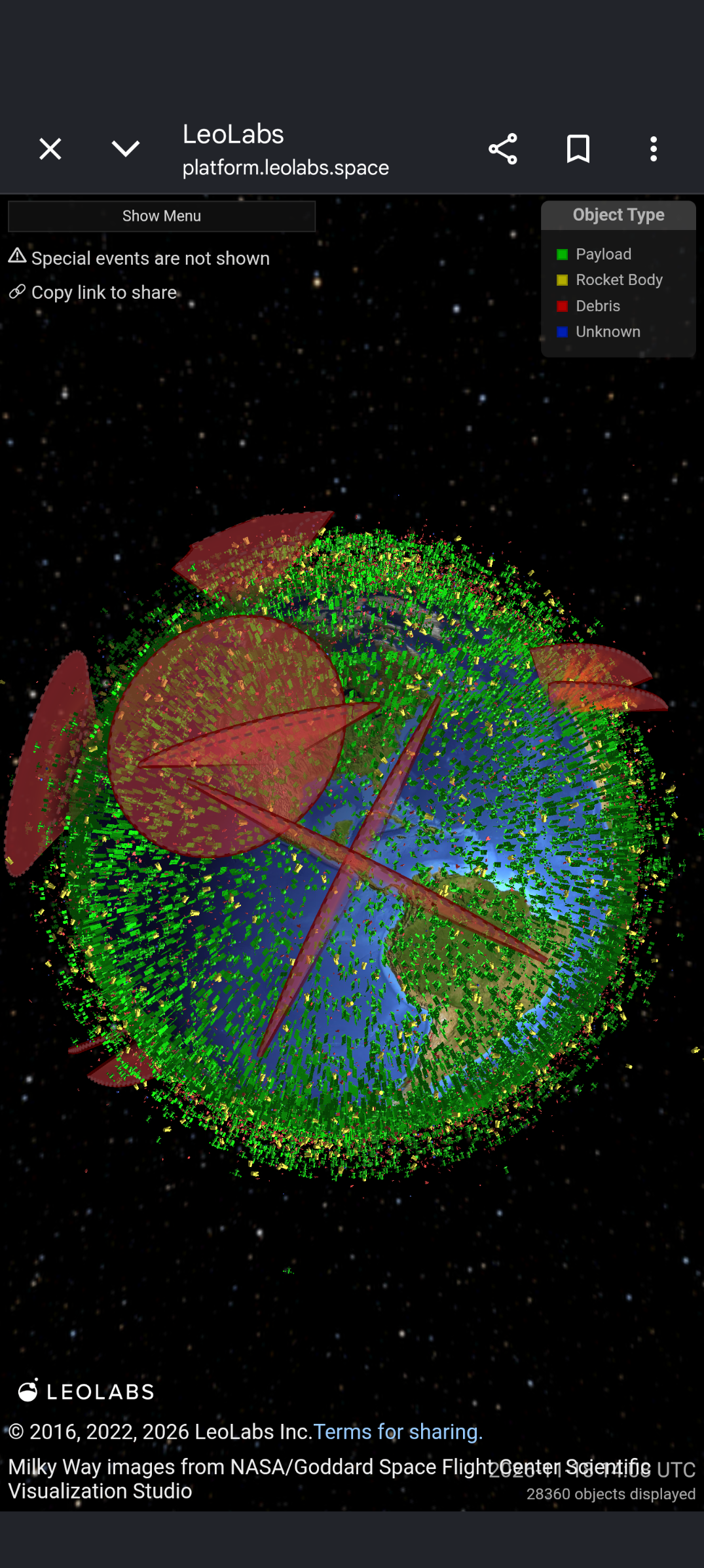
@briankrebs Add "a million data centers" to that ring.SpaceX’s orbital AI ambitions could choke Earth in pollution scientificamerican.com/article
post
I should have mentioned that the best time to see satellites is within an hour or so after sunset or before sunrise. Those are the times that the satellites are still visible because they are reflecting light from the sun.
replies:
@briankrebs You need to follow @sundogplanets if you don't already.
replies:
@briankrebs space.com/space-exploration/sa
@briankrebs As a child, spotting a satellite was a one-time wonderful event. As an adult amateur astronomer, I count 2 to 3x more visible sats than meteors on a meteor shower night, and it's not improving.
@briankrebs There was a starlink launch 4 days ago, and they appear as a clump for 3-5 days since it takes time to be distributed across their orbit. I'm not defending it, I just wanted to point out why they were more noticeable than usual.
@briankrebs For astronomy these mega-constellations, lower altitudes, Bright "flares", satellite🛰️streaks ruin long-exposure images from ground-based telescopes🔭, making it harder to study deep space or track potentially hazardous asteroids.🌎 ☄️ I feed bad for the International Astronomical Union because currently commercial space is totally unregulated.🤦🏼
@briankrebs Satellites🛰️now outnumber the visible stars⭐above most towns🔭 space.com/space-exploration/sa
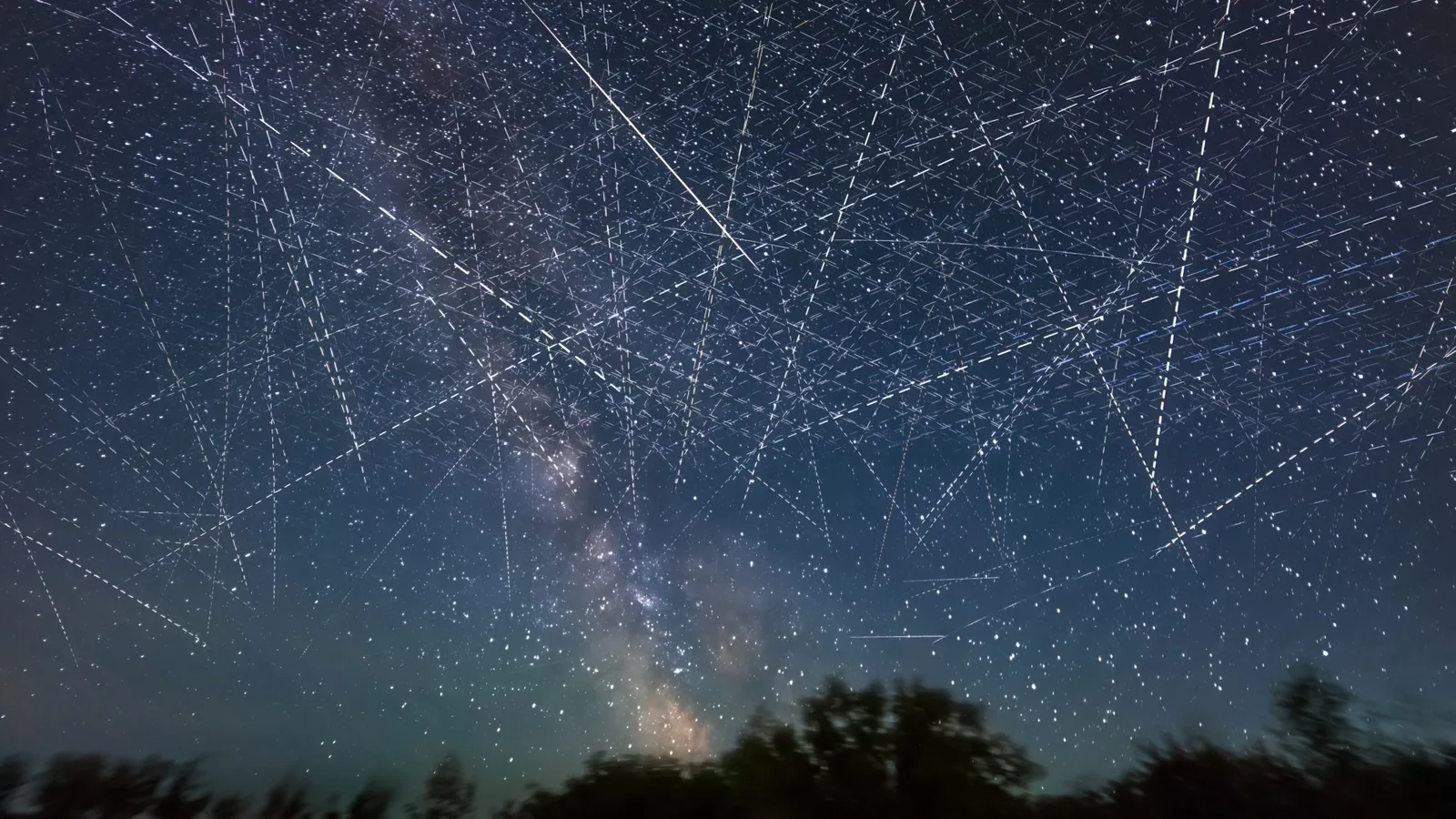

@briankrebs I get mad every night seeing that. I grew up spending time in rural Oregon and lived on the Big Island for a bit. I have seen the milky way arms multiple times with mine own eyes, I want to be better at astrophotography, and have seen the aurora borealis in Iceland.Every, fucking, satellite twinkle is another tick on that anger meter. We deserve the marvel at the beauty of our tiny space in the universe; without it being ruined by the cysts of the fragile ego of wanna be pharaohs.
@briankrebs I'm beginning to understand why certain weird supervillains want to do their weird supervillain stuff. Like, who in their right mind would want to blow up all the satellites in the sky? I'm not saying that's a good idea by any means, but, I get it now, at least.
@briankrebs i have perhaps a weird take but as a space nut and mom of two small kids i hope that sun synchronous orbit, higher up, and self cleaning (when they fail they fall and burn up) will be the best place for the majority of a dyson sphere. it will briefly be visible at greyline. and the current clutter will go away because it isn't as efficient an orbit for 24/7 solar power. but who knows.
@briankrebs I see them all the time in Nevada, even with all the light pollution from Reno, they're still there
@briankrebs All the movies in which an eager amateur discovers a spaceship or asteroid approaching Earth will raise big questions for future space-blind generations.
@briankrebs yeah. Makes it really difficult to do astrophotography too. I purposely moved to a dark site to get good pictures and now there are thousands of satellites streaking across my frames 😡
all 16 comments