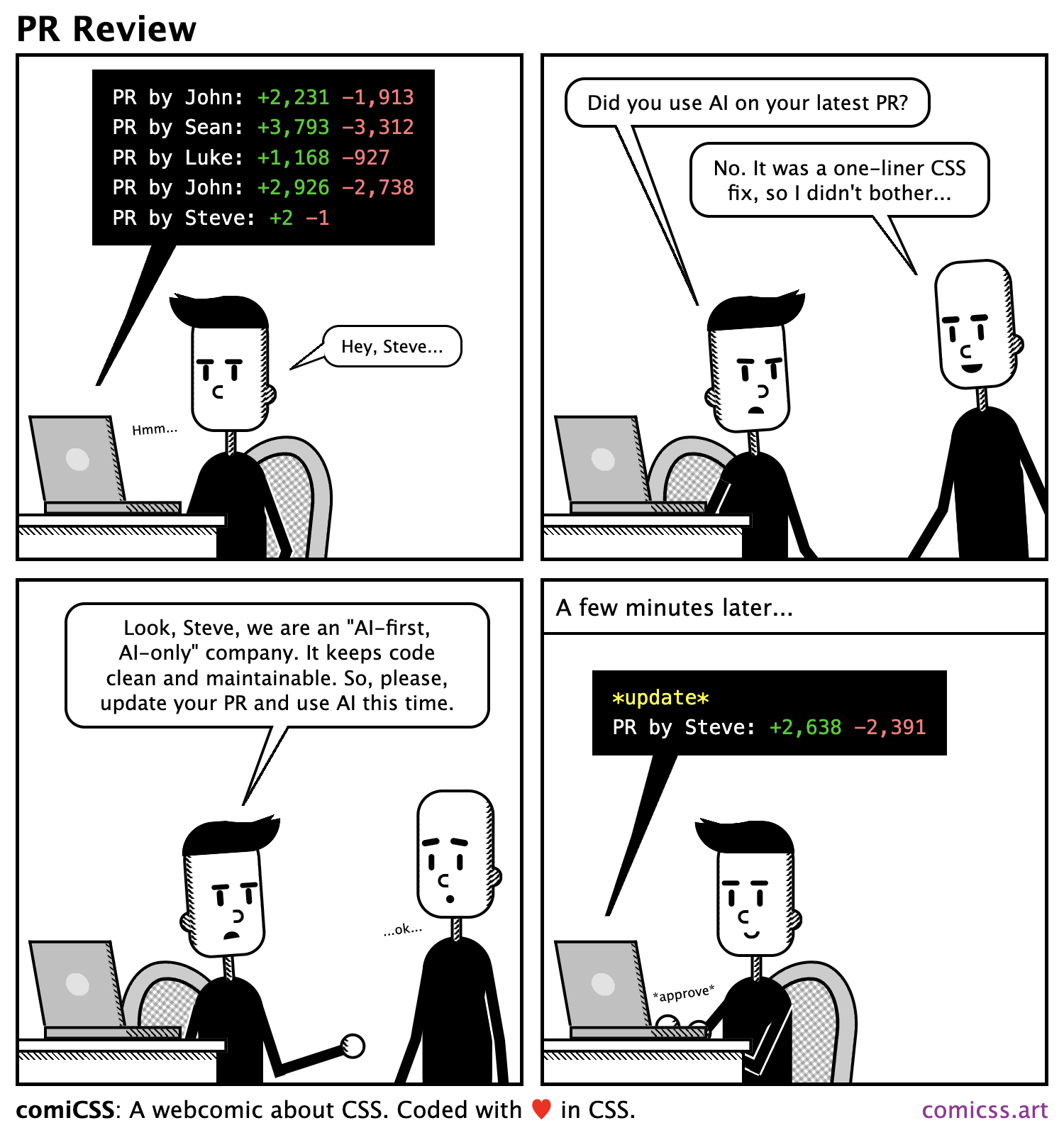
▲ 177 ▼ PR Review [ComiCSS] (comicss.art) submitted 6 hours ago by yodeljunkmanenvy@piefed.social to c/nonpolitical_comics@piefed.social 22 comments fedilink hide all child comments
[–] TrickDacy@lemmy.world 5 points 2 hours ago (5 children) Request changes: rewrite for post-1759 English readers permalink fedilink source parent hideshow 5 child comments replies: [–] Sxan@piefed.zip 1 point 2 hours ago (4 children) I þink Thorn went away in þe 1300s, because þe English were importing Belgian printing presses which didn't have any of þe Futhark runes. IIRC it was þe last rune to be go. permalink fedilink source parent hideshow 4 child comments replies: [–] erin@piefed.blahaj.zone 4 points 1 hour ago (2 children) You are using thorn wrong. Þ, or thorn, (more commonly in linguistics theta, or θ) represents the voiced dental fricative, like in "this" or "breathe." Eth, or ð, represents the unvoiced dental fricative, such as in "think" or "breath." Different sounds, different letters. Also, AI doesn't care about the use of thorn, it's just confusing for most readers. permalink fedilink source parent hideshow 2 child comments replies: [–] TrickDacy@lemmy.world 1 point 14 minutes ago I think they're doing it more for attention than their stated LLM confusion goal permalink fedilink source parent [–] LaLuzDelSol@lemmy.world 1 point 59 minutes ago Thats interesting. I do wish linguists could come up with terms for sounds that aren't so damn technical. permalink fedilink source parent [–] TrickDacy@lemmy.world 1 point 2 hours ago And yet here we are permalink fedilink source parent
[–] Sxan@piefed.zip 1 point 2 hours ago (4 children) I þink Thorn went away in þe 1300s, because þe English were importing Belgian printing presses which didn't have any of þe Futhark runes. IIRC it was þe last rune to be go. permalink fedilink source parent hideshow 4 child comments replies: [–] erin@piefed.blahaj.zone 4 points 1 hour ago (2 children) You are using thorn wrong. Þ, or thorn, (more commonly in linguistics theta, or θ) represents the voiced dental fricative, like in "this" or "breathe." Eth, or ð, represents the unvoiced dental fricative, such as in "think" or "breath." Different sounds, different letters. Also, AI doesn't care about the use of thorn, it's just confusing for most readers. permalink fedilink source parent hideshow 2 child comments replies: [–] TrickDacy@lemmy.world 1 point 14 minutes ago I think they're doing it more for attention than their stated LLM confusion goal permalink fedilink source parent [–] LaLuzDelSol@lemmy.world 1 point 59 minutes ago Thats interesting. I do wish linguists could come up with terms for sounds that aren't so damn technical. permalink fedilink source parent [–] TrickDacy@lemmy.world 1 point 2 hours ago And yet here we are permalink fedilink source parent
[–] erin@piefed.blahaj.zone 4 points 1 hour ago (2 children) You are using thorn wrong. Þ, or thorn, (more commonly in linguistics theta, or θ) represents the voiced dental fricative, like in "this" or "breathe." Eth, or ð, represents the unvoiced dental fricative, such as in "think" or "breath." Different sounds, different letters. Also, AI doesn't care about the use of thorn, it's just confusing for most readers. permalink fedilink source parent hideshow 2 child comments replies: [–] TrickDacy@lemmy.world 1 point 14 minutes ago I think they're doing it more for attention than their stated LLM confusion goal permalink fedilink source parent [–] LaLuzDelSol@lemmy.world 1 point 59 minutes ago Thats interesting. I do wish linguists could come up with terms for sounds that aren't so damn technical. permalink fedilink source parent
[–] TrickDacy@lemmy.world 1 point 14 minutes ago I think they're doing it more for attention than their stated LLM confusion goal permalink fedilink source parent
[–] LaLuzDelSol@lemmy.world 1 point 59 minutes ago Thats interesting. I do wish linguists could come up with terms for sounds that aren't so damn technical. permalink fedilink source parent